Spotlighting Remarkable Women and Girls

TIME AS THE NEW CURRENCY: Exploring The Concept Of Time Banking

time Banking

by Sinjae Francisca

We live in a world where money often dictates access to services , Take a deep breathe, NOW, imagine a world where your time is currency. An hour spent babysitting could earn you an hour of tutoring, Amazing right? This is not a Futuristic concept its called “ TIME BANKING” is a unique concept that transforms how we perceive and exchange services. This was Introduced in 1980 by Edgar Cahn in the United States, and it aims to strengthen communities, foster inclusivity, and provide equitable value for everyone’s time.

In this increasingly capitalist-driven world, time banking is a refreshing reminder of humanity’s intrinsic value—an idea that people’s time, irrespective of their professional qualifications, is equally precious.

What then is Time Banking?

Time banking is a barter system where participants exchange services using time as currency. For every hour you spend helping someone, you earn a “time credit,” which you can redeem for services from another member. The beauty lies in its simplicity: one hour of service complexity.

How It Works

Time banking operates on one simple principle: one hour of service equals one time credit. A member earns credits by offering a service, such as cooking or elder care, and can redeem them for services from others. These exchanges are facilitated through digital platforms that record credits and connect members within a local network. Unlike the monetary economy, where hierarchies prevail. Time Banking values all skills equally—whether you’re a CEO offering career advice or a retiree helping with grocery runs.

Time banking is more than a barter system; it’s a community glue. For instance, in Japan, it has been woven into elder care systems, where younger people help seniors and earn care giving credits for their future. Today Time banking can been seen in Over 30 countries with countries like U.S Spain, Japan, South Korea etc actively involved. Examples;

In the U.S., the Visiting Nurse Service of New York’s time bank connects 2,000 members, strengthening social bonds and improving access to essential services.

In Spain, time banks have revitalized cities like Barcelona, fostering
inclusion and enabling skill-sharing. Beyond individual benefits, time banks have ecological impacts, encouraging resource-sharing and reducing waste. Community gardens, repair services, and wellness workshops exemplify how this system integrates sustainability into its fabric.

Time banking is not without its flaws. For one, not all skills are in equal demand. While babysitting and tutoring are popular, niche skills like carpentry might find fewer takers. This skill imbalance can discourage participation.
Management complexity is another hurdle. Time banks require robust organization to track credits, facilitate exchanges, and ensure fairness. Larger networks often struggle to maintain the personal connections that make smaller systems thrive.
Finally, there’s the question of scalability. While time banking works wonders in close-knit communities, replicating its success in urban or global contexts is challenging due to cultural and logistical
differences.
Time banking is a prototype of what society could become if we prioritized people over profit. It shows us that wealth isn’t just financial—it’s communal, relational, and deeply human.

Thinking to start a Time Bank?

For individuals looking to start a time bank, the steps are surprisingly simple: assess community interest, develop operational frameworks, and promote membership through events and social media. As the system grows, continuous monitoring and adaptability are key to addressing challenges.

In Conclusion: Time banking is both a throwback and a leap forward. It harks back to ancient barter systems but redefines them with modern technology and Impartial deals. While it’s not a silver bullet for economic disparity, it’s a beacon of hope—a system where everyone’s time holds equal worth, where communities thrive, and
where isolation gives way to connection.
So, whether you’re exchanging an hour of babysitting for tech support or simply looking to reconnect with your neighbors, time banking reminds us that, in the end, time truly is the most valuable
currency.
Share:

Trending

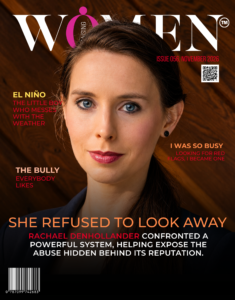
Raising Women Magazine Issue 56 – November 2026

The Courage to Question
We live in a world where reputation often arrives before character, popularity masquerades as goodness, and questioning authority can make you the problem. Apparently, being respected is sometimes mistaken for being beyond reproach.
Our cover woman, Rachael Denhollander, reminds us why that distinction matters. Her courage in confronting institutional abuse challenges us to reconsider what safety, justice and accountability truly mean.

Elsewhere, we explore the judgement surrounding childbirth, the invisible labour behind successful careers, the beauty industry’s obsession with perfection, and why women can cook the same meal as men yet receive considerably less applause.

From fashion and culture to relationships and motherhood, Issue 56 invites us to examine the assumptions we have inherited, including those we unknowingly perpetuate.

Because progress is not simply about celebrating extraordinary women. It is about creating a world where ordinary women and girls are heard, valued and protected.

And sometimes, change begins with refusing to look away.

Raising Women Magazine Issue 55 – October 2026

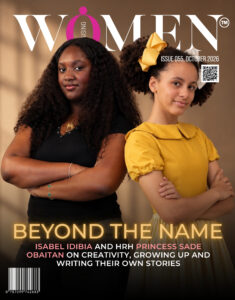
We spend a remarkable amount of time telling girls who they should become, often before they have finished discovering who they are. Apparently, growing up comes with a job description nobody remembers applying for.

In Issue 55, our cover girls, Isabel Idibia and Princess Sade Obaitan, remind us that famous surnames and royal titles may introduce you, but they should never define you.

From girls conquering oceans and swimming pools to conversations about beauty, culture and ambition, this edition examines the expectations we inherit and the courage required to question them.

In Find Her Light, I also reflect on the careers I might have pursued and why discovering another gift does not invalidate the life we have already built.

Perhaps that is the lesson running through these pages: identity is not a finished manuscript.

Every girl deserves the freedom to write her own story. And every woman deserves another chapter.

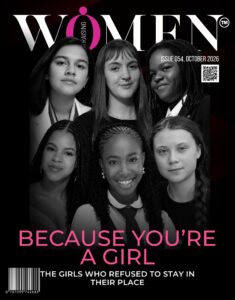
Raising Women Magazine Issue 54 – October 2026

“Because you’re a girl.”
Four little words that have spent generations doing an extraordinary amount of damage. Apparently, ambition, intelligence and audacity were once considered rather unladylike.
Fortunately, the girls featured in our 54th edition missed that memo.
As we celebrate the International Day of the Girl Child, we spotlight twelve remarkable girls rewriting the rules, while reminding ourselves that a girl should not need extraordinary achievements to deserve ordinary opportunities.
We also explore the expectations that complicate girlhood, the childhood wounds we carry into adulthood and, in my Find Her Light reflection, why the girl I once was might have a few lessons for the woman I have become.
Perhaps our greatest responsibility is not simply raising girls to conquer the world, but ensuring they never have to shrink themselves to belong in it.
Because you’re a girl?
What a wonderful reason to dream without limits.

Raising Women Magazine Issue 53 – September 2026

Apparently, saving the planet comes with a shopping list. Solar panels, electric cars, sustainable fashion and, preferably, a bank account that understands the assignment.

In Issue 53, our cover woman, Professor Joyashree Roy, challenges us to reconsider what sustainability really costs, who pays, and why the cheapest choices today may leave tomorrow’s generations with the bill.

But this issue is also about the invisible price tags attached to everyday life. From passport privilege and the cultural expectations of a “good woman” to motherhood, personal boundaries and the delicate art of enjoying life before finishing every task, we examine the systems shaping our choices.

We also celebrate women turning overlooked problems into extraordinary opportunities.

Perhaps progress begins when we stop asking only what things cost and start asking what they are worth.

A better world should not be a luxury reserved for those who can afford it.
Happy reading!

.

Your guide to IVF and egg freezing in Korea

Empowering your family planning journey with curated fertility treatments at lower costs. Get our guide for Korea’s leading clinics, pricing and service breakdown.

Recommended News

Raising Women Magazine Issue 56 – November 2026

The Courage to Question
We live in a world where reputation often arrives before character, popularity masquerades as goodness, and questioning authority can make you the problem. Apparently, being respected is sometimes mistaken for being beyond reproach.
Our cover woman, Rachael Denhollander, reminds us why that distinction matters. Her courage in confronting institutional abuse challenges us to reconsider what safety, justice and accountability truly mean.

Elsewhere, we explore the judgement surrounding childbirth, the invisible labour behind successful careers, the beauty industry’s obsession with perfection, and why women can cook the same meal as men yet receive considerably less applause.

From fashion and culture to relationships and motherhood, Issue 56 invites us to examine the assumptions we have inherited, including those we unknowingly perpetuate.

Because progress is not simply about celebrating extraordinary women. It is about creating a world where ordinary women and girls are heard, valued and protected.

And sometimes, change begins with refusing to look away.

Raising Women Magazine Issue 55 – October 2026

We spend a remarkable amount of time telling girls who they should become, often before they have finished discovering who they are. Apparently, growing up comes with a job description nobody remembers applying for.

In Issue 55, our cover girls, Isabel Idibia and Princess Sade Obaitan, remind us that famous surnames and royal titles may introduce you, but they should never define you.

From girls conquering oceans and swimming pools to conversations about beauty, culture and ambition, this edition examines the expectations we inherit and the courage required to question them.

In Find Her Light, I also reflect on the careers I might have pursued and why discovering another gift does not invalidate the life we have already built.

Perhaps that is the lesson running through these pages: identity is not a finished manuscript.

Every girl deserves the freedom to write her own story. And every woman deserves another chapter.

Raising Women Magazine Issue 54 – October 2026

“Because you’re a girl.”
Four little words that have spent generations doing an extraordinary amount of damage. Apparently, ambition, intelligence and audacity were once considered rather unladylike.
Fortunately, the girls featured in our 54th edition missed that memo.
As we celebrate the International Day of the Girl Child, we spotlight twelve remarkable girls rewriting the rules, while reminding ourselves that a girl should not need extraordinary achievements to deserve ordinary opportunities.
We also explore the expectations that complicate girlhood, the childhood wounds we carry into adulthood and, in my Find Her Light reflection, why the girl I once was might have a few lessons for the woman I have become.
Perhaps our greatest responsibility is not simply raising girls to conquer the world, but ensuring they never have to shrink themselves to belong in it.
Because you’re a girl?
What a wonderful reason to dream without limits.

Raising Women Magazine Issue 53 – September 2026

Apparently, saving the planet comes with a shopping list. Solar panels, electric cars, sustainable fashion and, preferably, a bank account that understands the assignment.

In Issue 53, our cover woman, Professor Joyashree Roy, challenges us to reconsider what sustainability really costs, who pays, and why the cheapest choices today may leave tomorrow’s generations with the bill.

But this issue is also about the invisible price tags attached to everyday life. From passport privilege and the cultural expectations of a “good woman” to motherhood, personal boundaries and the delicate art of enjoying life before finishing every task, we examine the systems shaping our choices.

We also celebrate women turning overlooked problems into extraordinary opportunities.

Perhaps progress begins when we stop asking only what things cost and start asking what they are worth.

A better world should not be a luxury reserved for those who can afford it.
Happy reading!

.

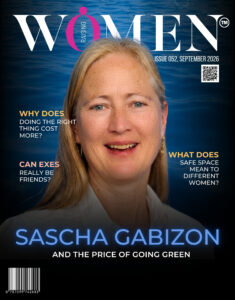
Raising Women Magazine Issue 52 – September 2026

This issue asks a deceptively simple question: can we save the planet without making ordinary people pay the highest price?
Our cover star, Sascha Gabizon, brings that question sharply into focus, challenging us to think about climate action not only through carbon, but through fairness, access and gender. Because going green sounds wonderful until sustainability becomes something only the wealthy can afford.
Across these pages, we follow climate change into unexpected places. Into our wardrobes, our food, our cultural traditions and even the price of our morning coffee. We also continue our important First Daughters conversation, explore what women really mean when they speak about safety, and look at 111 Miss World contestants whose purpose projects remind us that beauty today carries increasingly bigger expectations.
This edition is ultimately about responsibility, but responsibility shared fairly.
Because saving our planet cannot become another luxury.
And perhaps the greenest future is one everyone can actually afford.

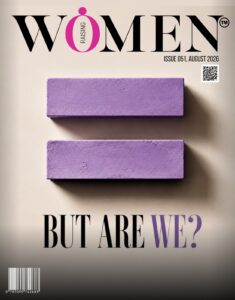
Raising Women Magazine Issue 051 – August 2026

Equal. Such a small word for such a complicated idea.

In this issue, we ask a question that feels almost impolite after decades of progress: women have more rights, education, income and influence than generations before us, but are we equal? We have travelled remarkably far, yet full global gender parity remains generations away. Apparently, equality is taking the scenic route.

Issue 51 looks beyond the equal sign to what equality actually feels like in women’s lives. We follow the money, the power and, importantly, the hours women still disproportionately spend caring. We also explore women’s old financial systems, workplace design, the soft life economy and the changing meaning of opportunity
.
Progress deserves celebration. But celebration should never make us complacent.

We have opened many doors.

Now we must ask what happens after women walk through them.

We are closer.

But are we there?
.