best casino sites for Canadians top real money casinos for Canadians safe online casinos for Canadian players Canadian online casino rankings best mobile casino Canada

Spotlighting Remarkable Women and Girls

The Art of Love: How Different Cultures Express Affection Through Art

By Francisca Sinjae


Love is a universal language, but the way it’s expressed through art is as diverse as the cultures that create it. Art has always been a vessel for expressing affection, desire, and connection. Let’s walk you through a journey across continents and centuries to explore how different cultures have turned love into a masterpiece.

India: The Poetry of Henna and Miniature Paintings
In India, love isn’t just spoken it’s painted, inked, and sung. Henna, or mehndi, is a traditional art form where intricate patterns are drawn on the hands and feet of brides before weddings. These designs aren’t just decorative; they often hide the names of the bride and groom within the swirls and loops, a secret love letter etched in temporary ink.

But henna is just the beginning. Indian miniature paintings, dating back to the Mughal era, are a treasure trove of romantic expression. These delicate works often depict scenes from ancient love stories like Radha and Krishna, where divine love is portrayed through vibrant colors and meticulous details. The paintings aren’t just art they’re a celebration of love’s spiritual and sensual dimensions.

Japan: The Subtlety of Waka Poetry
In Japan, love is often expressed with a whisper rather than a shout. Waka poetry, a classical form of Japanese verse, captures the fleeting beauty of love and nature. A famous example is the Manyoshu, an 8th-century anthology filled with poems that express longing, heartbreak, and the joy of reunion. These poems are often short but profound, like a lover’s sigh.

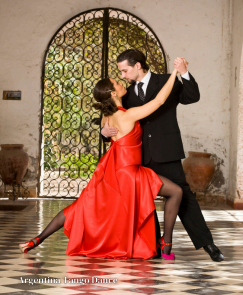
Argentina: The Tango, a Dance of Desire
In Argentina, love is a dance specifically, the tango. Born in the late 19th century in the working-class neighborhoods of Buenos Aires, the tango is a fusion of African, European, and Latin American
influences. It’s a dance of passion, longing, and connection, where partners move in perfect sync, their bodies telling a story of desire and heartbreak.

The tango isn’t just a dance; it’s a cultural phenomenon. Lyrics often speak of unrequited love, betrayal, and the bittersweet nature of romance.

France: The Passion of Impressionism and Cabaret

Yes! France the land of love, wine, and art. French Impressionists like Pierre-Auguste Renoir and Claude Monet captured the essence of love through their brushstrokes. Renoir’s Dance at Le Moulin de la Galette is a whirlwind of romance, with couples twirling under dappled sunlight, their joy palpable even centuries later.

But let’s not forget the sultry world of French cabaret. The Moulin Rouge, immortalized by Henri de Toulouse- Lautrec’s posters, was a place where love and art collided in a riot of color and movement. The can-can dancers, with their flamboyant skirts and high kicks, weren’t just performers they were symbols of freedom, passion, and the bohemian spirit of Paris.

West Africa: Adinkra Symbols and Love’s Eternal Patterns

In West Africa, particularly among the Akan people of Ghana, love is woven into the very fabric of life through Adinkra symbols. These symbols, often stamped onto cloth, carry deep meanings. For example, the Osram Ne Nsoromma symbol, which depicts a moon and a star, represents love, faithfulness, and harmony.

Adinkra cloth is often worn during special occasions, including weddings, making it a tangible expression of love
and commitment. Each symbol tells a story, and when combined, they create a visual narrative of the values that bind people together.

Native American Cultures: Love as a Sacred Bond

For many Native American tribes, love is deeply intertwined with spirituality and nature. The Navajo, for instance, create intricate sand paintings as part of healing rituals, but these artworks also symbolize the interconnectedness of all life, including the bonds of love. In the Pacific Northwest, tribes like the Haida use totem poles to tell stories of family lineage and love. These towering sculptures, carved with symbols and
figures, are a testament to the enduring nature of love and the importance of community.

Modern Love: Street Art and Digital Expressions

Fast forward to the 21st century, and love is
still a driving force in art just in newforms. Street artists like Banksy have used their work to comment on love in the modern world. One of Banksy’s most famous pieces, The Kissing Coppers, challenges
societal norms by depicting two male police officers in a passionate embrace, a bold statement on love and equality.

Meanwhile, digital art has opened up new possibilities for expressing affection. From Instagram poets like Rupi Kaur to digital illustrators who create personalized love stories, technology has made it easier than ever to share love through art.

Conclusion:

“Love as a Timeless Muse”

Love has always been a muse for artists, inspiring them to create works that transcend time and culture. Whether it’s the delicate brushstrokes or tango, art allows us to express the inexpressible the depth of our emotions, the complexity of our connections, and the universality of love.

So the next time you see a piece of art, take a closer look. You might just find a love story hidden within its colors, shapes, and movements. After all, love isn’t just something we feel it’s something we create.

Share:

Trending

Raising Women Magazine Issue 045 – June 2026

There is a difference between living and merely functioning.
Somewhere between the notifications, deadlines, responsibilities, ambitions, and endless demands of modern life, many of us have become exceptionally good at keeping going. We show up. We deliver. We carry. We cope. Yet beneath the appearance of productivity, an important question remains: are we truly well?
In this issue of Raising Women Magazine, we explore wellness not as a trend, but as a deeper conversation about humanity, health, purpose, and presence.
Our cover feature introduces Dr. Heidi Beilis, a pioneering physician helping to shape the future of healthcare through artificial intelligence. Her work reminds us that innovation is at its best when it serves people, particularly women whose lives may be transformed by earlier diagnoses and better outcomes.
Elsewhere, we explore grief, ambition, beauty, leadership, healthspan, rest, and the invisible burdens many women carry. We ask difficult questions about what it means to thrive, not simply survive.
As I wrote in this issue’s Find Her Light column, sometimes the rest we need is not sleep. Sometimes it is space. Sometimes it is perspective. Sometimes it is permission.
May these pages offer all three.

Raising Women Magazine Issue 044 – May 2026

There is something deeply revealing about the way a society treats its children. Not just in policy or parenting, but in the stories it tells them, the spaces it creates for them, and the kind of world it quietly prepares them to inherit. In this Children’s Day edition, Raising Women Magazine turns its attention to childhood itself, not as a sentimental phase of life, but as the foundation upon which identity, confidence, memory, and humanity are built.

Our cover star, Ms. Rachel, represents a refreshing reminder that gentleness still matters in an age of noise. Through patience, intentionality, and emotional safety, she has transformed songs and screen time into a global classroom for millions of children and families.

Across this issue, we explore the emotional architecture of childhood, from the girls who learn too early to shrink themselves, to the children quietly carrying adult burdens before they fully understand their own. We also interrogate modern parenting, digital culture, family, safety, and the futures young people are already shaping.

Because childhood is never just preparation for life.

In many ways, it is life itself.

The Family Tree Divide

What Women Are Given, and What They Build By Sipho Khumalo Two women walk into the same room. One is recognised before she speaks. The

Your guide to IVF and egg freezing in Korea

Empowering your family planning journey with curated fertility treatments at lower costs. Get our guide for Korea’s leading clinics, pricing and service breakdown.

Recommended News

Raising Women Magazine Issue 045 – June 2026

There is a difference between living and merely functioning.
Somewhere between the notifications, deadlines, responsibilities, ambitions, and endless demands of modern life, many of us have become exceptionally good at keeping going. We show up. We deliver. We carry. We cope. Yet beneath the appearance of productivity, an important question remains: are we truly well?
In this issue of Raising Women Magazine, we explore wellness not as a trend, but as a deeper conversation about humanity, health, purpose, and presence.
Our cover feature introduces Dr. Heidi Beilis, a pioneering physician helping to shape the future of healthcare through artificial intelligence. Her work reminds us that innovation is at its best when it serves people, particularly women whose lives may be transformed by earlier diagnoses and better outcomes.
Elsewhere, we explore grief, ambition, beauty, leadership, healthspan, rest, and the invisible burdens many women carry. We ask difficult questions about what it means to thrive, not simply survive.
As I wrote in this issue’s Find Her Light column, sometimes the rest we need is not sleep. Sometimes it is space. Sometimes it is perspective. Sometimes it is permission.
May these pages offer all three.

Raising Women Magazine Issue 044 – May 2026

There is something deeply revealing about the way a society treats its children. Not just in policy or parenting, but in the stories it tells them, the spaces it creates for them, and the kind of world it quietly prepares them to inherit. In this Children’s Day edition, Raising Women Magazine turns its attention to childhood itself, not as a sentimental phase of life, but as the foundation upon which identity, confidence, memory, and humanity are built.

Our cover star, Ms. Rachel, represents a refreshing reminder that gentleness still matters in an age of noise. Through patience, intentionality, and emotional safety, she has transformed songs and screen time into a global classroom for millions of children and families.

Across this issue, we explore the emotional architecture of childhood, from the girls who learn too early to shrink themselves, to the children quietly carrying adult burdens before they fully understand their own. We also interrogate modern parenting, digital culture, family, safety, and the futures young people are already shaping.

Because childhood is never just preparation for life.

In many ways, it is life itself.

The Family Tree Divide

What Women Are Given, and What They Build By Sipho Khumalo Two women walk into the same room. One is

First, Believe

By The Lulu They said the sky’s the limit But what if you’re still underground, still digging through the dirt

RudolphCasinos