Spotlighting Remarkable Women and Girls

Songs from the Past: How Folk Songs and Lullabies Keep Culture Alive

By Francisca Sinja

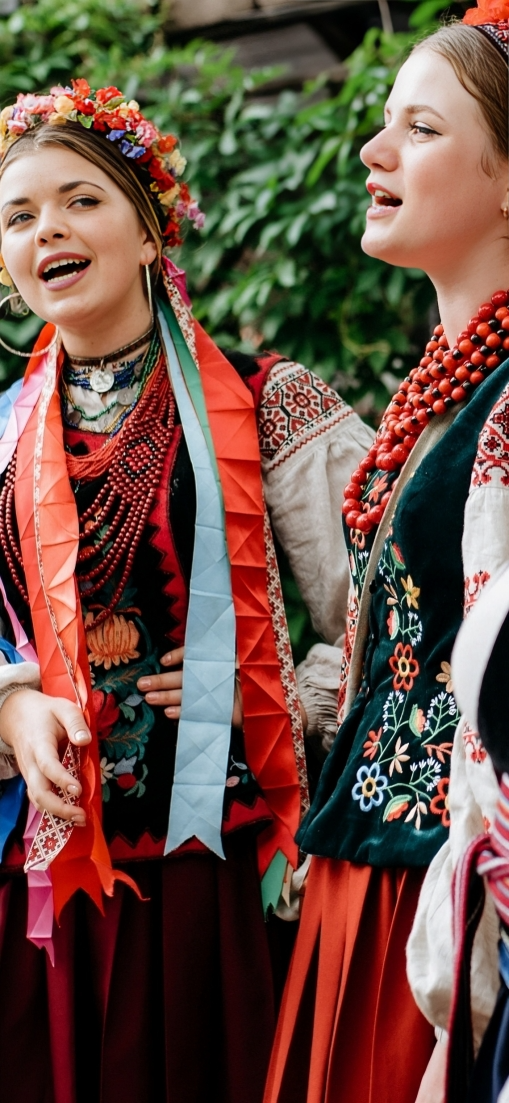
There is something about an old song that clings to the soullike a childhood memory. A melody hummed in the quiet ofdusk, a rhythm tapped against wooden floors, lyrics passeddown from lips wrinkled with time folk songs and lullabies aremore than just music. They are bridges to the past, stitchedtogether by generations of voices. Long before writtenrecords, before history books and digital archives, there weresongs. Women sang as they pounded grain under the morningsun. Grandmothers rocked babies to sleep with lullabies soakedin love and wisdom. Villages gathered around fires, passingdown legends wrapped in melody. These songs were not just entertainment; they were the heartbeat of a culture, a way toremember who we are and where we come from.

The Music That Raised Us

Ask anyone about a song from their childhood, and you’ll see it ,a flicker of recognition in their eyes, the faintest smile tuggingat their lips. Maybe it was a lullaby sung by a mother with tiredarms but a full heart. Maybe it was a playful tune childrenchanted while skipping ropes in the dusty heat of summer.Maybe it was a song that marked rites of passage a first love, afirst loss, a first rebellion.

In every culture, lullabies were the first songs we ever heard,whispered into our ears before we even knew the meaning ofwords. They were magic spells of comfort, capable of slowing aracing heartbeat or drying sleepy tears. Science now confirmswhat our ancestors already knew, lullabies regulate breathing,lower stress, and deepen the bond between parent and child.But beyond science, they were a mother’s promise in melody: Iam here, and you are safe.

Folk songs, on the other hand, were stories set to music. Theycarried the weight of history tales of love, war, migration, andcelebration. In Ireland, the haunting ballads of the Celts spokeof lost battles and distant lands. In India, classical folk songs toldof monsoon rains and mythical gods. In the Caribbean, calypsorhythms preserved the resilience of enslaved ancestors. Everyfolk song was a thread in the great Curtain of human experience.

Singing Through Generations

It’s easy to think that in the age of streaming services and fastpaced living, these songs might fade away. But nostalgia has away of sneaking up on us. A young mother, rocking her baby ina modern nursery, suddenly finds herself singing the samelullaby her grandmother once sang. A teenager scrollingthrough playlists stumbles upon a folk remix, and somethingancient stirs within them.

A group of friends, caught in amoment of shared memory, belt out a childhood song inunison, laughing at how easily the words return.These songs persist because they are woven into our DNA. InMexico, Las Mañanitas is still sung at birthday celebrations, justas it was a hundred years ago.

In Japan, Takeda Lullaby stillechoes in homes, just as it did when samurai walked the land.In Ghana, the call and response rhythms of Kpanlogo still bringcommunities together.Even in places where language has shifted and traditions havemorphed, the melodies remain. They are sung at weddings andfunerals, at protests and parades. They show up in pop music,sampled in beats, whispered in harmonies. They are not relics they are living, breathing legacies.

When a Song is a Time Machine

Music has a way of bending time. One moment, you’re in thepresent, scrolling through emails or waiting in traffic. Then afamiliar tune drifts through the air, and suddenly, you are fiveyears old again, holding your grandmother’s hand. You are backin a classroom, back in a village square, back in a warm bedlistening to the soft lull of a song that once meant home.These moments remind us that folk songs and lullabies are notjust about the past hey are about connection. They are proofthat across centuries and continents, people loved, laughed,grieved, and hoped in the same ways. They sang their joys andsorrows into melodies, trusting that someone, somewhere, would carry them forward.

Share:

Trending

Raising Women Magazine Issue 38 – March 2026

As we approach International Women’s Day, we lean into this year’s agenda: Give to Gain. It is a simple phrase, yet profoundly strategic. Progress for women has never been sustained by visibility alone. It has been built through investment, mentorship, solidarity, and the deliberate transfer of opportunity.

On our cover, Ambassador Keisha McGuire represents this principle in motion. Her leadership in global diplomacy reminds us that when women give knowledge, courage, and access, they do not diminish their power. They multiply it.

This edition examines what it truly means to give: time, resources, platforms, protection, policy influence. And what we gain in return: stronger institutions, fairer systems, and a generation of women who enter rooms already prepared.

International Women’s Day is not a performance. It is a responsibility.

When women give intentionally, we all gain collectively.

The question is not whether we will celebrate. The question is how we will contribute.

Raising Women Magazine Issue 38 – March 2026

As we approach International Women’s Day, we lean into this year’s agenda: Give to Gain. It is a simple phrase, yet profoundly strategic. Progress for women has never been sustained by visibility alone. It has been built through investment, mentorship, solidarity, and the deliberate transfer of opportunity.

On our cover, Ambassador Keisha McGuire represents this principle in motion. Her leadership in global diplomacy reminds us that when women give knowledge, courage, and access, they do not diminish their power. They multiply it.

This edition examines what it truly means to give: time, resources, platforms, protection, policy influence. And what we gain in return: stronger institutions, fairer systems, and a generation of women who enter rooms already prepared.

International Women’s Day is not a performance. It is a responsibility.

When women give intentionally, we all gain collectively.

The question is not whether we will celebrate. The question is how we will contribute.

Your guide to IVF and egg freezing in Korea

Empowering your family planning journey with curated fertility treatments at lower costs. Get our guide for Korea’s leading clinics, pricing and service breakdown.

Recommended News

Raising Women Magazine Issue 38 – March 2026

As we approach International Women’s Day, we lean into this year’s agenda: Give to Gain. It is a simple phrase, yet profoundly strategic. Progress for women has never been sustained by visibility alone. It has been built through investment, mentorship, solidarity, and the deliberate transfer of opportunity.

On our cover, Ambassador Keisha McGuire represents this principle in motion. Her leadership in global diplomacy reminds us that when women give knowledge, courage, and access, they do not diminish their power. They multiply it.

This edition examines what it truly means to give: time, resources, platforms, protection, policy influence. And what we gain in return: stronger institutions, fairer systems, and a generation of women who enter rooms already prepared.

International Women’s Day is not a performance. It is a responsibility.

When women give intentionally, we all gain collectively.

The question is not whether we will celebrate. The question is how we will contribute.

Raising Women Magazine Issue 38 – March 2026

As we approach International Women’s Day, we lean into this year’s agenda: Give to Gain. It is a simple phrase, yet profoundly strategic. Progress for women has never been sustained by visibility alone. It has been built through investment, mentorship, solidarity, and the deliberate transfer of opportunity.

On our cover, Ambassador Keisha McGuire represents this principle in motion. Her leadership in global diplomacy reminds us that when women give knowledge, courage, and access, they do not diminish their power. They multiply it.

This edition examines what it truly means to give: time, resources, platforms, protection, policy influence. And what we gain in return: stronger institutions, fairer systems, and a generation of women who enter rooms already prepared.

International Women’s Day is not a performance. It is a responsibility.

When women give intentionally, we all gain collectively.

The question is not whether we will celebrate. The question is how we will contribute.