Spotlighting Remarkable Women and Girls

Feminism 101: What it is, What it isn’t, and Why You Should Care

By Chloe Beaufoy

Feminism 101: What It Is and Why It Matters

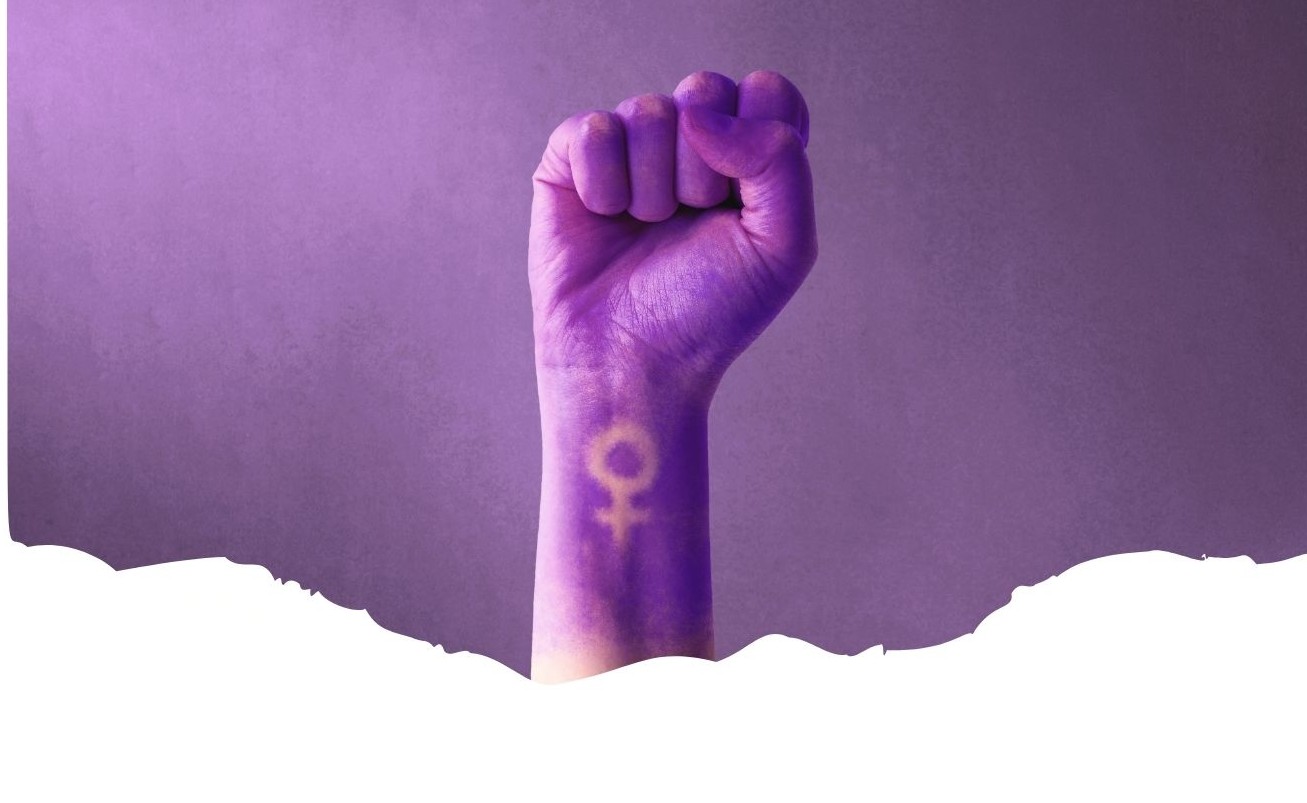
Feminism is, at its core, the belief in and work toward political, social, and economic equality between genders. Far from being an “anti-men” ideology, it calls for fair treatment and equal rights for everyone. Feminism asks us to look at the systems that have long entrenched gender imbalances, from unequal pay to restricted reproductive rights and challenges us to change them.

Historically, from the suffrage campaigns of the early 20th century to the bold movements of #MeToo and beyond, feminism has empowered women to assert their rights and demand a seat at the table.

In essence, feminism is the long-standing protest against the “old normal”, where power, opportunity, and respect were exclusively reserved for men and the argument that no human being should have to fight to live with dignity. Whether it’s advocating for the right to vote, access to education, equal participation in politics, or bodily autonomy, feminism is about leveling the playing field so that every person has the chance to flourish.

Misconceptions Demystifying Feminism

Despite its noble aims, feminism is often misunderstood, misrepresented, or even derided. Let’s clear up some of the most common misconceptions:

1. “Feminism is anti-men.

Many critics label feminism as hostile toward men. In reality, feminism challenges gender roles and power structures, not individuals based on their gender. As one recent opinion piece in The Guardian explains, issues such as “heteropessimism” (the idea that heterosexual relationships are set up for failure due to unrealistic expectations) arise from a complex web of systemic inequality, not because feminism tries to put all the blame on men. Feminism benefits society as a whole by striving for equality rather than by vilifying one sex.

2. “Feminism is only for a certain type of woman.”

Another misconception is that feminism is exclusive and reserved for the educated elite or only for those with a specific political inclination. Feminism, however, is deeply intersectional. It acknowledges that race, class, sexuality, and other factors intersect with gender to produce unique experiences of discrimination and oppression.

Whether you’re working as a caregiver, a CEO, or a student, feminism is about ensuring that your contributions and your rights are respected equally.

3. “Feminism is outdated; women have it all now.

Some say that feminist struggles are a thing of the past and that modern women no longer face discrimination. Yet, data and lived experience tell a different story. Despite significant progress, issues like wage gaps, sexual harassment, underrepresentation in leadership roles, and regressive legislation such as restrictions on reproductive rights remain pressing challenges. The recent global backlash against women’s rights in numerous regions shows that feminism is far from obsolete.

4. “Feminism only focuses on women’s issues.”

While feminism does center on women’s rights, its ultimate goal is to create a more just society for all. It challenges harmful stereotypes and rigid gender roles that limit everyone, regardless of gender. By advocating for an inclusive world, feminism also improves the conditions for men who suffer from unrealistic expectations or toxic masculinity.

Voices and Perspectives: What People Are Saying

In recent years, feminist thought has not only continued to evolve but has become louder and more diverse. Here are a few perspectives and opinions that illustrate the dynamic conversation happening today:

On Activism and “Heteropessimism”:

A Guardian article recently dissected the concept of heteropessimism, not as a baseless complaint, but as a rational response to longstanding gendered expectations in relationships. This perspective challenges oversimplifications and reminds us that demanding more emotional support and sharing the burdens of domestic labor are reactions to systemic imbalances.

Global and Political Voices:

The National Organization for Women (NOW) held a Feminist State of the Union event in 2023 that brought together voices from across the spectrum, from activists to policymakers, underlining that feminism is not only about defending rights at home but also about advocating for justice on the international stage. Leaders emphasized that when women’s rights are under attack, it is a collective failure of society and a call for immediate action.

(For instance, NOW’s event showed how economic, social, and political challenges are interlinked in the fight for equality. See NOW Feminist State of the Union 2023.)

Art and Culture as Feminist Tools:

In the realm of pop culture, figures like Rihanna, who boldly challenged norms even while pregnant during her Super Bowl performance, demonstrate how feminist symbolism can reshape public narratives. These cultural moments, celebrated in outlets like Ms. Magazine and The Times, serve as potent reminders that every public act by a woman can be a statement of independence and defiance against outdated norms.

Academic and Grassroots Analyses:

Recent research, such as the study “Women’s Perspectives on Harm and Justice after Online Harassment” (2023), showcases how women perceive digital spaces as arenas for both oppression and resistance. Academics point out that the harm women face online reflects broader societal gender injustices, urging platforms to adopt responses that prioritize women’s safety and dignity.

Intersectional Views:

In a 2023 essay collection like On Women by Susan Sontag, readers find an array of feminist insights that connect past critiques with present challenges. Sontag’s work, blending hard-hitting critique and intellectual brilliance, inspires new generations to question complacency and fight tirelessly for equality.

My Final Take: Why Every Woman Should Be a Feminist

At the heart of this discussion lies a simple yet powerful truth: feminism is the movement that stands between us and a society that perpetuates inequality. As a woman, if you do not stand up for equal rights, who will? Feminism isn’t just about fighting what we lack, it’s about recognizing our collective power to reshape society for the better.

No matter how society has painted the term, sometimes as divisive, sometimes as radical, the reality is that every woman benefits from a system where she is treated with respect, has equal opportunities, and is free to decide her own future.

Every woman’s struggle is intertwined with the struggle for justice. We cannot afford to sit on the sidelines or be content with half-measures. Feminism empowers us to challenge injustices, create spaces for dissent, and demand that our voices, our stories, and our rights are acknowledged and protected. Whether you are a student, a professional, a mother, or someone who feels marginalized, embracing feminism is a form of self-defense and collective liberation.

I firmly believe that every woman should proudly identify as a feminist. Not because we need to conform to a trendy label, but because it is a commitment, a pledge that we will persist in fighting for a fairer, more just world. If we leave this fight to be waged by just a few, then our progress will stall, and the status quo will remain unchallenged.

When women stand together, educated, spirited, and unapologetically feminist then the transformative power we wield can reshape our communities, our politics, and our cultural narratives.

In the words of a feminist thinker I admire, “If you do not fight for equality, who will?” The answer is simple: it is up to each and every one of us to ensure that future generations inherit a world where everyone is valued equally. Feminism is not optional; it is essential to the survival and flourishing of our society.

Conclusion

Feminism is more than a word; it is a force that has spanned centuries and continues to evolve in the face of new challenges. From its roots in the struggles for suffrage and reproductive rights to today’s global feminist dialogues and activism, the movement remains vital. Misconceptions about feminism often stem from a narrow view of gender roles or from political agendas that seek to undermine the progress made. Yet the core of feminism is as relevant as ever: the fight for dignity, equality, and justice.

Every woman should embrace feminism because when we fight for equal rights, we uplift not only ourselves but the entire fabric of society. It is our collective responsibility to challenge the systems that constrain us, to harness our power as a united community, and to create an inclusive world where everyone can thrive.

As we continue to share these perspectives, be it through global events, inspiring talks, or academic research, we remind ourselves that the fight for feminism is not over. We must keep pushing, keep questioning, and keep fighting. Because if every woman stands up as a feminist, the transformative change we need will be unstoppable.

By educating ourselves about feminism, debunking the myths that cloud it, and recognizing that the fight for equality is both personal and collective, we forge a path toward a future in which every woman can shine. Embrace feminism, it’s not merely a label; it’s a declaration that you refuse to settle for anything less than equality.
Share:

Trending

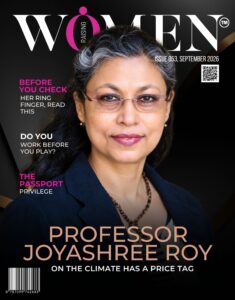
Raising Women Magazine Issue 53 – September 2026

Apparently, saving the planet comes with a shopping list. Solar panels, electric cars, sustainable fashion and, preferably, a bank account that understands the assignment.

In Issue 53, our cover woman, Professor Joyashree Roy, challenges us to reconsider what sustainability really costs, who pays, and why the cheapest choices today may leave tomorrow’s generations with the bill.

But this issue is also about the invisible price tags attached to everyday life. From passport privilege and the cultural expectations of a “good woman” to motherhood, personal boundaries and the delicate art of enjoying life before finishing every task, we examine the systems shaping our choices.

We also celebrate women turning overlooked problems into extraordinary opportunities.

Perhaps progress begins when we stop asking only what things cost and start asking what they are worth.

A better world should not be a luxury reserved for those who can afford it.
Happy reading!

.

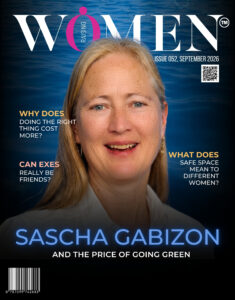
Raising Women Magazine Issue 52 – September 2026

This issue asks a deceptively simple question: can we save the planet without making ordinary people pay the highest price?
Our cover star, Sascha Gabizon, brings that question sharply into focus, challenging us to think about climate action not only through carbon, but through fairness, access and gender. Because going green sounds wonderful until sustainability becomes something only the wealthy can afford.
Across these pages, we follow climate change into unexpected places. Into our wardrobes, our food, our cultural traditions and even the price of our morning coffee. We also continue our important First Daughters conversation, explore what women really mean when they speak about safety, and look at 111 Miss World contestants whose purpose projects remind us that beauty today carries increasingly bigger expectations.
This edition is ultimately about responsibility, but responsibility shared fairly.
Because saving our planet cannot become another luxury.
And perhaps the greenest future is one everyone can actually afford.

Raising Women Magazine Issue 051 – August 2026

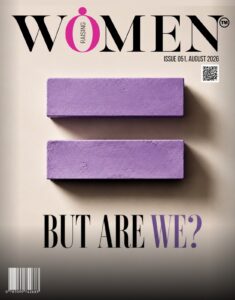
Equal. Such a small word for such a complicated idea.

In this issue, we ask a question that feels almost impolite after decades of progress: women have more rights, education, income and influence than generations before us, but are we equal? We have travelled remarkably far, yet full global gender parity remains generations away. Apparently, equality is taking the scenic route.

Issue 51 looks beyond the equal sign to what equality actually feels like in women’s lives. We follow the money, the power and, importantly, the hours women still disproportionately spend caring. We also explore women’s old financial systems, workplace design, the soft life economy and the changing meaning of opportunity
.
Progress deserves celebration. But celebration should never make us complacent.

We have opened many doors.

Now we must ask what happens after women walk through them.

We are closer.

But are we there?
.

Raising Women Magazine Issue 050 – August 2026

Fifty issues. That feels worth pausing for.
Not because fifty is simply a lovely round number, but because every issue represents another opportunity to ask better questions about women, culture and the world we are building.
And Issue 50 certainly asks questions.
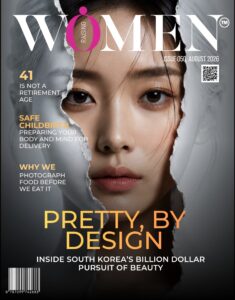
Our cover story, PRETTY, BY DESIGN, takes us to South Korea and its billion dollar pursuit of beauty, examining what happens when appearance becomes intertwined with confidence, opportunity and social capital. But before we become too fascinated by South Korea, perhaps we should check our own mirrors. The pursuit of “better” is increasingly global.
Elsewhere, we meet an Olympic champion who found gold at 41 and after motherhood, explore the AI gap reshaping women’s work, rediscover our grandmothers as archivists and ask why dinner now requires photography before eating.
Fifty editions later, Raising Women Magazine remains curious, global and committed to conversations that matter.
Here’s to 50.
And to everything we are still becoming.

Your guide to IVF and egg freezing in Korea

Empowering your family planning journey with curated fertility treatments at lower costs. Get our guide for Korea’s leading clinics, pricing and service breakdown.

Recommended News

Raising Women Magazine Issue 53 – September 2026

Apparently, saving the planet comes with a shopping list. Solar panels, electric cars, sustainable fashion and, preferably, a bank account that understands the assignment.

In Issue 53, our cover woman, Professor Joyashree Roy, challenges us to reconsider what sustainability really costs, who pays, and why the cheapest choices today may leave tomorrow’s generations with the bill.

But this issue is also about the invisible price tags attached to everyday life. From passport privilege and the cultural expectations of a “good woman” to motherhood, personal boundaries and the delicate art of enjoying life before finishing every task, we examine the systems shaping our choices.

We also celebrate women turning overlooked problems into extraordinary opportunities.

Perhaps progress begins when we stop asking only what things cost and start asking what they are worth.

A better world should not be a luxury reserved for those who can afford it.
Happy reading!

.

Raising Women Magazine Issue 52 – September 2026

This issue asks a deceptively simple question: can we save the planet without making ordinary people pay the highest price?
Our cover star, Sascha Gabizon, brings that question sharply into focus, challenging us to think about climate action not only through carbon, but through fairness, access and gender. Because going green sounds wonderful until sustainability becomes something only the wealthy can afford.
Across these pages, we follow climate change into unexpected places. Into our wardrobes, our food, our cultural traditions and even the price of our morning coffee. We also continue our important First Daughters conversation, explore what women really mean when they speak about safety, and look at 111 Miss World contestants whose purpose projects remind us that beauty today carries increasingly bigger expectations.
This edition is ultimately about responsibility, but responsibility shared fairly.
Because saving our planet cannot become another luxury.
And perhaps the greenest future is one everyone can actually afford.

Raising Women Magazine Issue 051 – August 2026

Equal. Such a small word for such a complicated idea.

In this issue, we ask a question that feels almost impolite after decades of progress: women have more rights, education, income and influence than generations before us, but are we equal? We have travelled remarkably far, yet full global gender parity remains generations away. Apparently, equality is taking the scenic route.

Issue 51 looks beyond the equal sign to what equality actually feels like in women’s lives. We follow the money, the power and, importantly, the hours women still disproportionately spend caring. We also explore women’s old financial systems, workplace design, the soft life economy and the changing meaning of opportunity
.
Progress deserves celebration. But celebration should never make us complacent.

We have opened many doors.

Now we must ask what happens after women walk through them.

We are closer.

But are we there?
.

Raising Women Magazine Issue 050 – August 2026

Fifty issues. That feels worth pausing for.
Not because fifty is simply a lovely round number, but because every issue represents another opportunity to ask better questions about women, culture and the world we are building.
And Issue 50 certainly asks questions.
Our cover story, PRETTY, BY DESIGN, takes us to South Korea and its billion dollar pursuit of beauty, examining what happens when appearance becomes intertwined with confidence, opportunity and social capital. But before we become too fascinated by South Korea, perhaps we should check our own mirrors. The pursuit of “better” is increasingly global.
Elsewhere, we meet an Olympic champion who found gold at 41 and after motherhood, explore the AI gap reshaping women’s work, rediscover our grandmothers as archivists and ask why dinner now requires photography before eating.
Fifty editions later, Raising Women Magazine remains curious, global and committed to conversations that matter.
Here’s to 50.
And to everything we are still becoming.

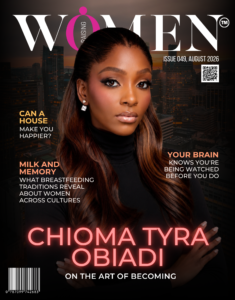
Raising Women Magazine Issue 049 – August 2026

There is a quiet shift taking place in the stories women are telling.

For years, success was measured by titles, milestones, and visibility. Today, we are asking deeper questions. What does influence look like? Who is changing the world? Which friendships shape the women we become? And how do we carry our heritage into a future we are helping to build?

This edition celebrates women and girls of African descent whose ideas, courage, creativity, and leadership are reshaping global conversations. Our cover feature is a reminder that Africa is not waiting to be discovered. It is already influencing the future through remarkable women whose work is changing industries, communities, and generations.

Alongside these inspiring stories, we explore the quiet power of friendship, the economics of modern womanhood, fashion’s changing priorities, and the cultural moments defining our time.

At Raising Women Magazine, we remain committed to one belief: when women rise with purpose, they do not simply change their own stories. They expand what the world believes is possible.

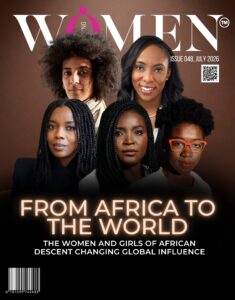
Raising Women Magazine Issue 048 – July 2026

There is a quiet shift taking place in the stories women are telling.

For years, success was measured by titles, milestones, and visibility. Today, we are asking deeper questions. What does influence look like? Who is changing the world? Which friendships shape the women we become? And how do we carry our heritage into a future we are helping to build?

This edition celebrates women and girls of African descent whose ideas, courage, creativity, and leadership are reshaping global conversations. Our cover feature is a reminder that Africa is not waiting to be discovered. It is already influencing the future through remarkable women whose work is changing industries, communities, and generations.

Alongside these inspiring stories, we explore the quiet power of friendship, the economics of modern womanhood, fashion’s changing priorities, and the cultural moments defining our time.

At Raising Women Magazine, we remain committed to one belief: when women rise with purpose, they do not simply change their own stories. They expand what the world believes is possible.