Spotlighting Remarkable Women and Girls

Easter Unveiled: From Renaissance Canvases to Global Festivities

By Tom Connelly

Easter, a holiday woven with threads of sacred tradition and vibrant cultural expression, has captivated hearts for millennia. It is a time when the solemnity of resurrection collides with the jubilance of spring, creating an image as diverse as humanity itself. This article invites you on a journey through time and across continents, exploring how artists and communities have transformed the Easter story into a symphony of art and celebration.

Part I: The Resurrection in Brushstrokes: A Divine Gallery

The resurrection of Christ, a foundation of Christian faith, has long been a muse for artists. Each era’s interpretation reveals as much about theological ideals as it does about the cultural zeitgeist.

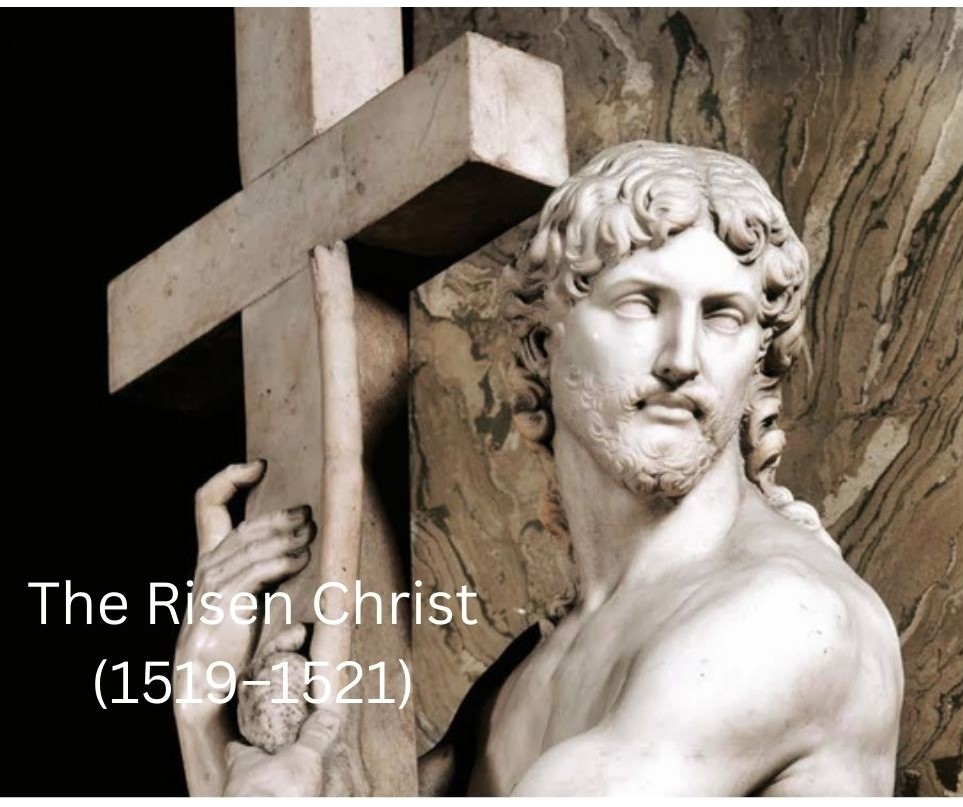
Take Michelangelo, the titan of the High Renaissance. While his Sistine Chapel frescoes dominate his legacy, his lesser-known sculpture The Risen Christ (1519–1521) in Rome’s Santa Maria sopra Minerva embodies Renaissance humanism. Christ, muscular and serene, clutches the cross, his pose echoing classical Greek statues. Here, resurrection is not just spiritual triumph but a celebration of human potential, a reflection of an era obsessed with merging divine grace and earthly beauty.

Then there’s Caravaggio, the Baroque rebel. His The Incredulity of Saint Thomas (1601–1602) captures a gritty, visceral moment post-resurrection: Thomas’s finger probing Christ’s wound. Caravaggio’s chiaroscuro, dramatic light and shadow heightens the tension between doubt and faith. Unlike Michelangelo’s idealism, Caravaggio grounds the sacred in the tangible, using street-thug models to remind viewers that resurrection is a visceral, personal reckoning.

Leonardo da Vinci, though famed for The Last Supper, never directly depicted the resurrection. Yet his unfinished The Virgin and Child with St. Anne (1503) hints at resurrection’s promise through symbolism: a lamb (Christ’s sacrifice) nestled near an infant Jesus, foreshadowing rebirth. Renaissance art, in its meticulous detail, turned theology into relatable narratives, shaping how Europe visualized Easter’s hope.

These works did more than decorate churches, they shaped collective consciousness. Michelangelo’s Christ became a paragon of strength; Caravaggio’s raw scenes made divinity accessible. Art, in their hands, turned resurrection from dogma into a mirror of human aspiration.

Even Corfu, Greece, adds drama: locals toss clay pots from balconies on Holy Saturday, the crash symbolizing shattered tombs and new beginnings. It’s Easter as theatre, a sensory spectacle where destruction births hope.

Conclusion: Easter’s Universal Alchemy, Where Sacred Meets Silly

From Caravaggio’s shadowy realism to Guyana’s sky-high kites, Easter’s essence lies in its duality. It is both intimate and universal, a story retold through marble, water fights, and egg feasts. Art immortalizes its mystery; traditions democratize its joy. Together, they remind us that resurrection, whether in a Galilean tomb or a Polish puddle is ultimately about transformation: of winter to spring, despair to hope, and solitude to community.

This Easter, as you admire a Renaissance masterpiece or fling a water balloon, remember: you’re part of a millennia-old heritage and story, stitching your own thread into the story.

Part II: Easter’s Oddities: Quirky Traditions that Defy Expectations

If art codified Easter’s soul, global traditions animate its body with riotous color and whimsy. From Poland to Guyana, communities reinterpret resurrection through cultural prisms, blending faith with folklore.

In Haux, France, Easter Monday sees chefs crack 15,000 eggs into a four-meter skillet, crafting a gargantuan omelet for 1,000 people. Legend claims Napoleon once demanded a village omelet, today, it’s a metaphor for abundance and communal renewal. Eggs, ancient symbols of life, here become an edible monument to shared joy.

Meanwhile, Poland’s Śmigus-Dyngus (Wet Monday) turns resurrection into a water fight. Rooted in pagan rites celebrating spring’s cleansing, boys douse girls with buckets, a playful baptism echoing Easter’s theme of rebirth. Laughter mingles with liturgy, proving faith need not be solemn to be sincere.

In Guyana, kites soar above Georgetown’s skies on Easter weekend. Shaped like crosses or butterflies, these vibrant creations symbolize Christ’s ascent and the soul’s liberation. Families picnic under kaleidoscopic canopies, merging Caribbean flair with resurrection’s promise.
Share:

Trending

Raising Women Magazine Issue 045 – June 2026

There is a difference between living and merely functioning.
Somewhere between the notifications, deadlines, responsibilities, ambitions, and endless demands of modern life, many of us have become exceptionally good at keeping going. We show up. We deliver. We carry. We cope. Yet beneath the appearance of productivity, an important question remains: are we truly well?
In this issue of Raising Women Magazine, we explore wellness not as a trend, but as a deeper conversation about humanity, health, purpose, and presence.
Our cover feature introduces Dr. Heidi Beilis, a pioneering physician helping to shape the future of healthcare through artificial intelligence. Her work reminds us that innovation is at its best when it serves people, particularly women whose lives may be transformed by earlier diagnoses and better outcomes.
Elsewhere, we explore grief, ambition, beauty, leadership, healthspan, rest, and the invisible burdens many women carry. We ask difficult questions about what it means to thrive, not simply survive.
As I wrote in this issue’s Find Her Light column, sometimes the rest we need is not sleep. Sometimes it is space. Sometimes it is perspective. Sometimes it is permission.
May these pages offer all three.

Raising Women Magazine Issue 044 – May 2026

There is something deeply revealing about the way a society treats its children. Not just in policy or parenting, but in the stories it tells them, the spaces it creates for them, and the kind of world it quietly prepares them to inherit. In this Children’s Day edition, Raising Women Magazine turns its attention to childhood itself, not as a sentimental phase of life, but as the foundation upon which identity, confidence, memory, and humanity are built.

Our cover star, Ms. Rachel, represents a refreshing reminder that gentleness still matters in an age of noise. Through patience, intentionality, and emotional safety, she has transformed songs and screen time into a global classroom for millions of children and families.

Across this issue, we explore the emotional architecture of childhood, from the girls who learn too early to shrink themselves, to the children quietly carrying adult burdens before they fully understand their own. We also interrogate modern parenting, digital culture, family, safety, and the futures young people are already shaping.

Because childhood is never just preparation for life.

In many ways, it is life itself.

The Family Tree Divide

What Women Are Given, and What They Build By Sipho Khumalo Two women walk into the same room. One is recognised before she speaks. The

Your guide to IVF and egg freezing in Korea

Empowering your family planning journey with curated fertility treatments at lower costs. Get our guide for Korea’s leading clinics, pricing and service breakdown.

Recommended News

Raising Women Magazine Issue 045 – June 2026

There is a difference between living and merely functioning.
Somewhere between the notifications, deadlines, responsibilities, ambitions, and endless demands of modern life, many of us have become exceptionally good at keeping going. We show up. We deliver. We carry. We cope. Yet beneath the appearance of productivity, an important question remains: are we truly well?
In this issue of Raising Women Magazine, we explore wellness not as a trend, but as a deeper conversation about humanity, health, purpose, and presence.
Our cover feature introduces Dr. Heidi Beilis, a pioneering physician helping to shape the future of healthcare through artificial intelligence. Her work reminds us that innovation is at its best when it serves people, particularly women whose lives may be transformed by earlier diagnoses and better outcomes.
Elsewhere, we explore grief, ambition, beauty, leadership, healthspan, rest, and the invisible burdens many women carry. We ask difficult questions about what it means to thrive, not simply survive.
As I wrote in this issue’s Find Her Light column, sometimes the rest we need is not sleep. Sometimes it is space. Sometimes it is perspective. Sometimes it is permission.
May these pages offer all three.

Raising Women Magazine Issue 044 – May 2026

There is something deeply revealing about the way a society treats its children. Not just in policy or parenting, but in the stories it tells them, the spaces it creates for them, and the kind of world it quietly prepares them to inherit. In this Children’s Day edition, Raising Women Magazine turns its attention to childhood itself, not as a sentimental phase of life, but as the foundation upon which identity, confidence, memory, and humanity are built.

Our cover star, Ms. Rachel, represents a refreshing reminder that gentleness still matters in an age of noise. Through patience, intentionality, and emotional safety, she has transformed songs and screen time into a global classroom for millions of children and families.

Across this issue, we explore the emotional architecture of childhood, from the girls who learn too early to shrink themselves, to the children quietly carrying adult burdens before they fully understand their own. We also interrogate modern parenting, digital culture, family, safety, and the futures young people are already shaping.

Because childhood is never just preparation for life.

In many ways, it is life itself.

The Family Tree Divide

What Women Are Given, and What They Build By Sipho Khumalo Two women walk into the same room. One is

First, Believe

By The Lulu They said the sky’s the limit But what if you’re still underground, still digging through the dirt