Spotlighting Remarkable Women and Girls

Entry #076: “I Don’t Know How to Love Them Anymore”

By Anonymous

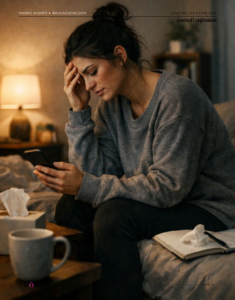
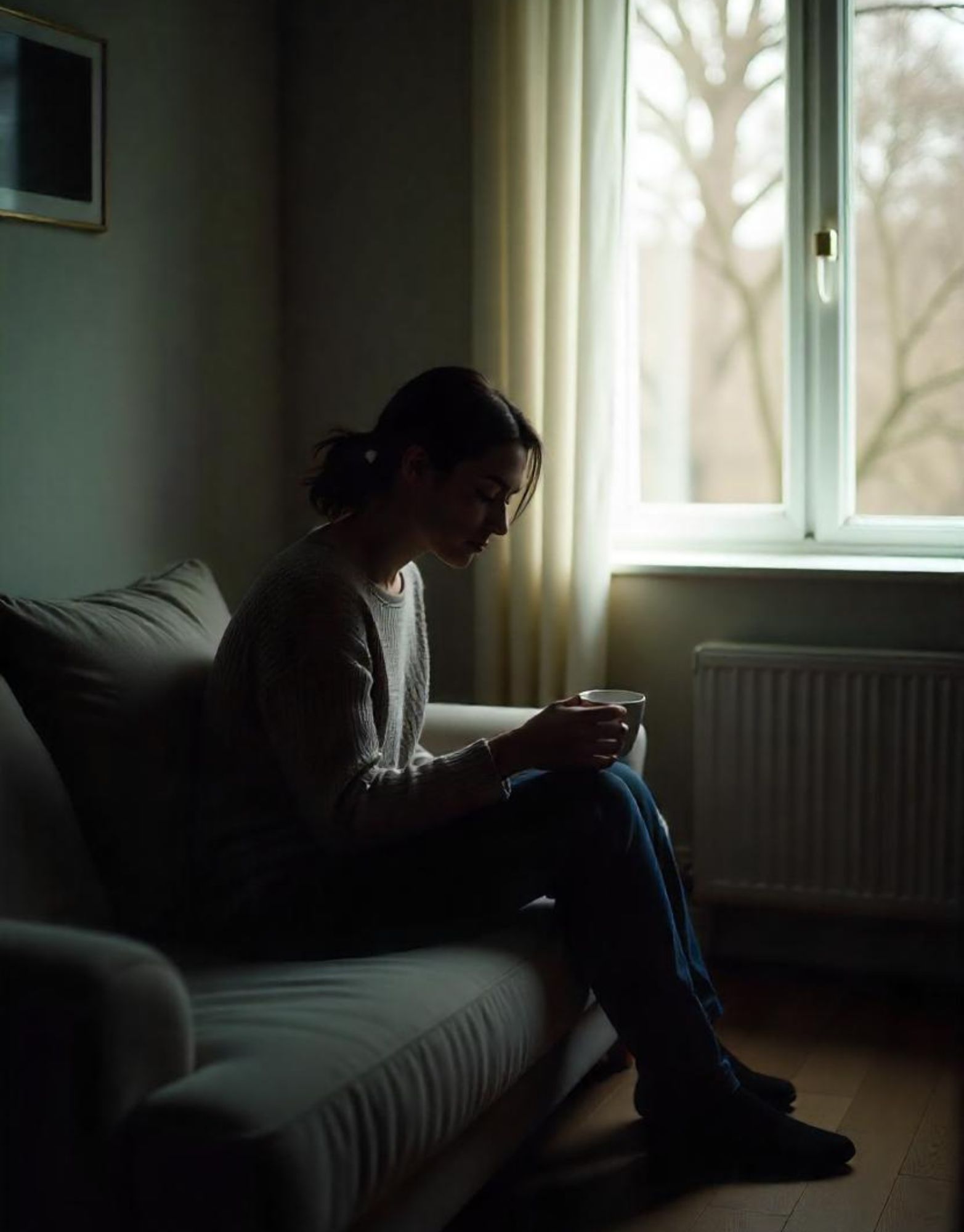
Some days I wish I had been born into a different family. Not because I hate mine but because loving them feels like carrying something sharp in my chest. And I’m tired of bleeding quietly.

Growing up, I always knew we were broken. Not in the loud, explosive way that draws attention, but in the silent, heavy kind of way that sits in your stomach and never moves. We didn’t talk much. We didn’t hug. We just existed in the same house, careful not to step on each other’s wounds.

My parents fought in ways that left bruises without fists. They used silence like a weapon. Days, sometimes weeks, would pass without a single word between them. And in that quiet, I learned to keep everything inside. I learned that emotions were dangerous. That vulnerability got punished. That love came with conditions.

I remember once, when I was about 13, I got second place in a school competition. I came home proud, smiling, certificate in hand. My dad barely looked up from the TV. My mom said, “So why didn’t you come first?” It wasn’t cruel. It was casual. Like disappointment was our family language.

I carried that memory for years. And it planted a voice in my head that still whispers, “You’re never enough.”

Now, I’m an adult. I live in another city. I have my own space, my own life, but the weight of that house still follows me. I find myself checking my tone too much in relationships. I say sorry even when I haven’t done anything wrong. I shut down when I feel too seen. I don’t know how to let people love me because I’m still waiting for them to find fault.

Last Christmas, I went home. I promised myself I’d be calm, patient, different. I lasted 36 hours before breaking down in the bathroom, sobbing into a towel because my mom had casually mocked my career again, said writing wasn’t “real work.” My dad just nodded. My brother scrolled through his phone.

I keep asking myself, “Why do I go back?” And the answer is simple: I still want their love. I still want the version of family I never had. I want to believe we can change. That maybe, with time, we’ll learn how to care without hurting.

But lately, I’ve been asking harder questions. Like: What if that never happens? What if loving them means losing myself?

I used to think boundaries were selfish. Now I know they’re survival. So I’ve started pulling back not out of hate, but out of self-preservation. I answer fewer calls. I skip the guilt-tripped visits. I let their comments roll off me, or at least I try.

I still love them. In a quiet, complicated way. But I’m learning that love isn’t always enough. Not when it leaves you broken.

I want to build something better for myself. A chosen family. A life where I don’t have to earn affection. Where “I’m proud of you” isn’t a phrase I’ve had to imagine hearing. Where safety doesn’t mean silence.

Some days I still ache for them to see me. To really see me. Not the child they expected, but the person I’ve become. I want to believe they’re trying, in their own way. But I also know that sometimes people don’t change. Not because they don’t love you, but because they never learned how.

And that’s the hardest part of growing up, accepting that healing might mean letting go.

So, this is my quiet confession:

I love my family.

But I don’t always like them.

And right now, that’s the most honest thing I can say.

Share:

Trending

Raising Women Magazine Issue 045 – June 2026

There is a difference between living and merely functioning.
Somewhere between the notifications, deadlines, responsibilities, ambitions, and endless demands of modern life, many of us have become exceptionally good at keeping going. We show up. We deliver. We carry. We cope. Yet beneath the appearance of productivity, an important question remains: are we truly well?
In this issue of Raising Women Magazine, we explore wellness not as a trend, but as a deeper conversation about humanity, health, purpose, and presence.
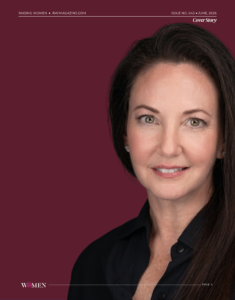
Our cover feature introduces Dr. Heidi Beilis, a pioneering physician helping to shape the future of healthcare through artificial intelligence. Her work reminds us that innovation is at its best when it serves people, particularly women whose lives may be transformed by earlier diagnoses and better outcomes.
Elsewhere, we explore grief, ambition, beauty, leadership, healthspan, rest, and the invisible burdens many women carry. We ask difficult questions about what it means to thrive, not simply survive.
As I wrote in this issue’s Find Her Light column, sometimes the rest we need is not sleep. Sometimes it is space. Sometimes it is perspective. Sometimes it is permission.
May these pages offer all three.

Raising Women Magazine Issue 044 – May 2026

There is something deeply revealing about the way a society treats its children. Not just in policy or parenting, but in the stories it tells them, the spaces it creates for them, and the kind of world it quietly prepares them to inherit. In this Children’s Day edition, Raising Women Magazine turns its attention to childhood itself, not as a sentimental phase of life, but as the foundation upon which identity, confidence, memory, and humanity are built.

Our cover star, Ms. Rachel, represents a refreshing reminder that gentleness still matters in an age of noise. Through patience, intentionality, and emotional safety, she has transformed songs and screen time into a global classroom for millions of children and families.

Across this issue, we explore the emotional architecture of childhood, from the girls who learn too early to shrink themselves, to the children quietly carrying adult burdens before they fully understand their own. We also interrogate modern parenting, digital culture, family, safety, and the futures young people are already shaping.

Because childhood is never just preparation for life.

In many ways, it is life itself.

The Family Tree Divide

What Women Are Given, and What They Build By Sipho Khumalo Two women walk into the same room. One is recognised before she speaks. The

Your guide to IVF and egg freezing in Korea

Empowering your family planning journey with curated fertility treatments at lower costs. Get our guide for Korea’s leading clinics, pricing and service breakdown.

Recommended News

Raising Women Magazine Issue 045 – June 2026

There is a difference between living and merely functioning.
Somewhere between the notifications, deadlines, responsibilities, ambitions, and endless demands of modern life, many of us have become exceptionally good at keeping going. We show up. We deliver. We carry. We cope. Yet beneath the appearance of productivity, an important question remains: are we truly well?
In this issue of Raising Women Magazine, we explore wellness not as a trend, but as a deeper conversation about humanity, health, purpose, and presence.
Our cover feature introduces Dr. Heidi Beilis, a pioneering physician helping to shape the future of healthcare through artificial intelligence. Her work reminds us that innovation is at its best when it serves people, particularly women whose lives may be transformed by earlier diagnoses and better outcomes.
Elsewhere, we explore grief, ambition, beauty, leadership, healthspan, rest, and the invisible burdens many women carry. We ask difficult questions about what it means to thrive, not simply survive.
As I wrote in this issue’s Find Her Light column, sometimes the rest we need is not sleep. Sometimes it is space. Sometimes it is perspective. Sometimes it is permission.
May these pages offer all three.

Raising Women Magazine Issue 044 – May 2026

There is something deeply revealing about the way a society treats its children. Not just in policy or parenting, but in the stories it tells them, the spaces it creates for them, and the kind of world it quietly prepares them to inherit. In this Children’s Day edition, Raising Women Magazine turns its attention to childhood itself, not as a sentimental phase of life, but as the foundation upon which identity, confidence, memory, and humanity are built.

Our cover star, Ms. Rachel, represents a refreshing reminder that gentleness still matters in an age of noise. Through patience, intentionality, and emotional safety, she has transformed songs and screen time into a global classroom for millions of children and families.

Across this issue, we explore the emotional architecture of childhood, from the girls who learn too early to shrink themselves, to the children quietly carrying adult burdens before they fully understand their own. We also interrogate modern parenting, digital culture, family, safety, and the futures young people are already shaping.

Because childhood is never just preparation for life.

In many ways, it is life itself.

The Family Tree Divide

What Women Are Given, and What They Build By Sipho Khumalo Two women walk into the same room. One is

First, Believe

By The Lulu They said the sky’s the limit But what if you’re still underground, still digging through the dirt