Spotlighting Remarkable Women and Girls

The Dark Skin Glow Up: The Dark Skin Glow Up:

By Yunik Treasure

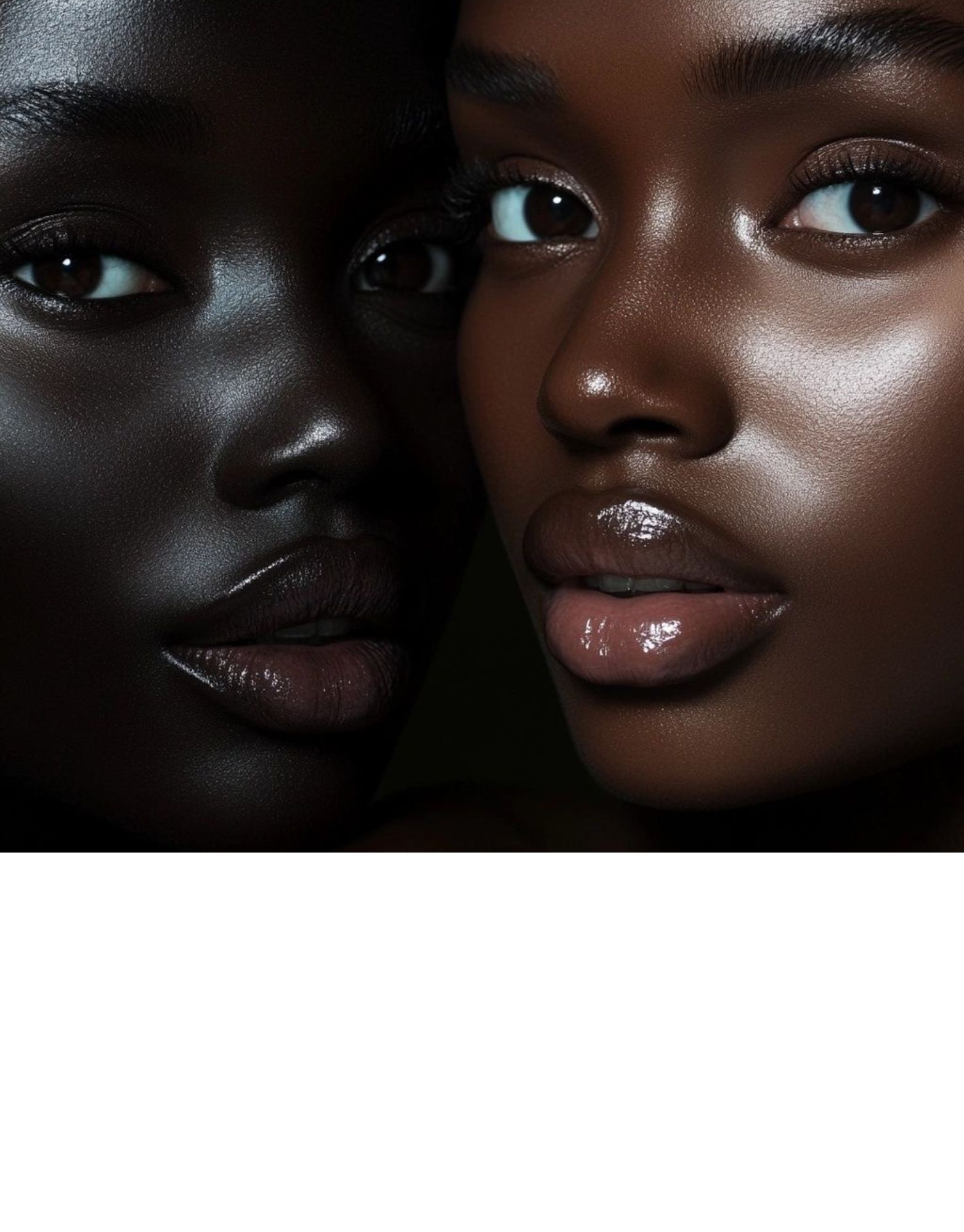
There was a time when dark-skinned women had better luck finding unicorns than foundation that matched. Makeup aisles were a parade of beiges with names like “ivory,” “sand,” and “nude,” as if deeper skin tones didn’t exist or worse, existed only in the margins.

Then along came 2017, and Rihanna did what beauty giants couldn’t be bothered to do. Fenty Beauty launched with 40 foundation shades, many of them for darker skin. And just like that, the industry got a reality check. The Fenty Effect wasn’t a fluke, it was a movement.

Sales spoke louder than excuses. According to a Harvard Business Review study, Fenty’s inclusive range helped it earn $100 million in its first 40 days. Other brands took notes, or rather, panicked. Suddenly, 10-shade ranges ballooned overnight. NARS, Uoma Beauty, and MAC expanded their offerings, while Maybelline’s Fit Me range became a go-to for melanin-rich shoppers on a budget.

Representation went beyond numbers. Brands began including dark-skinned models in campaigns, not as tokens but as the standard. Influencers like Jackie Aina and Nyma Tang used their platforms to spotlight shade disparities and hold brands accountable. They weren’t asking for handouts, they were demanding equality in a beauty industry built on exclusion.

And it worked. Sort of.

Plenty of brands now offer 30 or 40 shades, but there’s still a catch. Some of the deepest ones are mysteriously hard to find in physical stores. Online-only options mean women with rich complexions have to play a guessing game with undertones, swatches, and shipping fees. That’s not inclusivity, it’s inconvenience in a better dress.

Still, we’ve come a long way from the days of “close enough.” Foundation shades now account for undertones, skin conditions, and finish preferences. Whether you’re golden brown, deep olive, or espresso with a red hue, you’re no longer an afterthought. You’re the main character.

The dark-skin glow up isn’t just a win for makeup bags, it’s a shift in mindset. It proves what we’ve always known: when women of colour are seen, respected, and reflected, everyone wins.

And as for those brands still dragging their feet? We see you. And no, we’re not settling for “mocha-ish” ever again.


Share:

Trending

Raising Women Magazine Issue 38 – March 2026

As we approach International Women’s Day, we lean into this year’s agenda: Give to Gain. It is a simple phrase, yet profoundly strategic. Progress for women has never been sustained by visibility alone. It has been built through investment, mentorship, solidarity, and the deliberate transfer of opportunity.

On our cover, Ambassador Keisha McGuire represents this principle in motion. Her leadership in global diplomacy reminds us that when women give knowledge, courage, and access, they do not diminish their power. They multiply it.

This edition examines what it truly means to give: time, resources, platforms, protection, policy influence. And what we gain in return: stronger institutions, fairer systems, and a generation of women who enter rooms already prepared.

International Women’s Day is not a performance. It is a responsibility.

When women give intentionally, we all gain collectively.

The question is not whether we will celebrate. The question is how we will contribute.

Raising Women Magazine Issue 38 – March 2026

As we approach International Women’s Day, we lean into this year’s agenda: Give to Gain. It is a simple phrase, yet profoundly strategic. Progress for women has never been sustained by visibility alone. It has been built through investment, mentorship, solidarity, and the deliberate transfer of opportunity.

On our cover, Ambassador Keisha McGuire represents this principle in motion. Her leadership in global diplomacy reminds us that when women give knowledge, courage, and access, they do not diminish their power. They multiply it.

This edition examines what it truly means to give: time, resources, platforms, protection, policy influence. And what we gain in return: stronger institutions, fairer systems, and a generation of women who enter rooms already prepared.

International Women’s Day is not a performance. It is a responsibility.

When women give intentionally, we all gain collectively.

The question is not whether we will celebrate. The question is how we will contribute.

Your guide to IVF and egg freezing in Korea

Empowering your family planning journey with curated fertility treatments at lower costs. Get our guide for Korea’s leading clinics, pricing and service breakdown.

Recommended News

Raising Women Magazine Issue 38 – March 2026

As we approach International Women’s Day, we lean into this year’s agenda: Give to Gain. It is a simple phrase, yet profoundly strategic. Progress for women has never been sustained by visibility alone. It has been built through investment, mentorship, solidarity, and the deliberate transfer of opportunity.

On our cover, Ambassador Keisha McGuire represents this principle in motion. Her leadership in global diplomacy reminds us that when women give knowledge, courage, and access, they do not diminish their power. They multiply it.

This edition examines what it truly means to give: time, resources, platforms, protection, policy influence. And what we gain in return: stronger institutions, fairer systems, and a generation of women who enter rooms already prepared.

International Women’s Day is not a performance. It is a responsibility.

When women give intentionally, we all gain collectively.

The question is not whether we will celebrate. The question is how we will contribute.

Raising Women Magazine Issue 38 – March 2026

As we approach International Women’s Day, we lean into this year’s agenda: Give to Gain. It is a simple phrase, yet profoundly strategic. Progress for women has never been sustained by visibility alone. It has been built through investment, mentorship, solidarity, and the deliberate transfer of opportunity.

On our cover, Ambassador Keisha McGuire represents this principle in motion. Her leadership in global diplomacy reminds us that when women give knowledge, courage, and access, they do not diminish their power. They multiply it.

This edition examines what it truly means to give: time, resources, platforms, protection, policy influence. And what we gain in return: stronger institutions, fairer systems, and a generation of women who enter rooms already prepared.

International Women’s Day is not a performance. It is a responsibility.

When women give intentionally, we all gain collectively.

The question is not whether we will celebrate. The question is how we will contribute.