Spotlighting Remarkable Women and Girls

The Other Side of Motherhood: When the Path to Parenthood Doesn’t Go According to Plan

By Tilly Boateng

We love a neat narrative. Girl meets boy. They fall in love. She gets pregnant. Nine months later, there’s a baby and a happily ever after. Preferably with soft lighting, matching onesies, and a partner who cuts the umbilical cord.

But life isn’t a Pampers advert.

In reality, motherhood wears many faces. For some women, it’s a swift journey. For others, it’s a years-long saga involving syringes, strangers, and surgical scars. It can begin with prayer and end in adoption. It can begin with optimism and end in miscarriage. For millions, it never begins at all. Yet, we still hold “natural pregnancy” as the gold standard.

It’s time we ditched the outdated script and wrote new ones that reflect the messy, miraculous, often misunderstood ways women become mothers.

Natural Conception Isn’t Always Natural

The default expectation is clear. Get married, have sex, and let nature take its course. But for millions of couples, nature has other plans.

The World Health Organization reports that one in six people globally experience infertility. This statistic alone should reset how we speak about conception. For many women, what’s billed as a “natural” journey becomes an emotional obstacle course filled with timed sex, ovulation strips, and monthly heartbreak.

Despite the emotional toll, women often face thoughtless comments: “Just relax,” or “You’re trying too hard,” as if a positive mindset alone will unlock the uterus.

IUI and IVF: Love Meets Science

Enter the marvels of modern fertility treatment. Intrauterine insemination (IUI) and in vitro fertilisation (IVF) offer hope where biology falters.

IUI involves inserting sperm directly into the uterus at peak fertility. IVF is more intensive, involving hormonal stimulation, egg retrieval, fertilisation in a lab, and embryo transfer.

It sounds high-tech, but it feels deeply personal.

Women undergoing IVF experience hormonal chaos, physical exhaustion, and the constant anxiety of whether or not this attempt will be “the one.” It is expensive, both financially and emotionally. In the UK, one cycle can cost around £5,000, while in the U.S., the average is $12,000 to $15,000 per cycle, excluding medications.

Yet, critics still reduce it to “a shortcut.” There’s nothing short about injecting yourself daily, enduring bloating, bruises, and heartbreak, just to be told at the end that the embryo didn’t take.

C-Sections: The Stitches of Survival

If IVF is often dismissed as “unnatural,” Caesarean births face similar stigma. Roughly 21 percent of births worldwide occur via C-section, according to the WHO, yet women who don’t push their babies out are often told they didn’t “really” give birth.

C-sections are major surgeries. They save lives. They leave physical and emotional scars. Yet, a woman who delivers via C-section is still sometimes met with backhanded comments like, “At least you didn’t go through real labour.”

Let’s be clear. Real labour includes surviving pre-eclampsia, breech births, or placenta previa. Sometimes, strength looks like surrendering to the scalpel so both mother and baby live to tell the tale.

Donor Eggs and Sperm: Parenting Beyond DNA

Donor conception, using another person’s egg or sperm, has become a vital option for women with low ovarian reserve, same-sex couples, or individuals with genetic risks.

It’s a choice that comes with its own set of emotional hurdles. There’s the silent grief of losing a genetic connection, the fear of disclosure, and the worry about societal judgment.

But there is also empowerment in choosing to parent intentionally, to welcome a child through generosity and science. Love isn’t in the genes. It’s in the everyday care, the lullabies, the scraped knees, and the 2 a.m. feedings.

Still, critics ask, “Is the baby really yours?” Yes. Fully. Irrevocably. Because parenting is built in the doing, not the DNA.

Surrogacy: A Sacred Collaboration

Surrogacy is often the last stop on a long journey. For women with absent or damaged wombs, repeated miscarriages, or serious health conditions, this can be the only way to have a biological child.

It’s a complex arrangement that involves trust, transparency, and tenacity. Yet, it is one of the most scrutinised paths to motherhood.

When Chimamanda Ngozi Adichie revealed that she had welcomed twins through surrogacy, the response was split. Some congratulated her. Others whispered about why she kept it private, as if a woman’s womb is public property.

Surrogacy is not indulgence. It is sacrifice, by both the intending parent and the surrogate who carries the child. It’s time we stop treating it like a moral compromise.

Miscarriage: The Grief No One Brings Flowers For

Miscarriage is invisible pain. It doesn’t come with announcements or celebrations, but it leaves an aching emptiness that never fully disappears.

Globally, about one in four pregnancies end in miscarriage. Many women suffer silently, surrounded by baby showers and unsolicited advice.

People say, “At least it was early,” or “You can try again.” What they miss is that from the moment the line turned blue, the dream began. And when that dream ends abruptly, so does a part of the woman’s spirit.

The silence around miscarriage makes the pain worse. We need to make room for these stories, too.

Adoption: Chosen Love

For some women, motherhood doesn’t begin with a pregnancy test, but with a decision. Adoption is not a backup plan. It’s an act of fierce intentional love.

It’s also deeply complex. Prospective adoptive parents navigate background checks, home studies, and waiting lists. They often face uncomfortable questions like, “But don’t you want one of your own?” The truth is, they do. They just define “own” differently. And rightly so.

Adoption isn’t for the faint of heart. But it’s for the brave, the open, the ones who understand that family isn’t born, it’s built.

AI and Fertility Tech: The Future Is (Almost) Here

As fertility challenges grow, so does innovation. AI and tech are now entering the reproductive chat.

Apps like Ovia, Clue, and Natural Cycles use AI to track cycles, hormone levels, and predict fertile windows. Some even link with wearables that monitor basal temperature and other indicators to personalise fertility predictions.

Then there’s embryo grading powered by machine learning. Instead of relying on embryologists’ subjective views, AI algorithms now assess embryo viability, increasing IVF success rates.

Robotic surgery is enhancing precision in reproductive health procedures, while CRISPR gene editing continues to stir ethical debates around editing embryos for disease prevention or enhancement.

And what about IVG, in vitro gametogenesis? Scientists are exploring ways to create eggs and sperm from skin cells. If successful, it could offer hope for cancer survivors or same-sex couples wishing to have genetically related children.

The future is thrilling, but not without concern. Critics warn about over-commercialising fertility and argue that access remains limited to the wealthy. As with all innovation, equity must lead the conversation.

What the Critics Say

Critics of assisted reproduction and non-traditional parenting routes often lean into the idea that science is “interfering with nature.” They say motherhood should be “earned through suffering,” as if pain validates parenting.

They question surrogacy ethics, call donor conception unnatural, and brand C-sections as convenient. They romanticise vaginal birth, demonise fertility clinics, and reduce adoption to “Plan B.”

But here’s what they miss. Every woman who chooses an alternative path has already fought hard. She’s had to rewrite expectations, face stigma, and walk into rooms filled with judgment and still say, “I want to be a mother.”

There’s nothing unnatural about that.

Motherhood Reimagined

The truth is, every form of childbearing, whether natural or assisted, biological or adopted, requires immense strength. The woman who injects herself with hormones at dawn. The one who lies in an operating room. The woman who flies across countries to meet her adopted child. The one who miscarries and still smiles at baby announcements. These are the real heroines.

Motherhood isn’t a one-size-fits-all journey. It’s a mosaic of paths, each one shaped by love, longing, and often loss.

We must stop ranking these journeys. Stop asking, “Was it natural?” or “Did she carry the baby herself?” and start asking, “How can we support her better?”

Every Path is Valid

To every woman reading this who has felt “less than” because your route to motherhood didn’t follow the script, please know this.

You are not alone. You are not broken. You are not a footnote in someone else’s story. You are the story.

Whether you carried your child, adopted them, or are still trying, you are a mother in spirit and in strength. Whether you used IVF, a donor, a surrogate, or prayer, you did what it took. And that deserves honour, not shame.

We must raise awareness, raise standards, and raise each other.

Because raising women starts long before we raise children. And every journey, no matter how unconventional, is deeply, beautifully valid.

You’ve already done the most remarkable thing… you chose love. And love, in all its forms, is always enough.
Share:

Trending

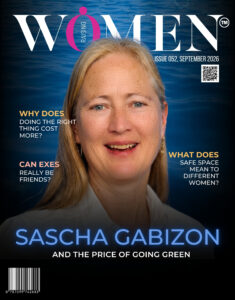
Raising Women Magazine Issue 52 – September 2026

This issue asks a deceptively simple question: can we save the planet without making ordinary people pay the highest price?
Our cover star, Sascha Gabizon, brings that question sharply into focus, challenging us to think about climate action not only through carbon, but through fairness, access and gender. Because going green sounds wonderful until sustainability becomes something only the wealthy can afford.
Across these pages, we follow climate change into unexpected places. Into our wardrobes, our food, our cultural traditions and even the price of our morning coffee. We also continue our important First Daughters conversation, explore what women really mean when they speak about safety, and look at 111 Miss World contestants whose purpose projects remind us that beauty today carries increasingly bigger expectations.
This edition is ultimately about responsibility, but responsibility shared fairly.
Because saving our planet cannot become another luxury.
And perhaps the greenest future is one everyone can actually afford.

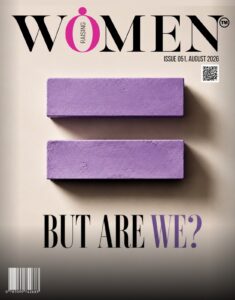
Raising Women Magazine Issue 051 – August 2026

Equal. Such a small word for such a complicated idea.

In this issue, we ask a question that feels almost impolite after decades of progress: women have more rights, education, income and influence than generations before us, but are we equal? We have travelled remarkably far, yet full global gender parity remains generations away. Apparently, equality is taking the scenic route.

Issue 51 looks beyond the equal sign to what equality actually feels like in women’s lives. We follow the money, the power and, importantly, the hours women still disproportionately spend caring. We also explore women’s old financial systems, workplace design, the soft life economy and the changing meaning of opportunity
.
Progress deserves celebration. But celebration should never make us complacent.

We have opened many doors.

Now we must ask what happens after women walk through them.

We are closer.

But are we there?
.

Raising Women Magazine Issue 050 – August 2026

Fifty issues. That feels worth pausing for.
Not because fifty is simply a lovely round number, but because every issue represents another opportunity to ask better questions about women, culture and the world we are building.
And Issue 50 certainly asks questions.
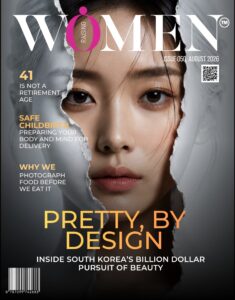
Our cover story, PRETTY, BY DESIGN, takes us to South Korea and its billion dollar pursuit of beauty, examining what happens when appearance becomes intertwined with confidence, opportunity and social capital. But before we become too fascinated by South Korea, perhaps we should check our own mirrors. The pursuit of “better” is increasingly global.
Elsewhere, we meet an Olympic champion who found gold at 41 and after motherhood, explore the AI gap reshaping women’s work, rediscover our grandmothers as archivists and ask why dinner now requires photography before eating.
Fifty editions later, Raising Women Magazine remains curious, global and committed to conversations that matter.
Here’s to 50.
And to everything we are still becoming.

Raising Women Magazine Issue 049 – August 2026

There is a quiet shift taking place in the stories women are telling.

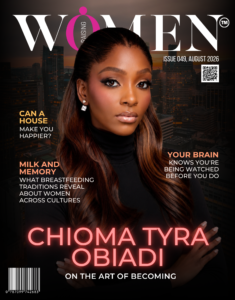
For years, success was measured by titles, milestones, and visibility. Today, we are asking deeper questions. What does influence look like? Who is changing the world? Which friendships shape the women we become? And how do we carry our heritage into a future we are helping to build?

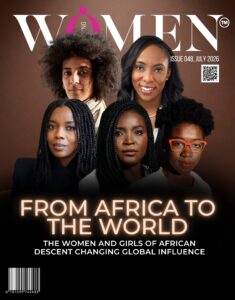
This edition celebrates women and girls of African descent whose ideas, courage, creativity, and leadership are reshaping global conversations. Our cover feature is a reminder that Africa is not waiting to be discovered. It is already influencing the future through remarkable women whose work is changing industries, communities, and generations.

Alongside these inspiring stories, we explore the quiet power of friendship, the economics of modern womanhood, fashion’s changing priorities, and the cultural moments defining our time.

At Raising Women Magazine, we remain committed to one belief: when women rise with purpose, they do not simply change their own stories. They expand what the world believes is possible.

Your guide to IVF and egg freezing in Korea

Empowering your family planning journey with curated fertility treatments at lower costs. Get our guide for Korea’s leading clinics, pricing and service breakdown.

Recommended News

Raising Women Magazine Issue 52 – September 2026

This issue asks a deceptively simple question: can we save the planet without making ordinary people pay the highest price?
Our cover star, Sascha Gabizon, brings that question sharply into focus, challenging us to think about climate action not only through carbon, but through fairness, access and gender. Because going green sounds wonderful until sustainability becomes something only the wealthy can afford.
Across these pages, we follow climate change into unexpected places. Into our wardrobes, our food, our cultural traditions and even the price of our morning coffee. We also continue our important First Daughters conversation, explore what women really mean when they speak about safety, and look at 111 Miss World contestants whose purpose projects remind us that beauty today carries increasingly bigger expectations.
This edition is ultimately about responsibility, but responsibility shared fairly.
Because saving our planet cannot become another luxury.
And perhaps the greenest future is one everyone can actually afford.

Raising Women Magazine Issue 051 – August 2026

Equal. Such a small word for such a complicated idea.

In this issue, we ask a question that feels almost impolite after decades of progress: women have more rights, education, income and influence than generations before us, but are we equal? We have travelled remarkably far, yet full global gender parity remains generations away. Apparently, equality is taking the scenic route.

Issue 51 looks beyond the equal sign to what equality actually feels like in women’s lives. We follow the money, the power and, importantly, the hours women still disproportionately spend caring. We also explore women’s old financial systems, workplace design, the soft life economy and the changing meaning of opportunity
.
Progress deserves celebration. But celebration should never make us complacent.

We have opened many doors.

Now we must ask what happens after women walk through them.

We are closer.

But are we there?
.

Raising Women Magazine Issue 050 – August 2026

Fifty issues. That feels worth pausing for.
Not because fifty is simply a lovely round number, but because every issue represents another opportunity to ask better questions about women, culture and the world we are building.
And Issue 50 certainly asks questions.
Our cover story, PRETTY, BY DESIGN, takes us to South Korea and its billion dollar pursuit of beauty, examining what happens when appearance becomes intertwined with confidence, opportunity and social capital. But before we become too fascinated by South Korea, perhaps we should check our own mirrors. The pursuit of “better” is increasingly global.
Elsewhere, we meet an Olympic champion who found gold at 41 and after motherhood, explore the AI gap reshaping women’s work, rediscover our grandmothers as archivists and ask why dinner now requires photography before eating.
Fifty editions later, Raising Women Magazine remains curious, global and committed to conversations that matter.
Here’s to 50.
And to everything we are still becoming.

Raising Women Magazine Issue 049 – August 2026

There is a quiet shift taking place in the stories women are telling.

For years, success was measured by titles, milestones, and visibility. Today, we are asking deeper questions. What does influence look like? Who is changing the world? Which friendships shape the women we become? And how do we carry our heritage into a future we are helping to build?

This edition celebrates women and girls of African descent whose ideas, courage, creativity, and leadership are reshaping global conversations. Our cover feature is a reminder that Africa is not waiting to be discovered. It is already influencing the future through remarkable women whose work is changing industries, communities, and generations.

Alongside these inspiring stories, we explore the quiet power of friendship, the economics of modern womanhood, fashion’s changing priorities, and the cultural moments defining our time.

At Raising Women Magazine, we remain committed to one belief: when women rise with purpose, they do not simply change their own stories. They expand what the world believes is possible.

Raising Women Magazine Issue 048 – July 2026

There is a quiet shift taking place in the stories women are telling.

For years, success was measured by titles, milestones, and visibility. Today, we are asking deeper questions. What does influence look like? Who is changing the world? Which friendships shape the women we become? And how do we carry our heritage into a future we are helping to build?

This edition celebrates women and girls of African descent whose ideas, courage, creativity, and leadership are reshaping global conversations. Our cover feature is a reminder that Africa is not waiting to be discovered. It is already influencing the future through remarkable women whose work is changing industries, communities, and generations.

Alongside these inspiring stories, we explore the quiet power of friendship, the economics of modern womanhood, fashion’s changing priorities, and the cultural moments defining our time.

At Raising Women Magazine, we remain committed to one belief: when women rise with purpose, they do not simply change their own stories. They expand what the world believes is possible.