By Tilly Boateng
Ink and Identity: How Refugee Women Preserve History on Their Skin
When homes vanish and official records disappear, some displaced women are turning to an unexpected archive: their skin. These tattoos, once cultural adornments, now serve as living memorials of identity, lineage, and resistance.
Amazigh (Berber) Women of North Africa
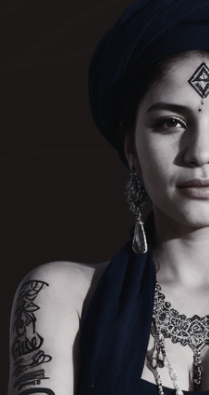
Amazigh women in Morocco, Algeria, Tunisia, and neighboring regions have long inscribed intricate geometric tattoos on their faces, hands, and ankles. These inked symbols signified tribal affiliation, marital status, fertility, and protection from evil. Though urbanization and religious conservatism caused this practice to fade, a revival is underway. Refugee and migrant Amazigh women in Europe are re-embracing these traditional marks, reconnecting with ancestors and asserting cultural identity. Tunisian tattooist Manel Mahdouani is bringing these designs to younger generations, framing each as “a woman’s history written on her,” even calling them a “Facebook wall” of personal and tribal memory.
Kurdish Deq Tattoos Across the Diaspora
In Kurdish communities spanning Syria, Turkey, Iraq, Iran, and the diaspora, the ancient art of deq (or xal) adorns chins, foreheads, hands, even breasts and feet. These tattoos, crafted by poking soot-and-breast-milk ink into the skin, marked personal milestones, tribal identity, spiritual protection, and fertility. Though suppressed by Islamic norms and state policies, deq is seeing revival. In Diyarbakır, Turkey, artist Fatê Temel became one of the few modern practitioners, using traditional ink to reconnect clients with their disappearing culture. In European diasporas, including Portugal artist Elu Aiyana continues the tradition, using deq to spiritually bridge fragmented Kurdish identities. In Kobane refugee camps, elders like Safi Haso recount how once “all Kurdish women had them,” with tattoos seen as diaries of womanhood and survival.
Bedouin Women of the Middle East
Nomadic Bedouin women, particularly in Jordan and Sinai traditionally tattooed their hands, faces, and arms via hand‑poking. These marks symbolized protection, health, tribal identity, and important life events. Though mostly found now on older generations, tattoos occasionally remain in regional camps and villages. Historical studies reinforce that Bedouin tattoos served multiple functions, including medicinal purposes and defense against the evil eye.
Body as Archive, Resistance, and Healing
For refugee women, tattoos offer more than cultural value, they restore agency. Choosing symbols, enduring the pain, and permanently marking the body becomes an act of control amid displacement. Psychologists note tattooing or even drawing personal symbols on the body can help build emotional resilience by reconnecting women to their heritage and giving them a tangible reminder of self amid upheaval.
In contexts where official identification is lost, skin becomes a living archive. It carries the names of absent loved ones, images of vanished homelands, and ancient prayers. Tattooed skin is more than ink, it’s memory, protest, and survival.
A Permanent Statement
In landscapes shaped by borders and laws, refugee women are writing their own histories on their skin. These tattoos are not simply art or tradition; they stand for defiance: “We are still here. We remember. We endure.”