Spotlighting Remarkable Women and Girls

Scrappy, Bold, and Brilliant: 6 Refugee-Fueled Ventures You Should Know About

By Chloe Beaufoy

In a world that often defines refugees by what they’ve lost, these businesses flip the script. They are proof that resilience, when mixed with a little creativity and the right kind of stub-bornness, can become a thriving enterprise. From kitchens in Lebanese camps to coding hubs in Iraq, these ventures aren’t waiting for permission to shine, they’re already doing it.

So, we’re spotlighting six standouts. Three are led by refugees. Three support displaced communities in remarkable ways. All are powered by women, or built to benefit them. And yes, they are very much magazine-worthy.

  1. Haven Coffee (London)

This isn’t your average latte stop.

Founded by Usman Khalid, a refugee from Pakistan, Haven Coffee serves more than caffeine. It brews second chances. The café offers barista training to other refugees, while hosting open-mic nights, creative showcases, and art exhibitions. Think of it as a community center disguised as a coffee shop.

People don’t just come here to sip, they come to be

What We Love About It

Every cup tells a story, and in this space, refugees are more than headlines. They’re artists, poets, and baristas with big dreams and sharp pour-over skills.

2. Soufra Kitchen (Beirut)

Soufra didn’t start in a five-star kitchen. It started in a refugee camp.

Mariam Shaar, a Palestinian woman born and raised in Bourj el-Barajneh camp, decided to rewrite the narrative. She launched a catering business inside the camp, hiring other women and reviving traditional Palestinian recipes. The result? A full-fledged food enterprise that now includes a food truck, a cookbook, and a documentary backed by Susan Sarandon.

What We Love About It

Food is home, and in Soufra’s kitchen, every dish is saying that culture survives, even when countries collapse.

3. Re:Coded (Middle East)

Refugee women writing code? Yes, and they’re good at it.

Re:Coded runs coding bootcamps in Iraq, Turkey, Yemen, and Lebanon, offering displaced youth and many of them women, the tools to build tech careers. This isn’t a nonprofit that teaches people to fish. It teaches them to build the app that sells the fish, delivers it, and automates the customer service.

What We Love About It

Refugee talent doesn’t need pity. It needs WiFi, mentorship, and someone to believe it belongs in the tech room.

4. Inkomoko (East Africa)

Inkomoko is a mouthful, but the meaning is simple. It means “origin” in Kinyarwanda. And the work this company does? It’s about starting over.

Operating in Kenya, Rwanda, Ethiopia, and South Sudan, Inkomoko provides business support to refugee entrepreneurs. They offer loans, mentorship, and practical skills, helping women go from “I just arrived” to “I just hired three people.”

What We Love About It

Economic freedom is the first real step to healing. And when refugee women start earning, they start rebuilding entire communities.

5. Forward·Inc (Netherlands)

Forward·Inc is what happens when startup culture meets refugee grit.

This Dutch-based platform helps refugee entrepreneurs develop real-world businesses through coaching, funding access, and startup weekends. Since 2017, over 100 ventures have been born out of the program, many led by women.

One standout? A Syrian fashion designer who now runs her own ethical fashion line in Rotterdam, using upcycled fabrics and refugee seamstresses. That’s not just business. That’s impact.

What We Love About It

With the right support, refugee women stop surviving and start innovating.

6. FORGE (Zambia and Botswana)

FORGE is the kind of organization that doesn’t just “help.” It listens.

Founded by a college student who spent time volunteering in Zambian refugee camps, FORGE now supports women-led initiatives within refugee communities. From running libraries to launching cooperatives, their model gives the power back to the people actually living the refugee experience.

What We Love About It

Real impact doesn’t happen for displaced women. It happens with them.

What This Means for Us

These six businesses do more than inspire. They disrupt.

They remind us that displaced doesn’t mean erased. That refugee isn’t a permanent identity. That with access, women will create, trade, build, and flourish even in the most uncertain terrain.

So when we talk about this idea of Refugee Renaissance, this is what we mean. Not charity. Not headlines. Not pity. Just women doing what they’ve always done, taking the pieces and building something whole.

Want to Support?

Here’s the beauty of it. You don’t have to hop on a plane or volunteer in a camp to support these businesses.

  • Order coffee from Haven online.
  • Follow Soufra on social media and share their story.
  • Invest time or funds into tech education via Re:Coded.
  • Recommend Inkomoko to anyone launching a refugee-led venture.
  • Sign up to mentor a woman through Forward·Inc.
  • Donate or amplify the work of FORGE in Southern Africa.

Every little act helps fuel the renaissance.

In The End

If there’s one thing refugee women know how to do, it’s make something from nothing. A quilt from scraps. A meal from memory. A business from survival.

And that’s the heartbeat of this edition. Refugee women are not waiting to be saved. They’re already saving what matters, culture, community, and dignity. One business at a time.

A practical directory covering licensed online casinos that accept e-wallet payments in Australia is https://mirpurgeneralhospitalbd.com/list-of-e-wallet-casinos-in-australia/. The page outlines common payment methods, mentions australian online casinos with ewallets, and can help players identify sites that support faster withdrawal e wallet casinos and deposit using ewallet in australia.
Share:

Trending

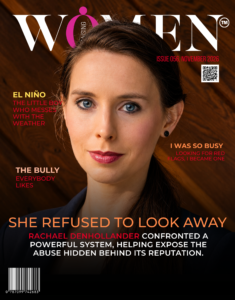
Raising Women Magazine Issue 56 – November 2026

The Courage to Question
We live in a world where reputation often arrives before character, popularity masquerades as goodness, and questioning authority can make you the problem. Apparently, being respected is sometimes mistaken for being beyond reproach.
Our cover woman, Rachael Denhollander, reminds us why that distinction matters. Her courage in confronting institutional abuse challenges us to reconsider what safety, justice and accountability truly mean.

Elsewhere, we explore the judgement surrounding childbirth, the invisible labour behind successful careers, the beauty industry’s obsession with perfection, and why women can cook the same meal as men yet receive considerably less applause.

From fashion and culture to relationships and motherhood, Issue 56 invites us to examine the assumptions we have inherited, including those we unknowingly perpetuate.

Because progress is not simply about celebrating extraordinary women. It is about creating a world where ordinary women and girls are heard, valued and protected.

And sometimes, change begins with refusing to look away.

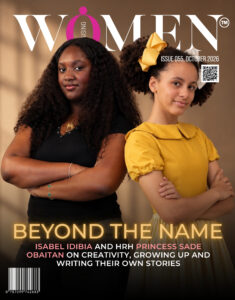
Raising Women Magazine Issue 55 – October 2026

We spend a remarkable amount of time telling girls who they should become, often before they have finished discovering who they are. Apparently, growing up comes with a job description nobody remembers applying for.

In Issue 55, our cover girls, Isabel Idibia and Princess Sade Obaitan, remind us that famous surnames and royal titles may introduce you, but they should never define you.

From girls conquering oceans and swimming pools to conversations about beauty, culture and ambition, this edition examines the expectations we inherit and the courage required to question them.

In Find Her Light, I also reflect on the careers I might have pursued and why discovering another gift does not invalidate the life we have already built.

Perhaps that is the lesson running through these pages: identity is not a finished manuscript.

Every girl deserves the freedom to write her own story. And every woman deserves another chapter.

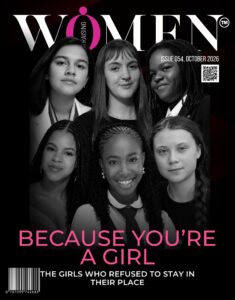
Raising Women Magazine Issue 54 – October 2026

“Because you’re a girl.”
Four little words that have spent generations doing an extraordinary amount of damage. Apparently, ambition, intelligence and audacity were once considered rather unladylike.
Fortunately, the girls featured in our 54th edition missed that memo.
As we celebrate the International Day of the Girl Child, we spotlight twelve remarkable girls rewriting the rules, while reminding ourselves that a girl should not need extraordinary achievements to deserve ordinary opportunities.
We also explore the expectations that complicate girlhood, the childhood wounds we carry into adulthood and, in my Find Her Light reflection, why the girl I once was might have a few lessons for the woman I have become.
Perhaps our greatest responsibility is not simply raising girls to conquer the world, but ensuring they never have to shrink themselves to belong in it.
Because you’re a girl?
What a wonderful reason to dream without limits.

Your guide to IVF and egg freezing in Korea

Empowering your family planning journey with curated fertility treatments at lower costs. Get our guide for Korea’s leading clinics, pricing and service breakdown.

Recommended News

Raising Women Magazine Issue 56 – November 2026

The Courage to Question
We live in a world where reputation often arrives before character, popularity masquerades as goodness, and questioning authority can make you the problem. Apparently, being respected is sometimes mistaken for being beyond reproach.
Our cover woman, Rachael Denhollander, reminds us why that distinction matters. Her courage in confronting institutional abuse challenges us to reconsider what safety, justice and accountability truly mean.

Elsewhere, we explore the judgement surrounding childbirth, the invisible labour behind successful careers, the beauty industry’s obsession with perfection, and why women can cook the same meal as men yet receive considerably less applause.

From fashion and culture to relationships and motherhood, Issue 56 invites us to examine the assumptions we have inherited, including those we unknowingly perpetuate.

Because progress is not simply about celebrating extraordinary women. It is about creating a world where ordinary women and girls are heard, valued and protected.

And sometimes, change begins with refusing to look away.

Raising Women Magazine Issue 55 – October 2026

We spend a remarkable amount of time telling girls who they should become, often before they have finished discovering who they are. Apparently, growing up comes with a job description nobody remembers applying for.

In Issue 55, our cover girls, Isabel Idibia and Princess Sade Obaitan, remind us that famous surnames and royal titles may introduce you, but they should never define you.

From girls conquering oceans and swimming pools to conversations about beauty, culture and ambition, this edition examines the expectations we inherit and the courage required to question them.

In Find Her Light, I also reflect on the careers I might have pursued and why discovering another gift does not invalidate the life we have already built.

Perhaps that is the lesson running through these pages: identity is not a finished manuscript.

Every girl deserves the freedom to write her own story. And every woman deserves another chapter.

Raising Women Magazine Issue 54 – October 2026

“Because you’re a girl.”
Four little words that have spent generations doing an extraordinary amount of damage. Apparently, ambition, intelligence and audacity were once considered rather unladylike.
Fortunately, the girls featured in our 54th edition missed that memo.
As we celebrate the International Day of the Girl Child, we spotlight twelve remarkable girls rewriting the rules, while reminding ourselves that a girl should not need extraordinary achievements to deserve ordinary opportunities.
We also explore the expectations that complicate girlhood, the childhood wounds we carry into adulthood and, in my Find Her Light reflection, why the girl I once was might have a few lessons for the woman I have become.
Perhaps our greatest responsibility is not simply raising girls to conquer the world, but ensuring they never have to shrink themselves to belong in it.
Because you’re a girl?
What a wonderful reason to dream without limits.

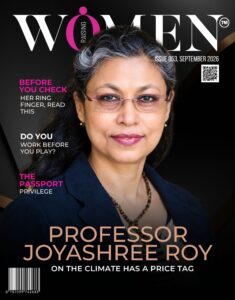
Raising Women Magazine Issue 53 – September 2026

Apparently, saving the planet comes with a shopping list. Solar panels, electric cars, sustainable fashion and, preferably, a bank account that understands the assignment.

In Issue 53, our cover woman, Professor Joyashree Roy, challenges us to reconsider what sustainability really costs, who pays, and why the cheapest choices today may leave tomorrow’s generations with the bill.

But this issue is also about the invisible price tags attached to everyday life. From passport privilege and the cultural expectations of a “good woman” to motherhood, personal boundaries and the delicate art of enjoying life before finishing every task, we examine the systems shaping our choices.

We also celebrate women turning overlooked problems into extraordinary opportunities.

Perhaps progress begins when we stop asking only what things cost and start asking what they are worth.

A better world should not be a luxury reserved for those who can afford it.
Happy reading!

.

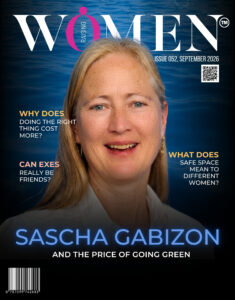
Raising Women Magazine Issue 52 – September 2026

This issue asks a deceptively simple question: can we save the planet without making ordinary people pay the highest price?
Our cover star, Sascha Gabizon, brings that question sharply into focus, challenging us to think about climate action not only through carbon, but through fairness, access and gender. Because going green sounds wonderful until sustainability becomes something only the wealthy can afford.
Across these pages, we follow climate change into unexpected places. Into our wardrobes, our food, our cultural traditions and even the price of our morning coffee. We also continue our important First Daughters conversation, explore what women really mean when they speak about safety, and look at 111 Miss World contestants whose purpose projects remind us that beauty today carries increasingly bigger expectations.
This edition is ultimately about responsibility, but responsibility shared fairly.
Because saving our planet cannot become another luxury.
And perhaps the greenest future is one everyone can actually afford.