Spotlighting Remarkable Women and Girls

The Woman Who Bottled Emotion and Branded the World’s Noses

By Chloe Beaufoy

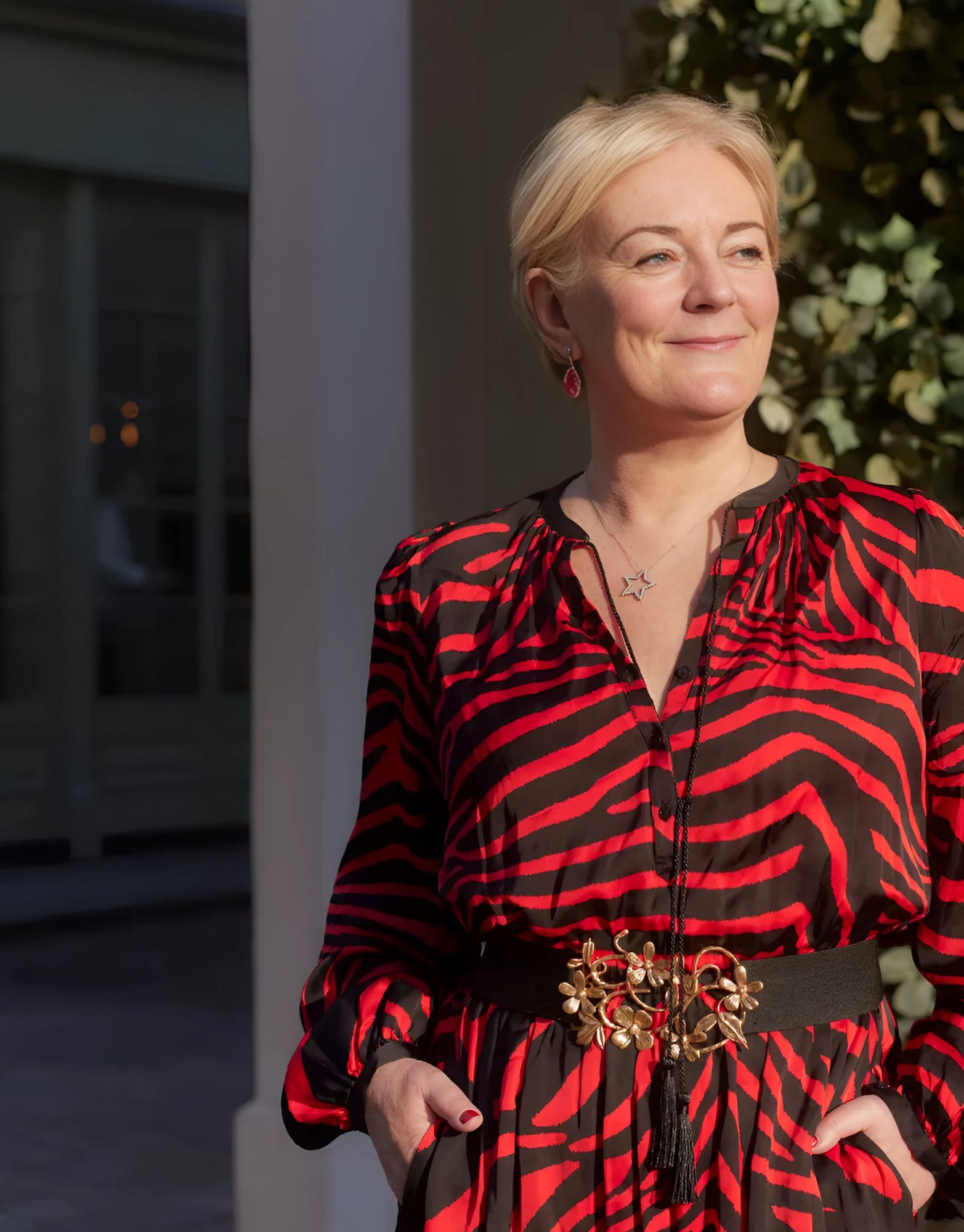
If ever there were proof that scent is more than fragrance, it is Jo Malone. She is not just the name behind a perfume empire. She is the woman who turned her own life story into a globally recognizable brand, bottled with elegance, wrapped in truth, and tied with a black ribbon.

Born Joanne Lesley Malone in 1963, Jo grew up in a council flat in Kent, helping her mother, who was a beautician, mix face creams in their kitchen. She was diagnosed with severe dyslexia and left school at fifteen to support her family. She has described her early life as one of resourcefulness rather than luxury. “I grew up in a home that had a lot of love but very little money,” she told The Guardian. “But I never saw that as a disadvantage.”

From Kitchen Creams to a Global Fragrance Empire

Her journey into fragrance was accidental and instinctive. Working as a facial therapist, she began gifting her clients bespoke bath oils made in her kitchen. They loved them so much that she began taking orders. In 1994, she opened her first shop in London. Within a few years, Jo Malone London became synonymous with understated luxury and uniquely layered scents. Think Lime Basil and Mandarin or Pomegranate Noir. Scents that feel like a walk through Kensington Gardens in early autumn or a memory of Sunday morning citrus on the skin.

By 1999, Estée Lauder came calling. Jo sold her brand to the beauty giant but stayed on as Creative Director until 2006. In theory, she had reached the height of her career. In reality, her life was about to unravel. A year after the sale, Jo was diagnosed with an aggressive form of breast cancer. She went through a double mastectomy and chemotherapy. “I thought I was going to die,” she told BBC Woman’s Hour. “And then I realised I had not finished telling my story.”

That story would find its next chapter in 2011, when Jo launched a new venture, Jo Loves. A completely different company, but still unmistakably hers. “Jo Malone is the story of my past,” she said in an interview with The Telegraph. “Jo Loves is the story of my future.”

Jo Loves: A New Chapter in Scent and Self

Jo Loves is bold, expressive, and delightfully sensory. It is built on memories , like the first scent she created for the brand, Pomelo, inspired by holidays in the Mediterranean. The Fragrance Paintbrush, one of the brand’s most popular inventions, lets you swipe perfume on your skin like watercolour. It is scent as art, experience, and emotion.

Despite the commercial success, Jo has always been honest about the personal toll of entrepreneurship. She speaks openly about imposter syndrome, mental health, and the sheer exhaustion that comes with building empires. “I do not always feel brave,” she said during her Desert Island Discs interview. “But I have learnt how to be resilient.”

Her resilience is not just in surviving cancer, it is in rebuilding after walking away from the empire that bore her name. Imagine watching your name become a global brand you no longer own. Jo had to start from scratch. Again. “When I sold my name, I sold part of my soul,” she confessed in her autobiography Jo Malone: My Story.

But starting again gave her freedom. Jo Loves is not just a brand, it is a reclamation. Today, the store on Elizabeth Street in London is more than a boutique, it is a sensory playground. You can personalise your candles, layer your scents, or attend one of her signature Tapas-style fragrance sessions.

Her creativity continues to push boundaries. She has spoken about scent being the most emotionally powerful of all the senses. “A fragrance should make your heart skip a beat,” she once told Vogue UK. Her genius lies in making the invisible unforgettable.

Outside of fragrance, Jo is a vocal advocate for women in business, mentoring young entrepreneurs and sharing her story at events across the UK. She is also involved in philanthropic work, particularly in support of breast cancer charities and mental health awareness. In 2018, she was made a CBE for services to the British economy and the GREAT Britain campaign.

From Signature Scents to Spirited New Ventures

So what is Jo Malone up to now? Still innovating. Still dreaming in scent. Her most recent creations from Jo Loves include Eucalyptus and Cedar Woods, and Golden Gardenia, each layered with her signature blend of story and sophistication. She remains hands-on in her business, often found at the store speaking with customers, testing products, and teaching her team to pay attention to the details no one sees but everyone feels.

But Jo’s creativity does not stop at fragrance. In 2023, she made headlines again with the unexpected yet elegantly executed launch of Jo Vodka , a new line of luxury British vodkas. Inspired by her passion for sensory experiences and crafted with the same precision and storytelling that defines her perfumes, Jo Vodka is her bold leap into the world of spirits. The brand is sleek, minimalist, and undeniably Jo. “I wanted to create something that was clean, confident and quietly luxurious,” she shared with The Times. “Just like a fragrance, it should evoke something memorable.”

With Jo Vodka, she is once again proving that storytelling is not limited to scent or skin. It can live in a bottle, be poured over ice, and still carry the imprint of a woman who refuses to be boxed in. What makes Jo Malone boldly beautiful is not just that she built two iconic brands. It is that she has done so while embracing vulnerability as strength. Her story is one of constant reinvention, of knowing when to let go and when to start again. She teaches us that success is not linear, that your name can leave the building and your spirit can still build again.

In a world that often rewards noise, Jo chose nuance. In a market saturated with sameness, she bottled memory. And in doing so, she reminded women everywhere that elegance can be loud, quiet, or whatever you choose to make it, as long as it is yours. In a world that often rewards noise, Jo chose nuance. In a market saturated with sameness, she bottled memory. And in doing so, she reminded women everywhere that elegance can be loud, quiet, or whatever you choose to make it, as long as it is yours.

Her life, like her fragrances , and now her vodka , lingers long after the moment. And that, dear reader, is how you build a legacy that smells and tastes like nothing else in the room.
Share:

Trending

Raising Women Magazine Issue 56 – November 2026

The Courage to Question
We live in a world where reputation often arrives before character, popularity masquerades as goodness, and questioning authority can make you the problem. Apparently, being respected is sometimes mistaken for being beyond reproach.
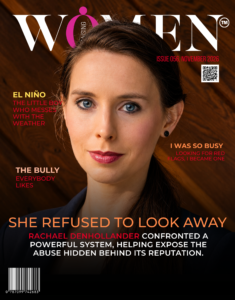
Our cover woman, Rachael Denhollander, reminds us why that distinction matters. Her courage in confronting institutional abuse challenges us to reconsider what safety, justice and accountability truly mean.

Elsewhere, we explore the judgement surrounding childbirth, the invisible labour behind successful careers, the beauty industry’s obsession with perfection, and why women can cook the same meal as men yet receive considerably less applause.

From fashion and culture to relationships and motherhood, Issue 56 invites us to examine the assumptions we have inherited, including those we unknowingly perpetuate.

Because progress is not simply about celebrating extraordinary women. It is about creating a world where ordinary women and girls are heard, valued and protected.

And sometimes, change begins with refusing to look away.

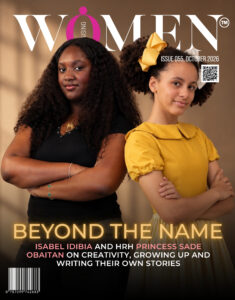
Raising Women Magazine Issue 55 – October 2026

We spend a remarkable amount of time telling girls who they should become, often before they have finished discovering who they are. Apparently, growing up comes with a job description nobody remembers applying for.

In Issue 55, our cover girls, Isabel Idibia and Princess Sade Obaitan, remind us that famous surnames and royal titles may introduce you, but they should never define you.

From girls conquering oceans and swimming pools to conversations about beauty, culture and ambition, this edition examines the expectations we inherit and the courage required to question them.

In Find Her Light, I also reflect on the careers I might have pursued and why discovering another gift does not invalidate the life we have already built.

Perhaps that is the lesson running through these pages: identity is not a finished manuscript.

Every girl deserves the freedom to write her own story. And every woman deserves another chapter.

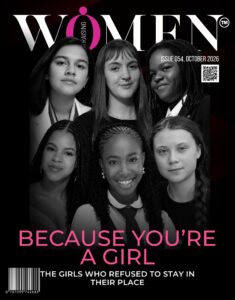
Raising Women Magazine Issue 54 – October 2026

“Because you’re a girl.”
Four little words that have spent generations doing an extraordinary amount of damage. Apparently, ambition, intelligence and audacity were once considered rather unladylike.
Fortunately, the girls featured in our 54th edition missed that memo.
As we celebrate the International Day of the Girl Child, we spotlight twelve remarkable girls rewriting the rules, while reminding ourselves that a girl should not need extraordinary achievements to deserve ordinary opportunities.
We also explore the expectations that complicate girlhood, the childhood wounds we carry into adulthood and, in my Find Her Light reflection, why the girl I once was might have a few lessons for the woman I have become.
Perhaps our greatest responsibility is not simply raising girls to conquer the world, but ensuring they never have to shrink themselves to belong in it.
Because you’re a girl?
What a wonderful reason to dream without limits.

Your guide to IVF and egg freezing in Korea

Empowering your family planning journey with curated fertility treatments at lower costs. Get our guide for Korea’s leading clinics, pricing and service breakdown.

Recommended News

Raising Women Magazine Issue 56 – November 2026

The Courage to Question
We live in a world where reputation often arrives before character, popularity masquerades as goodness, and questioning authority can make you the problem. Apparently, being respected is sometimes mistaken for being beyond reproach.
Our cover woman, Rachael Denhollander, reminds us why that distinction matters. Her courage in confronting institutional abuse challenges us to reconsider what safety, justice and accountability truly mean.

Elsewhere, we explore the judgement surrounding childbirth, the invisible labour behind successful careers, the beauty industry’s obsession with perfection, and why women can cook the same meal as men yet receive considerably less applause.

From fashion and culture to relationships and motherhood, Issue 56 invites us to examine the assumptions we have inherited, including those we unknowingly perpetuate.

Because progress is not simply about celebrating extraordinary women. It is about creating a world where ordinary women and girls are heard, valued and protected.

And sometimes, change begins with refusing to look away.

Raising Women Magazine Issue 55 – October 2026

We spend a remarkable amount of time telling girls who they should become, often before they have finished discovering who they are. Apparently, growing up comes with a job description nobody remembers applying for.

In Issue 55, our cover girls, Isabel Idibia and Princess Sade Obaitan, remind us that famous surnames and royal titles may introduce you, but they should never define you.

From girls conquering oceans and swimming pools to conversations about beauty, culture and ambition, this edition examines the expectations we inherit and the courage required to question them.

In Find Her Light, I also reflect on the careers I might have pursued and why discovering another gift does not invalidate the life we have already built.

Perhaps that is the lesson running through these pages: identity is not a finished manuscript.

Every girl deserves the freedom to write her own story. And every woman deserves another chapter.

Raising Women Magazine Issue 54 – October 2026

“Because you’re a girl.”
Four little words that have spent generations doing an extraordinary amount of damage. Apparently, ambition, intelligence and audacity were once considered rather unladylike.
Fortunately, the girls featured in our 54th edition missed that memo.
As we celebrate the International Day of the Girl Child, we spotlight twelve remarkable girls rewriting the rules, while reminding ourselves that a girl should not need extraordinary achievements to deserve ordinary opportunities.
We also explore the expectations that complicate girlhood, the childhood wounds we carry into adulthood and, in my Find Her Light reflection, why the girl I once was might have a few lessons for the woman I have become.
Perhaps our greatest responsibility is not simply raising girls to conquer the world, but ensuring they never have to shrink themselves to belong in it.
Because you’re a girl?
What a wonderful reason to dream without limits.

Raising Women Magazine Issue 53 – September 2026

Apparently, saving the planet comes with a shopping list. Solar panels, electric cars, sustainable fashion and, preferably, a bank account that understands the assignment.

In Issue 53, our cover woman, Professor Joyashree Roy, challenges us to reconsider what sustainability really costs, who pays, and why the cheapest choices today may leave tomorrow’s generations with the bill.

But this issue is also about the invisible price tags attached to everyday life. From passport privilege and the cultural expectations of a “good woman” to motherhood, personal boundaries and the delicate art of enjoying life before finishing every task, we examine the systems shaping our choices.

We also celebrate women turning overlooked problems into extraordinary opportunities.

Perhaps progress begins when we stop asking only what things cost and start asking what they are worth.

A better world should not be a luxury reserved for those who can afford it.
Happy reading!

.

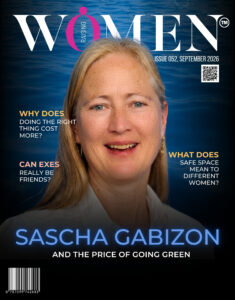
Raising Women Magazine Issue 52 – September 2026

This issue asks a deceptively simple question: can we save the planet without making ordinary people pay the highest price?
Our cover star, Sascha Gabizon, brings that question sharply into focus, challenging us to think about climate action not only through carbon, but through fairness, access and gender. Because going green sounds wonderful until sustainability becomes something only the wealthy can afford.
Across these pages, we follow climate change into unexpected places. Into our wardrobes, our food, our cultural traditions and even the price of our morning coffee. We also continue our important First Daughters conversation, explore what women really mean when they speak about safety, and look at 111 Miss World contestants whose purpose projects remind us that beauty today carries increasingly bigger expectations.
This edition is ultimately about responsibility, but responsibility shared fairly.
Because saving our planet cannot become another luxury.
And perhaps the greenest future is one everyone can actually afford.