Spotlighting Remarkable Women and Girls

Wife at Home, Boss at Work?

The Debate on Shrinking and Showing Up

By May Ikeora-Amamgbo

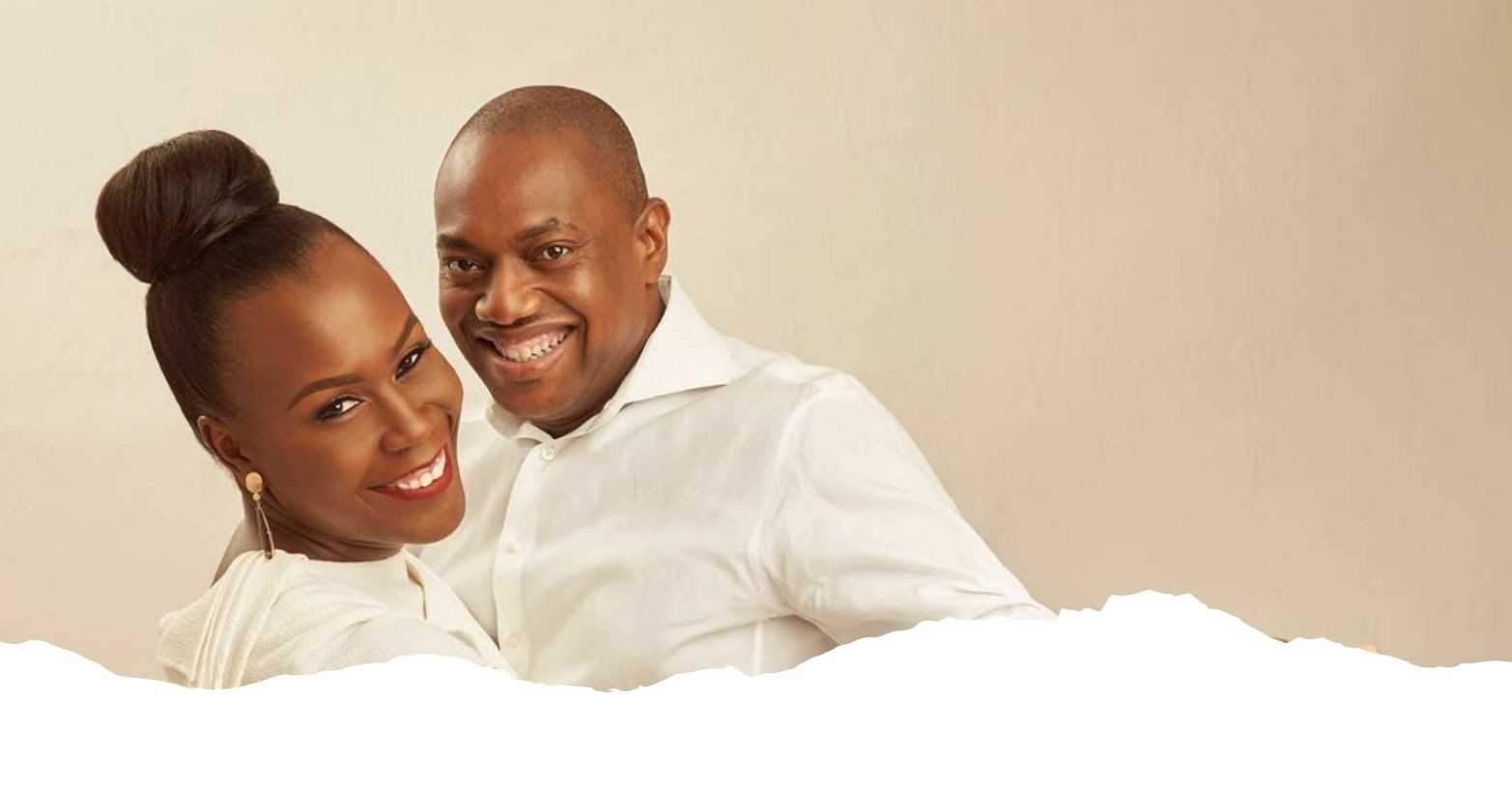
When renowned beauty entrepreneur Tara Fela-Durotoye the pioneering force behind House of Tara recently resurfaced in a viral video clip, saying that though she is the CEO and Founder of House of Tara, at home she is simply “Fela Durotoye’s wife,” the internet lit up faster than a makeup tutorial on a Monday morning.

Her full quote?

“When you become a powerful woman, if you don’t put boundaries in place as a married woman, that marriage cannot work… I am CEO and Founder of House of Tara, but when I get to Fela Durotoye’s house, I am Fela Durotoye’s wife. Your husband did not marry your title. He married you.”

The line was part of a longer, nuanced speech. But in the very nature of today’s social media, context is often the first casualty. Words get clipped, quoted, and catapulted across timelines, igniting conversations that blur intention. We can’t control what people choose to spotlight or when a remark becomes a flashpoint in public discourse.

At first glance, Tara’s comment came across as a thoughtful reflection on emotional boundaries and humility in marriage. But by the time it made the rounds courtesy of @thetattlerroomng the responses were anything but serene. Think pots boiling, tables shaking, timelines spiralling.

Some women saw wisdom. Others saw red.

“Shrink to Fit?” The Internet Reacts

Instagram users didn’t hold back and the comments were as layered as a well-contoured cheekbone.

@madamkeji wrote: “It is so disappointing to see successful women diminish, shrink and dismiss themselves and their success because of their husbands. These are people young girls are looking up to.”

@LionessAtEase was far less forgiving: “When we build the new Nigeria, married Nigerian women will not be having access to microphones in public… You people will not keep coming out to perpetuate harmful rhetoric that endangers women in marriage.”

@kssinzop added fire to the flame: “Why are Nigerians so ashamed of success? Why does a successful woman cause so much intimidation and headache?”

The frustration wasn’t just about Tara it was about a pattern. About how often powerful women are expected to apologise for their brilliance the moment marriage enters the chat.

About the generational fatigue of being told to adjust, adapt, and shrink to fit societal expectations.

@Drahkmaz summed it up: “Maybe the reason why so many women are rebelling is because for too long we’ve been told to shrink ourselves for men’s comfort.”

But not everyone saw it as a call to dim one’s light. Some saw wisdom in her words a subtle message about harmony over hierarchy.

@kaffyscollections_ offered a gentler perspective: “Dropping titles at home doesn’t make you less of who you are; it shows emotional intelligence and wisdom in building a peaceful home.”

@bade_ogbonyomi echoed the sentiment from a man’s lens:

“Same goes for us men. At home, you’re a husband and dad, not a director. That’s how homes work.”

Even @thevellabrand urged the public to take a beat: “Let’s listen to the full message before we conclude. Context is everything. Tara doesn’t look like marriage shrank her. She flies. And probably has a husband who lets her soar.”

Still, the emotional undercurrent was clear: many women are tired. Tired of performing submission, of hearing that softness equals survival, of having to “balance” when men are rarely asked to do the same.

Which raises a rather juicy question:

When you walk through the door after running your empire, must you take your crown off at the door? Or is it possible to wear it gracefully in every room?

Let’s unpack.

The Case for Wearing Different Hats

One could argue that Tara’s advice is about adaptability not erasure. Many agree that relationships thrive when we learn how to switch gears.

As a 40-year-old entrepreneur and mother of three shared during a community chat: “My husband doesn’t need the CEO version of me when we’re arguing about why our child won’t eat vegetables.”

It’s not about being less than, but about knowing which parts of yourself are needed where. And honestly, emotional intelligence sometimes looks like pausing your boardroom voice in a bedroom discussion.

Many agree that successful relationships, especially marriages, require compromise, mutual respect, and the ability to read the room. If your partner sees you only through the lens of your professional accolades, how do you both hold space for intimacy, vulnerability, and shared growth? As one witty commenter put it: “Softness is a strategy. Being a wife is not a demotion it’s just another role I play, and I wear it well.”

But… Why Must Women Always Be the Ones to Shrink?

Here’s where the conversation gets thorny. Why is this message almost exclusively directed at women? Where are the calls for men to hang up their alpha armour at the door?

@ebuka_iruke said it best: “Same goes for the man actually. At home, they are husband and wife, not CEO and co-founder.”

Yet in real life, the emotional labour of shrinking, silencing, and shifting often falls on the woman’s shoulders. It’s no wonder many younger women are exhausted by the whole charade.

@Drahkmaz: “Maybe the reason why many women are rebelling is because way too many people keep telling them to shrink themselves for the approval of men.”

@feis_tea didn’t hold back: “This is what Nigerian women are raised with, and you wonder why some women want to die instead ontop marriage.”

These aren’t just clapbacks they’re collective sighs. Women want love, not less of themselves.

So, What’s the Middle Ground?

It’s possible both camps are right and wrong.

Marriage isn’t a boardroom. But neither is it a prison cell. The real question is: can we be both powerful and partnered without apology? Can we be tender without being diminished?

The answer might lie in intention. If a woman chooses to “come home as a wife,” let it be her choice not a social requirement. And if a man loves a powerful woman, he must learn to hold her power gently not fear it.

Let’s stop turning “wife” into a synonym for less.

Tara Fela-Durotoye did not ask women to erase themselves. But her words ignited something deeper, a conversation about the invisible rules African women are still expected to obey in the name of love.

When you look at her journey and that of her husband, Fela Durotoye, they strike you as a couple who thrive on mutual success. In fact, I’d wager Fela finds Tara even more attractive in her full brilliance.

As someone newly married, I see shades of this in my own life. My husband sometimes proudly calls me “Dr Mayyy” (emphasis always on the ‘Dr’) usually in moments when I do something that reminds him of my essence. And though at home I’m simply May Amamgbo, I’ve grown even more ambitious, more inspired to reach for my highest self because he fans that fire.

We celebrate the brilliance we bring from our respective callings, but even more, we enjoy the richness of who we are beyond our titles. We complement. We partner. We play.

But here’s the truth: not every partner can do both. And not everyone should have to. Maybe, just maybe, we don’t need to choose between being “boss” and being “beloved.”

Maybe the real task is to stop performing peace at the expense of self and start creating relationships where every version of us is welcome.

As one user so perfectly put it:

Now that’s a perspective we can all mascara to.

“I’m a lioness at work, a dove at home and both versions of me deserve to exist, unapologetically.”

What’s your take? Join the conversation at @rwimagazine on Instagram and tell us how you showup in love and leadership.

An independent online guide summarizes licensed Australian casino sites and common features relevant to local players, including pokies, bonuses and deposit options. The resource describes typical payment methods and points to considerations for security and licensing. It is written for readers who want a general orientation rather than regulatory or legal advice. The page may help those comparing platforms or payment flows to form focused follow‑up questions. https://thelostbooks.org/best-online-australian-casino-insights/

Share:

Trending

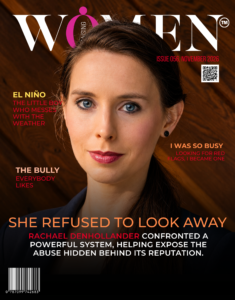
Raising Women Magazine Issue 56 – November 2026

The Courage to Question
We live in a world where reputation often arrives before character, popularity masquerades as goodness, and questioning authority can make you the problem. Apparently, being respected is sometimes mistaken for being beyond reproach.
Our cover woman, Rachael Denhollander, reminds us why that distinction matters. Her courage in confronting institutional abuse challenges us to reconsider what safety, justice and accountability truly mean.

Elsewhere, we explore the judgement surrounding childbirth, the invisible labour behind successful careers, the beauty industry’s obsession with perfection, and why women can cook the same meal as men yet receive considerably less applause.

From fashion and culture to relationships and motherhood, Issue 56 invites us to examine the assumptions we have inherited, including those we unknowingly perpetuate.

Because progress is not simply about celebrating extraordinary women. It is about creating a world where ordinary women and girls are heard, valued and protected.

And sometimes, change begins with refusing to look away.

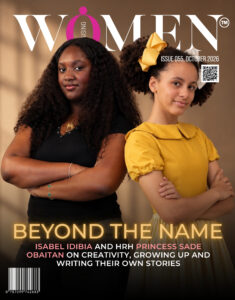
Raising Women Magazine Issue 55 – October 2026

We spend a remarkable amount of time telling girls who they should become, often before they have finished discovering who they are. Apparently, growing up comes with a job description nobody remembers applying for.

In Issue 55, our cover girls, Isabel Idibia and Princess Sade Obaitan, remind us that famous surnames and royal titles may introduce you, but they should never define you.

From girls conquering oceans and swimming pools to conversations about beauty, culture and ambition, this edition examines the expectations we inherit and the courage required to question them.

In Find Her Light, I also reflect on the careers I might have pursued and why discovering another gift does not invalidate the life we have already built.

Perhaps that is the lesson running through these pages: identity is not a finished manuscript.

Every girl deserves the freedom to write her own story. And every woman deserves another chapter.

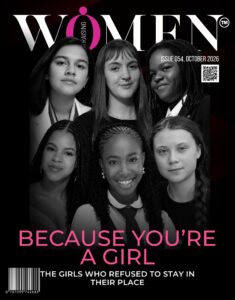
Raising Women Magazine Issue 54 – October 2026

“Because you’re a girl.”
Four little words that have spent generations doing an extraordinary amount of damage. Apparently, ambition, intelligence and audacity were once considered rather unladylike.
Fortunately, the girls featured in our 54th edition missed that memo.
As we celebrate the International Day of the Girl Child, we spotlight twelve remarkable girls rewriting the rules, while reminding ourselves that a girl should not need extraordinary achievements to deserve ordinary opportunities.
We also explore the expectations that complicate girlhood, the childhood wounds we carry into adulthood and, in my Find Her Light reflection, why the girl I once was might have a few lessons for the woman I have become.
Perhaps our greatest responsibility is not simply raising girls to conquer the world, but ensuring they never have to shrink themselves to belong in it.
Because you’re a girl?
What a wonderful reason to dream without limits.

Your guide to IVF and egg freezing in Korea

Empowering your family planning journey with curated fertility treatments at lower costs. Get our guide for Korea’s leading clinics, pricing and service breakdown.

Recommended News

Raising Women Magazine Issue 56 – November 2026

The Courage to Question
We live in a world where reputation often arrives before character, popularity masquerades as goodness, and questioning authority can make you the problem. Apparently, being respected is sometimes mistaken for being beyond reproach.
Our cover woman, Rachael Denhollander, reminds us why that distinction matters. Her courage in confronting institutional abuse challenges us to reconsider what safety, justice and accountability truly mean.

Elsewhere, we explore the judgement surrounding childbirth, the invisible labour behind successful careers, the beauty industry’s obsession with perfection, and why women can cook the same meal as men yet receive considerably less applause.

From fashion and culture to relationships and motherhood, Issue 56 invites us to examine the assumptions we have inherited, including those we unknowingly perpetuate.

Because progress is not simply about celebrating extraordinary women. It is about creating a world where ordinary women and girls are heard, valued and protected.

And sometimes, change begins with refusing to look away.

Raising Women Magazine Issue 55 – October 2026

We spend a remarkable amount of time telling girls who they should become, often before they have finished discovering who they are. Apparently, growing up comes with a job description nobody remembers applying for.

In Issue 55, our cover girls, Isabel Idibia and Princess Sade Obaitan, remind us that famous surnames and royal titles may introduce you, but they should never define you.

From girls conquering oceans and swimming pools to conversations about beauty, culture and ambition, this edition examines the expectations we inherit and the courage required to question them.

In Find Her Light, I also reflect on the careers I might have pursued and why discovering another gift does not invalidate the life we have already built.

Perhaps that is the lesson running through these pages: identity is not a finished manuscript.

Every girl deserves the freedom to write her own story. And every woman deserves another chapter.

Raising Women Magazine Issue 54 – October 2026

“Because you’re a girl.”
Four little words that have spent generations doing an extraordinary amount of damage. Apparently, ambition, intelligence and audacity were once considered rather unladylike.
Fortunately, the girls featured in our 54th edition missed that memo.
As we celebrate the International Day of the Girl Child, we spotlight twelve remarkable girls rewriting the rules, while reminding ourselves that a girl should not need extraordinary achievements to deserve ordinary opportunities.
We also explore the expectations that complicate girlhood, the childhood wounds we carry into adulthood and, in my Find Her Light reflection, why the girl I once was might have a few lessons for the woman I have become.
Perhaps our greatest responsibility is not simply raising girls to conquer the world, but ensuring they never have to shrink themselves to belong in it.
Because you’re a girl?
What a wonderful reason to dream without limits.

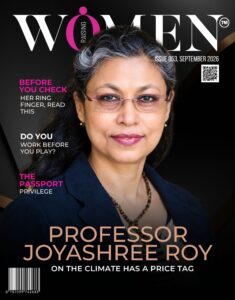
Raising Women Magazine Issue 53 – September 2026

Apparently, saving the planet comes with a shopping list. Solar panels, electric cars, sustainable fashion and, preferably, a bank account that understands the assignment.

In Issue 53, our cover woman, Professor Joyashree Roy, challenges us to reconsider what sustainability really costs, who pays, and why the cheapest choices today may leave tomorrow’s generations with the bill.

But this issue is also about the invisible price tags attached to everyday life. From passport privilege and the cultural expectations of a “good woman” to motherhood, personal boundaries and the delicate art of enjoying life before finishing every task, we examine the systems shaping our choices.

We also celebrate women turning overlooked problems into extraordinary opportunities.

Perhaps progress begins when we stop asking only what things cost and start asking what they are worth.

A better world should not be a luxury reserved for those who can afford it.
Happy reading!

.

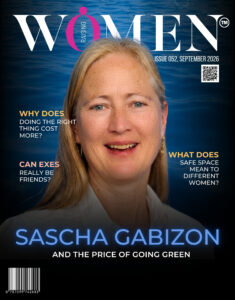
Raising Women Magazine Issue 52 – September 2026

This issue asks a deceptively simple question: can we save the planet without making ordinary people pay the highest price?
Our cover star, Sascha Gabizon, brings that question sharply into focus, challenging us to think about climate action not only through carbon, but through fairness, access and gender. Because going green sounds wonderful until sustainability becomes something only the wealthy can afford.
Across these pages, we follow climate change into unexpected places. Into our wardrobes, our food, our cultural traditions and even the price of our morning coffee. We also continue our important First Daughters conversation, explore what women really mean when they speak about safety, and look at 111 Miss World contestants whose purpose projects remind us that beauty today carries increasingly bigger expectations.
This edition is ultimately about responsibility, but responsibility shared fairly.
Because saving our planet cannot become another luxury.
And perhaps the greenest future is one everyone can actually afford.