Spotlighting Remarkable Women and Girls

Codes at the Table: Convenience or Culinary Buzzkill?

By Tom Connelly

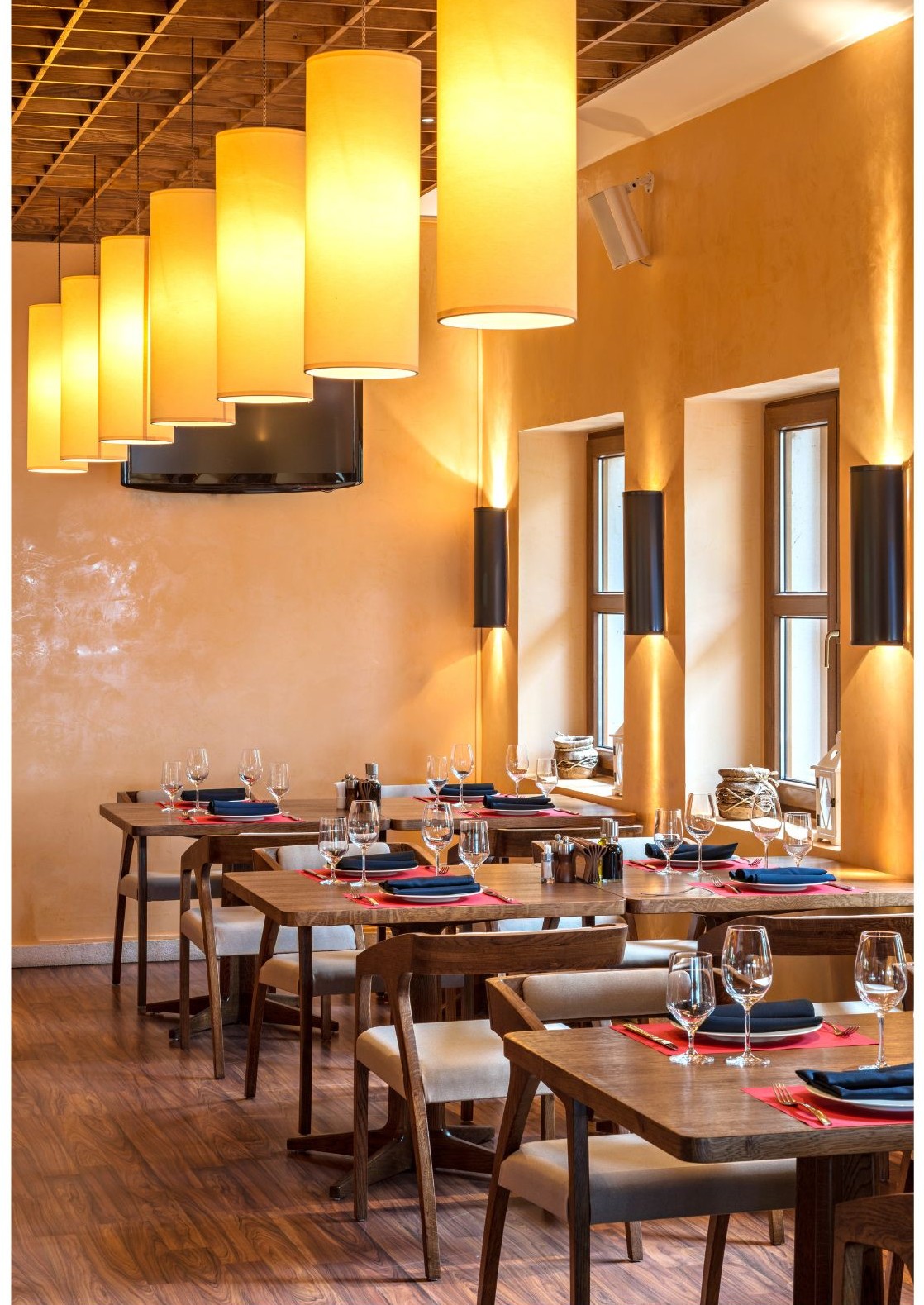
A few years ago, when you sat down at a restaurant, a friendly waiter would hand you a menu of something you could hold, read, and share with others at the table. Today, many restaurants ask you to scan a QR code instead. With a quick click on your phone, the menu pops up on your screen.

It may sound easy and modern, but not everyone is happy about it. Some love the change. Others feel like it takes away from the fun of going out to eat. So, are QR codes making dining better or worse?

Why Restaurants Use QR Codes

QR codes became popular during the COVID-19 pandemic. They helped restaurants stay safe by avoiding shared menus that many people touched. But even now, many restaurants still use them.

Why? Because they’re cheap and easy. Restaurants don’t have to print menus or worry about updating them. If something runs out in the kitchen, they can remove it from the online menu in seconds. If they want to change prices or add a new dish, it’s just a few clicks.

Some digital menus also show pictures, give information about ingredients, or even let customers place their orders and pay. This saves time for both the kitchen and the servers.

Also, for people who use phones often, it can feel quick and familiar. One scan, and the menu is right there.

Why Many Diners Feel Frustrated

Even with all the benefits, many people don’t like using QR code menus.

First, not everyone has a smartphone or wants to use one while eating. Older adults, people with vision problems, or those who aren’t comfortable with technology may struggle. They might feel left out or embarrassed asking for help.

Second, looking at a phone during a meal can feel cold. Dining is about enjoying food and talking with others. When everyone is staring at their screens, it’s easy to forget that you’re sharing a moment together. It’s not just a meal, it’s an experience.

Also, QR code menus can feel like extra work. Instead of asking the server about the menu or the day’s specials, customers have to figure it all out on their own. Some online menus are hard to read or confusing. That can be stressful, especially if you’re hungry and just want to order something tasty and fast.

What We’re Missing Without Paper Menus

A printed menu adds to the dining experience. It gives you something to touch and look through. You can pass it to a friend, point to your favorite dish, or ask the waiter about it.

Many people also feel more relaxed when they can hold a real menu. It’s easier to flip back and forth between sections and take your time choosing. A well-made menu can show off the restaurant’s style and personality in a way a phone screen just can’t.

Some diners say they feel rushed with QR menus. There’s no server guiding you, no small talk, and no special feeling. It can start to feel like you’re eating at a machine instead of being served by people who care.

Can There Be a Balance?

The problem isn’t technology itself, it’s how we use it.

Some restaurants are finding smart ways to blend both worlds. They offer printed menus but also place QR codes on the table for those who prefer them. Some use QR codes only for paying or checking drink specials, keeping the full food menu on paper.

Other restaurants are working on better digital menus that feel more welcoming, with photos, fun designs, and even stories about the dishes. The key is to give customers a choice and make sure everyone feels comfortable.

What Diners Really Want

At the end of the day, going out to eat is about more than just the food. It’s about how the experience makes you feel. A great meal should be warm, welcoming, and shared.

Some people like the speed of QR codes. Others miss the charm of a real menu. The best restaurants try to offer both and let customers decide what works for them.

Because when you sit at a table, you want more than a meal. You want connection, comfort, and care. And sometimes, that starts with something as simple as being handed a menu with a smile.

Share:

Trending

Raising Women Magazine Issue 56 – November 2026

The Courage to Question
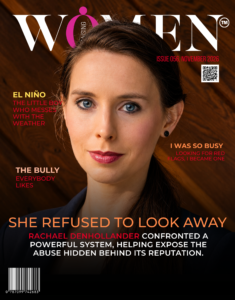
We live in a world where reputation often arrives before character, popularity masquerades as goodness, and questioning authority can make you the problem. Apparently, being respected is sometimes mistaken for being beyond reproach.
Our cover woman, Rachael Denhollander, reminds us why that distinction matters. Her courage in confronting institutional abuse challenges us to reconsider what safety, justice and accountability truly mean.

Elsewhere, we explore the judgement surrounding childbirth, the invisible labour behind successful careers, the beauty industry’s obsession with perfection, and why women can cook the same meal as men yet receive considerably less applause.

From fashion and culture to relationships and motherhood, Issue 56 invites us to examine the assumptions we have inherited, including those we unknowingly perpetuate.

Because progress is not simply about celebrating extraordinary women. It is about creating a world where ordinary women and girls are heard, valued and protected.

And sometimes, change begins with refusing to look away.

Raising Women Magazine Issue 55 – October 2026

We spend a remarkable amount of time telling girls who they should become, often before they have finished discovering who they are. Apparently, growing up comes with a job description nobody remembers applying for.

In Issue 55, our cover girls, Isabel Idibia and Princess Sade Obaitan, remind us that famous surnames and royal titles may introduce you, but they should never define you.

From girls conquering oceans and swimming pools to conversations about beauty, culture and ambition, this edition examines the expectations we inherit and the courage required to question them.

In Find Her Light, I also reflect on the careers I might have pursued and why discovering another gift does not invalidate the life we have already built.

Perhaps that is the lesson running through these pages: identity is not a finished manuscript.

Every girl deserves the freedom to write her own story. And every woman deserves another chapter.

Raising Women Magazine Issue 54 – October 2026

“Because you’re a girl.”
Four little words that have spent generations doing an extraordinary amount of damage. Apparently, ambition, intelligence and audacity were once considered rather unladylike.
Fortunately, the girls featured in our 54th edition missed that memo.
As we celebrate the International Day of the Girl Child, we spotlight twelve remarkable girls rewriting the rules, while reminding ourselves that a girl should not need extraordinary achievements to deserve ordinary opportunities.
We also explore the expectations that complicate girlhood, the childhood wounds we carry into adulthood and, in my Find Her Light reflection, why the girl I once was might have a few lessons for the woman I have become.
Perhaps our greatest responsibility is not simply raising girls to conquer the world, but ensuring they never have to shrink themselves to belong in it.
Because you’re a girl?
What a wonderful reason to dream without limits.

Your guide to IVF and egg freezing in Korea

Empowering your family planning journey with curated fertility treatments at lower costs. Get our guide for Korea’s leading clinics, pricing and service breakdown.

Recommended News

Raising Women Magazine Issue 56 – November 2026

The Courage to Question
We live in a world where reputation often arrives before character, popularity masquerades as goodness, and questioning authority can make you the problem. Apparently, being respected is sometimes mistaken for being beyond reproach.
Our cover woman, Rachael Denhollander, reminds us why that distinction matters. Her courage in confronting institutional abuse challenges us to reconsider what safety, justice and accountability truly mean.

Elsewhere, we explore the judgement surrounding childbirth, the invisible labour behind successful careers, the beauty industry’s obsession with perfection, and why women can cook the same meal as men yet receive considerably less applause.

From fashion and culture to relationships and motherhood, Issue 56 invites us to examine the assumptions we have inherited, including those we unknowingly perpetuate.

Because progress is not simply about celebrating extraordinary women. It is about creating a world where ordinary women and girls are heard, valued and protected.

And sometimes, change begins with refusing to look away.

Raising Women Magazine Issue 55 – October 2026

We spend a remarkable amount of time telling girls who they should become, often before they have finished discovering who they are. Apparently, growing up comes with a job description nobody remembers applying for.

In Issue 55, our cover girls, Isabel Idibia and Princess Sade Obaitan, remind us that famous surnames and royal titles may introduce you, but they should never define you.

From girls conquering oceans and swimming pools to conversations about beauty, culture and ambition, this edition examines the expectations we inherit and the courage required to question them.

In Find Her Light, I also reflect on the careers I might have pursued and why discovering another gift does not invalidate the life we have already built.

Perhaps that is the lesson running through these pages: identity is not a finished manuscript.

Every girl deserves the freedom to write her own story. And every woman deserves another chapter.

Raising Women Magazine Issue 54 – October 2026

“Because you’re a girl.”
Four little words that have spent generations doing an extraordinary amount of damage. Apparently, ambition, intelligence and audacity were once considered rather unladylike.
Fortunately, the girls featured in our 54th edition missed that memo.
As we celebrate the International Day of the Girl Child, we spotlight twelve remarkable girls rewriting the rules, while reminding ourselves that a girl should not need extraordinary achievements to deserve ordinary opportunities.
We also explore the expectations that complicate girlhood, the childhood wounds we carry into adulthood and, in my Find Her Light reflection, why the girl I once was might have a few lessons for the woman I have become.
Perhaps our greatest responsibility is not simply raising girls to conquer the world, but ensuring they never have to shrink themselves to belong in it.
Because you’re a girl?
What a wonderful reason to dream without limits.

Raising Women Magazine Issue 53 – September 2026

Apparently, saving the planet comes with a shopping list. Solar panels, electric cars, sustainable fashion and, preferably, a bank account that understands the assignment.

In Issue 53, our cover woman, Professor Joyashree Roy, challenges us to reconsider what sustainability really costs, who pays, and why the cheapest choices today may leave tomorrow’s generations with the bill.

But this issue is also about the invisible price tags attached to everyday life. From passport privilege and the cultural expectations of a “good woman” to motherhood, personal boundaries and the delicate art of enjoying life before finishing every task, we examine the systems shaping our choices.

We also celebrate women turning overlooked problems into extraordinary opportunities.

Perhaps progress begins when we stop asking only what things cost and start asking what they are worth.

A better world should not be a luxury reserved for those who can afford it.
Happy reading!

.

Raising Women Magazine Issue 52 – September 2026

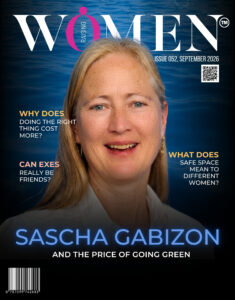
This issue asks a deceptively simple question: can we save the planet without making ordinary people pay the highest price?
Our cover star, Sascha Gabizon, brings that question sharply into focus, challenging us to think about climate action not only through carbon, but through fairness, access and gender. Because going green sounds wonderful until sustainability becomes something only the wealthy can afford.
Across these pages, we follow climate change into unexpected places. Into our wardrobes, our food, our cultural traditions and even the price of our morning coffee. We also continue our important First Daughters conversation, explore what women really mean when they speak about safety, and look at 111 Miss World contestants whose purpose projects remind us that beauty today carries increasingly bigger expectations.
This edition is ultimately about responsibility, but responsibility shared fairly.
Because saving our planet cannot become another luxury.
And perhaps the greenest future is one everyone can actually afford.