Spotlighting Remarkable Women and Girls

Fearless Futures Gen Z Women at the Frontline of Change

From classrooms to climate marches, these young leaders aren’t just part of the future they’re building it

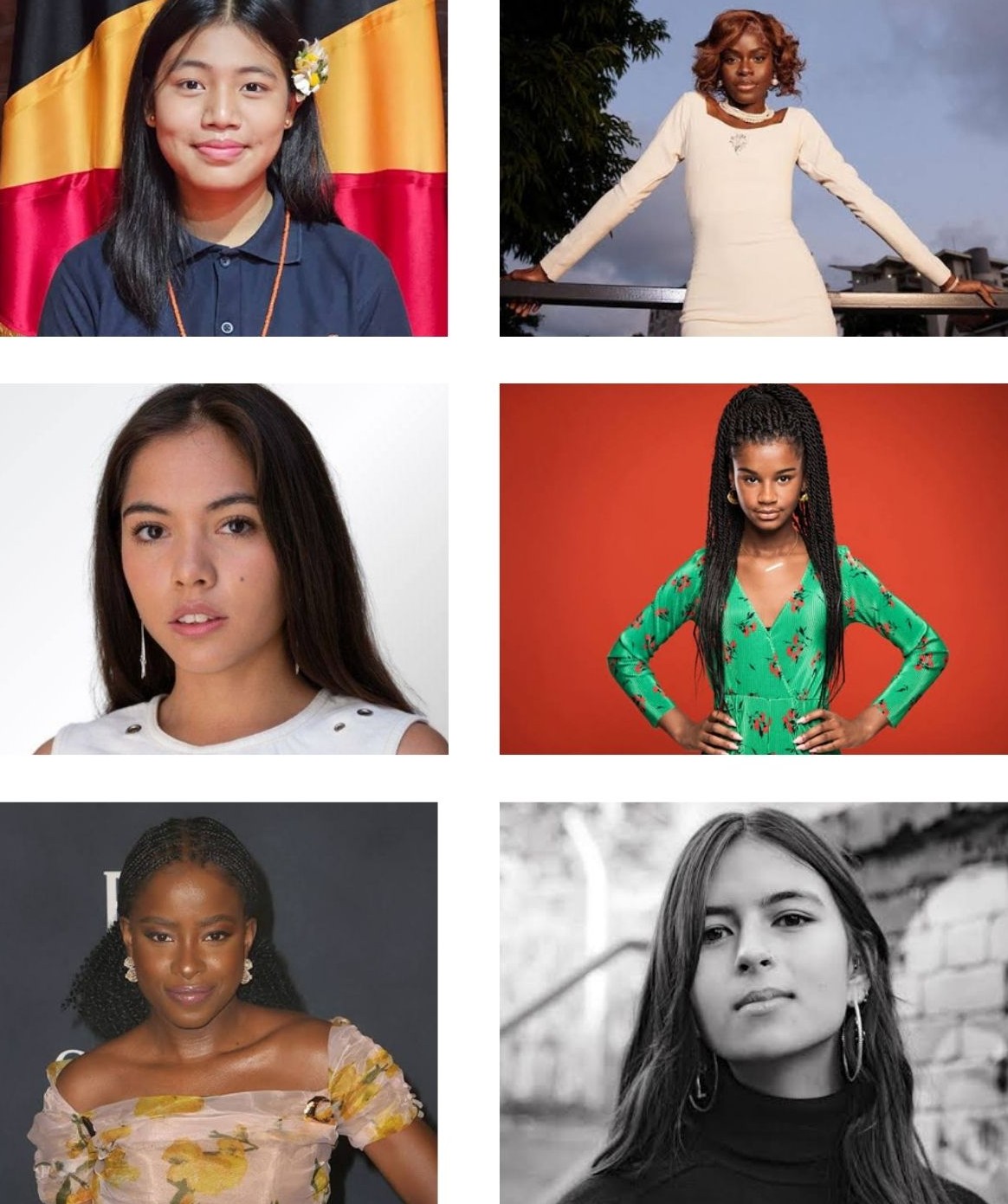
If anyone still believes Gen Z is “too young to change the world,” these ten young women are here to smash that myth beautifully, boldly, and unapologetically. They are not waiting for permission. They are not following the playbook. They are writing it. From climate activism to storytelling, neurodiversity advocacy to education reform, these young powerhouses are shaking systems and inspiring millions.

1. Eniola “Korty EO” Olanrewaju (Nigeria) Age: 27yrs

Korty EO is a razor-sharp filmmaker and YouTuber whose documentary style vlogs bring raw Nigerian youth culture into vivid focus. She’s collaborated with global brands like Spotify and Fenty, yet her greatest power lies in her ability to spotlight everyday lives through an unfiltered authentic lens. Her videos capture the textures of Lagos, the laughter, the fashion, the ambition, and convert them into a broader narrative of Black joy and innovation.

In a media landscape dominated by narrow portrayals, Korty’s work amplifies diverse Black African experiences from the inside out. She isn’t just creating content; she’s building cultural archives that challenge stereotypes and reclaim authenticity.

2. Xiye Bastida (Mexico/ USA) Age: 23yrs

Born in San Pedro Tultepec with Otomi and Toltec heritage, Xiye Bastida blends ancestral wisdom with present day urgency. As co-founder of the Re-Earth Initiative and a key figure in New York’s Fridays for Future, she demands that climate justice uplift communities at the front lines. Her speeches echo indigenous values before international protocols, calling out the gap between rhetoric and reality.

Xiye reconfigures environmentalism, rooting it in equity and preserving lifeways, not just ecosystems. Her activism deconstructs the false binary between tradition and modern solutions.

3. Licypriya Kangujam (India) Age: 13yrs

Licypriya doesn’t just join protests, she leads them with a megaphone made of conviction. Since age seven, she’s been delivering speeches, staging strikes, and founding The Child Movement to demand climate policy reform. Her presence at global forums like the UN forces policymakers to listen, and act.

Licypriya redefines leadership and urgency. She reminds us that age is not a limit, and youth voices are integral to decision-making about their own future.

4. Marley Dias ( USA) Age: 20yrs

When Marley questioned why her school’s bookshelves lacked Black girls as main characters, she sparked the #1000BlackGirlBooks campaign at 11. Thousands of books later, she’s a Harvard student, author, and speaker, continuing to shift literary norms and champion authentic representation.

Representation isn’t window dressing, it’s a revolution. Marley’s activism empowers the next generation to see themselves as protagonists, not extras.

5. Amanda S. C. Gorman (USA) Age: 27yrs

Amanda’s poem “The Hill We Climb” became a national anthem when she delivered it at the U.S. presidential inauguration. The youngest inaugural poet in American history, she continues to wield verse as a catalyst for unity, empathy, and progress.

Poetry is often dismissed as niche or academic, but Amanda proved it has the power to define moments, shift consciousness, and inspire collective change.

6. Taylor Cassidy (USA) Age: 22yrs

Taylor turned TikTok into a cultural classroom with “Fast Black History”, snappy videos spotlighting figures and events that mainstream media often ignore. She’s not just going viral—she’s imprinting purpose and pride into the scroll.

Taylor transforms education into empowerment. Every clip reminds Gen Z that their heritage is not just history, it’s alive, urgent, and theirs.

7. Mya-Rose Craig “Birdgirl” (UK) Age: 23yrs

Mya-Rose has watched birds across seven continents and become the youngest Briton with such a record. Her charity, Black2Nature, combines conservation with inclusivity, inviting minority ethnic communities into environmental spaces too often whitewashed.

Nature belongs to everyone, but access isn’t equal. Mya-Rose is rewriting that narrative, making environmentalism not just about survival, but belonging.

8. Howey Ou (Ou Hongyi) (China) Age: 22yrs

At 16, Howey staged China’s first school climate strike. She was expelled and monitored, yet she persists, hosting grassroots events, creating tattoos, planting trees in quiet protest, and refusing to fade into the background.

Howey’s activism is subversive grace, quiet, relentless rebellion against enforced silence. Her courage speaks for many without a voice.

9. Hadiqa Bashir (Pakistan) Age: 22yrs

A child marriage survivor turned rights advocate, Hadiqa founded Girls United for Human Rights in Swat Valley. She works with families and schools to end child marriage and educate girls, lighting pathways in places others might ignore.

Hadiqa doesn’t just teach empowerment, she demonstrates it. She is proof that rewriting traditions can start with one brave girl daring to demand better.

10. Chloé Sarah Hayden (Australia) Age: 28yrs

Chloé’s role in Netflix’s Heartbreak High helped shatter stereotypes by portraying an autistic teenager with depth and nuance. Her memoir “Different, Not Less” and podcast “Boldly Me” spotlight neurodiverse voices, reframing visibility as liberation.

Chloé doesn’t just represent autism, she celebrates it. Her work disrupts narratives that silence difference and puts identity front-and-center in the mainstream.

These women don’t wait for validation, they demand change. Their fields vary, film, protest, literature, conservation, but their courageis shared: disruption through authenticity, innovation through inclusivity.
Share:

Trending

Raising Women Magazine Issue 56 – November 2026

The Courage to Question
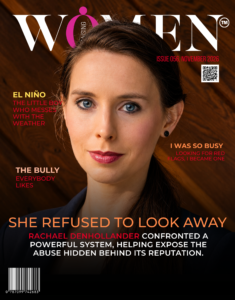
We live in a world where reputation often arrives before character, popularity masquerades as goodness, and questioning authority can make you the problem. Apparently, being respected is sometimes mistaken for being beyond reproach.
Our cover woman, Rachael Denhollander, reminds us why that distinction matters. Her courage in confronting institutional abuse challenges us to reconsider what safety, justice and accountability truly mean.

Elsewhere, we explore the judgement surrounding childbirth, the invisible labour behind successful careers, the beauty industry’s obsession with perfection, and why women can cook the same meal as men yet receive considerably less applause.

From fashion and culture to relationships and motherhood, Issue 56 invites us to examine the assumptions we have inherited, including those we unknowingly perpetuate.

Because progress is not simply about celebrating extraordinary women. It is about creating a world where ordinary women and girls are heard, valued and protected.

And sometimes, change begins with refusing to look away.

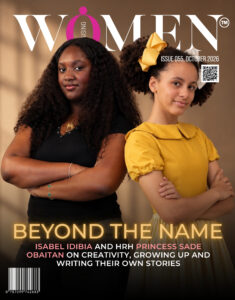
Raising Women Magazine Issue 55 – October 2026

We spend a remarkable amount of time telling girls who they should become, often before they have finished discovering who they are. Apparently, growing up comes with a job description nobody remembers applying for.

In Issue 55, our cover girls, Isabel Idibia and Princess Sade Obaitan, remind us that famous surnames and royal titles may introduce you, but they should never define you.

From girls conquering oceans and swimming pools to conversations about beauty, culture and ambition, this edition examines the expectations we inherit and the courage required to question them.

In Find Her Light, I also reflect on the careers I might have pursued and why discovering another gift does not invalidate the life we have already built.

Perhaps that is the lesson running through these pages: identity is not a finished manuscript.

Every girl deserves the freedom to write her own story. And every woman deserves another chapter.

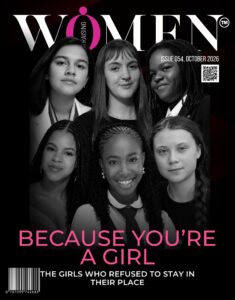
Raising Women Magazine Issue 54 – October 2026

“Because you’re a girl.”
Four little words that have spent generations doing an extraordinary amount of damage. Apparently, ambition, intelligence and audacity were once considered rather unladylike.
Fortunately, the girls featured in our 54th edition missed that memo.
As we celebrate the International Day of the Girl Child, we spotlight twelve remarkable girls rewriting the rules, while reminding ourselves that a girl should not need extraordinary achievements to deserve ordinary opportunities.
We also explore the expectations that complicate girlhood, the childhood wounds we carry into adulthood and, in my Find Her Light reflection, why the girl I once was might have a few lessons for the woman I have become.
Perhaps our greatest responsibility is not simply raising girls to conquer the world, but ensuring they never have to shrink themselves to belong in it.
Because you’re a girl?
What a wonderful reason to dream without limits.

Your guide to IVF and egg freezing in Korea

Empowering your family planning journey with curated fertility treatments at lower costs. Get our guide for Korea’s leading clinics, pricing and service breakdown.

Recommended News

Raising Women Magazine Issue 56 – November 2026

The Courage to Question
We live in a world where reputation often arrives before character, popularity masquerades as goodness, and questioning authority can make you the problem. Apparently, being respected is sometimes mistaken for being beyond reproach.
Our cover woman, Rachael Denhollander, reminds us why that distinction matters. Her courage in confronting institutional abuse challenges us to reconsider what safety, justice and accountability truly mean.

Elsewhere, we explore the judgement surrounding childbirth, the invisible labour behind successful careers, the beauty industry’s obsession with perfection, and why women can cook the same meal as men yet receive considerably less applause.

From fashion and culture to relationships and motherhood, Issue 56 invites us to examine the assumptions we have inherited, including those we unknowingly perpetuate.

Because progress is not simply about celebrating extraordinary women. It is about creating a world where ordinary women and girls are heard, valued and protected.

And sometimes, change begins with refusing to look away.

Raising Women Magazine Issue 55 – October 2026

We spend a remarkable amount of time telling girls who they should become, often before they have finished discovering who they are. Apparently, growing up comes with a job description nobody remembers applying for.

In Issue 55, our cover girls, Isabel Idibia and Princess Sade Obaitan, remind us that famous surnames and royal titles may introduce you, but they should never define you.

From girls conquering oceans and swimming pools to conversations about beauty, culture and ambition, this edition examines the expectations we inherit and the courage required to question them.

In Find Her Light, I also reflect on the careers I might have pursued and why discovering another gift does not invalidate the life we have already built.

Perhaps that is the lesson running through these pages: identity is not a finished manuscript.

Every girl deserves the freedom to write her own story. And every woman deserves another chapter.

Raising Women Magazine Issue 54 – October 2026

“Because you’re a girl.”
Four little words that have spent generations doing an extraordinary amount of damage. Apparently, ambition, intelligence and audacity were once considered rather unladylike.
Fortunately, the girls featured in our 54th edition missed that memo.
As we celebrate the International Day of the Girl Child, we spotlight twelve remarkable girls rewriting the rules, while reminding ourselves that a girl should not need extraordinary achievements to deserve ordinary opportunities.
We also explore the expectations that complicate girlhood, the childhood wounds we carry into adulthood and, in my Find Her Light reflection, why the girl I once was might have a few lessons for the woman I have become.
Perhaps our greatest responsibility is not simply raising girls to conquer the world, but ensuring they never have to shrink themselves to belong in it.
Because you’re a girl?
What a wonderful reason to dream without limits.

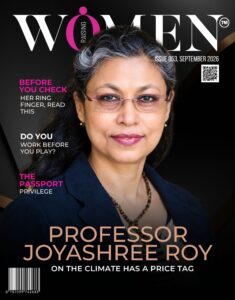
Raising Women Magazine Issue 53 – September 2026

Apparently, saving the planet comes with a shopping list. Solar panels, electric cars, sustainable fashion and, preferably, a bank account that understands the assignment.

In Issue 53, our cover woman, Professor Joyashree Roy, challenges us to reconsider what sustainability really costs, who pays, and why the cheapest choices today may leave tomorrow’s generations with the bill.

But this issue is also about the invisible price tags attached to everyday life. From passport privilege and the cultural expectations of a “good woman” to motherhood, personal boundaries and the delicate art of enjoying life before finishing every task, we examine the systems shaping our choices.

We also celebrate women turning overlooked problems into extraordinary opportunities.

Perhaps progress begins when we stop asking only what things cost and start asking what they are worth.

A better world should not be a luxury reserved for those who can afford it.
Happy reading!

.

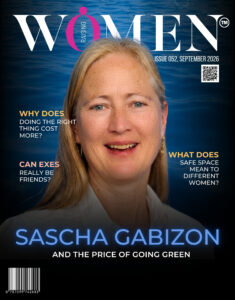
Raising Women Magazine Issue 52 – September 2026

This issue asks a deceptively simple question: can we save the planet without making ordinary people pay the highest price?
Our cover star, Sascha Gabizon, brings that question sharply into focus, challenging us to think about climate action not only through carbon, but through fairness, access and gender. Because going green sounds wonderful until sustainability becomes something only the wealthy can afford.
Across these pages, we follow climate change into unexpected places. Into our wardrobes, our food, our cultural traditions and even the price of our morning coffee. We also continue our important First Daughters conversation, explore what women really mean when they speak about safety, and look at 111 Miss World contestants whose purpose projects remind us that beauty today carries increasingly bigger expectations.
This edition is ultimately about responsibility, but responsibility shared fairly.
Because saving our planet cannot become another luxury.
And perhaps the greenest future is one everyone can actually afford.