Spotlighting Remarkable Women and Girls

Jessica Horn: Feminist Activist, Writer, Poet, and an Advisor on Women’s Rights

By Oluchi Obiahu

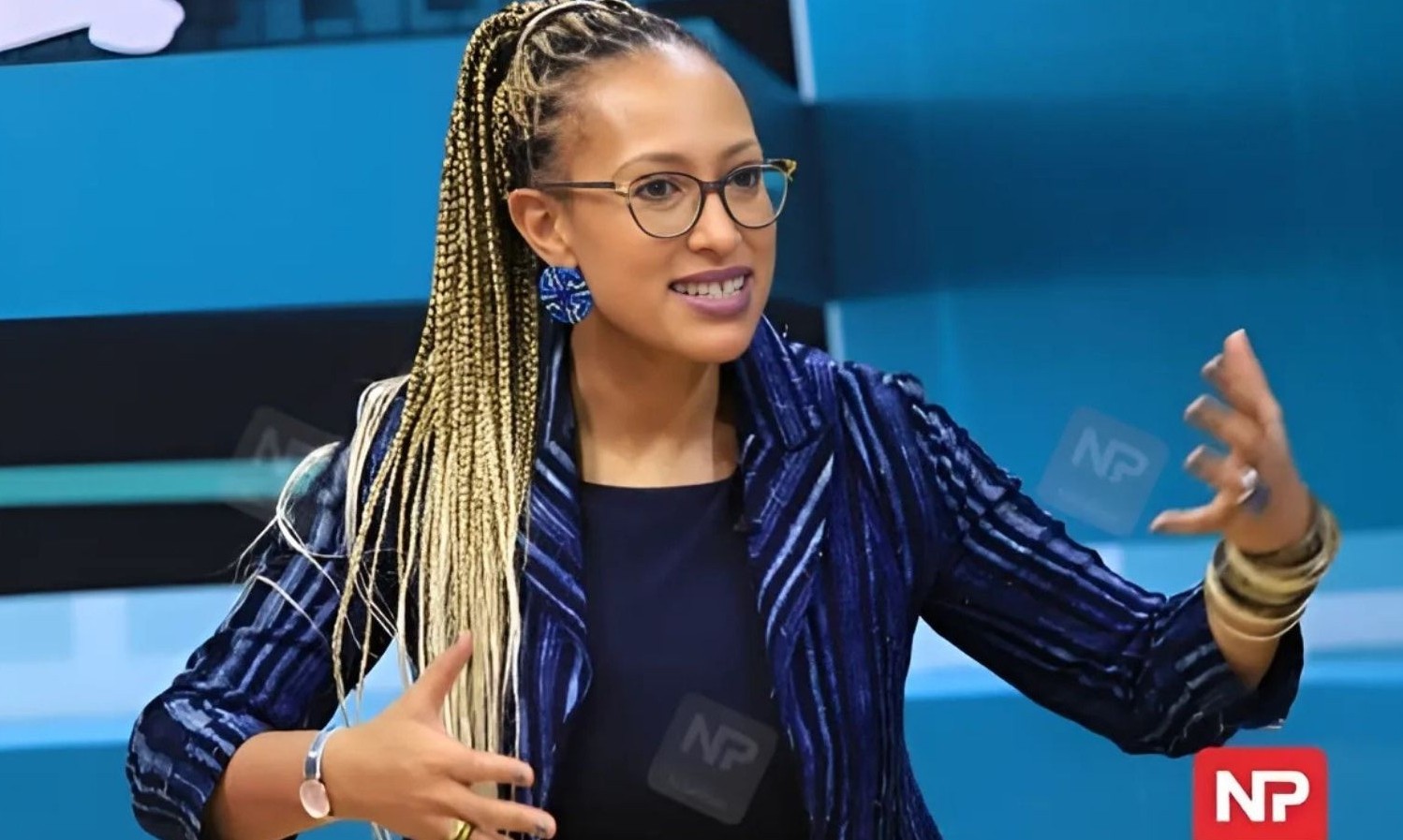
Jessica Horn (born 1979) is a feminist activist, writer, poet, and an advisor on women’s rights with Ugandan and Malian background. A ‘what next’ thinker, she looks beyond the hori-zon, not just disrupting systemic injustice but imagining daring new paths to liberation.

She is a pivotal figure in African feminism and philanthropy, blending intellectual rigor, creative expression, and strategic leadership to drive systemic change. As the Regional Director for East Africa at the Ford Foundation, she became the first African woman to hold this position since the organization’s establishment in the region in 1963. With over two decades of experience, Horn has dedicated her career to redefining freedom, power, and pleasure for African women, grounding her work in a Pan-African feminist framework that prioritizes structural change over superficial reforms.

Named an African Women Changemaker by ARISE Magazine and one of Applause Africa’s “40 Most Influential Africans under 40,” Horn weaves art and activism to amplify African women’s voices, as seen in her 2025 collaboration on The Temple of Her Skin, a documentary exploring African women’s tattooing and scarification histories.

Jessica Horn – Roots That Run Deep

Born to Ugandan and Malian parents, Horn’s multicultural heritage informs her nuanced understanding of African contexts. Her work is characterized by a bold commitment to gender justice, democracy, and participatory models of change. At the Ford Foundation, she oversees grant making that targets deep-rooted inequities, supporting initiatives that strengthen feminist movements, advance inclusive governance, and challenge systemic oppression. Her approach emphasizes resourcing grassroots organizations and fostering sustainable, community-driven solutions. Prior to her role at the Ford Foundation, Horn served as Director of Programmes at the African Women’s Development Fund (AWDF), coupled with board roles at Mama Cash, Urgent Action-Fund Africa, and the Fund for Global Human Rights, solidifying her as a visionary bridge-builder, fostering dialogue between big tech, women’s rights, civil society, impact investors, academics, and practitioners.

She introduced innovative, participatory models that empowered feminist movements across the continent, prioritizing flexibility and responsiveness to the needs of women’s organizations.

A GAME CHANGER

Horn’s contributions extend beyond institutional roles. As a co-founder of the African Feminist Forum, she has helped create spaces for women to articulate their own visions of liberation and build collective power. Her involvement in the Lancet Commission on Gender and Global Health underscores her commitment to integrating gender perspectives into global health policy, with a focus on addressing violence and body politics.

Horn’s recent work continues to challenge conventional funding models. often described as both lyrical and incisive, it amplifies African feminist perspectives. Through essays, poetry, and policy papers, she explores themes of embodiment, power, and resistance, making complex ideas accessible and compelling In a July 2025 interview with Leading Ladies Africa, she emphasized the need for flexible, long-term support for social justice initiatives, advocating for reduced bureaucratic barriers to make resources more accessible to grassroots feminist movements. She highlighted the current funding landscape, marked by sharp cuts in aid, as an opportunity to rethink sustainability through creative strategies like diaspora philanthropy, mutual aid, and impact investing. This perspective reflects her broader push to decolonize philanthropy and center African women’s voices in decision-making processes.

Art as Activism

Her intellectual contributions have also gained prominence in 2025 with the publication of her book, African Feminist Praxis: Cartographies of Liberatory Worldmaking (Sage Publishing). Launched in March 2025, the book explores African feminist principles, kinship, courage, pleasure, care, and memory, as frameworks for transformative action. It draws on generations of African feminist organizing to offer alternative visions for global change, emphasizing collective thriving over individual gain. A book talk hosted by the Institute of Development Studies in March 2025 highlighted her analysis of African resistance, often overshadowed by male-centric narratives, and underscored her commitment to amplifying women’s roles in liberation movements.

Creatively, Horn has been deeply engaged in storytelling as a tool for feminist advocacy. In 2025, she continued her collaboration with Laurence Sessou on The Temple of Her Skin, a creative documentary project exploring African women’s tattooing and scarification histories. This work reflects her belief in the power of embodied narratives to make the invisible visible, connecting personal stories to broader political and cultural transformations. She has also integrated art into her philanthropy, notably curating the Ford Foundation’s Nairobi office art collection with Rosie Olang’ Odhiambo to showcase women artists and historic photographs of East African women changemakers.

Horn’s global perspective, shaped by living on five continents and working in over 56 countries, informs her approach to feminist movement-building. She has been a vocal advocate for rethinking trauma and mental health from an African feminist lens, notably through her leadership in creating AIR (African Institute for Integrated Responses to Violence Against Women and Girls and HIV/AIDS), which reimagines care practices for activists facing violence and economic deprivation.

As earlier mentioned, her contributions at the AWDF from 2015 to 2020 remain foundational to her legacy. As Director of Programmes, she led a four-fold increase in grant making and pioneered initiatives like the AWDF Futures Initiative, which forecasted women’s rights trends by 2030, and the Flourish retreat, focused on activist well-being. These efforts continue to inspire her current work at the Ford Foundation, where she emphasizes sustainable, leaderful movements that prioritize collective care and imagination.

Horn has also been a vocal advocate for addressing gender-based violence, pushing for solutions that are rooted in African feminist principles rather than imported frameworks. Horn’s professional journey reflects a deep commitment to learning from and amplifying the voices of African women. Her work has influenced a wide range of organizations and movements, from local collectives to global commissions, earning her recognition as a leading voice in Pan-African feminism.

HIGHLIGHTS

  • Jessica Horn, a Ugandan-Malian visionary, pioneers African feminism, blending bold leadership and creative storytelling to ignite systemic change.
  • As the first African woman Regional Director for East Africa at the Ford Foundation, Jessica champions gender justice and grassroots empowerment.
  • Her 2025 book, African Feminist Praxis, redefines liberation through courage, care, and collective thriving.
  • Through projects like The Temple of Her Skin, Horn weaves art and activism to amplify African women’s voices.

Share:

Trending

Raising Women Magazine Issue 56 – November 2026

The Courage to Question
We live in a world where reputation often arrives before character, popularity masquerades as goodness, and questioning authority can make you the problem. Apparently, being respected is sometimes mistaken for being beyond reproach.
Our cover woman, Rachael Denhollander, reminds us why that distinction matters. Her courage in confronting institutional abuse challenges us to reconsider what safety, justice and accountability truly mean.

Elsewhere, we explore the judgement surrounding childbirth, the invisible labour behind successful careers, the beauty industry’s obsession with perfection, and why women can cook the same meal as men yet receive considerably less applause.

From fashion and culture to relationships and motherhood, Issue 56 invites us to examine the assumptions we have inherited, including those we unknowingly perpetuate.

Because progress is not simply about celebrating extraordinary women. It is about creating a world where ordinary women and girls are heard, valued and protected.

And sometimes, change begins with refusing to look away.

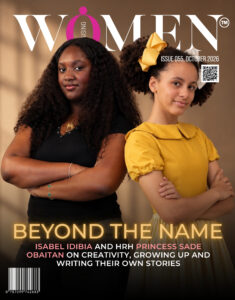
Raising Women Magazine Issue 55 – October 2026

We spend a remarkable amount of time telling girls who they should become, often before they have finished discovering who they are. Apparently, growing up comes with a job description nobody remembers applying for.

In Issue 55, our cover girls, Isabel Idibia and Princess Sade Obaitan, remind us that famous surnames and royal titles may introduce you, but they should never define you.

From girls conquering oceans and swimming pools to conversations about beauty, culture and ambition, this edition examines the expectations we inherit and the courage required to question them.

In Find Her Light, I also reflect on the careers I might have pursued and why discovering another gift does not invalidate the life we have already built.

Perhaps that is the lesson running through these pages: identity is not a finished manuscript.

Every girl deserves the freedom to write her own story. And every woman deserves another chapter.

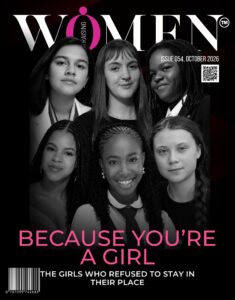
Raising Women Magazine Issue 54 – October 2026

“Because you’re a girl.”
Four little words that have spent generations doing an extraordinary amount of damage. Apparently, ambition, intelligence and audacity were once considered rather unladylike.
Fortunately, the girls featured in our 54th edition missed that memo.
As we celebrate the International Day of the Girl Child, we spotlight twelve remarkable girls rewriting the rules, while reminding ourselves that a girl should not need extraordinary achievements to deserve ordinary opportunities.
We also explore the expectations that complicate girlhood, the childhood wounds we carry into adulthood and, in my Find Her Light reflection, why the girl I once was might have a few lessons for the woman I have become.
Perhaps our greatest responsibility is not simply raising girls to conquer the world, but ensuring they never have to shrink themselves to belong in it.
Because you’re a girl?
What a wonderful reason to dream without limits.

Your guide to IVF and egg freezing in Korea

Empowering your family planning journey with curated fertility treatments at lower costs. Get our guide for Korea’s leading clinics, pricing and service breakdown.

Recommended News

Raising Women Magazine Issue 56 – November 2026

The Courage to Question
We live in a world where reputation often arrives before character, popularity masquerades as goodness, and questioning authority can make you the problem. Apparently, being respected is sometimes mistaken for being beyond reproach.
Our cover woman, Rachael Denhollander, reminds us why that distinction matters. Her courage in confronting institutional abuse challenges us to reconsider what safety, justice and accountability truly mean.

Elsewhere, we explore the judgement surrounding childbirth, the invisible labour behind successful careers, the beauty industry’s obsession with perfection, and why women can cook the same meal as men yet receive considerably less applause.

From fashion and culture to relationships and motherhood, Issue 56 invites us to examine the assumptions we have inherited, including those we unknowingly perpetuate.

Because progress is not simply about celebrating extraordinary women. It is about creating a world where ordinary women and girls are heard, valued and protected.

And sometimes, change begins with refusing to look away.

Raising Women Magazine Issue 55 – October 2026

We spend a remarkable amount of time telling girls who they should become, often before they have finished discovering who they are. Apparently, growing up comes with a job description nobody remembers applying for.

In Issue 55, our cover girls, Isabel Idibia and Princess Sade Obaitan, remind us that famous surnames and royal titles may introduce you, but they should never define you.

From girls conquering oceans and swimming pools to conversations about beauty, culture and ambition, this edition examines the expectations we inherit and the courage required to question them.

In Find Her Light, I also reflect on the careers I might have pursued and why discovering another gift does not invalidate the life we have already built.

Perhaps that is the lesson running through these pages: identity is not a finished manuscript.

Every girl deserves the freedom to write her own story. And every woman deserves another chapter.

Raising Women Magazine Issue 54 – October 2026

“Because you’re a girl.”
Four little words that have spent generations doing an extraordinary amount of damage. Apparently, ambition, intelligence and audacity were once considered rather unladylike.
Fortunately, the girls featured in our 54th edition missed that memo.
As we celebrate the International Day of the Girl Child, we spotlight twelve remarkable girls rewriting the rules, while reminding ourselves that a girl should not need extraordinary achievements to deserve ordinary opportunities.
We also explore the expectations that complicate girlhood, the childhood wounds we carry into adulthood and, in my Find Her Light reflection, why the girl I once was might have a few lessons for the woman I have become.
Perhaps our greatest responsibility is not simply raising girls to conquer the world, but ensuring they never have to shrink themselves to belong in it.
Because you’re a girl?
What a wonderful reason to dream without limits.

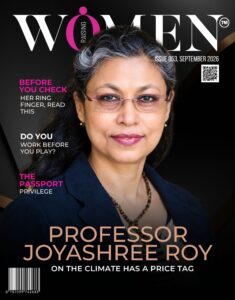
Raising Women Magazine Issue 53 – September 2026

Apparently, saving the planet comes with a shopping list. Solar panels, electric cars, sustainable fashion and, preferably, a bank account that understands the assignment.

In Issue 53, our cover woman, Professor Joyashree Roy, challenges us to reconsider what sustainability really costs, who pays, and why the cheapest choices today may leave tomorrow’s generations with the bill.

But this issue is also about the invisible price tags attached to everyday life. From passport privilege and the cultural expectations of a “good woman” to motherhood, personal boundaries and the delicate art of enjoying life before finishing every task, we examine the systems shaping our choices.

We also celebrate women turning overlooked problems into extraordinary opportunities.

Perhaps progress begins when we stop asking only what things cost and start asking what they are worth.

A better world should not be a luxury reserved for those who can afford it.
Happy reading!

.

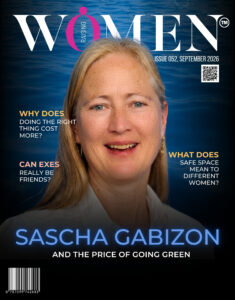
Raising Women Magazine Issue 52 – September 2026

This issue asks a deceptively simple question: can we save the planet without making ordinary people pay the highest price?
Our cover star, Sascha Gabizon, brings that question sharply into focus, challenging us to think about climate action not only through carbon, but through fairness, access and gender. Because going green sounds wonderful until sustainability becomes something only the wealthy can afford.
Across these pages, we follow climate change into unexpected places. Into our wardrobes, our food, our cultural traditions and even the price of our morning coffee. We also continue our important First Daughters conversation, explore what women really mean when they speak about safety, and look at 111 Miss World contestants whose purpose projects remind us that beauty today carries increasingly bigger expectations.
This edition is ultimately about responsibility, but responsibility shared fairly.
Because saving our planet cannot become another luxury.
And perhaps the greenest future is one everyone can actually afford.