Spotlighting Remarkable Women and Girls

Keir Starmer and the Thatcher Portrait: The Politics of Symbolism

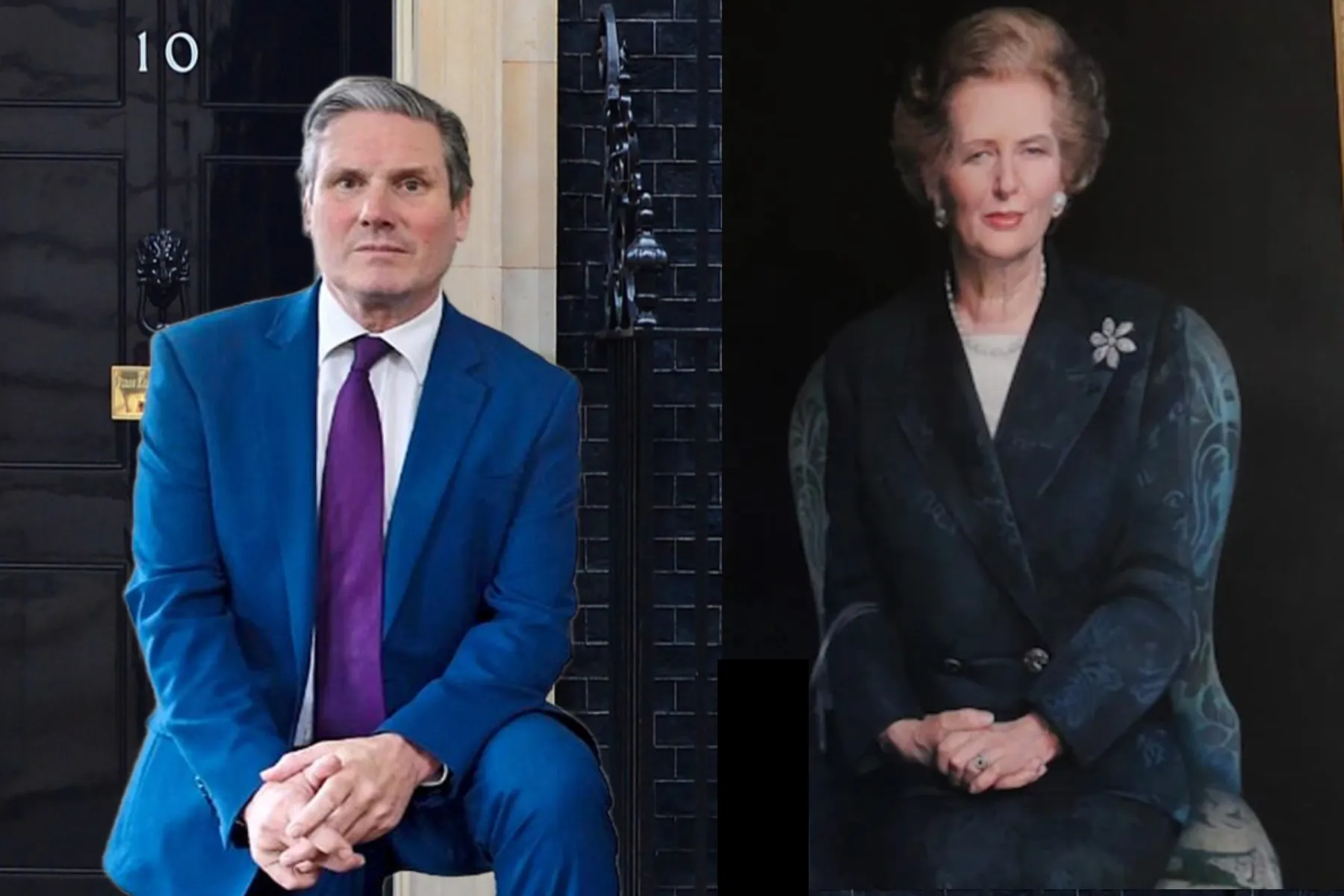
In the world of politics, symbolism is powerful. From statues and flags to portraits hung in the hallowed halls of government, these symbols can reflect a nation’s values, history, and aspirations. Recently, it was confirmed by The Guardian that Keir Starmer, the leader of the Labour Party, has had the portrait
of Margaret Thatcher removed from No 10 Downing Street. This significant move has ignited a flurry of debate. What could this decision mean for Britain, and why is it so important?

The Legacy of Margaret Thatcher

Margaret Thatcher, who served as Britain’s Prime Minister from 1979 to 1990, remains one of the most polarising figures in British history. As the first woman to hold the office, she broke the glass ceiling in politics, an achievement that is often celebrated, especially in discussions about women’s rights and leadership. However, Thatcher’s policies, known collectively as “Thatcherism,” left deep scars on the British landscape.

Her tenure was marked by sweeping economic reforms that favoured deregulation, privatisation, and a reduction in the power of trade unions. While these policies helped revive the British economy in the eyes of her supporters, they also led to significant social inequality, the decimation of traditional industries, and widespread unemployment, particularly in working-class communities. For many, Thatcher’s legacy is a complex one, embodying both the rise of neoliberalism and the decline of the welfare state.

The Significance of the Portrait

The portrait of Margaret Thatcher hanging in 10 Downing Street was more than just a picture. It was a symbol of a political era that transformed Britain. For some, it represented strength, determination, and a woman who broke barriers. For others, it was a reminder of a time of deep division, economic hardship, and social unrest. The presence of Thatcher’s portrait in the Prime Minister’s residence had been a point of pride for Conservatives, but it was also a point of contention for those who feel her policies did more harm than good.

By removing Thatcher’s portrait, Starmer has sent a powerful message. It signals a break from the Thatcherite legacy that has influenced British politics for over four decades. Starmer’s Labour Party has already begun to distance itself from the neoliberal policies that have dominated since Thatcher’s time, focusing instead on issues of social justice, public investment, and reversing the inequalities exacerbated by austerity measures in recent years.

Public Opinion and Political Perspectives

Public opinion on Thatcher remains deeply divided. A 2020 poll found that while 52% of Britons believe Thatcher was a good Prime Minister, 48% disagree. The divide is stark, particularly along generational and regional lines. Older voters and those in the South of England are more likely to view Thatcher favourably, while younger voters and those in the North, Scotland, and Wales—areas hardest hit by her policies—tend to hold more negative views.

For many women, particularly those who lived through Thatcher’s era, her legacy is even more complicated. While she shattered the glass ceiling in British politics, her policies were not necessarily aligned with feminist ideals. Thatcher famously said, “I owe nothing to women’s lib,” distancing herself from the women’s movement of the time. For some, her portrait is a reminder of this disconnect.

On the other hand, some argue that removing her portrait is a step too far, an erasure of a significant part of Britain’s political history. They contend that while her policies were controversial, they are a crucial part of understanding how modern Britain was shaped. Removing the portrait could be seen as an attempt to rewrite history rather than engage with it.

What Removing the Portrait Could Mean

Starmer’s decision to remove Thatcher’s portrait can be interpreted as a move towards a more inclusive and equitable vision for Britain. It aligns with his efforts to reposition Labour as a party focused on social justice, equality, and a rejection of the austerity-driven policies that have characterised much of British politics in recent years. This act can be seen as a symbolic rejection of the neoliberal legacy and a step towards acknowledging the pain and division that Thatcherism caused.

However, it could also provoke backlash, particularly from Conservative supporters and those who view Thatcher as a symbol of British resilience and leadership. The act of removing her portrait could be framed as divisive, an unnecessary gesture that risks alienating potential voters who respect her legacy, despite its complexities. In a broader sense, this move by Starmer could spark a deeper conversation about how we choose to remember our leaders and the symbols we keep in our most important public spaces. It challenges us to think about whose stories we elevate and whose we reconsider as we move forward as a nation.

As Britain grapples with its past and looks to the future, the symbols we choose to maintain or remove will play a crucial role in shaping the narrative. Keir Starmer’s decision to remove Margaret Thatcher’s portrait from 10 Downing Street is more than just an aesthetic choice—it is a statement about the direction in which he wants to lead the country. Whether seen as a bold rejection of a divisive legacy or an unnecessary provocation, the move will undoubtedly leave its mark on Britain’s political landscape. As public opinion continues to evolve, the discussion around this portrait may ultimately reflect broader shifts in how we understand and engage with our history.

Share:

Trending

Raising Women Magazine Issue 56 – November 2026

The Courage to Question
We live in a world where reputation often arrives before character, popularity masquerades as goodness, and questioning authority can make you the problem. Apparently, being respected is sometimes mistaken for being beyond reproach.
Our cover woman, Rachael Denhollander, reminds us why that distinction matters. Her courage in confronting institutional abuse challenges us to reconsider what safety, justice and accountability truly mean.

Elsewhere, we explore the judgement surrounding childbirth, the invisible labour behind successful careers, the beauty industry’s obsession with perfection, and why women can cook the same meal as men yet receive considerably less applause.

From fashion and culture to relationships and motherhood, Issue 56 invites us to examine the assumptions we have inherited, including those we unknowingly perpetuate.

Because progress is not simply about celebrating extraordinary women. It is about creating a world where ordinary women and girls are heard, valued and protected.

And sometimes, change begins with refusing to look away.

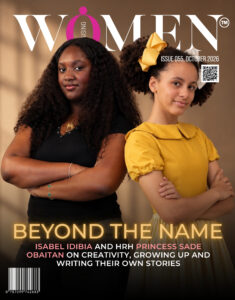
Raising Women Magazine Issue 55 – October 2026

We spend a remarkable amount of time telling girls who they should become, often before they have finished discovering who they are. Apparently, growing up comes with a job description nobody remembers applying for.

In Issue 55, our cover girls, Isabel Idibia and Princess Sade Obaitan, remind us that famous surnames and royal titles may introduce you, but they should never define you.

From girls conquering oceans and swimming pools to conversations about beauty, culture and ambition, this edition examines the expectations we inherit and the courage required to question them.

In Find Her Light, I also reflect on the careers I might have pursued and why discovering another gift does not invalidate the life we have already built.

Perhaps that is the lesson running through these pages: identity is not a finished manuscript.

Every girl deserves the freedom to write her own story. And every woman deserves another chapter.

Raising Women Magazine Issue 54 – October 2026

“Because you’re a girl.”
Four little words that have spent generations doing an extraordinary amount of damage. Apparently, ambition, intelligence and audacity were once considered rather unladylike.
Fortunately, the girls featured in our 54th edition missed that memo.
As we celebrate the International Day of the Girl Child, we spotlight twelve remarkable girls rewriting the rules, while reminding ourselves that a girl should not need extraordinary achievements to deserve ordinary opportunities.
We also explore the expectations that complicate girlhood, the childhood wounds we carry into adulthood and, in my Find Her Light reflection, why the girl I once was might have a few lessons for the woman I have become.
Perhaps our greatest responsibility is not simply raising girls to conquer the world, but ensuring they never have to shrink themselves to belong in it.
Because you’re a girl?
What a wonderful reason to dream without limits.

Your guide to IVF and egg freezing in Korea

Empowering your family planning journey with curated fertility treatments at lower costs. Get our guide for Korea’s leading clinics, pricing and service breakdown.

Recommended News

Raising Women Magazine Issue 56 – November 2026

The Courage to Question
We live in a world where reputation often arrives before character, popularity masquerades as goodness, and questioning authority can make you the problem. Apparently, being respected is sometimes mistaken for being beyond reproach.
Our cover woman, Rachael Denhollander, reminds us why that distinction matters. Her courage in confronting institutional abuse challenges us to reconsider what safety, justice and accountability truly mean.

Elsewhere, we explore the judgement surrounding childbirth, the invisible labour behind successful careers, the beauty industry’s obsession with perfection, and why women can cook the same meal as men yet receive considerably less applause.

From fashion and culture to relationships and motherhood, Issue 56 invites us to examine the assumptions we have inherited, including those we unknowingly perpetuate.

Because progress is not simply about celebrating extraordinary women. It is about creating a world where ordinary women and girls are heard, valued and protected.

And sometimes, change begins with refusing to look away.

Raising Women Magazine Issue 55 – October 2026

We spend a remarkable amount of time telling girls who they should become, often before they have finished discovering who they are. Apparently, growing up comes with a job description nobody remembers applying for.

In Issue 55, our cover girls, Isabel Idibia and Princess Sade Obaitan, remind us that famous surnames and royal titles may introduce you, but they should never define you.

From girls conquering oceans and swimming pools to conversations about beauty, culture and ambition, this edition examines the expectations we inherit and the courage required to question them.

In Find Her Light, I also reflect on the careers I might have pursued and why discovering another gift does not invalidate the life we have already built.

Perhaps that is the lesson running through these pages: identity is not a finished manuscript.

Every girl deserves the freedom to write her own story. And every woman deserves another chapter.

Raising Women Magazine Issue 54 – October 2026

“Because you’re a girl.”
Four little words that have spent generations doing an extraordinary amount of damage. Apparently, ambition, intelligence and audacity were once considered rather unladylike.
Fortunately, the girls featured in our 54th edition missed that memo.
As we celebrate the International Day of the Girl Child, we spotlight twelve remarkable girls rewriting the rules, while reminding ourselves that a girl should not need extraordinary achievements to deserve ordinary opportunities.
We also explore the expectations that complicate girlhood, the childhood wounds we carry into adulthood and, in my Find Her Light reflection, why the girl I once was might have a few lessons for the woman I have become.
Perhaps our greatest responsibility is not simply raising girls to conquer the world, but ensuring they never have to shrink themselves to belong in it.
Because you’re a girl?
What a wonderful reason to dream without limits.

Raising Women Magazine Issue 53 – September 2026

Apparently, saving the planet comes with a shopping list. Solar panels, electric cars, sustainable fashion and, preferably, a bank account that understands the assignment.

In Issue 53, our cover woman, Professor Joyashree Roy, challenges us to reconsider what sustainability really costs, who pays, and why the cheapest choices today may leave tomorrow’s generations with the bill.

But this issue is also about the invisible price tags attached to everyday life. From passport privilege and the cultural expectations of a “good woman” to motherhood, personal boundaries and the delicate art of enjoying life before finishing every task, we examine the systems shaping our choices.

We also celebrate women turning overlooked problems into extraordinary opportunities.

Perhaps progress begins when we stop asking only what things cost and start asking what they are worth.

A better world should not be a luxury reserved for those who can afford it.
Happy reading!

.

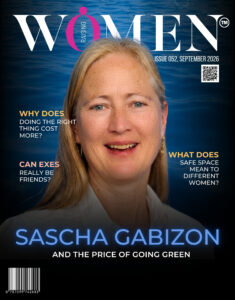
Raising Women Magazine Issue 52 – September 2026

This issue asks a deceptively simple question: can we save the planet without making ordinary people pay the highest price?
Our cover star, Sascha Gabizon, brings that question sharply into focus, challenging us to think about climate action not only through carbon, but through fairness, access and gender. Because going green sounds wonderful until sustainability becomes something only the wealthy can afford.
Across these pages, we follow climate change into unexpected places. Into our wardrobes, our food, our cultural traditions and even the price of our morning coffee. We also continue our important First Daughters conversation, explore what women really mean when they speak about safety, and look at 111 Miss World contestants whose purpose projects remind us that beauty today carries increasingly bigger expectations.
This edition is ultimately about responsibility, but responsibility shared fairly.
Because saving our planet cannot become another luxury.
And perhaps the greenest future is one everyone can actually afford.