best casino sites for Canadians top real money casinos for Canadians safe online casinos for Canadian players Canadian online casino rankings best mobile casino Canada

Spotlighting Remarkable Women and Girls

Eat, Pray, Love by Elizabeth Gilbert

A Divisive Pilgrimage for the Soul

By Ikupolusi Ariyike

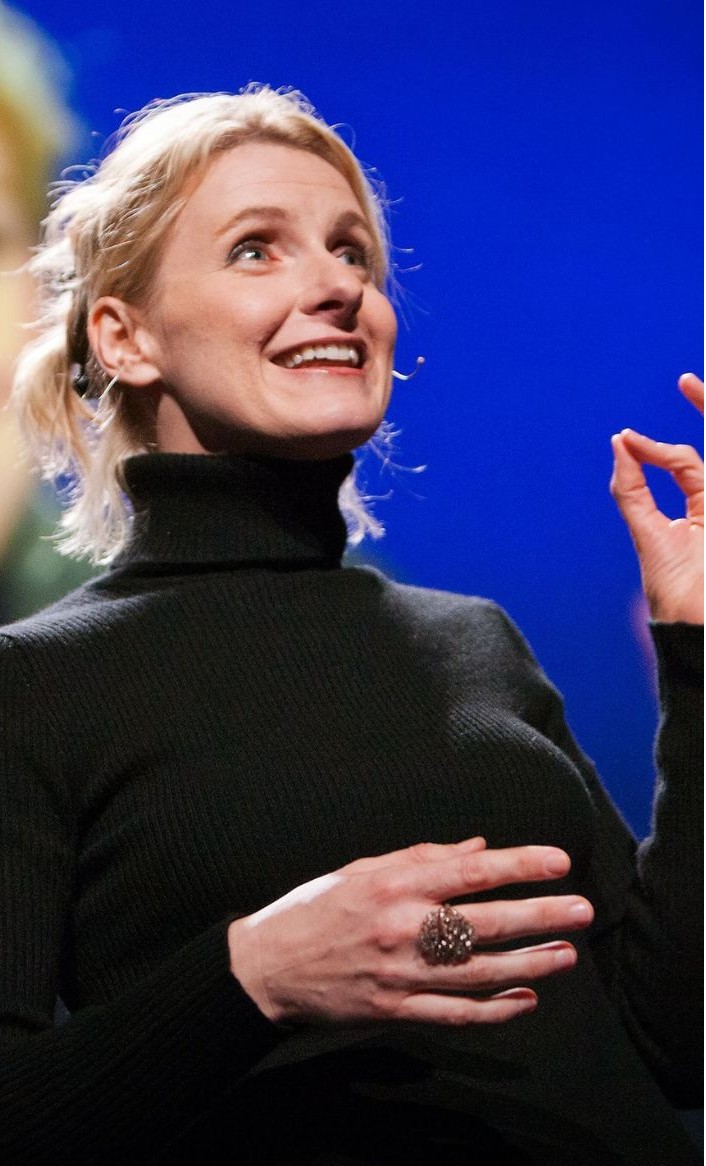
It’s almost impossible to review Eat, Pray, Love as just a book. Since its publication in 2006, Elizabeth Gilbert’s memoir has become a cultural phenomenon, a shorthand for female self-discovery, and a lightning rod for criticism. To pick it up today is to engage not just with the text, but with its entire legacy. Having finally embarked on this much-hyped journey, many found it to be a flawed, yet undeniably powerful and resonant read.

The Premise: A Journey in Three Acts

The story is well-known by now: reeling from a devastating divorce and a subsequent crushing depression, Gilbert, a successful journalist, makes a radical decision. She will spend a year traveling to three countries, each dedicated to a different aspect of healing: Italy for pleasure (Eat), India for devotion (Pray), and Indonesia for balance (Love).

The Strengths: Gilbert’s Gifts

Where the book truly shines is in Gilbert’s voice. She is a masterful, witty, and deeply honest writer. Her prose is accessible and often laugh-out-loud funny, even when she’s describing her darkest moments. She doesn’t paint herself as a heroic seeker but as a flawed, often confused woman, making her journey feel relatable.

The “Eat” section in Italy is an unapologetic delight. Her descriptions of pasta, pizza, and learning Italian are a sensual feast. It’s a powerful argument for the legitimacy of pleasure as a form of healing, a necessary first step after a period of grief.

The “Pray” section in an Indian ashrop is the book’s emotional and philosophical core. Here, Gilbert grapples with her restless mind, her past, and her concept of God. Her struggles with meditation are hilariously and painfully real. This section is not about finding easy answers, but about the messy, frustrating, and ultimately rewarding work of looking inward.

The Criticisms: Privilege and a Touch of Self-Absorption

The most common critique of Eat, Pray, Love is its glaring privilege. The ability to simply leave one’s life and fund a global year of self-discovery is a fantasy for most. This is a valid point, and it can create a barrier for some readers.

Furthermore, the narrative can at times feel self-absorbed. The focus is intensely internal, and the people Gilbert meets can sometimes feel like supporting characters in her own spiritual play. The “Love” section in Bali, while providing a satisfying romantic conclusion, risks undermining the earlier message of self-sufficiency for some, and though Gilbert argues it’s about finding love from a place of wholeness, not need.

The Verdict: Why You Should Read It Anyway

Despite its flaws, Eat, Pray, Love endures for a reason. It is not a universal blueprint for happiness, nor was it ever meant to be. It is one woman’s specific and very personal story.

Read it not as a prescriptive guide, but as a permission slip. Permission to prioritize your own joy, to wrestle with your spirituality on your own terms, and to believe that it’s never too late to change your life’s trajectory. Its greatest legacy is its message of hope that after profound loss, there can be not just recovery, but a renaissance.

In summary

Eat, Pray, Love is a compelling, beautifully written, and deeply human memoir. Approach it with an awareness of its context and its limitations, but allow yourself to be swept up in its honest and often hilarious pursuit of what makes a life worth living. It’s a book that, for all its divisiveness, has inspired millions to ask themselves the most important question: What do I really want?
Share:

Trending

Raising Women Magazine Issue 045 – June 2026

There is a difference between living and merely functioning.
Somewhere between the notifications, deadlines, responsibilities, ambitions, and endless demands of modern life, many of us have become exceptionally good at keeping going. We show up. We deliver. We carry. We cope. Yet beneath the appearance of productivity, an important question remains: are we truly well?
In this issue of Raising Women Magazine, we explore wellness not as a trend, but as a deeper conversation about humanity, health, purpose, and presence.
Our cover feature introduces Dr. Heidi Beilis, a pioneering physician helping to shape the future of healthcare through artificial intelligence. Her work reminds us that innovation is at its best when it serves people, particularly women whose lives may be transformed by earlier diagnoses and better outcomes.
Elsewhere, we explore grief, ambition, beauty, leadership, healthspan, rest, and the invisible burdens many women carry. We ask difficult questions about what it means to thrive, not simply survive.
As I wrote in this issue’s Find Her Light column, sometimes the rest we need is not sleep. Sometimes it is space. Sometimes it is perspective. Sometimes it is permission.
May these pages offer all three.

Raising Women Magazine Issue 044 – May 2026

There is something deeply revealing about the way a society treats its children. Not just in policy or parenting, but in the stories it tells them, the spaces it creates for them, and the kind of world it quietly prepares them to inherit. In this Children’s Day edition, Raising Women Magazine turns its attention to childhood itself, not as a sentimental phase of life, but as the foundation upon which identity, confidence, memory, and humanity are built.

Our cover star, Ms. Rachel, represents a refreshing reminder that gentleness still matters in an age of noise. Through patience, intentionality, and emotional safety, she has transformed songs and screen time into a global classroom for millions of children and families.

Across this issue, we explore the emotional architecture of childhood, from the girls who learn too early to shrink themselves, to the children quietly carrying adult burdens before they fully understand their own. We also interrogate modern parenting, digital culture, family, safety, and the futures young people are already shaping.

Because childhood is never just preparation for life.

In many ways, it is life itself.

The Family Tree Divide

What Women Are Given, and What They Build By Sipho Khumalo Two women walk into the same room. One is recognised before she speaks. The

Your guide to IVF and egg freezing in Korea

Empowering your family planning journey with curated fertility treatments at lower costs. Get our guide for Korea’s leading clinics, pricing and service breakdown.

Recommended News

Raising Women Magazine Issue 045 – June 2026

There is a difference between living and merely functioning.
Somewhere between the notifications, deadlines, responsibilities, ambitions, and endless demands of modern life, many of us have become exceptionally good at keeping going. We show up. We deliver. We carry. We cope. Yet beneath the appearance of productivity, an important question remains: are we truly well?
In this issue of Raising Women Magazine, we explore wellness not as a trend, but as a deeper conversation about humanity, health, purpose, and presence.
Our cover feature introduces Dr. Heidi Beilis, a pioneering physician helping to shape the future of healthcare through artificial intelligence. Her work reminds us that innovation is at its best when it serves people, particularly women whose lives may be transformed by earlier diagnoses and better outcomes.
Elsewhere, we explore grief, ambition, beauty, leadership, healthspan, rest, and the invisible burdens many women carry. We ask difficult questions about what it means to thrive, not simply survive.
As I wrote in this issue’s Find Her Light column, sometimes the rest we need is not sleep. Sometimes it is space. Sometimes it is perspective. Sometimes it is permission.
May these pages offer all three.

Raising Women Magazine Issue 044 – May 2026

There is something deeply revealing about the way a society treats its children. Not just in policy or parenting, but in the stories it tells them, the spaces it creates for them, and the kind of world it quietly prepares them to inherit. In this Children’s Day edition, Raising Women Magazine turns its attention to childhood itself, not as a sentimental phase of life, but as the foundation upon which identity, confidence, memory, and humanity are built.

Our cover star, Ms. Rachel, represents a refreshing reminder that gentleness still matters in an age of noise. Through patience, intentionality, and emotional safety, she has transformed songs and screen time into a global classroom for millions of children and families.

Across this issue, we explore the emotional architecture of childhood, from the girls who learn too early to shrink themselves, to the children quietly carrying adult burdens before they fully understand their own. We also interrogate modern parenting, digital culture, family, safety, and the futures young people are already shaping.

Because childhood is never just preparation for life.

In many ways, it is life itself.

The Family Tree Divide

What Women Are Given, and What They Build By Sipho Khumalo Two women walk into the same room. One is

First, Believe

By The Lulu They said the sky’s the limit But what if you’re still underground, still digging through the dirt

RudolphCasinos