How Emotional Responsibility Affects Their Wellbeing and Their Role in the Economy
By Zamie Ayo
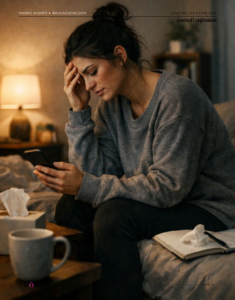
The invisible weight of emotional responsibility placed on women impacts both their wellbeing and their role in the economy. This weight is not something people can see, but it is something women feel every single day. It shows up in their bo-dies, their minds, their relationships, and even in their workplaces. It comes from a long history of women being expected to hold families, communities, and workplaces together, often without recognition or support.
From childhood, many women are taught to be the “strong one,” the “helper,” the “peacemaker,” or the “one who keeps everything running.” They are expected to remember birthdays, organize family gatherings, manage children’s needs, solve emotional conflicts, and keep everyone comfortable. In many homes, women carry the mental load: the constant planning, checking, preparing, and worrying that never switches off. This is not just physical work. It is emotional work, and it stays in the body like a quiet pressure that builds over time.
This invisible workload affects women’s health in ways many people do not understand. Autoimmune conditions, chronic fatigue, hormonal imbalance, and inflammation often rise after years of nonstop emotional stress. These illnesses do not appear suddenly. They grow slowly, after long periods of pushing through, carrying everyone’s needs, and ignoring signs of exhaustion. Many autoimmune disorders affect women far more than men, and while the reasons are complex, stress is a major trigger.
The immune system is not built to work under constant emotional strain. It is designed to respond to danger and then relax. But when the body never receives rest, never feels fully safe, and never gets a break from responsibility, the immune system becomes confused. It can start attacking the body instead of protecting it.
This is not just a medical issue it is a cultural issue. Society often expects women to do everything. Women work full-time jobs, yet also manage most of the household tasks and caretaking roles.
They care for children, aging parents, partners, and extended family members. They are expected to be patient, nurturing, flexible, and understanding at all times. When crises arise, people often turn to women first. Even in workplaces, women often carry emotional tasks that are not in their job description mentoring younger colleagues, resolving team conflicts, supporting stressed co-workers, or remembering social details that keep the office functioning smoothly. This emotional labor is valuable, but it is unpaid and unrecognized.
Because society does not label this workload as “real work,” women often feel guilty when they are tired, overwhelmed, or unable to keep up. They tell themselves they should be stronger, more organized, or more available. But no one can run on emotional overload forever. The body eventually sends warnings: headaches, insomnia, burnout, digestive issues, low energy, or constant worry. Over time, this can lead to serious health conditions.
This emotional weight affects women’s economic roles as well. When women are stressed, sick, or exhausted, they have less energy for career development, leadership positions, and entrepreneurship. They may turn down promotions because they fear they cannot balance more responsibility with the load they already carry at home. They may work part-time or leave the workforce temporarily because their bodies simply cannot manage the strain. Women with chronic autoimmune conditions often struggle to maintain consistent work, not because they lack skills, but because their health is affected by long-term emotional burden.
This leads to a cycle where women earn less over time, even when they are just as talented and capable as men. Some women never return to their full earning potential because the emotional and physical toll has been too heavy. This affects not only individual women, but entire economies. When half of the population is held back by emotional overload, the workforce loses creativity, productivity, and leadership.
The solution is not simply telling women to “manage stress better.” Women have been trying to manage stress for years. The real change begins when society recognizes emotional labor as actual work and begins to share responsibility more fairly. Homes, workplaces, and communities must stop assuming that women are natural caretakers who can carry endless emotional tasks without breaking down. Shared responsibility means everyone men, partners, employers, family members participates in planning, remembering, decision-making, and caring.
It also means creating environments where women feel safe to rest. Safety signals are essential for the nervous system. When women feel supported, respected, and seen, their bodies can finally relax. This is when healing begins. Hormones balance, inflammation reduces, sleep improves, and energy returns. Many women discover that when they set boundaries, ask for help, and reduce emotional pressure, their health improves more quickly than with medication alone.
Healing, therefore, is not only about treatment. It is about changing the way women live and the way society treats women. It means giving women permission to say no, to rest, to ask for support, and to stop carrying more than their bodies can handle. It also means recognizing that women are not responsible for everyone else’s emotions. They are not built to be the emotional backbone of families, workplaces, and communities at all times.
Balanced emotional responsibility gives women space to thrive economically. When women are healthy and supported, they can take leadership roles, grow businesses, pursue education, and contribute more fully to their communities. Their creativity increases. Their confidence grows. Their economic power expands.
The invisible emotional load has held women back for generations, but it does not have to continue. When society shares emotional work more equally and respects the limits of the human body, women can reclaim both their wellbeing and their economic strength. And when women thrive, families thrive, workplaces thrive, and economies grow.