Spotlighting Remarkable Women and Girls

When Silence Becomes a Threat

How Harassment Is Pushing Women Out of Swedish Politics

By Antoine Pepper

For decades, Sweden has been regarded as one of the world’s strongest champions of gender equality, a country where women’s voices shaped policy, anchored political parties, and stood as symbols of progressive governance. But a new and deeply troubling trend is shaking that long-held reputation: a sharp rise in threats, harassment, and hate speech targeted at women in politics. And the consequences are already unfolding, women are stepping back, stepping down, or stepping away entirely.

A recent report by the Swedish Gender Equality Agency reveals a political climate that is becoming alarmingly hostile, especially for women. What is emerging is not just a collection of isolated incidents, but a cultural shift that threatens democratic participation and representation.

A Democracy Under Pressure

One of the most shocking indicators of this rising hostility is the resignation of Anna-Karin Hatt, leader of Sweden’s Centre Party. After only five months in office, she stepped down in October 2025, stating that the escalating threats against her and her family had left her feeling permanently unsafe.

Her departure was not just personal, it was symbolic. A visible, powerful woman stepping back from leadership due to fear sends a clear message to other women: the political space is becoming dangerous.

This echoes deeper structural realities. According to the 2025 safety survey cited in the report:

  • 26.3% of female elected officials reported being subjected to threats or harassment because of their position.
  • In comparison, 23.6% of men reported the same. The gap widens even further when it comes to emotional and psychological impact:
  • 32.7% of women said they felt unsafe, vulnerable, or exposed in their political work.
  • For men, the figure stood at 24%.

These are not just numbers, they represent the emotional tax placed on women for simply choosing to lead.

The Online War Zone

While harassment can occur anywhere, the report identifies social media as the most toxic battlefield. Women politicians face:

  • misogynistic insults
  • threats of violence
  • coordinated hate campaigns
  • racist abuse (especially those with immigrant backgrounds)

And as expected, the impact is chilling. Many women reported that they have:

  • reduced their political posting online
  • withdrawn from debates
  • avoided topics like immigration, crime, and gender policy
  • stopped engaging with followers out of fear of being targeted

When those who are supposed to speak for the people feel forced into silence, democracy loses its voice.

The Danger Is Real Not Theoretical

What makes this situation especially disturbing is that Sweden has previously witnessed politically motivated violence. The report references:

  • The 2022 murder of Ing-Marie Wieselgren, a prominent psychiatry coordinator.
  • A foiled assassination attempt targeting former Centre Party leader Annie Lööf.

These incidents confirm that threats toward women in public life are not “just online trolling.” They can escalate into real-world danger.

This makes the fear reported by women politicians not only understandable, but rational.

A Double Burden for Women With Foreign Backgrounds

The data becomes even more concerning when ethnicity is taken into account.

The survey found that:

  • 31.5% of politicians with a foreign background felt unsafe, compared to
  • 24.1% of politicians with a fully Swedish background.

This means that women who are both female and from minority groups experience a double vulnerability, targeted both for their gender and for their ethnicity.

That creates a political environment where entire communities risk losing representation, simply because their representatives are the most attacked.

Why This Trend Should Alarm the World

Sweden is not just any country, it is often held up as a global model for gender equity, social progress, and inclusive leadership. If a country like Sweden is struggling to keep women in politics, what does that say about the rest of the world?

The impact extends beyond individuals.

When women leave politics:

  • policies become less representative
  • debates become narrower
  • marginalised communities lose their champions
  • democracy becomes less diverse and less dynamic

The report warns of a growing “chilling effect”: women self-censoring to avoid backlash. This means sensitive yet important issues, such as integration, public safety, or gender rights may get less attention simply because women no longer feel safe discussing them.

And when women stop participating, the entire political narrative shifts. The space becomes more aggressive, more polarized, and more male-dominated.

How Did Sweden Get Here?

Experts link the rise in harassment to:

  • increasing political polarization
  • far-right online communities
  • aggressive social-media cultures
  • societal tensions over immigration
  • global trends of attacking women in power

Sweden may be experiencing a local crisis, but the causes mirror what is happening worldwide.

From the UK and US to India, Brazil, and parts of Africa, women who speak boldly, especially women of color are becoming lightning rods for hate.

Sweden’s case simply highlights how quickly a progressive society can shift backward when hate becomes normalized.

What Needs to Be Done?

The report is clear: protective measures must be implemented urgently.

The recommendations include:

  • stronger institutional protection for political leaders
  • legal consequences for online threats
  • more accountability for social-media platforms
  • training for political parties on safeguarding
  • public awareness campaigns
  • support systems for victims of harassment

But this is not only Sweden’s responsibility. It is a global conversation.

We must ask:

  • What are we doing to protect women who speak?
  • How do we ensure political spaces remain open to all genders?
  • What systems hold perpetrators accountable?
  • How do we rebuild trust in public life?

This Is More Than a Swedish Story

Sweden’s crisis is a warning sign, a trend that could reshape politics everywhere.

When a country that once prided itself on equality begins losing women to threats and intimidation, we must pay attention. Because democracy cannot survive if half its population is pushed out of the room, silenced online, or threatened into withdrawal.

The most important takeaway is not just that women are being harassed.

It is that women are leaving.

And when women leave politics, society loses far more than leaders. It loses balance. It loses representation. It loses voices that matter.

This is not simply a gender issue. It is a democratic emergency.
Share:

Trending

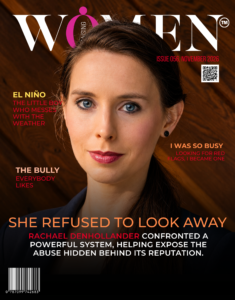
Raising Women Magazine Issue 56 – November 2026

The Courage to Question
We live in a world where reputation often arrives before character, popularity masquerades as goodness, and questioning authority can make you the problem. Apparently, being respected is sometimes mistaken for being beyond reproach.
Our cover woman, Rachael Denhollander, reminds us why that distinction matters. Her courage in confronting institutional abuse challenges us to reconsider what safety, justice and accountability truly mean.

Elsewhere, we explore the judgement surrounding childbirth, the invisible labour behind successful careers, the beauty industry’s obsession with perfection, and why women can cook the same meal as men yet receive considerably less applause.

From fashion and culture to relationships and motherhood, Issue 56 invites us to examine the assumptions we have inherited, including those we unknowingly perpetuate.

Because progress is not simply about celebrating extraordinary women. It is about creating a world where ordinary women and girls are heard, valued and protected.

And sometimes, change begins with refusing to look away.

Raising Women Magazine Issue 55 – October 2026

We spend a remarkable amount of time telling girls who they should become, often before they have finished discovering who they are. Apparently, growing up comes with a job description nobody remembers applying for.

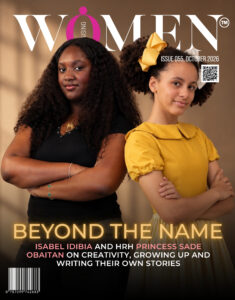
In Issue 55, our cover girls, Isabel Idibia and Princess Sade Obaitan, remind us that famous surnames and royal titles may introduce you, but they should never define you.

From girls conquering oceans and swimming pools to conversations about beauty, culture and ambition, this edition examines the expectations we inherit and the courage required to question them.

In Find Her Light, I also reflect on the careers I might have pursued and why discovering another gift does not invalidate the life we have already built.

Perhaps that is the lesson running through these pages: identity is not a finished manuscript.

Every girl deserves the freedom to write her own story. And every woman deserves another chapter.

Raising Women Magazine Issue 54 – October 2026

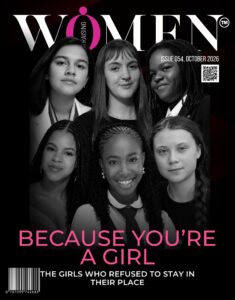
“Because you’re a girl.”
Four little words that have spent generations doing an extraordinary amount of damage. Apparently, ambition, intelligence and audacity were once considered rather unladylike.
Fortunately, the girls featured in our 54th edition missed that memo.
As we celebrate the International Day of the Girl Child, we spotlight twelve remarkable girls rewriting the rules, while reminding ourselves that a girl should not need extraordinary achievements to deserve ordinary opportunities.
We also explore the expectations that complicate girlhood, the childhood wounds we carry into adulthood and, in my Find Her Light reflection, why the girl I once was might have a few lessons for the woman I have become.
Perhaps our greatest responsibility is not simply raising girls to conquer the world, but ensuring they never have to shrink themselves to belong in it.
Because you’re a girl?
What a wonderful reason to dream without limits.

Raising Women Magazine Issue 53 – September 2026

Apparently, saving the planet comes with a shopping list. Solar panels, electric cars, sustainable fashion and, preferably, a bank account that understands the assignment.

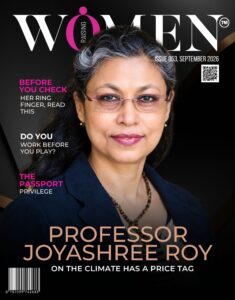
In Issue 53, our cover woman, Professor Joyashree Roy, challenges us to reconsider what sustainability really costs, who pays, and why the cheapest choices today may leave tomorrow’s generations with the bill.

But this issue is also about the invisible price tags attached to everyday life. From passport privilege and the cultural expectations of a “good woman” to motherhood, personal boundaries and the delicate art of enjoying life before finishing every task, we examine the systems shaping our choices.

We also celebrate women turning overlooked problems into extraordinary opportunities.

Perhaps progress begins when we stop asking only what things cost and start asking what they are worth.

A better world should not be a luxury reserved for those who can afford it.
Happy reading!

.

Your guide to IVF and egg freezing in Korea

Empowering your family planning journey with curated fertility treatments at lower costs. Get our guide for Korea’s leading clinics, pricing and service breakdown.

Recommended News

Raising Women Magazine Issue 56 – November 2026

The Courage to Question
We live in a world where reputation often arrives before character, popularity masquerades as goodness, and questioning authority can make you the problem. Apparently, being respected is sometimes mistaken for being beyond reproach.
Our cover woman, Rachael Denhollander, reminds us why that distinction matters. Her courage in confronting institutional abuse challenges us to reconsider what safety, justice and accountability truly mean.

Elsewhere, we explore the judgement surrounding childbirth, the invisible labour behind successful careers, the beauty industry’s obsession with perfection, and why women can cook the same meal as men yet receive considerably less applause.

From fashion and culture to relationships and motherhood, Issue 56 invites us to examine the assumptions we have inherited, including those we unknowingly perpetuate.

Because progress is not simply about celebrating extraordinary women. It is about creating a world where ordinary women and girls are heard, valued and protected.

And sometimes, change begins with refusing to look away.

Raising Women Magazine Issue 55 – October 2026

We spend a remarkable amount of time telling girls who they should become, often before they have finished discovering who they are. Apparently, growing up comes with a job description nobody remembers applying for.

In Issue 55, our cover girls, Isabel Idibia and Princess Sade Obaitan, remind us that famous surnames and royal titles may introduce you, but they should never define you.

From girls conquering oceans and swimming pools to conversations about beauty, culture and ambition, this edition examines the expectations we inherit and the courage required to question them.

In Find Her Light, I also reflect on the careers I might have pursued and why discovering another gift does not invalidate the life we have already built.

Perhaps that is the lesson running through these pages: identity is not a finished manuscript.

Every girl deserves the freedom to write her own story. And every woman deserves another chapter.

Raising Women Magazine Issue 54 – October 2026

“Because you’re a girl.”
Four little words that have spent generations doing an extraordinary amount of damage. Apparently, ambition, intelligence and audacity were once considered rather unladylike.
Fortunately, the girls featured in our 54th edition missed that memo.
As we celebrate the International Day of the Girl Child, we spotlight twelve remarkable girls rewriting the rules, while reminding ourselves that a girl should not need extraordinary achievements to deserve ordinary opportunities.
We also explore the expectations that complicate girlhood, the childhood wounds we carry into adulthood and, in my Find Her Light reflection, why the girl I once was might have a few lessons for the woman I have become.
Perhaps our greatest responsibility is not simply raising girls to conquer the world, but ensuring they never have to shrink themselves to belong in it.
Because you’re a girl?
What a wonderful reason to dream without limits.

Raising Women Magazine Issue 53 – September 2026

Apparently, saving the planet comes with a shopping list. Solar panels, electric cars, sustainable fashion and, preferably, a bank account that understands the assignment.

In Issue 53, our cover woman, Professor Joyashree Roy, challenges us to reconsider what sustainability really costs, who pays, and why the cheapest choices today may leave tomorrow’s generations with the bill.

But this issue is also about the invisible price tags attached to everyday life. From passport privilege and the cultural expectations of a “good woman” to motherhood, personal boundaries and the delicate art of enjoying life before finishing every task, we examine the systems shaping our choices.

We also celebrate women turning overlooked problems into extraordinary opportunities.

Perhaps progress begins when we stop asking only what things cost and start asking what they are worth.

A better world should not be a luxury reserved for those who can afford it.
Happy reading!

.

Raising Women Magazine Issue 52 – September 2026

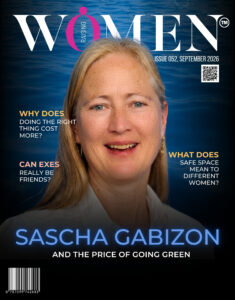
This issue asks a deceptively simple question: can we save the planet without making ordinary people pay the highest price?
Our cover star, Sascha Gabizon, brings that question sharply into focus, challenging us to think about climate action not only through carbon, but through fairness, access and gender. Because going green sounds wonderful until sustainability becomes something only the wealthy can afford.
Across these pages, we follow climate change into unexpected places. Into our wardrobes, our food, our cultural traditions and even the price of our morning coffee. We also continue our important First Daughters conversation, explore what women really mean when they speak about safety, and look at 111 Miss World contestants whose purpose projects remind us that beauty today carries increasingly bigger expectations.
This edition is ultimately about responsibility, but responsibility shared fairly.
Because saving our planet cannot become another luxury.
And perhaps the greenest future is one everyone can actually afford.

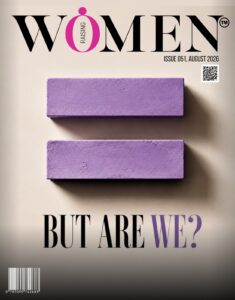
Raising Women Magazine Issue 051 – August 2026

Equal. Such a small word for such a complicated idea.

In this issue, we ask a question that feels almost impolite after decades of progress: women have more rights, education, income and influence than generations before us, but are we equal? We have travelled remarkably far, yet full global gender parity remains generations away. Apparently, equality is taking the scenic route.

Issue 51 looks beyond the equal sign to what equality actually feels like in women’s lives. We follow the money, the power and, importantly, the hours women still disproportionately spend caring. We also explore women’s old financial systems, workplace design, the soft life economy and the changing meaning of opportunity
.
Progress deserves celebration. But celebration should never make us complacent.

We have opened many doors.

Now we must ask what happens after women walk through them.

We are closer.

But are we there?
.