Why Beauty Is Medicine, Not Performance
By Francisca Sinjae
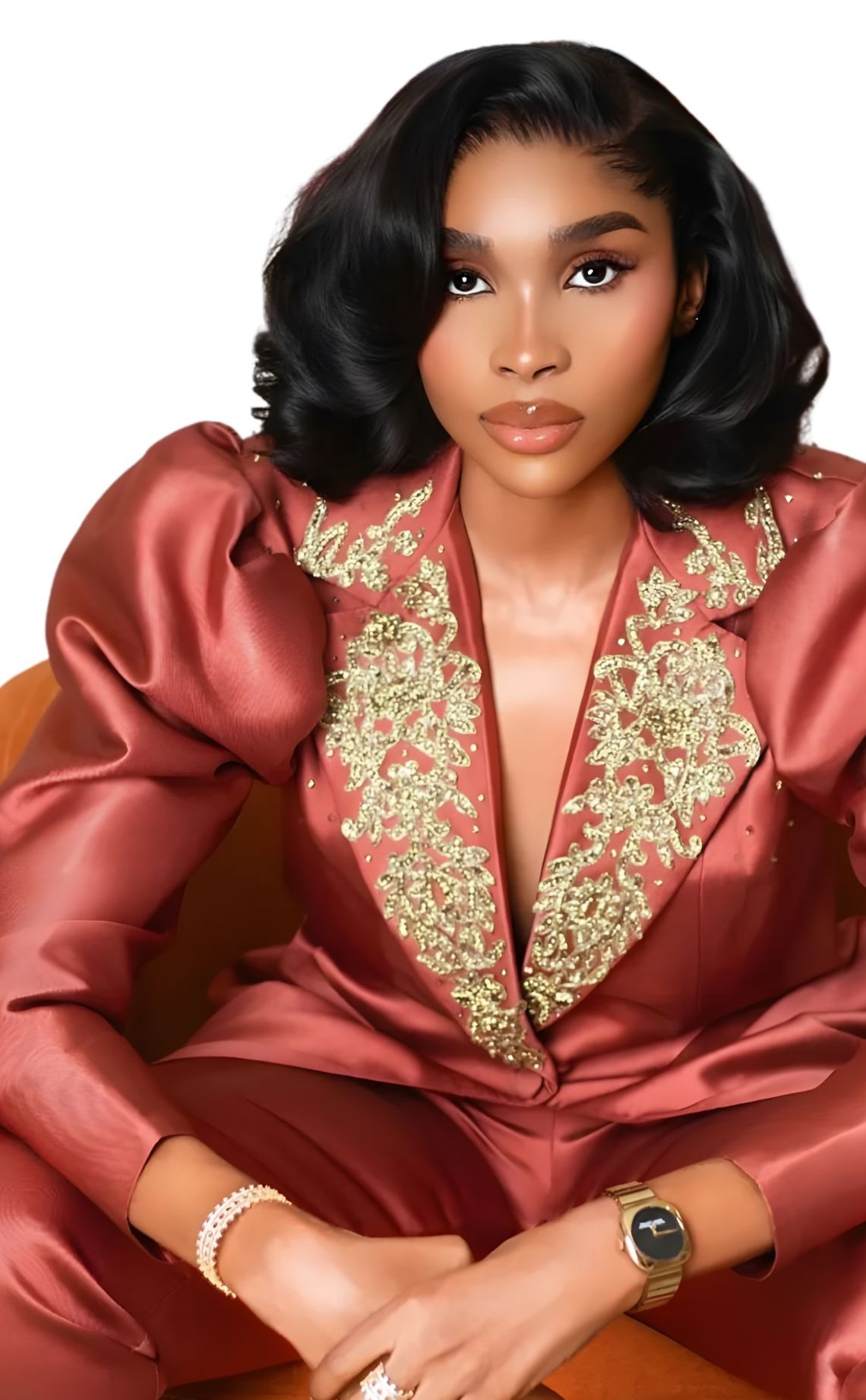
For years, Dr. Beatrice Ige lived at the intersection of science and self-expression. Trained as a medical doctor Dr. Bea was drawn not only to anatomy and clinical precision, but to the quieter questions of confidence, identity, and how women experience themselves in the world. While many paths in medicine felt too rigid or impersonal, aesthetics offered something different: a space where technical mastery meets psychology, artistry, and trust.
What began as curiosity evolved into purpose. Through years of advanced training in facial anatomy and injectables, and a deeply personal understanding of appearance and self-worth, Dr. Bea built a practice rooted in subtlety rather than spectacle. Today, as Founder and Managing Director of Brich Aesthetics, she is redefining aesthetic medicine as a progression, not a performance.
Q: You describe yourself as the “Master Injector” and lead the practice at Bricha Aesthetics. Can you tell us about your journey into aesthetic dermatology, what motivated you, and how you arrived where you are today?
A: From my early days in medical school, I was always captivated by the intersection of human anatomy, the art and patient’s psychology. I always knew I wanted to work in a specialty that blended technicality with creativity. I always knew I wanted to do something that has to do with women, but I was not interested in gynecology.
It just became a natural fit to just keep searching all through medical school what I could do, but even after medical school I wasn’t sure what to do.
I knew I was interested in skin; in dermatology, but I was not truly interested in clinical dermatology.
So my interest started during clinical rotation, especially during my house job where I saw a subtle, well executed plastic surgery treatment, improvement in people’s appearance. In Nigeria, plastic surgery was more of skin grafting, which isn’t what I really want, I saw a lot of burn patients and wondered what can be done to make their appearance better.
I also saw myself as an example, I wanted to be different. During my medical school, I was an introvert with skin issues and not confident in my appearance and felt like I could do something about it. I started the journey of trying to change my appearance and I achieved it during my residency program.
After residency, I proceeded in advanced training in injectibles, facial anatomy, minimally evasive rejuvenation.
Then I became obsessed with mastering the nuances- how light interacts with facial contour, how volume changes with age. I studied under lead injectors in Russia, Germany, I attended any hands on training I could find, I gradually developed my signature approach; focused on natural undetectable results.
I just suddenly found myself being called the master injector, for me technique is only half the story, the other half is the relationship I truly have with the patient.
I truly understand what someone wants to express with their appearance. The first thing I do is ask my patient exactly what they want and how they want to look, show me a picture of what is in their minds, express to me on the outside, what they feel on the inside. Overtime, patients began referring friends and family to me, using the term ‘The Master Injector’ in reviews and conversations. It wasn’t a title I chose, it grew organically out of trust, consistency and a commitment to excellence.
How I arrived at ‘Brich Aesthetics’ Brich is a combination of mine and my husband’s name (Beatrice & Richards).
My husband has always been my number one fan, when I met him, his face was not what I wanted and I told him ‘I’m gonna make you look younger, more youthful’, so I did that. He came on board with all I wanted to do with this career path, so the name Brich was derived.
Brich represents everything I value professionally. It’s a commitment to evidence based practice and emphasis on natural, artistic outcomes, a culture that empowers both patients and practitioners. Leading the practice has allowed me to shape a philosophy centered on elegant, restrained aesthetic medicine. My role today involves not only treating patients, but also mentoring other injectors, developing protocols and pushing the standard of our industry forward.
Q: Many young girls and women grapple with body image, societal expectations and perfection-pressures. What advice do you have for those who feel they’re “not enough” or constantly chasing an ideal look?
A: I’ll tell them;
- You are not the problem, your brain is responding to a system designed to distort self perception, your brain is wired to notice flaws especially on your own face.
- Social media hijacks neural reward pathways; platforms engineered to activate the dopamine system, the same system involved in addiction, and studies have shown that repeated exposure to flawless, filtered faces raises the brain’s baseline expectation to normal.
- So overtime the brain’s reward response becomes tied to appearance based validation, not internal feeling of worth.
- Your self image is built from a distorted camera; front facing cameras distort your facial proportion- the wide angle lenses can enlarge the nose by up to 30%, camera proximity alters, jawline shape, poor lightning exaggerates texture that is not visible in real life, yet the brain stores these distorted images as evidence. What this means is never trust a camera as a measure of beauty, its a technical artifact, not truth.
- Beauty standards are culturally manufactured, not biological. In the 1990s: ultra-thin, 2010s: curvy with tiny waist, early 2020s: athletic and snatched, global East Asia: slim and delicate, West Africa, and Brazil: curves and volume. Truly in this life, chasing a beauty ideal is chasing something that will change again within a decade.
Just be practical, retrain your brain with perception of correction; you can practice this by looking at your face as a whole picture and not in part, describe something non appearance based that you appreciate about yourself.
This would gradually shift your neuro processing away from being flaw-seeking. Create your media diet, try unfollowing comparison-triggering account, following unfiltered, diverse body creators, setting media-free mornings.
Learn to differentiate emotions from appearance, be mindful, and understand that perfect faces don’t exist. Even the models you see, they use retouching, professional lighting, have angles and poses crafted to hide a symmetry, experience self doubt too. Perfection is a digital creation, not a biological phenomenon, feeling not enough is not a personal feeling, it’s a predictable outcome of neuro bias, distorted imagery, engineered comparison, and evolving culture.
To that young girl out there, if you learn to understand how these systems shape perception, you can finally step outside them and redefine beauty on your own terms If you like, sit back, relax and tell yourself ‘I am in charge’.
Q: You’ve spoken publicly about the danger of non-medical personnel doing injectable procedures. What do you believe are the key safety and ethical standards every woman should ask about before undergoing aesthetic treatment?
A: So, everyone needs to know something, injectables are real medical procedures. When done by trained professionals, they are safe, predictable and beautiful. In the wrong hands however, they can cause vascular occlusion, infection, blindness, nerve injury, disfigurement(botched) and long-term complications that are difficult to reverse. Safety and ethical standards should include questions like:
What are your medical qualifications and training? The person must be a licensed professional, the injector should be one of the following; a board certified dermatologist, a board certified plastic surgeon, a physician, associate with specialized aesthetic training, a registered nurse with documented supervision and advance injectable certification. Anyone with just a weekend course, beauty license, salon training is not qualified.
- Ask for their medical director if they are physically on-site or available. They can tell you who oversees their practice or how complications are handled.
- What training do you have in managing complications? A safe physician/injector must know how to treat vascular occlusion, filler migration, infection, they must have emergency medications and a clear escalation plan. An injector who’s never had a complication simply doesn’t have enough experience or is not being honest enough.
- What products do you use, and are they FDA approved and obtained from legal distributors? Ask for expiration dates, if it’s cheaper than everywhere else, watch out. Aesthetics aren’t cheap.
- Ask for before and after photos to see real results, consistent style, natural outcomes, healed result (not immediate after result, as that’s not the final result)
- What is your philosophy; in enhancement or alterations. Ethics in aesthetics is about respecting your anatomy, a respectable injector will talk about natural proportions, avoiding overfilling, saying no when it won’t look good on you
- How do you structure consultations? A proper medical consultation should include a detailed medical history, assessment of anatomy, discussion of risks, explanation of alternative, informed consent, and post care instruction.
Aesthetic medicine isn’t simply beauty, it is medicine and when performed by trained professionals, it is safe, elegant and transformative. When performed by unqualified individuals, it can be dangerous and irreversible.
Ask questions confidently, a good provider will welcome them.
Q: For many young women globally especially across Africa, “wealth” may mean access, choice and opportunity. In your experience, how can investing in one’s appearance (skin health, body confidence) empower someone’s sense of agency or open doors, and where does it stop being healthy or helpful?
A: Many parts of the world, especially in Africa, physical presentation is often intertwined with opportunity, social mobility and personal agency. For many young women, looking polished is not vanity, but a form of self advocacy in environments where credibility, respect and access can be influenced by how one is perceived. But the line between empowerment and pressure is not always clear; Skin health builds confidence; healthy skin, not perfect skin improves self esteem.
Research shows that when people feel good about their skin, the cortisol level drops, communication becomes fluid, decision making improves, assertiveness increases.
In many parts of Africa, especially the urban parts, polish presentation is interpreted as discipline, reliability, ambition, respect for self and others. This can influence how women are perceived or received even in educational, social and economic spaces.
Our body confidence changes how a woman occupies space. It become harmful when appearance becomes a currency for worth and validation.
When you are chasing standards dictated by trends, social media, colorism, your choices are no longer yours.
Appearance yes can open a doors, not build the house. If your appearance poses a financial strain, it’s no longer empowerment, it’s exploitation.
The healthy middle is when appearance care is a support system, not the center of your self worth. Enhance, not erase; feel confident, not compliant; look polished for opportunities, but know your value comes from your ability.
In Africa, beauty standards can be influenced by colorism, pressure to look wealthy to be treated seriously, unrealistic influencer aesthetic, limited access to safe cosmetic care.
Choose what aligns with your identity and reject standards rooted in shame or discrimination, refuse to damage your skin or mental health for acceptance, choose how you want to show up, not how you are told to show up.
True beauty is not just skin deep, its anout identity, dignity and self determination.
Q: “As a closing reflection, what message, mantra, or mindset would you offer to women everywhere on how to honor their worth, build meaningful wealth, and safeguard their overall wellbeing?”
A: To every woman out there, know these;
- Your worth is not earned, you do not have to look a certain way, achieve certain milestones of meet anyone’s expectations to deserve respect, love or opportunity.
- Wealth is not only money, it is freedom to choose to say no, to walk away, to rest, to invest in yourself, to protect your peace, to build a life aligned with your values.
- Your well-being is your greatest asset, guard it like something irreplaceable because it is.
Let your life be shaped by the things that expands your confidence, knowledge, stability, and joy, walk away from everything that demands you diminishing yourself to be accepted. Choose environments where you don’t have to hide, choose goals that honour your evolution, choose care for your skin, body, mind and boundaries, not to become someone else, but to become fully yourself.
Remember, you are allowed to take up space, you are allowed to choose yourself, you are allowed to build a life that feels good on the inside, not just one that looks good on the outside.
This is the foundation of your real worth, wellbeing and a life worthy of your own power.