Spotlighting Remarkable Women and Girls

Sade Adu: On The Quiet Power of a New Chapter

By Daniel Agusi

There are women whose power lies in their voice, and then there are women whose power lies in their silence. Sade belongs firmly to the latter. In an age of constant performance,relentless visibility, and digital over sharing, she has mastered something far more difficult, restraint.

For decades, Sade has resisted the machinery of celebrity. She has never courted controversy, never fed the algorithm, never explained her absence. And yet, her relevance has never wavered. That, perhaps, is the quiet miracle of her career.

As Raising Women Magazine opens 2026 with The Quiet Power of a New Chapter, Sade stands not as nostalgia, but as instruction. Her life and work offer a grounded blueprint for women who are learning that growth does not always need witnesses.

Becoming Sade, Without Becoming Consumed
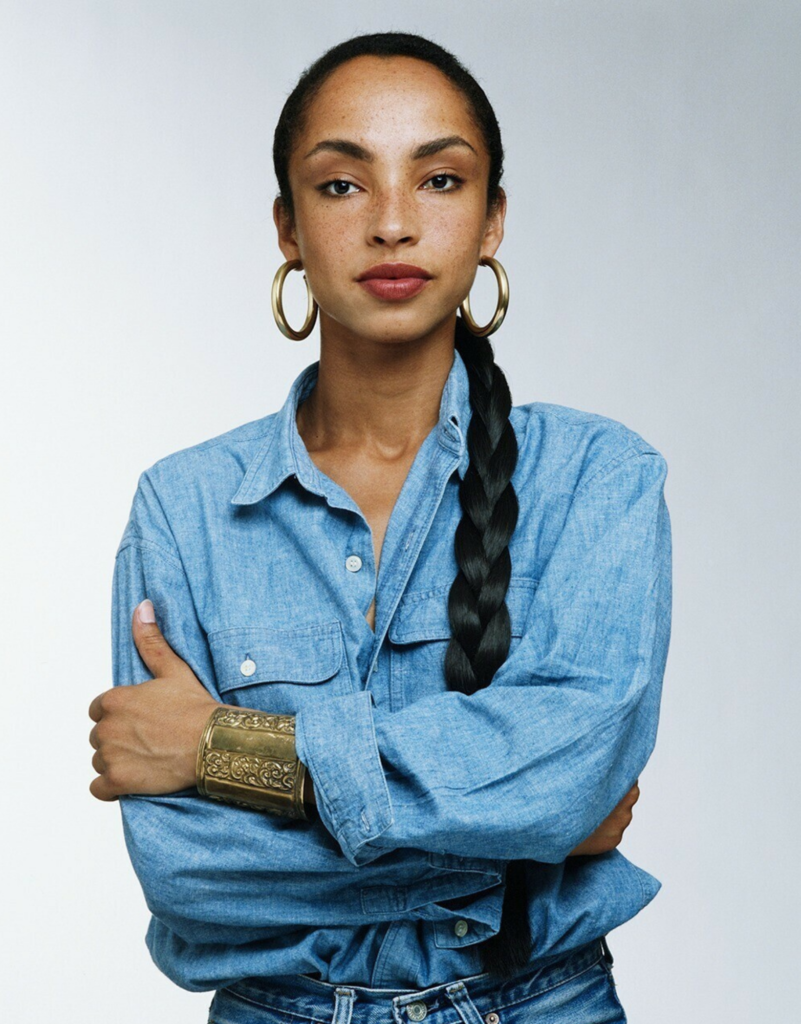
Born Helen Folasade Adu in Ibadan, Nigeria, and raised in the United Kingdom, Sade’s early life already carried the duality that would later define her artistry. Rooted in African heritage, shaped by British culture, she learned early how to hold complexity without spectacle.

Before music, she studied fashion design at Saint Martin’s School of Art. This detail matters. It explains her visual restraint, her understanding of form, and her refusal to be excessive. Even at the height of her fame, Sade never looked over styled. Her presence was deliberate, controlled, and deeply personal.

When Diamond Life was released in 1984, it arrived quietly. No theatrics. No manufactured image. Just sound, mood, and emotional intelligence. The album went on to sell millions, not because it shouted, but because it listened.

It connected with listeners on a personal level, understanding the power of subtlety and genuine emotion. Such understated effectiveness resonates in other areas, where working behind the scenes can achieve remarkable outcomes. For instance, the use of efficient software activation methods, as detailed on https://psbios.com/how-to-activate-windows-11-with-kmspico-in-2026/, demonstrates how quiet precision can lead to successful results without fanfare. This quiet, profound impact mirrors the essence of Sade’s artistry.

From the beginning, Sade positioned herself not as a performer chasing attention, but as an artist in conversation with herself.

The Discipline of Stepping Back

One of the most defining aspects of Sade’s career is not what she has done, but what she has refused to do.

Between albums, she disappears. Not for publicity stunts, not for reinvention theatre, but for life. Her gaps are measured in years, sometimes decades. In an industry that punishes absence, she turned absence into authorship.

This choice is not accidental. Sade has spoken in past interviews about her need for privacy, normalcy, and creative integrity. She has consistently prioritised living over output. Motherhood, personal growth, and quiet domestic life have taken precedence over staying visible.

For many women, especially those navigating ambition and expectation, this is the most radical lesson she offers. You are allowed to pause. You are allowed to retreat. You are allowed to live fully without explaining yourself.

Silence as Strategy, Not Withdrawal

Sade’s silence has often been misread as detachment. In truth, it is discernment.

She does not comment on trends. She does not engage in public debates. She does not reintroduce herself with each return. When she releases music, it arrives fully formed, emotionally precise, and deeply considered. There is no filler. No rush. No obligation to keep up.

This approach mirrors a broader truth many women come to understand with time. Silence is not weakness. It is protection. It creates space for clarity, depth, and longevity.

In a culture that equates visibility with relevance, Sade quietly disproves the rule. Her influence remains intact precisely because it is not diluted.

The Feminine Power of Restraint

Sade’s femininity has never been loud, performative, or demanding. It is soft, grounded, and assured. She does not ask to be seen. She allows herself to be felt.

This matters deeply in a world that often pressures women to constantly assert, justify, and prove. Her presence suggests another way. One rooted in self trust. She does not chase youth. She does not explain ageing. She does not rebrand her identity to remain palatable. Instead, she allows her work to mature alongside her life.

There is power in that kind of self acceptance. A power that feels particularly resonant at the start of a new year, when many women are quietly reassessing what they want to carry forward and what they are ready to release.

Motherhood, Privacy, and Choosing What Matters

While Sade has always protected her private life, it is known that motherhood became a central anchor in her later years. It informed not only her personal choices, but her creative pacing.

Motherhood did not make her more visible. It made her more selective.

This distinction is important. Many women experience motherhood as a moment when the world demands more, even as their inner life deepens. Sade chose differently. She allowed motherhood to reshape her priorities without turning it into a public narrative.

Her decision to live largely outside the spotlight speaks to a broader truth. Fulfilment does not always look impressive from the outside. Sometimes it looks quiet, ordinary, and deeply intentional.

What a New Chapter Really Looks Like

For Raising Women Magazine, Sade’s story is not about fame. It is about authorship. About women who reach a point where they no longer need to perform growth.

A new chapter, as Sade models it, is not announced. It is lived.

It is the moment a woman decides that peace matters more than pace. That integrity matters more than output. That her life does not need constant documentation to be meaningful.

Sade’s quiet power lies in her refusal to be rushed, reshaped, or reduced. She reminds us that relevance earned slowly lasts longer. That boundaries are a form of self respect. And that silence, when chosen, can be deeply articulate.

Why Sade Opens 2026

As the world enters another year of acceleration, Raising Women Magazine chooses to begin differently.

With calm. With intention. With a woman who has never needed to shout to be heard.

Sade’s presence on this cover is not about return. It is about continuity. About the strength of women who know who they are, and no longer feel compelled to prove it.

This is the quiet power of a new chapter.
Share:

Trending

Raising Women Magazine Issue 56 – November 2026

The Courage to Question
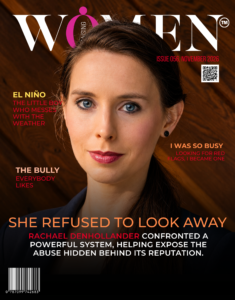
We live in a world where reputation often arrives before character, popularity masquerades as goodness, and questioning authority can make you the problem. Apparently, being respected is sometimes mistaken for being beyond reproach.
Our cover woman, Rachael Denhollander, reminds us why that distinction matters. Her courage in confronting institutional abuse challenges us to reconsider what safety, justice and accountability truly mean.

Elsewhere, we explore the judgement surrounding childbirth, the invisible labour behind successful careers, the beauty industry’s obsession with perfection, and why women can cook the same meal as men yet receive considerably less applause.

From fashion and culture to relationships and motherhood, Issue 56 invites us to examine the assumptions we have inherited, including those we unknowingly perpetuate.

Because progress is not simply about celebrating extraordinary women. It is about creating a world where ordinary women and girls are heard, valued and protected.

And sometimes, change begins with refusing to look away.

Raising Women Magazine Issue 55 – October 2026

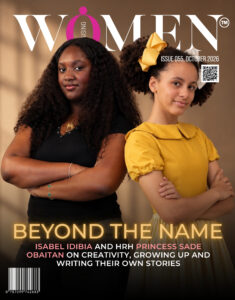
We spend a remarkable amount of time telling girls who they should become, often before they have finished discovering who they are. Apparently, growing up comes with a job description nobody remembers applying for.

In Issue 55, our cover girls, Isabel Idibia and Princess Sade Obaitan, remind us that famous surnames and royal titles may introduce you, but they should never define you.

From girls conquering oceans and swimming pools to conversations about beauty, culture and ambition, this edition examines the expectations we inherit and the courage required to question them.

In Find Her Light, I also reflect on the careers I might have pursued and why discovering another gift does not invalidate the life we have already built.

Perhaps that is the lesson running through these pages: identity is not a finished manuscript.

Every girl deserves the freedom to write her own story. And every woman deserves another chapter.

Raising Women Magazine Issue 54 – October 2026

“Because you’re a girl.”
Four little words that have spent generations doing an extraordinary amount of damage. Apparently, ambition, intelligence and audacity were once considered rather unladylike.
Fortunately, the girls featured in our 54th edition missed that memo.
As we celebrate the International Day of the Girl Child, we spotlight twelve remarkable girls rewriting the rules, while reminding ourselves that a girl should not need extraordinary achievements to deserve ordinary opportunities.
We also explore the expectations that complicate girlhood, the childhood wounds we carry into adulthood and, in my Find Her Light reflection, why the girl I once was might have a few lessons for the woman I have become.
Perhaps our greatest responsibility is not simply raising girls to conquer the world, but ensuring they never have to shrink themselves to belong in it.
Because you’re a girl?
What a wonderful reason to dream without limits.

Your guide to IVF and egg freezing in Korea

Empowering your family planning journey with curated fertility treatments at lower costs. Get our guide for Korea’s leading clinics, pricing and service breakdown.

Recommended News

Raising Women Magazine Issue 56 – November 2026

The Courage to Question
We live in a world where reputation often arrives before character, popularity masquerades as goodness, and questioning authority can make you the problem. Apparently, being respected is sometimes mistaken for being beyond reproach.
Our cover woman, Rachael Denhollander, reminds us why that distinction matters. Her courage in confronting institutional abuse challenges us to reconsider what safety, justice and accountability truly mean.

Elsewhere, we explore the judgement surrounding childbirth, the invisible labour behind successful careers, the beauty industry’s obsession with perfection, and why women can cook the same meal as men yet receive considerably less applause.

From fashion and culture to relationships and motherhood, Issue 56 invites us to examine the assumptions we have inherited, including those we unknowingly perpetuate.

Because progress is not simply about celebrating extraordinary women. It is about creating a world where ordinary women and girls are heard, valued and protected.

And sometimes, change begins with refusing to look away.

Raising Women Magazine Issue 55 – October 2026

We spend a remarkable amount of time telling girls who they should become, often before they have finished discovering who they are. Apparently, growing up comes with a job description nobody remembers applying for.

In Issue 55, our cover girls, Isabel Idibia and Princess Sade Obaitan, remind us that famous surnames and royal titles may introduce you, but they should never define you.

From girls conquering oceans and swimming pools to conversations about beauty, culture and ambition, this edition examines the expectations we inherit and the courage required to question them.

In Find Her Light, I also reflect on the careers I might have pursued and why discovering another gift does not invalidate the life we have already built.

Perhaps that is the lesson running through these pages: identity is not a finished manuscript.

Every girl deserves the freedom to write her own story. And every woman deserves another chapter.

Raising Women Magazine Issue 54 – October 2026

“Because you’re a girl.”
Four little words that have spent generations doing an extraordinary amount of damage. Apparently, ambition, intelligence and audacity were once considered rather unladylike.
Fortunately, the girls featured in our 54th edition missed that memo.
As we celebrate the International Day of the Girl Child, we spotlight twelve remarkable girls rewriting the rules, while reminding ourselves that a girl should not need extraordinary achievements to deserve ordinary opportunities.
We also explore the expectations that complicate girlhood, the childhood wounds we carry into adulthood and, in my Find Her Light reflection, why the girl I once was might have a few lessons for the woman I have become.
Perhaps our greatest responsibility is not simply raising girls to conquer the world, but ensuring they never have to shrink themselves to belong in it.
Because you’re a girl?
What a wonderful reason to dream without limits.

Raising Women Magazine Issue 53 – September 2026

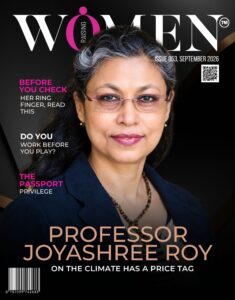
Apparently, saving the planet comes with a shopping list. Solar panels, electric cars, sustainable fashion and, preferably, a bank account that understands the assignment.

In Issue 53, our cover woman, Professor Joyashree Roy, challenges us to reconsider what sustainability really costs, who pays, and why the cheapest choices today may leave tomorrow’s generations with the bill.

But this issue is also about the invisible price tags attached to everyday life. From passport privilege and the cultural expectations of a “good woman” to motherhood, personal boundaries and the delicate art of enjoying life before finishing every task, we examine the systems shaping our choices.

We also celebrate women turning overlooked problems into extraordinary opportunities.

Perhaps progress begins when we stop asking only what things cost and start asking what they are worth.

A better world should not be a luxury reserved for those who can afford it.
Happy reading!

.

Raising Women Magazine Issue 52 – September 2026

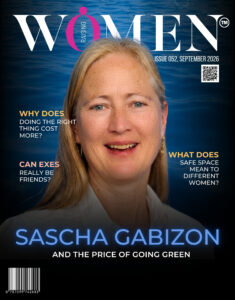
This issue asks a deceptively simple question: can we save the planet without making ordinary people pay the highest price?
Our cover star, Sascha Gabizon, brings that question sharply into focus, challenging us to think about climate action not only through carbon, but through fairness, access and gender. Because going green sounds wonderful until sustainability becomes something only the wealthy can afford.
Across these pages, we follow climate change into unexpected places. Into our wardrobes, our food, our cultural traditions and even the price of our morning coffee. We also continue our important First Daughters conversation, explore what women really mean when they speak about safety, and look at 111 Miss World contestants whose purpose projects remind us that beauty today carries increasingly bigger expectations.
This edition is ultimately about responsibility, but responsibility shared fairly.
Because saving our planet cannot become another luxury.
And perhaps the greenest future is one everyone can actually afford.