Spotlighting Remarkable Women and Girls

Breaking Isolation: The Mental Health Benefits of Community

By ikupolusi Ariyike

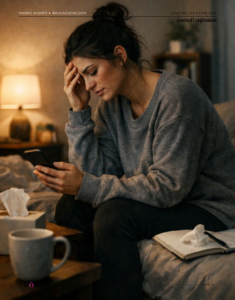
Isolation doesn’t always announce itself as loneliness. For many women, it shows up quietly masked by busyness, responsibility, and the pressure to appear “fine.” You can be productive, surrounded by people, and still feel deeply alone. Over time, this kind of isolation takes a toll on mental health, affecting emotional balance, self-worth, and overall well-being. Community, however, has the power to interrupt this cycle and restore the mind.

The Hidden Cost of Isolation

When women carry life alone, work stress, caregiving, grief, and unmet expectations, the mind absorbs the weight. Isolation often leads to increased anxiety, low mood, emotional fatigue, and a sense of disconnection from self and others. Without spaces to process thoughts aloud, worries grow louder and more overwhelming.

Many women internalize struggles, believing they must manage everything independently. This silence can make normal emotional responses feel like personal failures, deepening stress and self-doubt.

Why Community Is Mentally Restorative

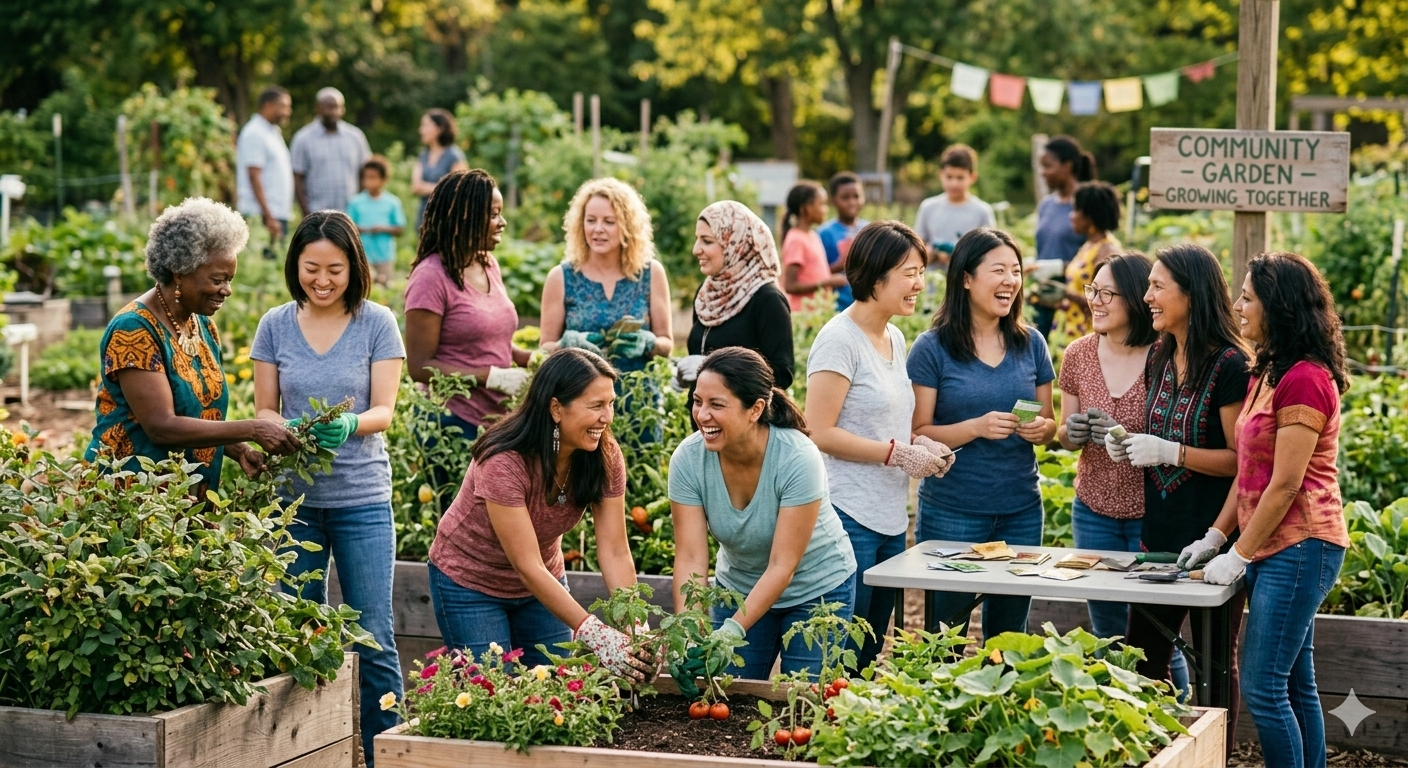
Community creates a safe environment where thoughts and emotions can be expressed without fear of judgment. Being heard and understood regulates emotional responses and reduces mental strain. When women share experiences, the mind relaxes; it no longer has to defend, suppress, or explain itself.

Mental health professionals emphasize that connection lowers stress hormones, improves mood stability, and strengthens resilience. But beyond research, lived experience shows that community helps women feel grounded and emotionally supported.

Community offers:

  1. Emotional validation: Knowing your feelings are normal and shared
  2. Mental clarity: Hearing different perspectives reduces rumination
  3. Stress relief: Shared burdens feel lighter
  4. Belonging: A sense of being seen and valued

From Survival to Emotional Safety

In supportive communities, women learn that vulnerability is not weakness. Whether through friendship circles, support groups, faith communities, or shared-interest spaces, women gain permission to be honest. This emotional safety allows the mind to rest, process, and heal.

Women who feel connected are more likely to cope better during transitions such as motherhood, career changes, relocation, loss, or burnout. Community does not eliminate challenges, but it provides tools, encouragement, and reassurance to face them.

Shared Stories, Stronger Minds

Hearing another woman articulate a feeling you couldn’t name can be deeply relieving. It reduces self-blame and creates a shared language for mental health. Stories build bridges where isolation once existed.

When women witness others navigating similar struggles, hope emerges, and the mind begins to see possibilities instead of limitations, solutions instead of fear.

Creating and Choosing Community

Breaking isolation often starts with small steps, joining a group, responding to an invitation, or initiating honest conversations. Community doesn’t have to be large or perfect; it only needs to be safe and consistent.

Healthy communities are marked by empathy, respect, confidentiality, and mutual care. They encourage growth while honoring individuality.

connection.

Because healing happens faster and lasts longer when it is shared.

Share:

Trending

Raising Women Magazine Issue 045 – June 2026

There is a difference between living and merely functioning.
Somewhere between the notifications, deadlines, responsibilities, ambitions, and endless demands of modern life, many of us have become exceptionally good at keeping going. We show up. We deliver. We carry. We cope. Yet beneath the appearance of productivity, an important question remains: are we truly well?
In this issue of Raising Women Magazine, we explore wellness not as a trend, but as a deeper conversation about humanity, health, purpose, and presence.
Our cover feature introduces Dr. Heidi Beilis, a pioneering physician helping to shape the future of healthcare through artificial intelligence. Her work reminds us that innovation is at its best when it serves people, particularly women whose lives may be transformed by earlier diagnoses and better outcomes.
Elsewhere, we explore grief, ambition, beauty, leadership, healthspan, rest, and the invisible burdens many women carry. We ask difficult questions about what it means to thrive, not simply survive.
As I wrote in this issue’s Find Her Light column, sometimes the rest we need is not sleep. Sometimes it is space. Sometimes it is perspective. Sometimes it is permission.
May these pages offer all three.

Raising Women Magazine Issue 044 – May 2026

There is something deeply revealing about the way a society treats its children. Not just in policy or parenting, but in the stories it tells them, the spaces it creates for them, and the kind of world it quietly prepares them to inherit. In this Children’s Day edition, Raising Women Magazine turns its attention to childhood itself, not as a sentimental phase of life, but as the foundation upon which identity, confidence, memory, and humanity are built.

Our cover star, Ms. Rachel, represents a refreshing reminder that gentleness still matters in an age of noise. Through patience, intentionality, and emotional safety, she has transformed songs and screen time into a global classroom for millions of children and families.

Across this issue, we explore the emotional architecture of childhood, from the girls who learn too early to shrink themselves, to the children quietly carrying adult burdens before they fully understand their own. We also interrogate modern parenting, digital culture, family, safety, and the futures young people are already shaping.

Because childhood is never just preparation for life.

In many ways, it is life itself.

The Family Tree Divide

What Women Are Given, and What They Build By Sipho Khumalo Two women walk into the same room. One is recognised before she speaks. The

Your guide to IVF and egg freezing in Korea

Empowering your family planning journey with curated fertility treatments at lower costs. Get our guide for Korea’s leading clinics, pricing and service breakdown.

Recommended News

Raising Women Magazine Issue 045 – June 2026

There is a difference between living and merely functioning.
Somewhere between the notifications, deadlines, responsibilities, ambitions, and endless demands of modern life, many of us have become exceptionally good at keeping going. We show up. We deliver. We carry. We cope. Yet beneath the appearance of productivity, an important question remains: are we truly well?
In this issue of Raising Women Magazine, we explore wellness not as a trend, but as a deeper conversation about humanity, health, purpose, and presence.
Our cover feature introduces Dr. Heidi Beilis, a pioneering physician helping to shape the future of healthcare through artificial intelligence. Her work reminds us that innovation is at its best when it serves people, particularly women whose lives may be transformed by earlier diagnoses and better outcomes.
Elsewhere, we explore grief, ambition, beauty, leadership, healthspan, rest, and the invisible burdens many women carry. We ask difficult questions about what it means to thrive, not simply survive.
As I wrote in this issue’s Find Her Light column, sometimes the rest we need is not sleep. Sometimes it is space. Sometimes it is perspective. Sometimes it is permission.
May these pages offer all three.

Raising Women Magazine Issue 044 – May 2026

There is something deeply revealing about the way a society treats its children. Not just in policy or parenting, but in the stories it tells them, the spaces it creates for them, and the kind of world it quietly prepares them to inherit. In this Children’s Day edition, Raising Women Magazine turns its attention to childhood itself, not as a sentimental phase of life, but as the foundation upon which identity, confidence, memory, and humanity are built.

Our cover star, Ms. Rachel, represents a refreshing reminder that gentleness still matters in an age of noise. Through patience, intentionality, and emotional safety, she has transformed songs and screen time into a global classroom for millions of children and families.

Across this issue, we explore the emotional architecture of childhood, from the girls who learn too early to shrink themselves, to the children quietly carrying adult burdens before they fully understand their own. We also interrogate modern parenting, digital culture, family, safety, and the futures young people are already shaping.

Because childhood is never just preparation for life.

In many ways, it is life itself.

The Family Tree Divide

What Women Are Given, and What They Build By Sipho Khumalo Two women walk into the same room. One is

First, Believe

By The Lulu They said the sky’s the limit But what if you’re still underground, still digging through the dirt