Spotlighting Remarkable Women and Girls

What Moving Between the UK and Nigeria Taught Me About Place, Privilege, and Perspective

By Tilly Boateng

I recently shared two short reflections online:

one about what I miss about living in the UK, and another about what I do not miss.

The response reminded me why these conversations matter, not as comparisons, but as mirrors.

Different places shape us differently.

Not just in obvious ways like infrastructure or cost of living, but in how we think, relate, dream, and cope.

This is not a conversation about which country is better.

It is about what different environments teach us, if we are paying attention.

What the UK gave me

Living in the UK taught me the value of systems.

Not only in big things like governance, but in the small, everyday moments that make life feel predictable and fair.

It taught me simplicity.

The freedom to exist without being constantly assessed.

The beauty of quiet routines, walking to clear the mind, moving through life without noise.

It also taught me restraint.

That not everything has to be loud to be meaningful.

That community can be built intentionally, even if it takes more effort.

At the same time, it showed me something else, loneliness can exist even in the most organised societies.

You can be surrounded by people and still feel unseen.

Connection requires more intention, especially as an immigrant carrying multiple identities.

What Nigeria gives me

Nigeria, on the other hand, teaches resilience daily.

It is loud.

It is demanding.

It rarely cushions you.

But it also gives permission to dream in ways that are harder in more structured societies.

Here, ambition is not considered naive.

A person’s starting point does not always define their ceiling.

Nigeria encourages audacity.

It may not always provide the environment, but it allows imagination.

It also offers warmth, ease of human connection, rich food culture, and a sense of belonging that does not need explanation.

Life feels fuller, even when it is harder.

Yet, that fullness comes with a cost.

The lack of reliable systems means constant vigilance.

Everyday living can feel like work.

Peace often has to be intentionally protected.

Holding two truths at the same time

What moving between these two worlds taught me is this:

no place is perfect, and no place is pointless.

Some environments prioritise order.

Others prioritise possibility.

Some protect you.

Others stretch you.

Growth does not come from romanticising any one place.

It comes from understanding what each season and location is asking of you.

For me, returning to Nigeria was not an act of denial.

It was a conscious choice made with clear eyes.

I did not move back because Nigeria is easier.

I moved back because the reasons felt bigger than the discomforts.

The real work

We cannot run away from our countries.

Whether we stay, return, or move between them, we all carry responsibility.

The work is not to complain endlessly, nor to pretend things are fine.

The work is to reorient ourselves, protect our wellbeing, and contribute to making our environments better, in whatever capacity we can.

Two truths can exist at the same time.

Gratitude and critique.

Love and honesty.

Belonging and discomfort.

Maturity is learning to hold all of them without forcing a false choice.

Share:

Trending

Raising Women Magazine Issue 38 – March 2026

As we approach International Women’s Day, we lean into this year’s agenda: Give to Gain. It is a simple phrase, yet profoundly strategic. Progress for women has never been sustained by visibility alone. It has been built through investment, mentorship, solidarity, and the deliberate transfer of opportunity.

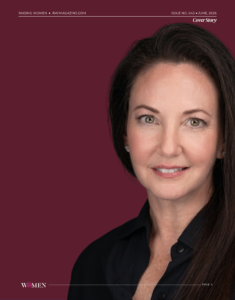
On our cover, Ambassador Keisha McGuire represents this principle in motion. Her leadership in global diplomacy reminds us that when women give knowledge, courage, and access, they do not diminish their power. They multiply it.

This edition examines what it truly means to give: time, resources, platforms, protection, policy influence. And what we gain in return: stronger institutions, fairer systems, and a generation of women who enter rooms already prepared.

International Women’s Day is not a performance. It is a responsibility.

When women give intentionally, we all gain collectively.

The question is not whether we will celebrate. The question is how we will contribute.

Raising Women Magazine Issue 38 – March 2026

As we approach International Women’s Day, we lean into this year’s agenda: Give to Gain. It is a simple phrase, yet profoundly strategic. Progress for women has never been sustained by visibility alone. It has been built through investment, mentorship, solidarity, and the deliberate transfer of opportunity.

On our cover, Ambassador Keisha McGuire represents this principle in motion. Her leadership in global diplomacy reminds us that when women give knowledge, courage, and access, they do not diminish their power. They multiply it.

This edition examines what it truly means to give: time, resources, platforms, protection, policy influence. And what we gain in return: stronger institutions, fairer systems, and a generation of women who enter rooms already prepared.

International Women’s Day is not a performance. It is a responsibility.

When women give intentionally, we all gain collectively.

The question is not whether we will celebrate. The question is how we will contribute.

Your guide to IVF and egg freezing in Korea

Empowering your family planning journey with curated fertility treatments at lower costs. Get our guide for Korea’s leading clinics, pricing and service breakdown.

Recommended News

Raising Women Magazine Issue 38 – March 2026

As we approach International Women’s Day, we lean into this year’s agenda: Give to Gain. It is a simple phrase, yet profoundly strategic. Progress for women has never been sustained by visibility alone. It has been built through investment, mentorship, solidarity, and the deliberate transfer of opportunity.

On our cover, Ambassador Keisha McGuire represents this principle in motion. Her leadership in global diplomacy reminds us that when women give knowledge, courage, and access, they do not diminish their power. They multiply it.

This edition examines what it truly means to give: time, resources, platforms, protection, policy influence. And what we gain in return: stronger institutions, fairer systems, and a generation of women who enter rooms already prepared.

International Women’s Day is not a performance. It is a responsibility.

When women give intentionally, we all gain collectively.

The question is not whether we will celebrate. The question is how we will contribute.

Raising Women Magazine Issue 38 – March 2026

As we approach International Women’s Day, we lean into this year’s agenda: Give to Gain. It is a simple phrase, yet profoundly strategic. Progress for women has never been sustained by visibility alone. It has been built through investment, mentorship, solidarity, and the deliberate transfer of opportunity.

On our cover, Ambassador Keisha McGuire represents this principle in motion. Her leadership in global diplomacy reminds us that when women give knowledge, courage, and access, they do not diminish their power. They multiply it.

This edition examines what it truly means to give: time, resources, platforms, protection, policy influence. And what we gain in return: stronger institutions, fairer systems, and a generation of women who enter rooms already prepared.

International Women’s Day is not a performance. It is a responsibility.

When women give intentionally, we all gain collectively.

The question is not whether we will celebrate. The question is how we will contribute.