Spotlighting Remarkable Women and Girls

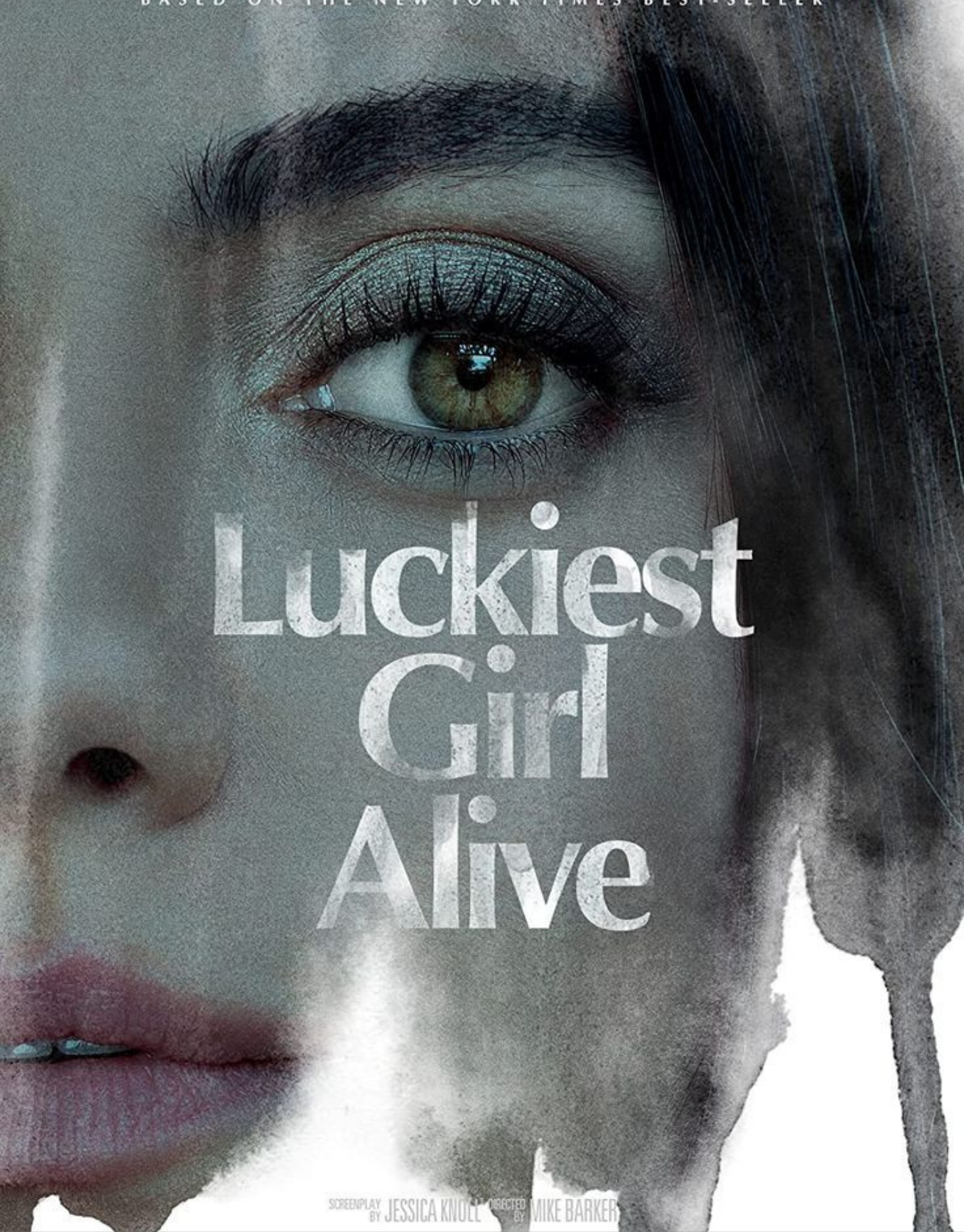
Luckiest Girl Alive Movie Review

By Ikupolusi Ariyike

Luckiest Girl Alive (2022), adapted from Jessica Knoll’s bestselling novel, is a glossy psychological thriller that wears the confidence of its title like armour only to slowly crack it open and reveal something far more uncomfortable underneath.

The film follows Ani FaNelli (played with sharp intensity by Mila Kunis), a successful New York magazine editor who appears to have achieved everything she once dreamed of: wealth, status, and a handsome fiancé from an elite family. Yet from the opening scenes, it’s clear that Ani’s polished life is a performance. As the story moves between her present-day world and flashbacks to her teenage years at an elite prep school, the film exposes the trauma that shaped her ambition and emotional detachment.

As an adaptation, Luckiest Girl Alive stays largely faithful to the novel’s central themes, particularly its examination of female rage, victimhood, and the pressure to appear “fine” in the aftermath of violence. While some of the book’s internal monologue and nuance are inevitably lost, the film compensates with a strong visual language and a tense, sometimes suffocating atmosphere. Director Mike Barker leans into sharp contrasts: pristine Manhattan apartments versus chaotic memories, designer clothing versus raw emotional scars.

Mila Kunis delivers one of her most serious performances to date. She captures Ani’s prickly defensiveness and simmering anger, even when the script occasionally rushes through emotional beats that the novel allowed to breathe. The supporting cast is effective, though certain characters feel underdeveloped compared to their literary counterparts, one of the adaptation’s more noticeable shortcomings.

Where the film truly succeeds is in its refusal to offer easy catharsis. Luckiest Girl Alive does not frame healing as neat or inspirational; instead, it presents it as messy, painful, and deeply personal. At times, the pacing falters, and the tonal shifts can feel abrupt, but the film’s core message remains potent: survival does not look the same for everyone, and being “lucky” can be a myth we cling to for self-preservation.

Ultimately, Luckiest Girl Alive may not fully capture the depth of Jessica Knoll’s novel, but it remains a compelling and unsettling movie, one that invites viewers to question the stories we tell about success, trauma, and the cost of silence.
Share:

Trending

Raising Women Magazine Issue 045 – June 2026

There is a difference between living and merely functioning.
Somewhere between the notifications, deadlines, responsibilities, ambitions, and endless demands of modern life, many of us have become exceptionally good at keeping going. We show up. We deliver. We carry. We cope. Yet beneath the appearance of productivity, an important question remains: are we truly well?
In this issue of Raising Women Magazine, we explore wellness not as a trend, but as a deeper conversation about humanity, health, purpose, and presence.
Our cover feature introduces Dr. Heidi Beilis, a pioneering physician helping to shape the future of healthcare through artificial intelligence. Her work reminds us that innovation is at its best when it serves people, particularly women whose lives may be transformed by earlier diagnoses and better outcomes.
Elsewhere, we explore grief, ambition, beauty, leadership, healthspan, rest, and the invisible burdens many women carry. We ask difficult questions about what it means to thrive, not simply survive.
As I wrote in this issue’s Find Her Light column, sometimes the rest we need is not sleep. Sometimes it is space. Sometimes it is perspective. Sometimes it is permission.
May these pages offer all three.

Raising Women Magazine Issue 044 – May 2026

There is something deeply revealing about the way a society treats its children. Not just in policy or parenting, but in the stories it tells them, the spaces it creates for them, and the kind of world it quietly prepares them to inherit. In this Children’s Day edition, Raising Women Magazine turns its attention to childhood itself, not as a sentimental phase of life, but as the foundation upon which identity, confidence, memory, and humanity are built.

Our cover star, Ms. Rachel, represents a refreshing reminder that gentleness still matters in an age of noise. Through patience, intentionality, and emotional safety, she has transformed songs and screen time into a global classroom for millions of children and families.

Across this issue, we explore the emotional architecture of childhood, from the girls who learn too early to shrink themselves, to the children quietly carrying adult burdens before they fully understand their own. We also interrogate modern parenting, digital culture, family, safety, and the futures young people are already shaping.

Because childhood is never just preparation for life.

In many ways, it is life itself.

The Family Tree Divide

What Women Are Given, and What They Build By Sipho Khumalo Two women walk into the same room. One is recognised before she speaks. The

Your guide to IVF and egg freezing in Korea

Empowering your family planning journey with curated fertility treatments at lower costs. Get our guide for Korea’s leading clinics, pricing and service breakdown.

Recommended News

Raising Women Magazine Issue 045 – June 2026

There is a difference between living and merely functioning.
Somewhere between the notifications, deadlines, responsibilities, ambitions, and endless demands of modern life, many of us have become exceptionally good at keeping going. We show up. We deliver. We carry. We cope. Yet beneath the appearance of productivity, an important question remains: are we truly well?
In this issue of Raising Women Magazine, we explore wellness not as a trend, but as a deeper conversation about humanity, health, purpose, and presence.
Our cover feature introduces Dr. Heidi Beilis, a pioneering physician helping to shape the future of healthcare through artificial intelligence. Her work reminds us that innovation is at its best when it serves people, particularly women whose lives may be transformed by earlier diagnoses and better outcomes.
Elsewhere, we explore grief, ambition, beauty, leadership, healthspan, rest, and the invisible burdens many women carry. We ask difficult questions about what it means to thrive, not simply survive.
As I wrote in this issue’s Find Her Light column, sometimes the rest we need is not sleep. Sometimes it is space. Sometimes it is perspective. Sometimes it is permission.
May these pages offer all three.

Raising Women Magazine Issue 044 – May 2026

There is something deeply revealing about the way a society treats its children. Not just in policy or parenting, but in the stories it tells them, the spaces it creates for them, and the kind of world it quietly prepares them to inherit. In this Children’s Day edition, Raising Women Magazine turns its attention to childhood itself, not as a sentimental phase of life, but as the foundation upon which identity, confidence, memory, and humanity are built.

Our cover star, Ms. Rachel, represents a refreshing reminder that gentleness still matters in an age of noise. Through patience, intentionality, and emotional safety, she has transformed songs and screen time into a global classroom for millions of children and families.

Across this issue, we explore the emotional architecture of childhood, from the girls who learn too early to shrink themselves, to the children quietly carrying adult burdens before they fully understand their own. We also interrogate modern parenting, digital culture, family, safety, and the futures young people are already shaping.

Because childhood is never just preparation for life.

In many ways, it is life itself.

The Family Tree Divide

What Women Are Given, and What They Build By Sipho Khumalo Two women walk into the same room. One is

First, Believe

By The Lulu They said the sky’s the limit But what if you’re still underground, still digging through the dirt