By Ifeoma Udu
Lately, I’ve been scrolling through my TikTok FYP and noticing a trend, many brown creators of Indian descent pointing out how Hollywood does brown better than Bollywood. As an avid fan of Bollywood myself, I have to agree. Most heroines in Bollywood films and shows are light-skinned, even though a significant portion of India’s population has darker or medium brown skin tones. When a darker-skinned character does appear, it is usually a man, often cast as the comedic relief, the brute, or a supporting figure whose story exists only to highlight the heroine’s beauty.
There is something quietly revolutionary happening in Western pop culture, brown people are finally being seen, and more importantly, they are being seen as they are.
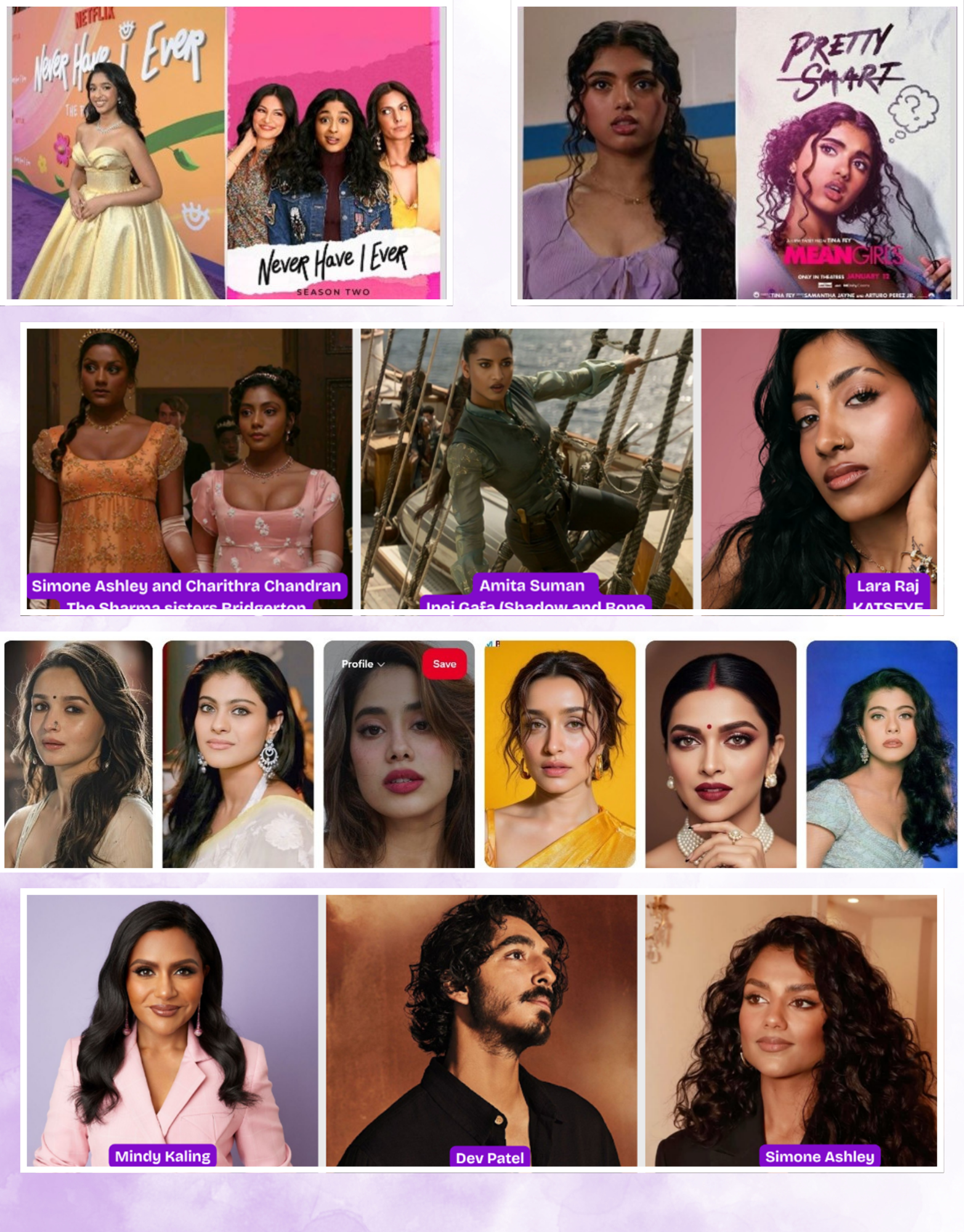
For decades, brown skin existed in entertainment as background, a sidekick, a stereotype, a silhouette too dark for the spotlight. But lately, a shift has been brewing. From Maitreyi Ramakrishnan redefining the teen heroine in Never Have I Ever to Avantika Vandanapu bringing color to Mean Girls: The Musical.
Add Simone Ashley and Charithra Chandran from Bridgerton, and Amita Suman from Shadow and Bone, and Lara Raj, the striking brown woman in the new Y2K pop group KATSEYE, brown people are no longer footnotes, suddenly global pop culture is filled with faces that look like they are from the Indian subcontinent but carry stories far beyond it.
These women are not there to be “exotic” or “ethnic”. They are leading narratives, selling records, and anchoring billion-dollar franchises all in unapologetically brown skin.
And yet, the irony stings. The very country that birthed these women, India, still struggles to celebrate them in their most natural form. In Bollywood, “beauty” is still often synonymous with “light”.
Bollywood often favors fair-skinned actresses, rarely showing the full range of natural Indian skin tones. When a darker-skinned actress appears, it is treated as a novelty. “Look how brave she is,” they will say, as if melanin were a protest.
This is not just about foundation shades or lighting, it is about identity. Bollywood, one of the largest film industries in the world, still struggles to see the full spectrum of its population. When darker-skinned men appear, they are often comic relief, the villain, or a supporting character, rarely the romantic lead or central figure. Even Netflix’s recent Indian storytelling, like Bombay Begums, often privileges lighter skin tones for protagonists.
Part of why we are seeing more brown people on screen is that they are gaining control of storytelling.
Creators like Mindy Kaling, who founded Kaling International, Dev Patel, who launched Minor Realm to develop under-represented voices, and Simone Ashley, who has begun taking on producing roles, are producing work that centers brown characters in ways traditional studios rarely have. While Mindy Kaling’s work has been criticized for leaning into familiar tropes, like the brown girl / white boy romance, the shift towards brown-led narratives is undeniable. Representation is no longer just about casting, it is about ownership of narrative.
Hollywood, to its credit, is unlearning this slowly but visibly. Representation remains uneven, but it is evolving. When Maitreyi Ramakrishnan rolls her eyes in Never Have I Ever, Simone Ashley becomes the love interest without an accent or apology, or Priyanka Chopra carries global blockbuster franchises, they expand what it means to be brown on screen. They are not symbols, they are people, messy, funny, magnetic, and real.
Bollywood, meanwhile, continues peddling the fair-skinned fantasy inherited from colonial times, a legacy of colorism dressed in couture and high-definition gloss. Even as audiences worldwide demand authenticity, Indian screens still cling to illusion. Dark-skinned actresses may get acclaim, but they rarely become the industry’s face. Unlike Bollywood, Hollywood is treating brown skin as a marketable asset, proving that visibility and profit can coexist.
The difference is stark. The West is learning to see brown people in full spectrum, while Bollywood is still trying to edit brown skin into a shade that rarely reflects the true diversity of its people. Young brown people around the world are finally seeing faces that look like theirs, not as exotic ornaments, but as leads, icons, and heroes.
Until Bollywood embraces the richness of its people, its cinematic beauty will remain one-dimensional, forever chasing a shade that exists mostly in filters, not reality.