Spotlighting Remarkable Women and Girls

The Cost of “No Gatekeeping” Is the Supply Chain Being Unravelled?

By Antoinne Pepper

There was a time when knowing where a product came from was considered an advantage. Today, it is content.

Across social media platforms, a new kind of influence has emerged. Not one that sells aspiration, but one that sells access. Factory addresses. Supplier contacts. Price breakdowns. The hidden architecture of commerce, once guarded, is now being narrated in 60 seconds. In Nigeria, this trend has taken on a particular intensity, with creators openly sharing supplier details in the name of transparency, virality, and what has now become a moral stance, no gatekeeping.

At first glance, it feels like progress.

Consumers gain access to cheaper goods. Distributors enjoy higher margins by selling directly. The market appears more democratic. But beneath this surface lies a more complicated question. What happens when access becomes extraction, and visibility replaces structure?

To understand the tension, one must begin with what supply chains were designed to do. Traditionally, products move through layers for a reason. Producers manufacture. Distributors manage volume and logistics. Retailers translate goods into experience, accessibility, and trust. Each layer absorbs risk, adds value, and sustains livelihoods.

What is currently unfolding is not simply transparency. It is compression.

The rise of direct sourcing, accelerated by digital platforms, has begun to collapse these layers globally. Consumers are increasingly bypassing retailers to connect directly with manufacturers, driven by rising living costs, curiosity about origin, and the viral appeal of “insider knowledge.” What was once a corporate advantage is now publicly crowdsourced.

For producers, particularly small-scale and women-led enterprises, this shift can be empowering.

Direct access to global markets means higher margins, stronger brand control, and independence from traditional distribution networks. A woman producing textiles in Abeokuta or skincare in Seoul can now reach buyers in London or Lagos without intermediaries.

But this same shift introduces fragility elsewhere.

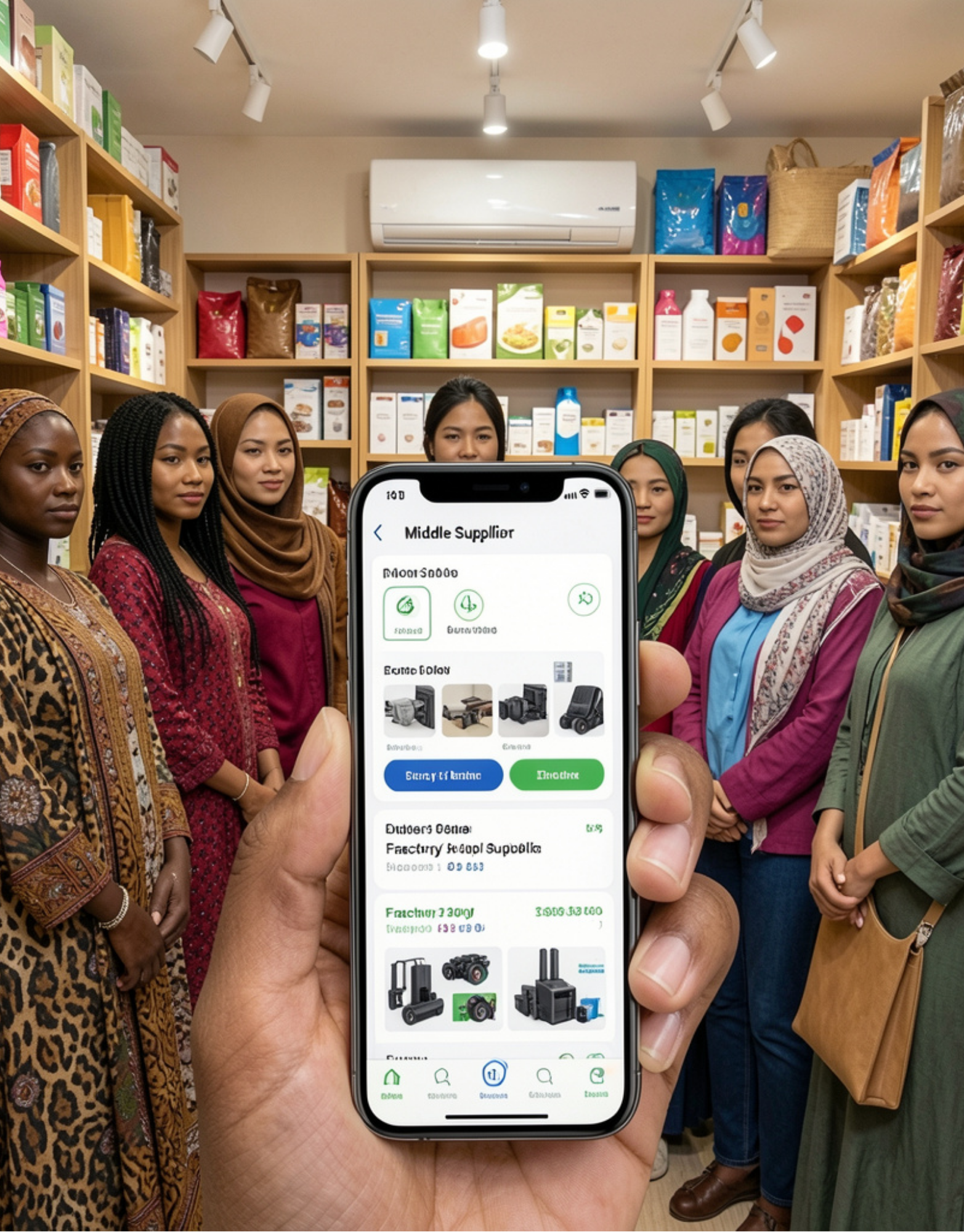
The most immediate pressure is felt by those in the middle layer, retailers, small distributors, boutique owners, many of whom are women. Their business models depend on a margin that justifies curation, customer service, inventory risk, and local accessibility. When customers begin to bypass them, not because of inefficiency but because of newly available information, that margin erodes.

In Nigeria, retailers have begun to voice this concern more openly. The complaint is not simply about competition. It is about disruption without transition.

A customer who discovers a supplier through a viral video may not consider minimum order quantities, shipping complexities, customs duties, quality inconsistencies, or after-sales risk. The retailer, who once absorbed these variables, becomes redundant in the eyes of a consumer focused only on price.

Ironically, this creates a paradox. The same customer who bypasses a retailer for a cheaper product may later return to complain about delays, defects, or lack of accountability. What appears efficient in the short term can become unstable in the long term.

Even for distributors, the apparent benefit of direct sales may not be as sustainable as it seems. Scaling direct-to-consumer relationships requires infrastructure, customer service systems, logistics management, and brand positioning. Not all suppliers are equipped for this transition. What they gain in margin, they may lose in operational complexity.

This is where the conversation becomes more nuanced than the binary of gatekeeping versus openness.

The criticism of influencers who share supplier contacts, including figures like Paramount Plug, reflects a broader anxiety about the erosion of economic ecosystems. Yet it would be intellectually dishonest to dismiss the movement entirely. Transparency is not the problem. In many industries, it has corrected exploitative markups, exposed inefficiencies, and empowered consumers.

The question is not whether information should be shared, but how it is shared, and what responsibility comes with that sharing.
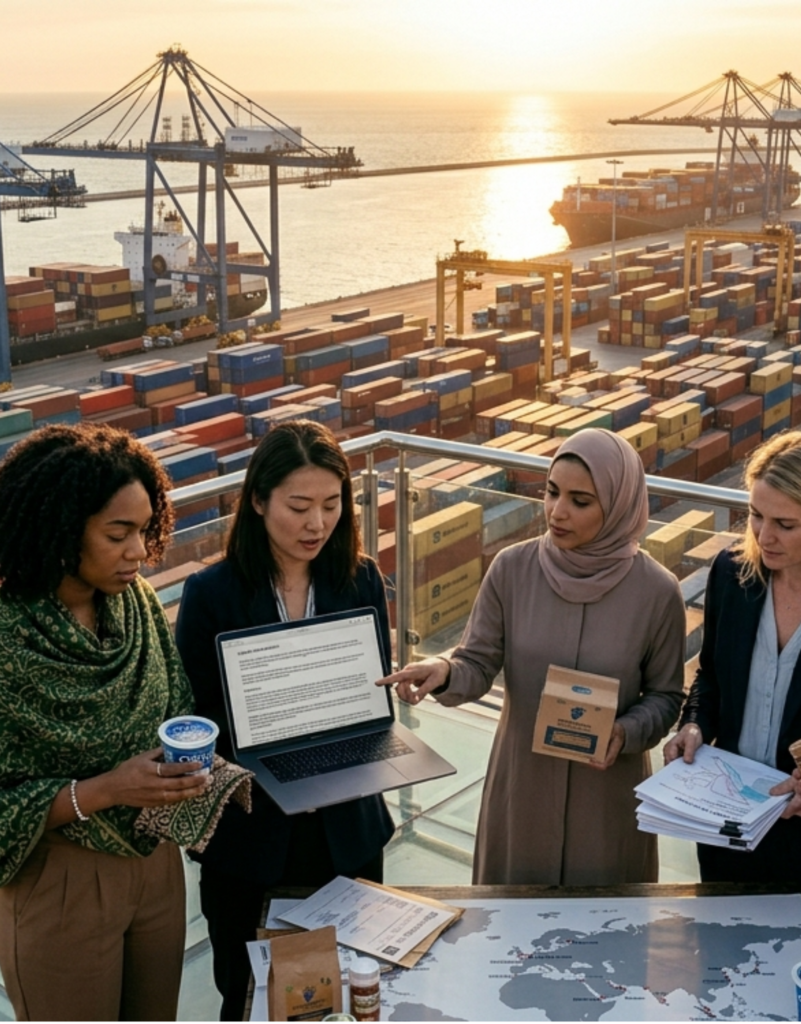
Because markets do not function on information alone. They function on structure.

When content reduces complex supply chains into a single narrative, “buy directly and save,” it ignores the invisible labour embedded within those chains.

Logistics, trust-building, quality assurance, local market adaptation, these are not inefficiencies. They are value layers.

Globally, what we are witnessing is not the extinction of the supply chain, but its redefinition. The middleman is not disappearing. The middleman is being forced to justify their existence.

Retailers who survive this shift will not compete on access alone. They will compete on experience, trust, and differentiation. They will become curators rather than resellers, educators rather than intermediaries. In many ways, this evolution is overdue.

For consumers, the responsibility is equally important. Price is not the only metric of value. Reliability, accountability, and sustainability matter. Supporting local businesses is not charity. It is participation in an economic ecosystem that ultimately benefits the consumer as well.

And for content creators, perhaps the most powerful shift is this. Influence is no longer just about exposure. It is about consequence.

Sharing information is easy. Understanding its ripple effects is harder.

The future of commerce will not be decided by whether we keep or remove gates. It will be shaped by whether we understand why those gates existed in the first place, and what must replace them when they are gone.

Because when everything becomes accessible, the real question is no longer who has the information. It is who understands the system well enough to sustain it.
Share:

Trending

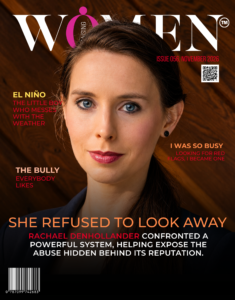
Raising Women Magazine Issue 56 – November 2026

The Courage to Question
We live in a world where reputation often arrives before character, popularity masquerades as goodness, and questioning authority can make you the problem. Apparently, being respected is sometimes mistaken for being beyond reproach.
Our cover woman, Rachael Denhollander, reminds us why that distinction matters. Her courage in confronting institutional abuse challenges us to reconsider what safety, justice and accountability truly mean.

Elsewhere, we explore the judgement surrounding childbirth, the invisible labour behind successful careers, the beauty industry’s obsession with perfection, and why women can cook the same meal as men yet receive considerably less applause.

From fashion and culture to relationships and motherhood, Issue 56 invites us to examine the assumptions we have inherited, including those we unknowingly perpetuate.

Because progress is not simply about celebrating extraordinary women. It is about creating a world where ordinary women and girls are heard, valued and protected.

And sometimes, change begins with refusing to look away.

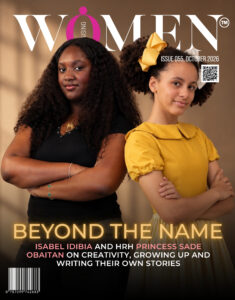
Raising Women Magazine Issue 55 – October 2026

We spend a remarkable amount of time telling girls who they should become, often before they have finished discovering who they are. Apparently, growing up comes with a job description nobody remembers applying for.

In Issue 55, our cover girls, Isabel Idibia and Princess Sade Obaitan, remind us that famous surnames and royal titles may introduce you, but they should never define you.

From girls conquering oceans and swimming pools to conversations about beauty, culture and ambition, this edition examines the expectations we inherit and the courage required to question them.

In Find Her Light, I also reflect on the careers I might have pursued and why discovering another gift does not invalidate the life we have already built.

Perhaps that is the lesson running through these pages: identity is not a finished manuscript.

Every girl deserves the freedom to write her own story. And every woman deserves another chapter.

Raising Women Magazine Issue 54 – October 2026

“Because you’re a girl.”
Four little words that have spent generations doing an extraordinary amount of damage. Apparently, ambition, intelligence and audacity were once considered rather unladylike.
Fortunately, the girls featured in our 54th edition missed that memo.
As we celebrate the International Day of the Girl Child, we spotlight twelve remarkable girls rewriting the rules, while reminding ourselves that a girl should not need extraordinary achievements to deserve ordinary opportunities.
We also explore the expectations that complicate girlhood, the childhood wounds we carry into adulthood and, in my Find Her Light reflection, why the girl I once was might have a few lessons for the woman I have become.
Perhaps our greatest responsibility is not simply raising girls to conquer the world, but ensuring they never have to shrink themselves to belong in it.
Because you’re a girl?
What a wonderful reason to dream without limits.

Raising Women Magazine Issue 53 – September 2026

Apparently, saving the planet comes with a shopping list. Solar panels, electric cars, sustainable fashion and, preferably, a bank account that understands the assignment.

In Issue 53, our cover woman, Professor Joyashree Roy, challenges us to reconsider what sustainability really costs, who pays, and why the cheapest choices today may leave tomorrow’s generations with the bill.

But this issue is also about the invisible price tags attached to everyday life. From passport privilege and the cultural expectations of a “good woman” to motherhood, personal boundaries and the delicate art of enjoying life before finishing every task, we examine the systems shaping our choices.

We also celebrate women turning overlooked problems into extraordinary opportunities.

Perhaps progress begins when we stop asking only what things cost and start asking what they are worth.

A better world should not be a luxury reserved for those who can afford it.
Happy reading!

.

Your guide to IVF and egg freezing in Korea

Empowering your family planning journey with curated fertility treatments at lower costs. Get our guide for Korea’s leading clinics, pricing and service breakdown.

Recommended News

Raising Women Magazine Issue 56 – November 2026

The Courage to Question
We live in a world where reputation often arrives before character, popularity masquerades as goodness, and questioning authority can make you the problem. Apparently, being respected is sometimes mistaken for being beyond reproach.
Our cover woman, Rachael Denhollander, reminds us why that distinction matters. Her courage in confronting institutional abuse challenges us to reconsider what safety, justice and accountability truly mean.

Elsewhere, we explore the judgement surrounding childbirth, the invisible labour behind successful careers, the beauty industry’s obsession with perfection, and why women can cook the same meal as men yet receive considerably less applause.

From fashion and culture to relationships and motherhood, Issue 56 invites us to examine the assumptions we have inherited, including those we unknowingly perpetuate.

Because progress is not simply about celebrating extraordinary women. It is about creating a world where ordinary women and girls are heard, valued and protected.

And sometimes, change begins with refusing to look away.

Raising Women Magazine Issue 55 – October 2026

We spend a remarkable amount of time telling girls who they should become, often before they have finished discovering who they are. Apparently, growing up comes with a job description nobody remembers applying for.

In Issue 55, our cover girls, Isabel Idibia and Princess Sade Obaitan, remind us that famous surnames and royal titles may introduce you, but they should never define you.

From girls conquering oceans and swimming pools to conversations about beauty, culture and ambition, this edition examines the expectations we inherit and the courage required to question them.

In Find Her Light, I also reflect on the careers I might have pursued and why discovering another gift does not invalidate the life we have already built.

Perhaps that is the lesson running through these pages: identity is not a finished manuscript.

Every girl deserves the freedom to write her own story. And every woman deserves another chapter.

Raising Women Magazine Issue 54 – October 2026

“Because you’re a girl.”
Four little words that have spent generations doing an extraordinary amount of damage. Apparently, ambition, intelligence and audacity were once considered rather unladylike.
Fortunately, the girls featured in our 54th edition missed that memo.
As we celebrate the International Day of the Girl Child, we spotlight twelve remarkable girls rewriting the rules, while reminding ourselves that a girl should not need extraordinary achievements to deserve ordinary opportunities.
We also explore the expectations that complicate girlhood, the childhood wounds we carry into adulthood and, in my Find Her Light reflection, why the girl I once was might have a few lessons for the woman I have become.
Perhaps our greatest responsibility is not simply raising girls to conquer the world, but ensuring they never have to shrink themselves to belong in it.
Because you’re a girl?
What a wonderful reason to dream without limits.

Raising Women Magazine Issue 53 – September 2026

Apparently, saving the planet comes with a shopping list. Solar panels, electric cars, sustainable fashion and, preferably, a bank account that understands the assignment.

In Issue 53, our cover woman, Professor Joyashree Roy, challenges us to reconsider what sustainability really costs, who pays, and why the cheapest choices today may leave tomorrow’s generations with the bill.

But this issue is also about the invisible price tags attached to everyday life. From passport privilege and the cultural expectations of a “good woman” to motherhood, personal boundaries and the delicate art of enjoying life before finishing every task, we examine the systems shaping our choices.

We also celebrate women turning overlooked problems into extraordinary opportunities.

Perhaps progress begins when we stop asking only what things cost and start asking what they are worth.

A better world should not be a luxury reserved for those who can afford it.
Happy reading!

.

Raising Women Magazine Issue 52 – September 2026

This issue asks a deceptively simple question: can we save the planet without making ordinary people pay the highest price?
Our cover star, Sascha Gabizon, brings that question sharply into focus, challenging us to think about climate action not only through carbon, but through fairness, access and gender. Because going green sounds wonderful until sustainability becomes something only the wealthy can afford.
Across these pages, we follow climate change into unexpected places. Into our wardrobes, our food, our cultural traditions and even the price of our morning coffee. We also continue our important First Daughters conversation, explore what women really mean when they speak about safety, and look at 111 Miss World contestants whose purpose projects remind us that beauty today carries increasingly bigger expectations.
This edition is ultimately about responsibility, but responsibility shared fairly.
Because saving our planet cannot become another luxury.
And perhaps the greenest future is one everyone can actually afford.

Raising Women Magazine Issue 051 – August 2026

Equal. Such a small word for such a complicated idea.

In this issue, we ask a question that feels almost impolite after decades of progress: women have more rights, education, income and influence than generations before us, but are we equal? We have travelled remarkably far, yet full global gender parity remains generations away. Apparently, equality is taking the scenic route.

Issue 51 looks beyond the equal sign to what equality actually feels like in women’s lives. We follow the money, the power and, importantly, the hours women still disproportionately spend caring. We also explore women’s old financial systems, workplace design, the soft life economy and the changing meaning of opportunity
.
Progress deserves celebration. But celebration should never make us complacent.

We have opened many doors.

Now we must ask what happens after women walk through them.

We are closer.

But are we there?
.