Spotlighting Remarkable Women and Girls

“Die With Memories, Not Dreams”

By Dr May Ikeora-Amamgbo

There is a particular kind of honesty in that sentence. It does not flatter you. It does not comfort you. It simply asks, quietly but firmly, what exactly are you doing with your life?

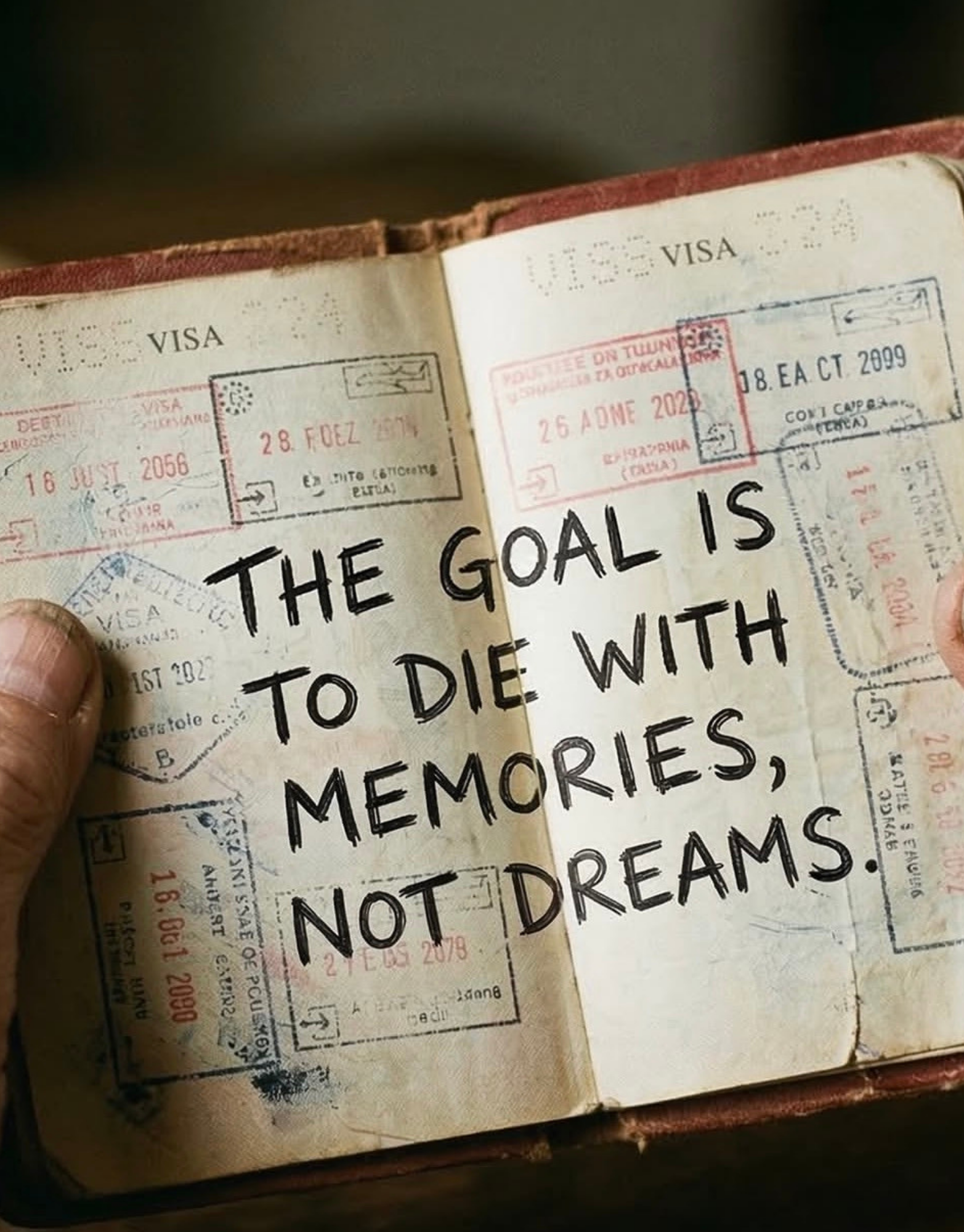
“The goal is to die with memories, not dreams.”

It sounds poetic at first. Almost like something you would repost, nod at, and move on from. But sit with it for a moment, and it becomes less of a quote and more of a mirror.

Because most women are not short of dreams. If anything, we are raised on them. Dream of success. Dream of love. Dream of impact. Dream of becoming. We are taught to imagine, to aspire, to stretch beyond where we are.

But no one really prepares us for the harder question. What happens to the dreams that never leave our minds?

There is a quiet accumulation that happens over time. Dreams deferred, postponed, reshaped to fit circumstances.

Not because we are incapable, but because life, especially as a woman, is rarely lived in isolation. There are expectations to meet, roles to fulfil, people to consider. We become excellent at carrying. Responsibilities, emotions, entire ecosystems of other people’s needs.

And somewhere in all of that, our dreams learn patience.

Too much patience.

Research in behavioural psychology suggests that humans are naturally inclined to prioritise immediate obligations over long term fulfilment. It is not laziness. It is design. We respond to urgency. We attend to what is in front of us. The problem is that for many women, what is in front of us is often everything except ourselves.

So dreams remain intact, but untouched.

This is where the quote disrupts us.

It does not say stop dreaming. It says do not die with them still inside you.

Because there is a difference between a dream and a memory. A dream is imagined. A memory is lived. A dream is safe. A memory is proof that you were willing to step into uncertainty.

And uncertainty is where most women hesitate, not because we lack courage, but because we have been conditioned to minimise risk. To be sensible. To be strategic. To be careful.

Careful women build stable lives. But careful women can also build quiet regrets.

There is a version of you that exists only in your imagination. She is the one who took the trip. Who started the thing. Who said yes before she felt ready. Who chose herself without over explaining it. She is not extraordinary. She is simply a version of you that acted.

And action is where identity is formed.

This is what we do not say enough. You do not find yourself by thinking about who you are. You find yourself by living in ways that reveal you.

The woman who travels alone for the first time does not return as the same woman.

The one who finally speaks, after years of silence, does not remain who she was.

The one who tries, fails, recalibrates, and tries again begins to understand herself in ways no amount of reflection could offer.

Memories are not just experiences. They are data. Evidence of expansion. And expansion is uncomfortable.

There is always a cost. Time. Money. Reputation. Certainty. Sometimes even relationships. Growth rarely negotiates gently. It demands movement. It asks you to leave behind versions of yourself that felt safe but no longer serve you.

This is why many women stay with dreams. Dreams do not disrupt your life. Memories do.

But here is the quiet truth. A life without disruption may feel stable, but it can also feel distant. Like you are watching yourself live instead of actually living.

There is nothing empowering about postponing your life indefinitely.

And no, this is not about reckless decisions or abandoning responsibility. It is about recalibrating your relationship with your own life. It is about recognising that you are not just here to manage existence. You are here to experience it.

To feel it fully. To participate in it actively. To make decisions that, even if imperfect, become part of your story. Because one day, whether we admit it or not, we will all take inventory. Not of what we planned. Not of what we almost did. But of what we actually lived.

The conversations we had. The risks we took. The moments we allowed ourselves to be present, unguarded, alive. That is what remains. Dreams are beautiful, but they are not enough. They were never meant to stay dreams.

So the question is not whether you have them. The question is, what are you doing about them? Because the life you are imagining is not waiting somewhere in the future. It is waiting on your decision.

And perhaps, in choosing to live just a little more boldly, a little more presently, a little more honestly, you begin, gently and deliberately, to find her light.

Share:

Trending

Raising Women Magazine Issue 57 – November 2026

November is here, and in the spirit of Movember, we are giving men the spotlight. Yes, ladies, the entire issue. But before anyone gets too comfortable, we have a few questions.

For generations, we have raised boys to be providers, protectors and kings. Somewhere along the way, we forgot that power without responsibility is simply entitlement wearing a crown.

In Issue 57, our cover conversation with Dr Gary Barker and our interview with Harish Sadani challenge what society calls a “real man”. We explore masculinity, men’s wellbeing, gender-based violence, child marriage and the expectations that shape boys long before they become men.

This is neither an indictment of men nor a celebration of masculinity without scrutiny. It is an invitation to rethink both.

Because the future of women and girls depends partly on the men we raise today.

Perhaps real power is knowing when to s
hare it.

Raising Women Magazine Issue 56 – November 2026

The Courage to Question
We live in a world where reputation often arrives before character, popularity masquerades as goodness, and questioning authority can make you the problem. Apparently, being respected is sometimes mistaken for being beyond reproach.
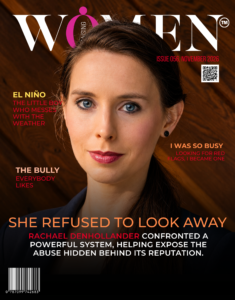
Our cover woman, Rachael Denhollander, reminds us why that distinction matters. Her courage in confronting institutional abuse challenges us to reconsider what safety, justice and accountability truly mean.

Elsewhere, we explore the judgement surrounding childbirth, the invisible labour behind successful careers, the beauty industry’s obsession with perfection, and why women can cook the same meal as men yet receive considerably less applause.

From fashion and culture to relationships and motherhood, Issue 56 invites us to examine the assumptions we have inherited, including those we unknowingly perpetuate.

Because progress is not simply about celebrating extraordinary women. It is about creating a world where ordinary women and girls are heard, valued and protected.

And sometimes, change begins with refusing to look away.

Raising Women Magazine Issue 55 – October 2026

We spend a remarkable amount of time telling girls who they should become, often before they have finished discovering who they are. Apparently, growing up comes with a job description nobody remembers applying for.

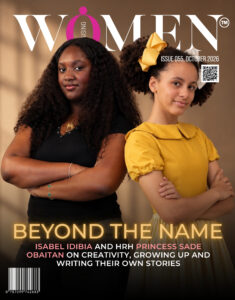
In Issue 55, our cover girls, Isabel Idibia and Princess Sade Obaitan, remind us that famous surnames and royal titles may introduce you, but they should never define you.

From girls conquering oceans and swimming pools to conversations about beauty, culture and ambition, this edition examines the expectations we inherit and the courage required to question them.

In Find Her Light, I also reflect on the careers I might have pursued and why discovering another gift does not invalidate the life we have already built.

Perhaps that is the lesson running through these pages: identity is not a finished manuscript.

Every girl deserves the freedom to write her own story. And every woman deserves another chapter.

Your guide to IVF and egg freezing in Korea

Empowering your family planning journey with curated fertility treatments at lower costs. Get our guide for Korea’s leading clinics, pricing and service breakdown.

Recommended News

Raising Women Magazine Issue 57 – November 2026

November is here, and in the spirit of Movember, we are giving men the spotlight. Yes, ladies, the entire issue. But before anyone gets too comfortable, we have a few questions.

For generations, we have raised boys to be providers, protectors and kings. Somewhere along the way, we forgot that power without responsibility is simply entitlement wearing a crown.

In Issue 57, our cover conversation with Dr Gary Barker and our interview with Harish Sadani challenge what society calls a “real man”. We explore masculinity, men’s wellbeing, gender-based violence, child marriage and the expectations that shape boys long before they become men.

This is neither an indictment of men nor a celebration of masculinity without scrutiny. It is an invitation to rethink both.

Because the future of women and girls depends partly on the men we raise today.

Perhaps real power is knowing when to s
hare it.

Raising Women Magazine Issue 56 – November 2026

The Courage to Question
We live in a world where reputation often arrives before character, popularity masquerades as goodness, and questioning authority can make you the problem. Apparently, being respected is sometimes mistaken for being beyond reproach.
Our cover woman, Rachael Denhollander, reminds us why that distinction matters. Her courage in confronting institutional abuse challenges us to reconsider what safety, justice and accountability truly mean.

Elsewhere, we explore the judgement surrounding childbirth, the invisible labour behind successful careers, the beauty industry’s obsession with perfection, and why women can cook the same meal as men yet receive considerably less applause.

From fashion and culture to relationships and motherhood, Issue 56 invites us to examine the assumptions we have inherited, including those we unknowingly perpetuate.

Because progress is not simply about celebrating extraordinary women. It is about creating a world where ordinary women and girls are heard, valued and protected.

And sometimes, change begins with refusing to look away.

Raising Women Magazine Issue 55 – October 2026

We spend a remarkable amount of time telling girls who they should become, often before they have finished discovering who they are. Apparently, growing up comes with a job description nobody remembers applying for.

In Issue 55, our cover girls, Isabel Idibia and Princess Sade Obaitan, remind us that famous surnames and royal titles may introduce you, but they should never define you.

From girls conquering oceans and swimming pools to conversations about beauty, culture and ambition, this edition examines the expectations we inherit and the courage required to question them.

In Find Her Light, I also reflect on the careers I might have pursued and why discovering another gift does not invalidate the life we have already built.

Perhaps that is the lesson running through these pages: identity is not a finished manuscript.

Every girl deserves the freedom to write her own story. And every woman deserves another chapter.

Raising Women Magazine Issue 54 – October 2026

“Because you’re a girl.”
Four little words that have spent generations doing an extraordinary amount of damage. Apparently, ambition, intelligence and audacity were once considered rather unladylike.
Fortunately, the girls featured in our 54th edition missed that memo.
As we celebrate the International Day of the Girl Child, we spotlight twelve remarkable girls rewriting the rules, while reminding ourselves that a girl should not need extraordinary achievements to deserve ordinary opportunities.
We also explore the expectations that complicate girlhood, the childhood wounds we carry into adulthood and, in my Find Her Light reflection, why the girl I once was might have a few lessons for the woman I have become.
Perhaps our greatest responsibility is not simply raising girls to conquer the world, but ensuring they never have to shrink themselves to belong in it.
Because you’re a girl?
What a wonderful reason to dream without limits.

Raising Women Magazine Issue 53 – September 2026

Apparently, saving the planet comes with a shopping list. Solar panels, electric cars, sustainable fashion and, preferably, a bank account that understands the assignment.

In Issue 53, our cover woman, Professor Joyashree Roy, challenges us to reconsider what sustainability really costs, who pays, and why the cheapest choices today may leave tomorrow’s generations with the bill.

But this issue is also about the invisible price tags attached to everyday life. From passport privilege and the cultural expectations of a “good woman” to motherhood, personal boundaries and the delicate art of enjoying life before finishing every task, we examine the systems shaping our choices.

We also celebrate women turning overlooked problems into extraordinary opportunities.

Perhaps progress begins when we stop asking only what things cost and start asking what they are worth.

A better world should not be a luxury reserved for those who can afford it.
Happy reading!

.