By Francisca Sinjae
There was a time when fear did not go unanswered. A child could wake in the mid- dle of the night, unsettled by a dream they could not fully explain, and walk into a room where someone would not only listen, but interpret. Not analyse. Not dismiss. Interpret.
“What did you see?”
“How did it feel?”
“Don’t worry. It means something else.”
In that quiet exchange, something important was happening. The child was not just being comforted. They were being taught how to understand experience itself.
Before language becomes precise, before logic sharpens, before the world begins to demand certainty, children meet reality first through sensation. A shadow looks like something else. A sound carries intention. A dream feels like truth. And for generations, it was often women, mothers, grandmothers, aunties, who stood at that fragile intersection between imagination and meaning, helping children cross it without fear.
They were not formally trained, yet they practised a form of intelligence that is only now being widely studied: deep attentiveness. The ability to observe subtle shifts, to listen beneath words, to recognise patterns in behaviour long before they become obvious. A mother could tell when a child’s silence was not obedience but withdrawal. She could sense when a fever was more than a passing illness. She could hear hesitation in a voice and know it carried something heavier than the sentence itself.
And when a child spoke about a dream, she did not discard it as nonsense. She understood that dreams, especially for children, are not simply stories of the night.
They are extensions of the day’s unprocessed thoughts, fears and curiosities. They are, in many ways, the mind’s first attempt at interpretation.
Across cultures, this form of maternal interpretation was not random. It was inherited. Knowledge moved quietly from one generation of women to the next. A grandmother would correct a mother, a mother would refine her responses, and a child would grow up absorbing not just the meaning offered, but the method itself.
Interpretation was rarely about accuracy. It was about grounding. A frightening dream might be reframed as a sign of strength. A recurring image might be turned into a story with an ending the child could control. A moment of fear could be softened with humour or ritual. In some homes, it came through prayer. In others, through proverbs. In many, through simple conversation repeated over time until the child no longer felt alone inside their own mind.
A tradition rooted in Africa
In Yoruba and Igbo traditions across West Africa, and carried forward into the Nigerian diaspora, the act of sharing a dream with an elder was never casual. It was a form of trust, and the elder’s response was a form of teaching. To tell your mother a dream was to offer her your inner world; to receive her interpretation was to receive a framework for holding it.
The Yoruba concept of àṣà, culture, tradition, inherited practice, describes precisely this kind of intergenerational knowledge. It is not written in books.
In Igbo households, the umuada, women of the family carried a collective wisdom about the interior lives of children that no single individual possessed alone. Dream interpretation was one thread in a much larger tapestry of emotional transmission.
When these households were disrupted by migration, by urbanisation, by the fractures of colonial history this thread did not simply move with the family. It frayed. And in its fraying, something changed in how children were guided through their own uncertainty.
What these women were doing was subtle, but powerful. They were giving children a way to hold their own experience. They were teaching that the most overwhelming feelings could be named, turned over, examined from a different angle and survived. Not by suppression. Not by distraction. But by the patient act of sitting inside an experience until it gave up something meaningful.
Today, much of this work has been reclassified under the language of psychology. We speak of emotional regulation, cognitive processing, behavioural patterns. We understand more about how the brain develops, how attachment shapes identity, how early experiences influence long-term wellbeing.
But understanding something scientifically is not the same as practising it relationally.
In Igbo households, the umuada, women of the family carried a collective wisdom about the interior lives of children that no single individual possessed alone. Dream interpretation was one thread in a much larger tapestry of emotional transmission.
When these households were disrupted by migration, by urbanisation, by the fractures of colonial history this thread did not simply move with the family. It frayed. And in its fraying, something changed in how children were guided through their own uncertainty.
What these women were doing was subtle, but powerful. They were giving children a way to hold their own experience. They were teaching that the most overwhelming feelings could be named, turned over, examined from a different angle and survived. Not by suppression. Not by distraction. But by the patient act of sitting inside an experience until it gave up something meaningful.
Today, much of this work has been reclassified under the language of psychology. We speak of emotional regulation, cognitive processing, behavioural patterns. We understand more about how the brain develops, how attachment shapes identity, how early experiences influence long-term wellbeing.
But understanding something scientifically is not the same as practising it relationally.
“Interpretation, in its truest form, is not about providing answers. It is about holding space until meaning becomes possible.”

Consider what happens when a child today wakes from a disturbing dream and reaches, before anything else, for a screen.
The algorithm does not ask what they saw. It offers stimulation. The group chat does not sit with the image; it dissolves it in noise. Even well-meaning digital content on children’s emotional health tends toward the prescriptive, here is what this feeling means, here is what to do about it rather than the exploratory. The interpretive pause, the space between experience and meaning, has been compressed almost to nothing.
Research in developmental psychology increasingly supports what maternal wisdom long practised: that children who are guided through uncertainty rather than rescued from it develop stronger capacities for emotional tolerance, problem-solving, and self-understanding. The mode of transmission matters less than the presence behind it. But presence requires time, and unhurried time has become one of the scarcest resources in modern family life across incomes, across cultures, across continents.
Children still dream. They still wake unsure, afraid, curious. But the path to meaning has changed. Instead of one steady voice guiding them through uncertainty, they encounter many voices, digital, distant, inconsistent. Information is immediate, but interpretation is diluted. The result is not necessarily confusion, but a different kind of processing: faster, but often less rooted.
And yet. There are gains that cannot be ignored. Children today are more likely to have language for their emotions. Conversations around mental health are more open. There is greater awareness of trauma, anxiety, and the importance of validation.
The work of interpretation has not disappeared. It has dispersed and in that dispersal, something quieter has shifted: the depth of presence. The willingness to stay with a child’s experience long enough to help them make sense of it, rather than moving quickly to resolve or categorise it.
When interpretation takes other forms
When the space for direct maternal interpretation is absent or disrupted by migration, by loss, by the pace of survival, the need to understand inner experience does not vanish. It finds other forms. History is full of women who, unable to have their inner worlds witnessed by another, learned to witness them through creation.
Women who created their own interpretation
When the voice of interpretation is missing, some women have turned inward not to silence their inner worlds, but to give them a form the world could finally see. These three artists did not resolve their interior experiences. They expanded them.
Leonora Carrington
Her paintings are filled with figures that resist easy explanation creatures between states, narratives that feel ancient and deeply personal. Her work reflects a mind at home with ambiguity. She did not decode the unconscious. She chose to live alongside it, and made that habitation visible.
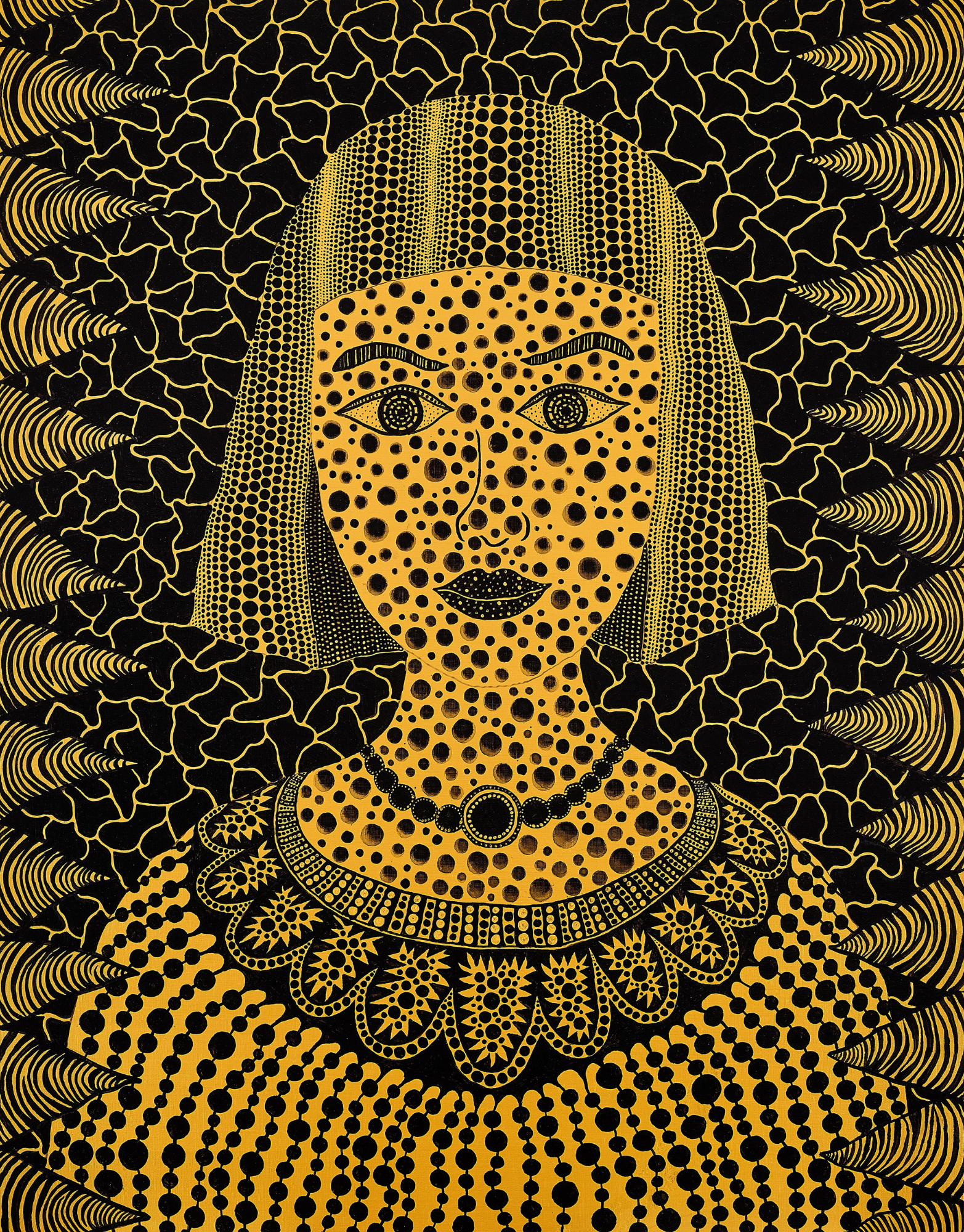
Yayoi Kusama
From childhood, Kusama encountered visual patterns, dots, nets, expanses that felt overwhelming, that no one around her fully acknowledged. Rather than suppress these visions, she translated them into art. The repetition became structure. The chaos became order. What had once been hers alone became something millions could enter and feel.
Frida Kahlo
Kahlo rejected the label of surrealist. She insisted she painted her reality her pain, her body, her experience, not her dreams. Yet the visual language she used is symbolic, layered, emotionally constructed. She reminds us that reality itself is not always literal. The line between experience and interpretation was, for her, something she crossed every day with a brush.
What these women reveal is not a lack of interpretation, but a different order of it one that does not rely on conversation, but on creation. One that does not simplify experience, but expands it. They are evidence that the human need to understand inner life does not disappear when the traditional channels close. It adapts. It finds another way through.
And in doing so, they offer something back to the mothers who came before them a reminder that the impulse to interpret is not weakness. It is one of the most distinctly human things we do.
The new interpreter
And so we return to the child. To the moment of uncertainty, of fear, of curiosity. The question is no longer whether that child will encounter confusion. That is inevitable. The question is how they will be guided through it.
The role of the first interpreter has not vanished. But it has changed form. And it is worth describing, specifically, what that new form looks like, because it is not a fantasy of returning to something lost. It is already present, in households where women have found a way to hold both worlds.
She is the mother who puts the phone face-down when her daughter begins to speak. Not forever, not performatively, just long enough. She is the grandmother in Lagos who has no clinical vocabulary for anxiety but knows, with absolute certainty, when her grandchild is carrying something that needs to be spoken aloud rather than scrolled past.
She is the auntie in the diaspora who translates between the emotional languages of two cultures, helping a child who does not quite belong to either find the words that fit their particular experience. She is the woman who has read the psychology books and understands the terminology, but who also knows that what her child needs at two in the morning is not a framework. It is a presence.
These women are not performing a tradition. They are renewing it, blending instinct with information, cultural memory with contemporary understanding, the grandmother’s patience with the mother’s awareness. They know when to explain and when to simply listen. They know that the goal is not to resolve every dark dream but to sit inside it long enough that it loses its power to frighten.
Because what mattered then still matters now.
Not the certainty of the answer, but the quality of the attention.
Not the accuracy of interpretation, but the willingness to engage.
To interpret is to care enough to stay.
To listen long enough for something unclear to become clearer.
To recognise that understanding is not immediate, but built,
conversation by conversation, morning by morning.
And perhaps that is what those women always knew.
That before a child can face the world,
they must first learn how to understand it.
And that learning, more often than not,
begins with someone willing to sit in the dark with them
and say, quietly but with certainty.
“This is what it could mean.”