By Ifeanyi’s Daughter
As this issue explores family, inheritance, and the quiet architecture of advantage, the global rich list offers a striking real-world reflection. Many of the world’s wealthiest women did not start from scratch. Their wealth is tied to legacy, to family systems built long before them. Others, however, stand as exceptions, having built or co-built their fortunes in modern economies. The distinction matters more than it appears.
According to data from Forbes, women still make up a small share of global billionaires, yet their numbers continue to rise. In 2026, they represent roughly 14 percent of the world’s billionaire population. Within that group, the balance between inherited wealth and self-made success remains uneven.
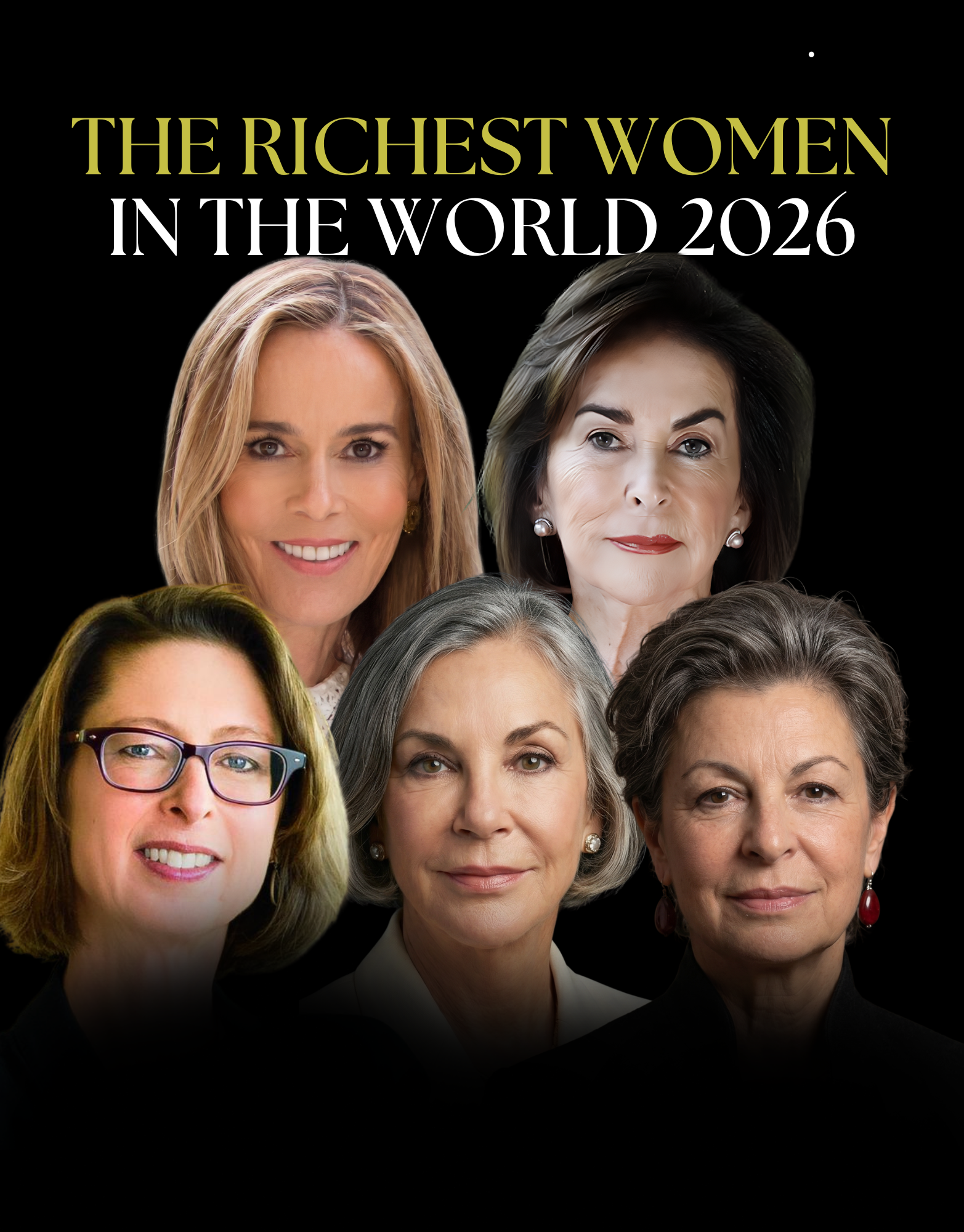
Here are the ten richest women in the world in 2026:
1. Alice Walton
Net worth: Approx. $134B
Age: 76 | Source: Walmart
Citizenship: United States
2. Françoise Bettencourt Meyers & Family
Net worth: Approx. $100B
Age: 72 | Source: L’Oréal
Citizenship: France
3. Julia Koch & Family
Net worth: Approx. $81.2B
Age: 63 | Source: Koch Industries
Citizenship: United States
4. Iris Fontbona & Family
Net worth: Approx. $52.6B
Age: 83 | Source: Mining
Citizenship: Chile
5. Jacqueline Mars
Net worth: Approx. $49.1B
Age: 86| Source: Candy
Citizenship: United States
6. Rafaela Aponte-Diamant
Net worth: Approx. $44.5B
Age: 80 | Source: MSC Shipping
Citizenship: Switzerland / Italy
7. Savitri Jindal & Family
Net worth: Approx. $39.1B
Age: 75 | Source: Steel
Citizenship: India
8. Miriam Adelson & Family
Net worth: Approx. $37.5B
Age: 80 | Source: Casinos
Citizenship: United States / Israel
9. Abigail Johnson
Net worth: Approx. $33.2B
Age: 64 | Source: Fidelity Investments
Citizenship: United States
10. Zheng Shuliang & Family
Net worth: Approx. $33.2B
Age: 80 | Source: Aluminum products
Citizenship: China
What This List Reveals
A closer look shows a clear pattern. A significant number of these women are heirs to vast family enterprises. Walmart, L’Oréal, Mars, Koch Industries. These are not just companies. They are generational systems of wealth.
At the same time, figures like Rafaela Aponte-Diamant and Abigail Johnson reflect a different trajectory. Leadership, expansion, and strategic control, not just inheritance, define their position.
The takeaway is not to diminish either path. It is to recognise that wealth is rarely created in isolation. It is shaped by access, by timing, by family, and by structure.
Which brings us back to the central question of this issue. Not simply who has wealth, but how they got it and what that starting point looked like.
Because in the end, the difference between inherited advantage and built success is not always visible, but it is always consequential.