by Francisca Sinjae
Some children inherit bedtime stories. Others inherit crises. And then there are the rare few who stare directly at broken systems, poisoned water, collapsing ecosystems, online cruelty, inequality, and silence, and decide, somehow, that they are capable of fixing them before they are old enough to rent a car.
This generation is terrifyingly brilliant.
Not in the rehearsed, trophy polished way adults often package gifted children for inspiration porn and social media applause. No. These young people are sharper than that. They are inventors, environmental warriors, journalists, founders, healers, and activists carrying the emotional intelligence of people twice their age and the urgency of people who understand that the world is already on fire.
They are not preparing for the future. They are dragging it toward us.
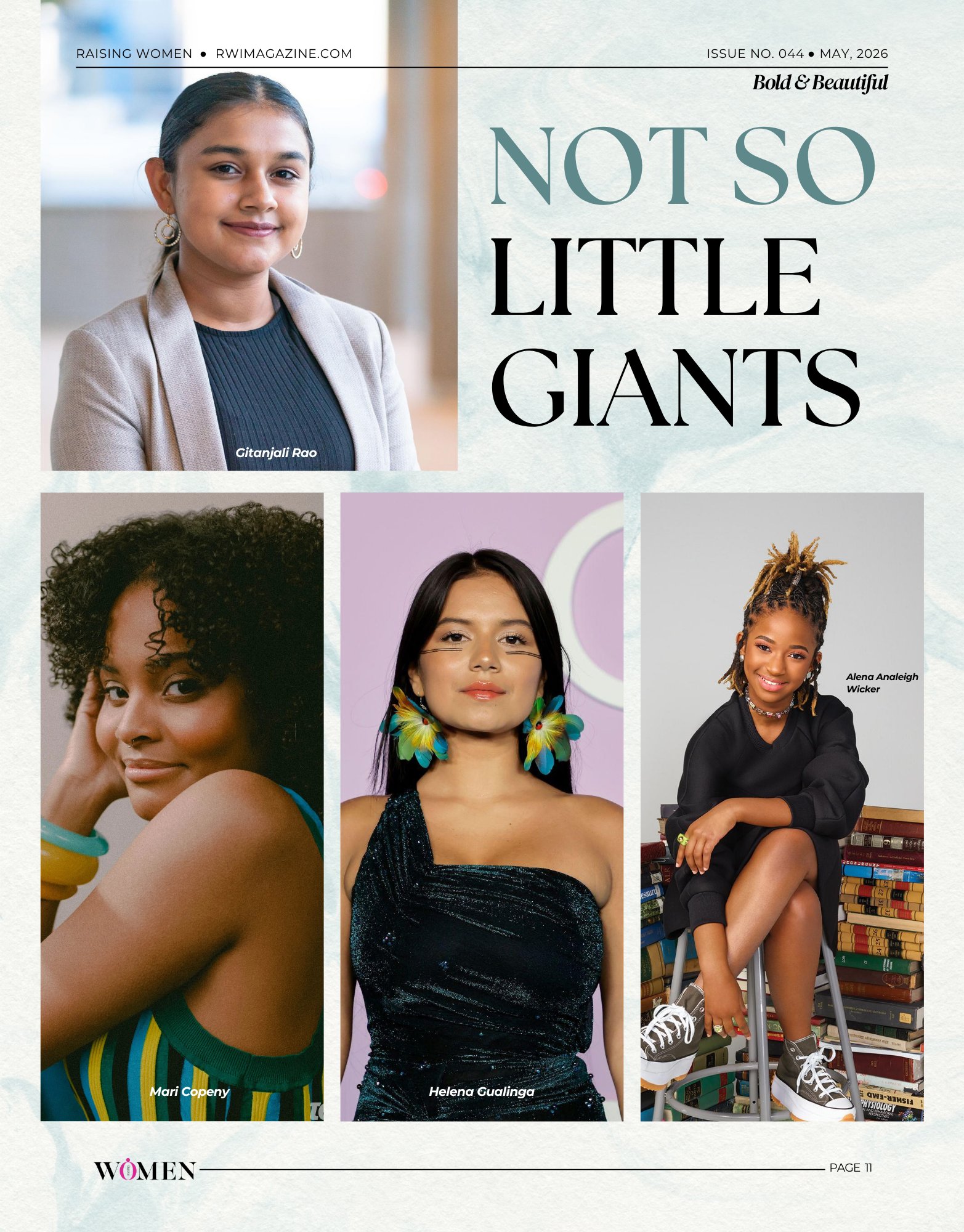
Gitanjali Rao, the 20 year old Indian American inventor from Colorado, While most teenagers were busy surviving high school awkwardness and algorithm driven attention spans, Rao was building technology to detect lead contaminated water and designing AI systems to combat cyberbullying. Her brilliance feels almost cinematic, except it is painfully real. What makes her extraordinary is not just intellect, but intention. “If I can do it,” she once said, “anybody can do it.” It is the kind of sentence that sounds simple until you realize how radically hopeful it is.
There is Mari Copeny, the 18 year old activist from Flint, Michigan, better known globally as Little Miss Flint, who wrote a letter at eight years old that forced the American government to look directly at children poisoned by their own water supply. While adults debated policy and public image, Mari mobilized compassion into action, distributing bottled water and advocating relentlessly for families in Flint. She did not simply become the face of a crisis. She became proof that empathy can be politically disruptive.
The environmental movement, too, has found some of its fiercest protectors in young voices the world once underestimated. Autumn Peltier, a 21 year old Anishinaabe activist from Wikwemkoong First Nation in Ontario, speaks about clean water with the spiritual conviction of someone defending ancestry itself. Helena Gualinga, the 23 year old Ecuadorian Finnish climate advocate from the Sarayaku community in the Amazon, fights for the rainforest not as a trend, but as inheritance, memory, and survival. Their activism carries something modern politics often lacks: sacredness.
Elsewhere, entrepreneurship has become deeply personal. Mikaila Ulmer, the 21 year old entrepreneur from Texas, transformed childhood bee stings into a thriving business empire built around environmental sustainability and education. In her hands, lemonade became activism in a bottle.
And brilliance, it seems, refuses borders. Nila Ibrahimi, an 18 year old Afghan Canadian activist, protested restrictions on girls’ voices through song. Mya-Rose Craig, the 23 year old British Bangladeshi conservationist known as Birdgirl, transformed bird watching into a radical conversation about race, belonging, and access to nature. Alena Analeigh Wicker, a 16 year old STEM prodigy from the United States, entered medical pathways while still navigating adolescence, while Dorothy Jean Tillman II, a 19 year old scholar from Chicago, earned a doctorate before many teenagers decide what they want for lunch.
Even storytelling itself is being redefined. Hilde Lysiak, the 19 year old journalist from Pennsylvania, proved journalism belongs to the curious, not just the credentialed. Young digital personalities like Tatum Galberth from the United States are reshaping online spaces with joy, confidence, and affirmations in an internet culture increasingly fuelled by outrage.
What makes these young people unforgettable is not perfection. It is proximity to reality. They have grown up in a world fractured by climate anxiety, displacement, political division, economic inequality, and relentless digital noise. Yet instead of becoming numb, they became necessary.
Perhaps that is the most astonishing thing about them.
Not their age.
Not their awards.
Not even their genius.
But their refusal to believe that power belongs only to adults.