By Daniel Agusi
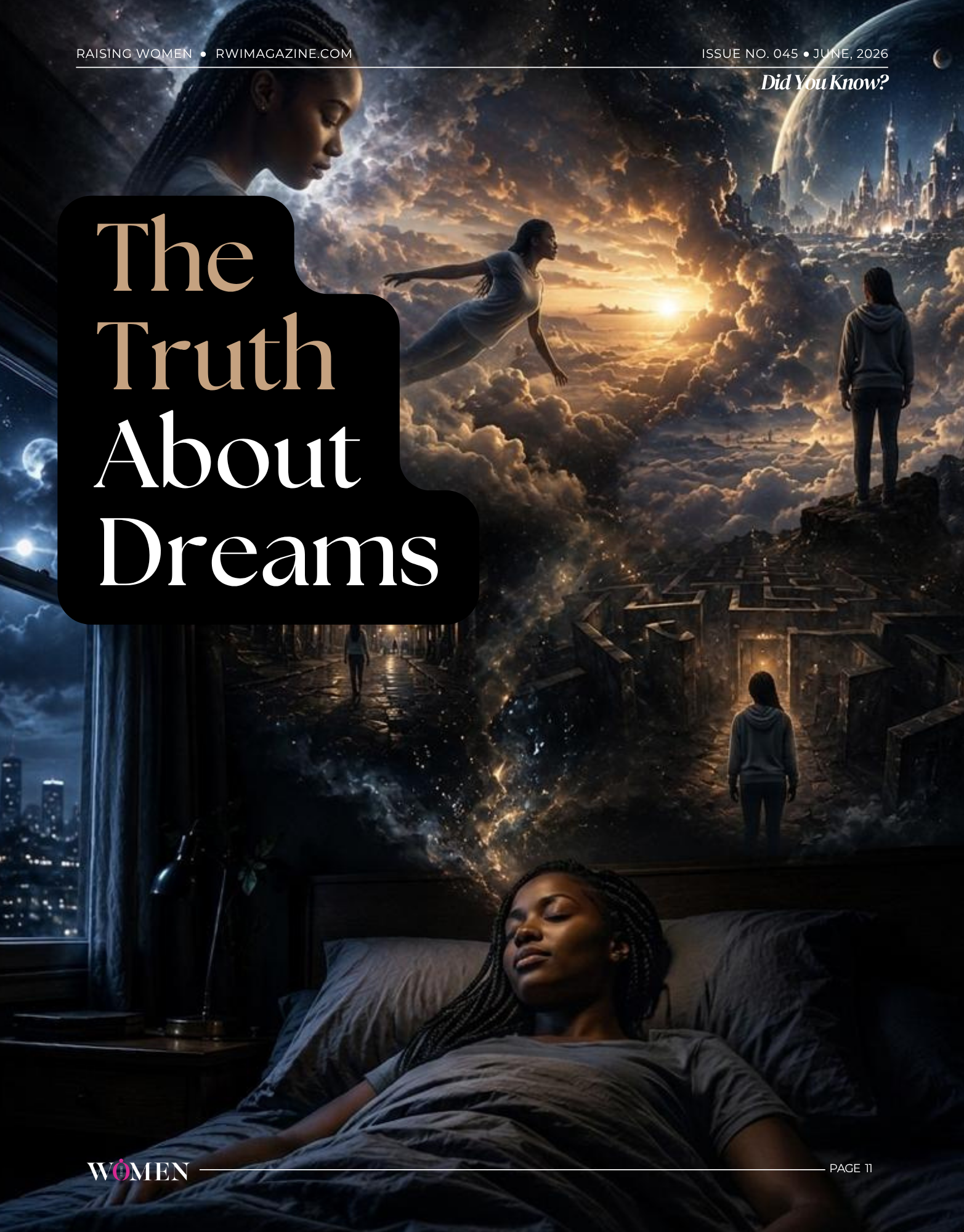
Some nights I am watching myself from above, a spectator in my own story, like I bought a front-row ticket to a movie where the main character just happens to be me. Other nights, I am fully in control. I snap my fingers and change locations. I fly. I rewrite the scene like a director who just decided the script is not good enough. And then there are the other nights. The ones where I have zero power, zero say, zero exit. I am just… there. Dragged through whatever the night has decided for me. Three very different experiences, one sleeping body. I got curious. So, I went digging, and what I found about dreams is honestly too good not to share.
Let us start here: you are dreaming more than you think. The average person has between three and six dreams every single night, yet forgets up to 95% of them within minutes of waking up. So yes, your brain has been running full cinematic productions every night of your life and you have been sleeping through the credits.
Most of this happens during REM sleep, which stands for Rapid Eye Movement. It is the stage your body cycles into roughly every 90 minutes, and during it, your brain is almost as active as when you are wide awake. The twist? The prefrontal cortex, the logical, rational, “wait-this-makes-no-sense” part of your brain, is largely switched off. Which is exactly why in a dream, you can fly over Lagos, bump into a childhood friend in outer space, and think absolutely nothing of it.
Now, about those three experiences. Scientists actually have names for all of them. The observer-style dream, where you watch yourself like a movie, is linked to something called allocentric processing. Your brain steps outside itself, creates emotional distance, and watches from a remove. Researchers believe this often happens when you are processing something you are not quite ready to face up close.
The one where you are in control? That is lucid dreaming, and it is more common than people realise. Studies show that about 55% of people have experienced at least one lucid dream in their lifetime. Some people train themselves to do it regularly. Tibetan Buddhist monks have been practicing something called Dream Yoga for centuries, deliberately entering and navigating the dream state as a form of spiritual discipline and consciousness expansion. So if you have ever flown in a dream and fully knew you were dreaming, congratulations, you were accidentally doing ancient monk work.
And the uncontrollable ones? Those are your standard non-lucid dreams, the brain doing whatever it wants with no input from you. When they turn dark, they become nightmares, which tend to spike during periods of high stress, grief, or unprocessed emotion. Your brain is essentially flagging something it needs you to deal with. Inconvenient, but honest.
Beyond the science, dreams have carried spiritual weight across every culture since the beginning of recorded history. In Christianity and Islam, dreams are treated as a channel between the human and the divine. Joseph’s dreams in Genesis, the Prophet Muhammad’s revelations in sleep, dreams as warnings, prophecies, and divine instructions run throughout sacred texts. In African traditional spirituality, dreams are often the space where ancestors speak, warn, or visit the living. The Yoruba concept of ala holds that certain dreams carry messages requiring real-world response, whether prayer, ritual, or simply attention.
Carl Jung, one of the most influential psychologists of the 20th century, called dreams the royal road to the unconscious. He believed every symbol in a dream was the inner self trying to communicate what the waking mind refuses to see.
And then there is this: you cannot dream a face you have never seen. Every single person who appears in your dreams is someone your brain has encountered before, even if only in passing. A stranger on a bus three years ago could be starring in your dreams tonight. Your brain never truly forgets a face.
Dreams are vast. They are science, they are spirit, they are psychology, they are art. And they have been happening to you, every single night, whether you remember them or not.
Fascinating Dream Facts
- Blind people dream. Those blind from birth experience dreams entirely through sound, smell, touch, and emotion. No visuals needed for the brain to put on a full show.
- Déjà vu may actually be a fragment of a forgotten dream overlapping with reality. That eerie “I have been here before” feeling? Your sleeping brain may have gotten there first.
- You can only dream about faces you have already seen. Your brain does not invent new ones. Every stranger in your dream is someone you have crossed paths with, even briefly. The random man at the bus stop in 2019 is now a recurring character.
- Animals dream too. Dogs twitch and whimper in their sleep. Rats have been scientifically shown to replay maze routes during REM sleep. Your dog is not just sleeping, he is reliving his whole day.
- Sleep paralysis, that terrifying state of being awake but completely unable to move, often with a dark presence looming in the room, is simply the REM state bleeding into waking consciousness. Different cultures have named this entity for centuries: the Old Hag in the Caribbean, Ogun Oru in Yoruba tradition, the Incubus and Succubus in European folklore. Same experience, different names, universal dread.
- People with higher creative intelligence tend to have more vivid, narrative-rich dreams. Essentially, if your dreams feel like a Netflix series, take that as a compliment.
- Nightmares peak in children aged 3 to 6, and then again in adults under intense stress or grief. The brain does not forget, it just waits until you are asleep to bring it all back up.
So, the next time someone catches you dozing off, do not apologise. You are not being lazy. You are running a fully immersive, spiritually loaded, neurologically complex simulation that scientists still do not completely understand.
Honestly? That is more than most people do with their Sundays.