by Sipho Khumalo
| “We work with people’s lives. Every decision I make about technology is a decision about a woman sitting in a waiting room, hoping for good news.” |
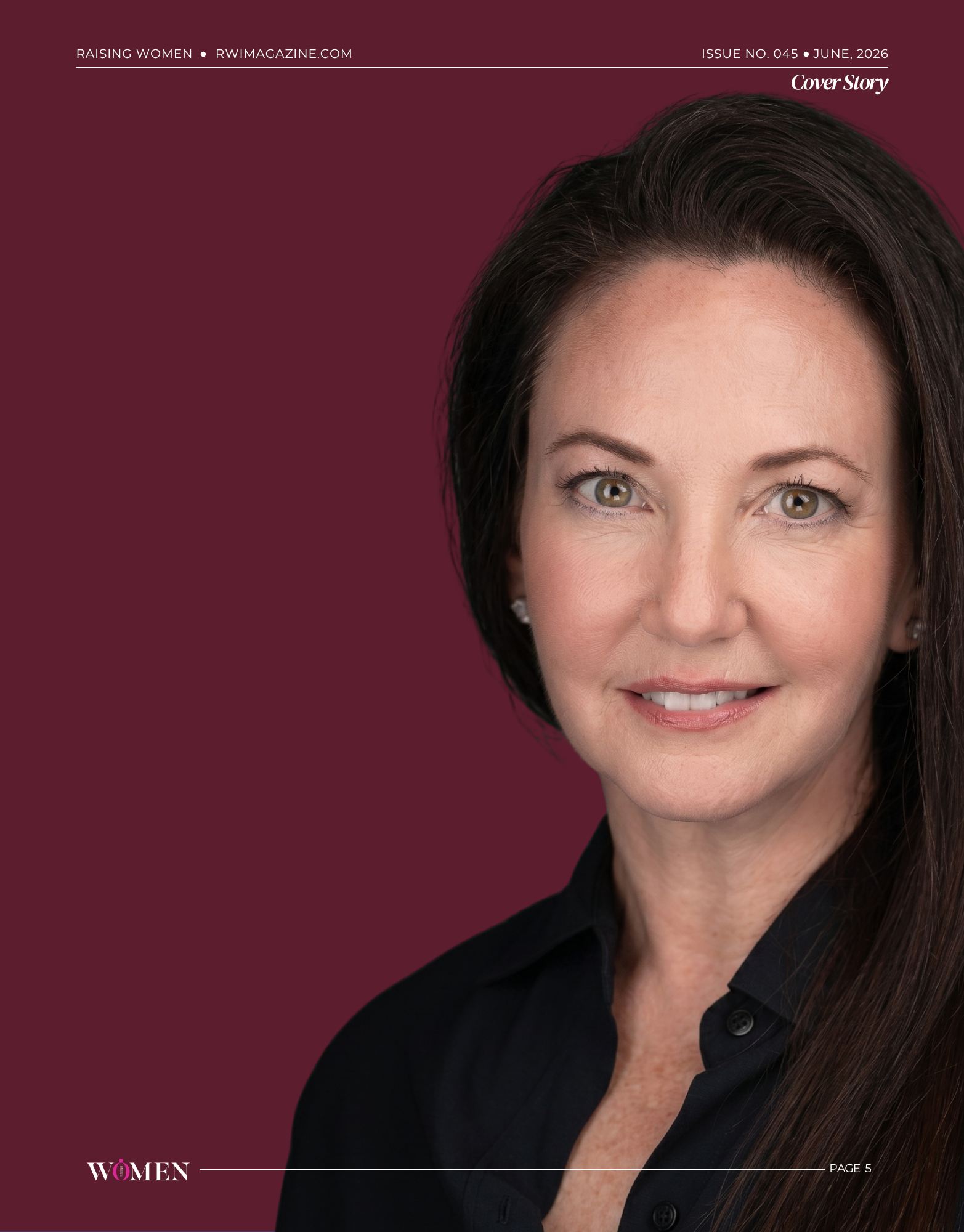
There is a particular kind of discipline required to sit with uncertainty every single day. To study images of the interior human body, to search for what might be hiding in plain sight, and to understand that a mistake does not end in a missed deadline or a failed contract. It ends in a missed cancer. Heidi Beilis has been doing this for over thirty-five years.
She has done it as a junior radiologist learning to read films in the intense corridors of Johns Hopkins. She has done it as a Vice President and Chief Medical Officer overseeing a division of 2,200 people and a $2.5 billion enterprise within WellSpan Health in Pennsylvania. And she has done it as a woman who, in early 2025, stepped away from one of the largest healthcare conferences of the year because her wife had just undergone a radical double mastectomy.
The story of Dr. Heidi Beilis is not simply the story of an accomplished physician. It is the story of what happens when a woman of exceptional intellectual range, genuine compassion, and quiet ferocity dedicates an entire career to the belief that women deserve better medicine. That they deserve to be seen more clearly. That the technology responsible for their diagnoses should be as rigorously interrogated as the tissue it examines.
It is, as it happens, an extraordinarily timely story. Because artificial intelligence has arrived in radiology with a speed that has left many healthcare systems scrambling to keep up. And Dr. Beilis is among the small number of senior physician leaders who have not merely accepted AI into their departments but shaped how it functions, what standards it must meet, and what it is never permitted to replace.
From Chemistry to Medicine: A Mind Built for Both
She graduated from Union College in upstate New York with a degree in chemistry. She also graduated with a degree in European history. This is not an incidental detail. It is, arguably, the biographical fact that explains everything else about her. The woman who would go on to implement some of the most sophisticated AI diagnostic tools in American healthcare was educated simultaneously in the rigour of molecular science and the sweep of human civilisation. One discipline teaches you to trust data. The other teaches you that data without context is meaningless.
From Union College, she proceeded to Jefferson Medical College in Philadelphia, graduating in 1990. What followed was a training programme of formidable intensity. A surgical residency at Johns Hopkins. A four-year radiology residency at the University of Southern California. A two-year fellowship in Interventional Radiology, back at Johns Hopkins. By the time she emerged fully credentialled, she had been trained at two of the most prestigious medical institutions in the United States, in one of medicine’s most technically demanding specialities.
“She did not build her career on the assumption that medicine was working well enough. She built it on the conviction that it could work better.”
Interventional radiology is not a passive discipline. It sits at the intersection of imaging and surgery, using real-time visualisation to guide minimally invasive procedures inside the living body. It requires the kind of precise, spatial intelligence that very few people possess. It also requires something rarer: the composure to act decisively when the stakes are absolute.
Her early career took her through private practice at American Radiology Services and LifeBridge Health, where she directed CT imaging and non-vascular ultrasound at Sinai Hospital in Baltimore. These were not stepping-stone positions. They were formative years in which she developed a systematic understanding of how imaging departments actually function, how they fail, and what leadership means in an environment where the margin for error is effectively zero.
By the time she joined WellSpan Health in York, Pennsylvania, she brought with her not just clinical excellence but a specific and unusual combination of skills: the ability to think like a physician and act like an executive, simultaneously.
The Intelligence of Seeing
Approximately five years ago, Dr. Beilis recognised that artificial intelligence had reached a meaningful threshold. Not the technology of science fiction, nor the breathless promises of Silicon Valley press releases, but something measurably, clinically useful: AI that could review imaging data in real time and support physicians at the moment of decision-making. WellSpan Health was among the first health systems in the United States to bring this level of clinical AI into everyday practice.
What she oversaw was not a wholesale transfer of diagnostic authority to machines. It was something considerably more nuanced and considerably more effective. Under her leadership, WellSpan implemented FDA-approved AI tools that sit alongside radiologists during image review, trained on over one million mammograms from clinical sources around the world. The system examines each image, assigns a concern score between one and ten, marks areas deserving closer attention, and effectively flags them for the physician. It is, as Dr. Beilis herself describes it, a tap on the shoulder.
“The AI may highlight an area of the breast and say: ‘Do not overlook this.’ In minutes, it taps the radiologist on the shoulder to help point out an area of concern.”
The distinction she draws is important enough to state plainly. The AI is not reading the mammogram. The physician is reading the mammogram, with a second opinion available in seconds. The physician remains the foundation of the evaluation. The AI ensures that nothing is overlooked in a system processing approximately 100,000 screening mammograms per year.
The clinical results have been striking. A two-month trial of the AI system at WellSpan revealed it would enable radiologists to detect an additional 56 instances of breast cancer annually among the health system’s mammography volume. In the United States, one in eight women will develop breast cancer in her lifetime. Each of those 56 additional detections represents a woman who might otherwise have left a clinic carrying an undetected diagnosis inside her body.
The system proved particularly valuable for women with dense breast tissue, where traditional mammography is hardest to interpret. Women with extremely dense breasts are four to five times more likely to develop breast cancer than those with fatty breast tissue, and their imaging is among the most technically challenging to read. AI has improved accuracy precisely where accuracy has historically been most elusive.
In one case that speaks to the human stakes of the work, the AI system identified an area of concern on the mammogram of a young woman with breast implants. Rather than sending her home to await a follow-up appointment in the coming weeks, she received immediate further testing during the same visit. The result was an early-stage breast cancer diagnosis.
She walked into the clinic for a routine screening. She left with information that may well have saved her life.
Beyond the Breast: A System Designed to See Women
Mammography is not the full scope of Dr. Beilis’s AI agenda. Under her leadership, WellSpan has deployed AI tools across a range of critical diagnostic categories that disproportionately affect or present differently in women. CT imaging for stroke, pulmonary embolism, brain haemorrhage, intracranial aneurysm and cervical spine fracture now benefits from AI analysis capable of flagging urgent findings within seconds, allowing radiologists to prioritise the cases most likely to deteriorate.
In 2023 alone, WellSpan’s AI systems analysed 152,000 cases related to pulmonary artery embolism, cervical spine fracture and intracranial haemorrhage, flagging 7,780 for urgent radiologist review. These are not abstract numbers. Pulmonary embolism kills. Stroke kills. The window for intervention is measured in minutes. An AI system that can identify a suspicious finding and elevate it to the top of a radiologist’s queue does not replace clinical judgement. It creates the conditions for clinical judgement to be exercised before the moment has passed.
“While that is news no one wants to get, the patient told us she appreciated finding out sooner rather than later.”
What is striking about Dr. Beilis’s approach is the standard she insists upon before any AI tool earns a place in her department. WellSpan is one of only twenty health systems in the United States to have formally pledged responsible AI adoption. This is not a marketing posture. It translates to a rigorous evaluation process in which every proposed AI solution undergoes structured trial before clinical deployment. ‘We work with people’s lives,’ she has said. The phrase carries the weight of a principle, not a platitude.
The Woman Behind the Work
There is a detail in Dr. Beilis’s story that deserves to be named directly, because it changes the texture of everything else in this profile. In early 2025, she chose not to attend ACHE Congress, the largest annual gathering of healthcare executives in the United States. She wrote publicly about why. Her wife had just had a double mastectomy. She was home. She was not attending the conference. Her priority was her family.
Consider what it means for a woman who has dedicated her career to AI-powered breast cancer detection to watch the person she loves most undergo treatment for breast cancer. There is no comfortable distance between the professional and the personal in that moment. The disease she has worked to catch earlier, in other women’s bodies, arrived in her own home.
What she wrote was characteristically measured: that some things are more important than professional presence, that healing comes first, and that others who were already aware would understand. It is the writing of a woman who does not perform vulnerability but does not hide from it either. It is also the writing of a woman whose compassion for patients has never been theoretical. She knows what it feels like to be on the other side of a diagnosis.
A colleague, Elyce Wolfgang, once described her in terms that seem precisely right: only a compassionate, imaginative leader like Beilis can ensure that the systems of care are aligned to make sure that the woman has her battle plan before she returns to her car. That sentence is worth pausing over. The goal, in Dr. Beilis’s vision of medicine, is not to produce a diagnosis. It is to produce a woman who leaves a clinic informed, supported, and ready for what comes next. Same-day results. Same-day follow-up imaging where needed. Same-day biopsy referrals where indicated. Not because efficiency is an institutional virtue, but because anxiety is real and time is not neutral.
The Responsible Future of AI in Medicine
In 2026, Dr. Beilis announced her retirement from WellSpan Health, with her final day set for 6th July. She did so after launching one of the most recent innovations under her leadership: AI-generated imaging result summaries delivered directly to patients through the MyChart patient portal, removing another point of delay between diagnosis and understanding. It was, characteristically, a patient-centred final act.
She leaves behind a department transformed. She leaves behind a model of AI adoption that prioritises rigour over enthusiasm, and patients over optics. She leaves behind a generation of clinical and administrative leaders who watched a physician-executive navigate one of the most consequential technological transitions in the history of imaging medicine, and do it with her principles intact.
“We’re expediting care for the patients who need additional imaging, and in some cases a biopsy. That really reduces anxiety for the patient.”
She also leaves behind a timely and sobering reminder that the future of AI in healthcare will be shaped not by the companies building the algorithms, but by the clinicians deciding which algorithms earn a place in the room. The data on which AI systems are trained reflects the world that produced it. If the physicians overseeing adoption do not insist on diversity, rigour, and transparency, the next generation of diagnostic tools will simply automate the blind spots of the last one.
Dr. Beilis has spent her career insisting on exactly this standard. She has also spent her career understanding something that the technology, for all its sophistication, cannot replicate: the experience of sitting across from a woman who has just been told her scan showed something concerning. The experience of ensuring that she leaves that room not with fear alone, but with a plan.
There are many ways to measure a career in medicine. By publications. By administrative scope. By the number of staff overseen or the revenue commanded by a division. Dr. Beilis’s career is measurable by all of these. But the measure that will outlast the rest is simpler and more difficult to quantify. It is the number of women who walked into a clinic expecting an ordinary appointment, and walked out with an early diagnosis. Women who had time on their side, because a physician spent thirty-five years making sure the tools existed to give it to them.
She trained at Johns Hopkins. She led at WellSpan. She won the Golden Apple Award from the WellSpan Academy of Medical Educators. She moderated AI leadership roundtables and published her thinking on responsible technology adoption. She raised two children. She loved her wife. She went home when it mattered.
She is, in the language that matters most, the kind of doctor women pray for. The kind who understands that behind every scan is not a case number, but a life in progress.