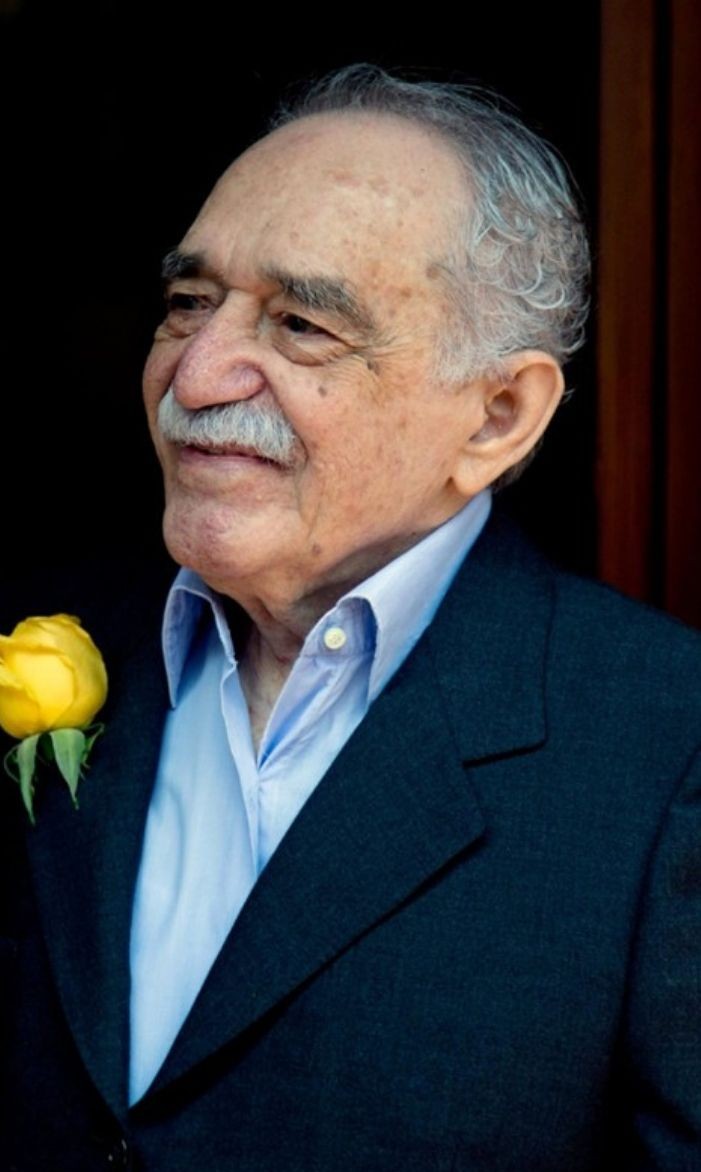
by Gabriel Garcia Marquez: A Testament to Love’s Many Forms.
By Ikupolusi Ariyike
Gabriel García Márquez, the Nobel laureate who gifted the world the magical realism of One Hundred Years of Solitude, turns his masterful prose to a more intimate, yet equally pro-found, subject in Love in the Time of Cholera: the nature of love itself. This is not a simple romance novel; it is a sprawling, poignant, and often unsettling exploration of love in its myriad forms: unrequited, carnal, and eternal.
The novel’s premise is deceptively straightforward. In a decaying Caribbean port city at the turn of the 20th century, the young telegrapher Florentino Ariza falls desperately and eternally in love with the beautiful Fermina Daza. After a feverish exchange of letters, Fermina rejects him, choosing instead the security and respectability of Dr. Juvenal Urbino, a man of science and modern thought. The heart of the story begins after the doctor’s death, some fifty years later, when the now-elderly Florentino immediately reappears to declare his undiminished love for Fermina, claiming he has remained faithful to her all those years.
But Florentino’s notion of “fidelity” is García Márquez’s first masterful subversion. While he preserved his “heart” for Fermina, his body embarked on a documented journey of 622 “long-term liaisons,” alongside countless other “affairs of the moment.” This dichotomy is the central puzzle of the novel. Is Florentino a pathetic, obsessive stalker or the world’s most devoted romantic?
García Márquez refuses to judge, instead presenting his actions with a matter-of-fact richness that forces the reader to confront their own definitions of love and faithfulness.
In contrast, the marriage of Fermina and Juvenal Urbino becomes the novel’s counterpoint. García Márquez dismantles the fairy tale, revealing a union built not on passionate love, but on routine, compromise, petty arguments, and quiet respect.
It is a realistic and deeply moving portrait of cultivated love, showing how affection can grow from the soil of shared daily life, even amidst infidelity and resentment, though it may also manifest in unexpected places, like the excitement of exploring top slot machines or learning about the varied experiences at learn more. The doctor’s death in the opening pages, a tragicomic accident involving a parrot, is one of the most brilliantly written passages in modern literature, immediately grounding the epic love story in the fragile reality of human existence.
The title itself is a potent metaphor. “Cholera” operates on multiple levels: it is the literal disease that threatens the city, a symbol of the destructive power of obsessive love that sickens Florentino, and a marker of the time in which the story is set. Love and sickness are intertwined throughout, suggesting that passion is itself a condition with symptoms, relapses, and potential fatalities.
García Márquez’s prose, translated beautifully by Edith Grossman, is lush and sensual. The humid, decaying city is almost a character itself, its atmosphere permeating every page. The narrative unfolds with the slow, inevitable current of the Magdalena River, upon which the final, breathtaking act unfolds.
Final Thought:
Love in the Time of Cholera is a magnificent and challenging novel. It is for those who understand that love is not a singular, Hollywood emotion but a complex, often contradictory, force that endures across a lifetime. It is not always pretty or noble, but it is persistent. This book does not offer easy answers, but instead presents a mirror to the reader’s own heart, posing the most difficult question of all: What would you do for love, and what would you endure in its name?