Spotlighting Remarkable Women and Girls

Being a Provider Is More Than Paying the Bills

By Daniel Agusi

Scroll through social media for five minutes and you’ll see it.
“Men are providers.”
“If you can’t provide, you’re not ready.”
“Money is the bare minimum.”

The internet is having a full conversation about what men owe the people in their lives, and most of it centres on money. Rent paid. School fees settled. Groceries bought. Lights on.

Important? Absolutely.
Complete? Not even close.

Somewhere along the line, providing became a strictly financial job description. And while paying bills matters, reducing manhood to bank transfers does everyone a disservice, including men themselves.

Because real provision does not end at your wallet.

The Problem With the “Money-Only” Provider

Let’s be honest. Money is easy to measure. You either paid or you didn’t. You can show receipts. You can point to results. Emotional presence, leadership, and care are harder to quantify, so they get quietly pushed aside.

But here’s the uncomfortable truth.
A home can be fully funded and still feel emotionally bankrupt.

Many people grew up with fathers or male figures who “did their part” financially but were distant, unavailable, or completely absent emotionally. They showed up with money and disappeared everywhere else.

That model taught boys that silence is strength and taught girls and children that love is something you earn by not asking for too much.

We are now seeing the consequences of that thinking play out in relationships, marriages, and families.

Emotional Provision Is Still Provision

Being emotionally available is not softness. It is responsibility.

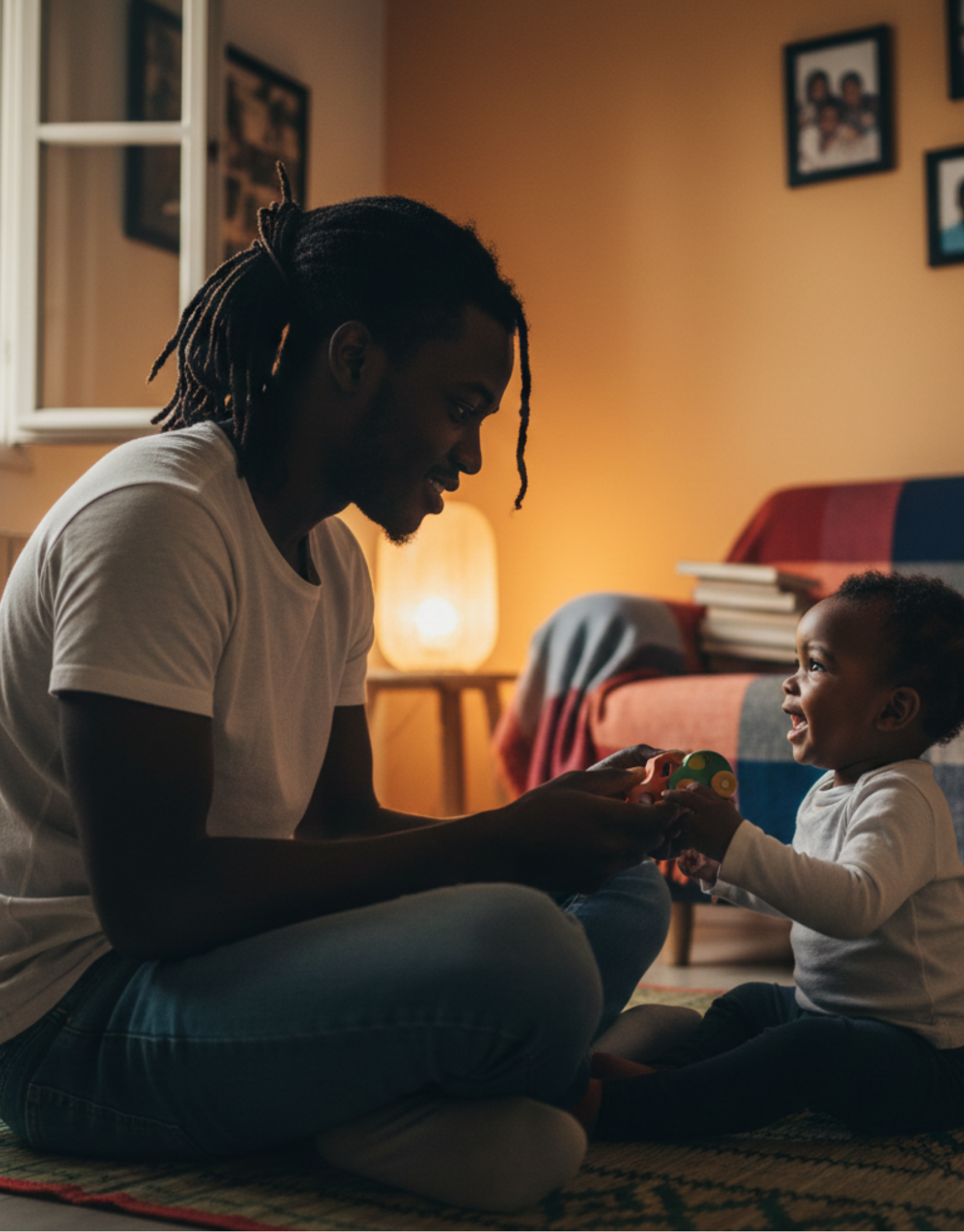
Emotional provision looks like listening without immediately trying to fix everything. It looks like knowing what your partner is worried about before it becomes a crisis. It looks like noticing when your child is quieter than usual and asking questions instead of brushing it off.

It also looks like doing your own emotional work. Understanding your triggers. Learning how to communicate frustration without turning it into anger or withdrawal. Apologising when you get it wrong.

That is work. Hard work. But it is still provision.

A man who creates emotional safety provides stability that money alone cannot buy.

Leadership Is Not Control

There is a big difference between leadership and control, even though the two are often confused.

Leadership is not making all the decisions. It is not barking orders or positioning yourself as the unquestioned authority in the room. True leadership is guidance, accountability, and example.

A leading man does not dominate. He sets tone.

He models respect in how he speaks. He takes responsibility when things fall apart. He is willing to say “I don’t know” and “I was wrong”. He understands that strength includes adaptability.

Leadership also means making room for others to lead too. Encouraging voices instead of silencing them. Recognising that partnership does not reduce masculinity, it strengthens it.

Presence Is a Currency

There is a version of provision that requires no money at all. Presence.

Being there. Actually there. Not half-listening while scrolling your phone. Not physically present but mentally checked out.

Presence is attending important moments without being forced. It is remembering details because you paid attention. It is showing up consistently, not just during emergencies or celebrations.

For many people, presence is what they remember long after the money is gone.

Why This Conversation Matters Now

The current online debate is not an attack on men. It is a response to outdated expectations that no longer serve modern families or relationships.

Women are working. Children are more emotionally aware. Life is more complex. The old script where men provide money and everyone else figures out the rest no longer works.

Men deserve better than a narrow definition of worth. And families deserve more than one-dimensional providers.

Reframing Provision Without Losing Masculinity

Expanding what it means to provide does not make men less masculine. It makes masculinity more useful.

A man can be financially responsible and emotionally intelligent. He can be strong and gentle. He can lead without controlling. He can provide money and still show up fully as a human being.

The goal is not to remove financial responsibility from men. It is to stop pretending that money is the only thing that matters.

Because at the end of the day, the most valuable things a man provides are not always the ones you can count. They are the ones people feel.

And those are often the ones that last the longest.

Share:

Trending

Raising Women Magazine Issue 045 – June 2026

There is a difference between living and merely functioning.
Somewhere between the notifications, deadlines, responsibilities, ambitions, and endless demands of modern life, many of us have become exceptionally good at keeping going. We show up. We deliver. We carry. We cope. Yet beneath the appearance of productivity, an important question remains: are we truly well?
In this issue of Raising Women Magazine, we explore wellness not as a trend, but as a deeper conversation about humanity, health, purpose, and presence.
Our cover feature introduces Dr. Heidi Beilis, a pioneering physician helping to shape the future of healthcare through artificial intelligence. Her work reminds us that innovation is at its best when it serves people, particularly women whose lives may be transformed by earlier diagnoses and better outcomes.
Elsewhere, we explore grief, ambition, beauty, leadership, healthspan, rest, and the invisible burdens many women carry. We ask difficult questions about what it means to thrive, not simply survive.
As I wrote in this issue’s Find Her Light column, sometimes the rest we need is not sleep. Sometimes it is space. Sometimes it is perspective. Sometimes it is permission.
May these pages offer all three.

Raising Women Magazine Issue 044 – May 2026

There is something deeply revealing about the way a society treats its children. Not just in policy or parenting, but in the stories it tells them, the spaces it creates for them, and the kind of world it quietly prepares them to inherit. In this Children’s Day edition, Raising Women Magazine turns its attention to childhood itself, not as a sentimental phase of life, but as the foundation upon which identity, confidence, memory, and humanity are built.

Our cover star, Ms. Rachel, represents a refreshing reminder that gentleness still matters in an age of noise. Through patience, intentionality, and emotional safety, she has transformed songs and screen time into a global classroom for millions of children and families.

Across this issue, we explore the emotional architecture of childhood, from the girls who learn too early to shrink themselves, to the children quietly carrying adult burdens before they fully understand their own. We also interrogate modern parenting, digital culture, family, safety, and the futures young people are already shaping.

Because childhood is never just preparation for life.

In many ways, it is life itself.

The Family Tree Divide

What Women Are Given, and What They Build By Sipho Khumalo Two women walk into the same room. One is recognised before she speaks. The

Your guide to IVF and egg freezing in Korea

Empowering your family planning journey with curated fertility treatments at lower costs. Get our guide for Korea’s leading clinics, pricing and service breakdown.

Recommended News

Raising Women Magazine Issue 045 – June 2026

There is a difference between living and merely functioning.
Somewhere between the notifications, deadlines, responsibilities, ambitions, and endless demands of modern life, many of us have become exceptionally good at keeping going. We show up. We deliver. We carry. We cope. Yet beneath the appearance of productivity, an important question remains: are we truly well?
In this issue of Raising Women Magazine, we explore wellness not as a trend, but as a deeper conversation about humanity, health, purpose, and presence.
Our cover feature introduces Dr. Heidi Beilis, a pioneering physician helping to shape the future of healthcare through artificial intelligence. Her work reminds us that innovation is at its best when it serves people, particularly women whose lives may be transformed by earlier diagnoses and better outcomes.
Elsewhere, we explore grief, ambition, beauty, leadership, healthspan, rest, and the invisible burdens many women carry. We ask difficult questions about what it means to thrive, not simply survive.
As I wrote in this issue’s Find Her Light column, sometimes the rest we need is not sleep. Sometimes it is space. Sometimes it is perspective. Sometimes it is permission.
May these pages offer all three.

Raising Women Magazine Issue 044 – May 2026

There is something deeply revealing about the way a society treats its children. Not just in policy or parenting, but in the stories it tells them, the spaces it creates for them, and the kind of world it quietly prepares them to inherit. In this Children’s Day edition, Raising Women Magazine turns its attention to childhood itself, not as a sentimental phase of life, but as the foundation upon which identity, confidence, memory, and humanity are built.

Our cover star, Ms. Rachel, represents a refreshing reminder that gentleness still matters in an age of noise. Through patience, intentionality, and emotional safety, she has transformed songs and screen time into a global classroom for millions of children and families.

Across this issue, we explore the emotional architecture of childhood, from the girls who learn too early to shrink themselves, to the children quietly carrying adult burdens before they fully understand their own. We also interrogate modern parenting, digital culture, family, safety, and the futures young people are already shaping.

Because childhood is never just preparation for life.

In many ways, it is life itself.

The Family Tree Divide

What Women Are Given, and What They Build By Sipho Khumalo Two women walk into the same room. One is

First, Believe

By The Lulu They said the sky’s the limit But what if you’re still underground, still digging through the dirt