Spotlighting Remarkable Women and Girls

Black Wealth Has Always Existed

The Incredible Story of Sarah Rector, America’s Youngest Oil Millionaire

By Francisca Sinjae

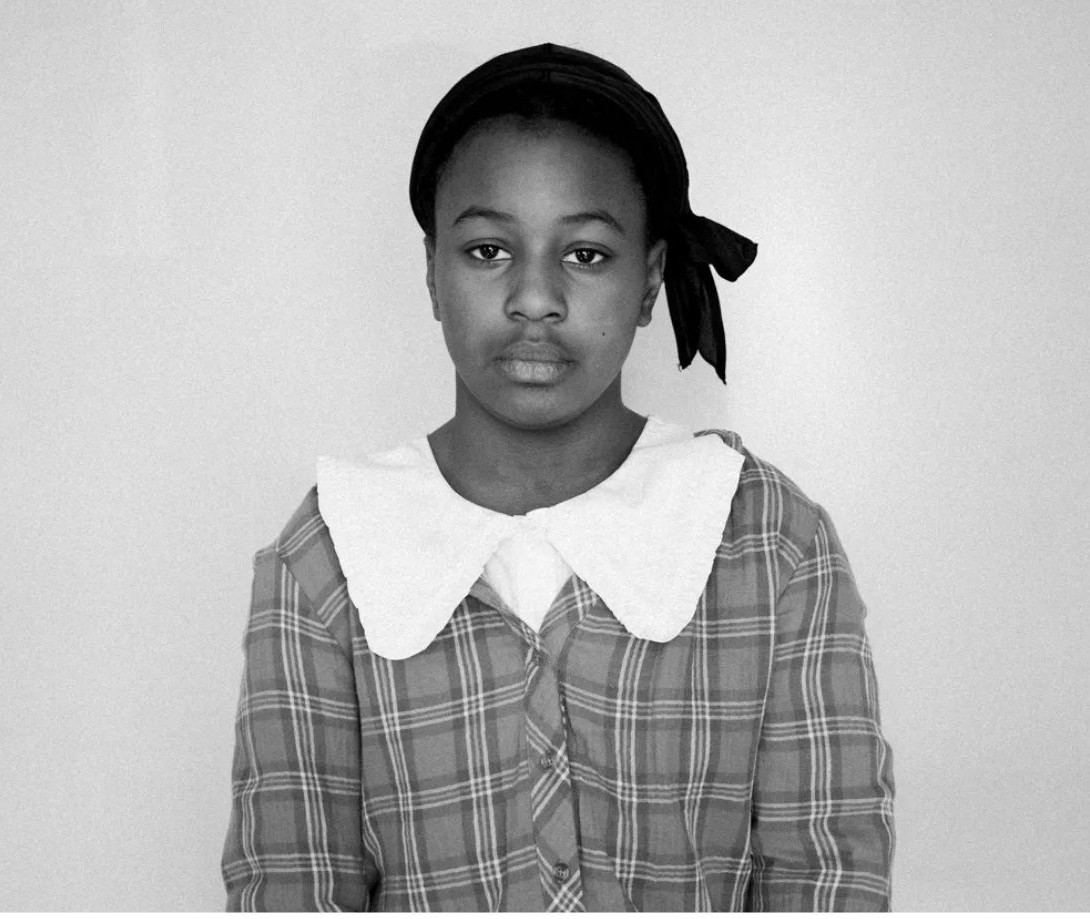
When we talk about Black wealth in history, stories like Madam C.J. Walker often take the spotlight. But hidden in America’s forgotten archives is another remarkable tale that of Sarah Rector, a young Black girl who, by age 12, became a millionaire in the most unexpected way. Her story is not just inspiring; it’s a bold reminder that Black wealth has deep roots, even if the history books don’t talk about it.

Born in 1902 in Indian Territory (now Oklahoma), Sarah was the daughter of Rose and Joseph Rector formerly enslaved people and members of the Muscogee (Creek) Nation. Following the Civil War, treaties granted land rights to Freedmen like the Rectors. Through the Dawes Allotment Act, each child in the Creek Nation, including Sarah, was allocated 160 acres of land.

Initially, her plot was dismissed by her family and government officials as worthless rocky, dusty, and infertile. Nobody expected anything good from that land. In fact, the family struggled to pay the property taxes and almost sold it off. But out of necessity, they leased the land to the Cushing-Drumright Oil Company.

And that’s where everything changed.

In 1913, oil was discovered and not just a little. The well gushed out so much oil it produced 2,500 barrels per day. By today’s standards, this would be like striking gold every single day. Overnight, Sarah’s income shot up to about $300 daily which translates to over $8,000 per day in today’s money. By the following year, Sarah was earning over $11,000 monthly, officially making her America’s youngest oil millionaire at just 12 years old.

The media couldn’t get enough. She was soon dubbed “The Richest Colored Girl in the World”. Newspapers across the country ran stories about her wealth, and curious suitors from all over tried to marry into her fortune. But while Sarah was making headlines, the reality was far more complicated.

Racism and greed reared their ugly heads. White guardianship boards swooped in, claiming that a Black child couldn’t possibly manage such wealth. In a bizarre twist, Oklahoma state officials even suggested reclassifying Sarah as “white” so she could better “fit” the image of her millionaire status. According to reports, the state legislature granted her white status on record not because she changed, but because her bank account did.

Despite these challenges, Sarah Rector was no passive heiress. Her family hired lawyers to protect her wealth, and she grew into a savvy businesswoman. By the time she turned 18, Sarah owned

prime real estate in Kansas City, Missouri, a mansion that was once the home of a local millionaire, multiple rental properties, and a fleet of cars. She also held shares in several oil companies, banks, and businesses.

Sarah used her wealth to live comfortably but also responsibly. She attended the Tuskegee Institute, founded by Booker T. Washington, where she received education in business and agriculture. Reports suggest she contributed to Black causes, schools, and businesses throughout her life, though she kept a low profile as an adult.

What makes Sarah’s story so fascinating isn’t just the money, it’s what it represents. At a time when Black people were being lynched, segregated, and systemically oppressed, here was a young Black girl born into a post-slavery America controlling oil wells, managing property, and commanding respect (even if begrudgingly) from white America.

Sarah Rector’s story disrupts the myth that Black wealth is a modern phenomenon. It shows that land ownership, business acumen, and generational wealth have always been within our grasp even when the odds were stacked against us. Her life is a masterclass on why land matters, why financial literacy is power, and why telling these stories is essential.

Sarah Rector lived well into adulthood, married twice, raised children, and continued to oversee her businesses until her death in 1967. Today, her name may not be widely known, but her legacy is undeniable.

In an era where conversations around Black wealth, ownership, and legacy are louder than ever, Sarah Rector’s story deserves a permanent spot. She was proof over a century ago that Black excellence is not new. It’s ancestral. It’s historical. And it’s ours.


Share:

Trending

Raising Women Magazine Issue 045 – June 2026

There is a difference between living and merely functioning.
Somewhere between the notifications, deadlines, responsibilities, ambitions, and endless demands of modern life, many of us have become exceptionally good at keeping going. We show up. We deliver. We carry. We cope. Yet beneath the appearance of productivity, an important question remains: are we truly well?
In this issue of Raising Women Magazine, we explore wellness not as a trend, but as a deeper conversation about humanity, health, purpose, and presence.
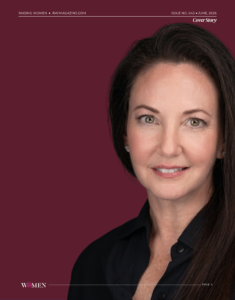
Our cover feature introduces Dr. Heidi Beilis, a pioneering physician helping to shape the future of healthcare through artificial intelligence. Her work reminds us that innovation is at its best when it serves people, particularly women whose lives may be transformed by earlier diagnoses and better outcomes.
Elsewhere, we explore grief, ambition, beauty, leadership, healthspan, rest, and the invisible burdens many women carry. We ask difficult questions about what it means to thrive, not simply survive.
As I wrote in this issue’s Find Her Light column, sometimes the rest we need is not sleep. Sometimes it is space. Sometimes it is perspective. Sometimes it is permission.
May these pages offer all three.

Raising Women Magazine Issue 044 – May 2026

There is something deeply revealing about the way a society treats its children. Not just in policy or parenting, but in the stories it tells them, the spaces it creates for them, and the kind of world it quietly prepares them to inherit. In this Children’s Day edition, Raising Women Magazine turns its attention to childhood itself, not as a sentimental phase of life, but as the foundation upon which identity, confidence, memory, and humanity are built.

Our cover star, Ms. Rachel, represents a refreshing reminder that gentleness still matters in an age of noise. Through patience, intentionality, and emotional safety, she has transformed songs and screen time into a global classroom for millions of children and families.

Across this issue, we explore the emotional architecture of childhood, from the girls who learn too early to shrink themselves, to the children quietly carrying adult burdens before they fully understand their own. We also interrogate modern parenting, digital culture, family, safety, and the futures young people are already shaping.

Because childhood is never just preparation for life.

In many ways, it is life itself.

The Family Tree Divide

What Women Are Given, and What They Build By Sipho Khumalo Two women walk into the same room. One is recognised before she speaks. The

Your guide to IVF and egg freezing in Korea

Empowering your family planning journey with curated fertility treatments at lower costs. Get our guide for Korea’s leading clinics, pricing and service breakdown.

Recommended News

Raising Women Magazine Issue 045 – June 2026

There is a difference between living and merely functioning.
Somewhere between the notifications, deadlines, responsibilities, ambitions, and endless demands of modern life, many of us have become exceptionally good at keeping going. We show up. We deliver. We carry. We cope. Yet beneath the appearance of productivity, an important question remains: are we truly well?
In this issue of Raising Women Magazine, we explore wellness not as a trend, but as a deeper conversation about humanity, health, purpose, and presence.
Our cover feature introduces Dr. Heidi Beilis, a pioneering physician helping to shape the future of healthcare through artificial intelligence. Her work reminds us that innovation is at its best when it serves people, particularly women whose lives may be transformed by earlier diagnoses and better outcomes.
Elsewhere, we explore grief, ambition, beauty, leadership, healthspan, rest, and the invisible burdens many women carry. We ask difficult questions about what it means to thrive, not simply survive.
As I wrote in this issue’s Find Her Light column, sometimes the rest we need is not sleep. Sometimes it is space. Sometimes it is perspective. Sometimes it is permission.
May these pages offer all three.

Raising Women Magazine Issue 044 – May 2026

There is something deeply revealing about the way a society treats its children. Not just in policy or parenting, but in the stories it tells them, the spaces it creates for them, and the kind of world it quietly prepares them to inherit. In this Children’s Day edition, Raising Women Magazine turns its attention to childhood itself, not as a sentimental phase of life, but as the foundation upon which identity, confidence, memory, and humanity are built.

Our cover star, Ms. Rachel, represents a refreshing reminder that gentleness still matters in an age of noise. Through patience, intentionality, and emotional safety, she has transformed songs and screen time into a global classroom for millions of children and families.

Across this issue, we explore the emotional architecture of childhood, from the girls who learn too early to shrink themselves, to the children quietly carrying adult burdens before they fully understand their own. We also interrogate modern parenting, digital culture, family, safety, and the futures young people are already shaping.

Because childhood is never just preparation for life.

In many ways, it is life itself.

The Family Tree Divide

What Women Are Given, and What They Build By Sipho Khumalo Two women walk into the same room. One is

First, Believe

By The Lulu They said the sky’s the limit But what if you’re still underground, still digging through the dirt