By Zamie Ayo
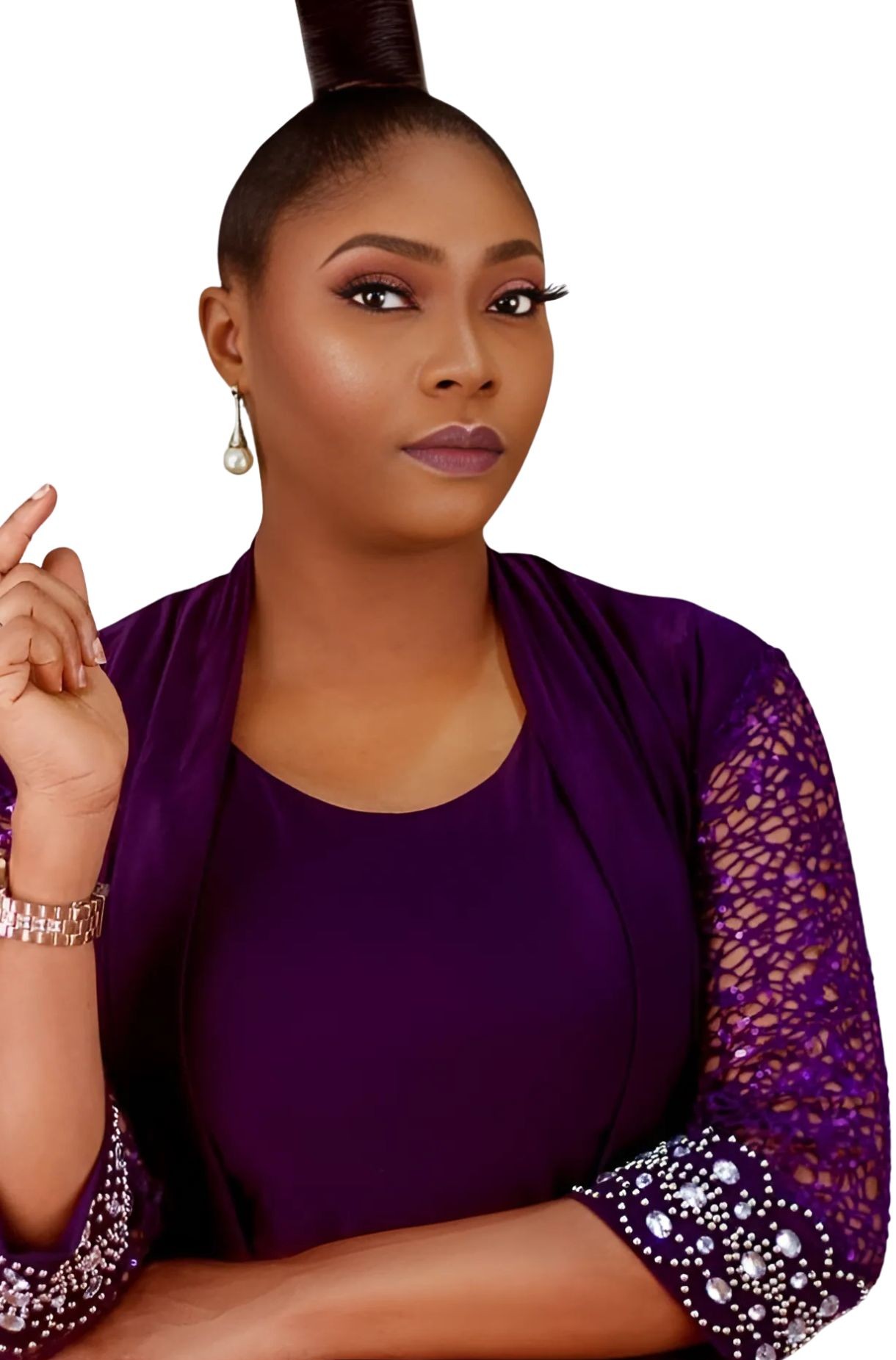
In an engaging interaction with Raising Women Magazine, entrepreneur and visionary Tale Alimi opens up about her bold reimagining of women’s financial empowerment. Beyond.
access to capital, she explores how cultural conditioning, self-doubt, and hidden barriers often keep women from seizing opportunities. Through her groundbreaking framework and community-driven initiatives, she champions not just economic growth but also personal transformation. In this edition of Sheconomics, Tale shares her insights on dismantling invisible obstacles, scaling women-led ventures, and envisioning a future where women’s wealth reshapes households, communities, and the global economy.
1. You’ve described REAF as a framework to unlock women’s economic freedom. How does it go beyond traditional financial inclusion to truly change how women build and sustain wealth?
Traditional financial inclusion operates on a simple premise: give people access to tools, such as bank accounts or loans, and prosperity will follow. But for millions of African women, that’s like giving someone a key without showing them the door, or worse, without addressing the invisible walls blocking their path.
My research revealed that the most formidable barriers aren’t financial; they’re psycho social. I’m talking about internalized shame, the cultural stigma around gender roles, failure and ambition, and the deep-seated belief that they’re “not enough” to be funded.
REAF goes beyond traditional finance by dismantling these invisible walls. We don’t just offer financial tools; we offer freedom in three dimensions:
- Freedom of Money: This is the traditional part: capacity building, digital literacy, and connecting them to seed grants and tailored financial products.
- Freedom of Mind: This is the core. We run “Story Clinics” to help women reframe their s financial narratives, heal financial trauma and change the perception of failure into badges of resilience. We advocate for and “psychosocial nudges” in tech platforms to counteract the voice of self-doubt that tells them not to apply for a loan they qualify for.
- Freedom of Skills: We provide practical, context-specific training delivered by trusted team members and trained community figures we call “Aunty Ambassadors.” They use proverbs and wisdom, not just spreadsheets, to get the point across.
We change how women build wealth by first healing their relationship with wealth itself. Sustainable wealth isn’t just built on a balance sheet; it’s built on a foundation of unshakable self-belief.
2. Your research highlights the invisible “Shame Tax” that keeps many women from pursuing opportunities. Can you share a moment or story that brought this concept to life for you, and how can women begin to dismantle it in themselves?
The concept crystallised for me through two contrasting experiences. The first was watching a highly educated, brilliant female entrepreneur, a woman with a stellar business plan shrinking from a major funding application. Her reason? She was certain the funding institution would discover she was a “fraud” and not as capable or qualified as she seemed. She pre-emptively rejected herself to avoid the shame of potential rejection.
The second was a personal moment. I felt one of these invisible taxes firsthand. A few years ago, my FinTech company, Rouzo, was a death-on-arrival story waiting to happen. We were a new start-up, and we’d just lost all of our initial B2B partners when the pandemic hit. But we pivoted. We created a portfolio-managed, crowd funded lending model that did so well, we won multiple awards for three years running. We were an example of success. Then, with a change in government and economic policies, we faced a new crisis. The informal small businesses we served as our core customers were hit hard. The high default rates meant we had to make a heartbreaking decision: we had to exit the business model.
Despite the fact that every single factor leading to the failure was external, I felt a deep, personal sense of shame. I beat myself up internally, believing I had failed. I was paying what I now call the “shame tax.” This is the feeling that makes so many women I’ve researched afraid to take up funding opportunities because they fear failure and being mocked. I had to rewire my own mind and recognize that I was not a failure; the system was flawed.
Women can begin to dismantle it by:
- Naming it: Recognize that feeling of “I’m not enough” or “I don’t deserve this” or “I will be penalized if I fail” as the Shame Tax; a systemic condition, not a personal truth.
- Reframing Failure: Actively celebrate “intelligent failures” those that come from trying, learning, and iterating. Your failed venture isn’t a mark of shame; it’s a tuition fee you’ve paid for your education in business.
- Finding Their Circle: Surround themselves with other women who are on the same journey of liberation. In our Story Clinics, when one woman shares her story of shame or a limiting belief, it loses its power over everyone in the room.
3. In your experience, which is harder to overcome for women entrepreneurs: systemic barriers like access to finance, or internalized beliefs shaped by culture and society?
They are a vicious cycle, but internalized beliefs are the harder battle. Here’s why: you can design a policy to fix a systemic barrier, but you cannot legislate a woman’s belief in herself.
A bank can create a revolutionary, low-collateral loan product, but if a woman has been socialized to believe that debt is shameful or that she will fail and disgrace her family, she will never walk through that door to apply. She becomes her own gatekeeper.
My data showed that 26% of women self-select out of opportunities, anticipating bias before it even happens. The system doesn’t need to reject them; they reject themselves on the system’s behalf. Therefore, our first and most critical work at REAF is to dismantle the internal gatekeeper. Once a woman believes she is worthy of capital, she will find a way to overcome or demand the change of the systemic barriers in her way.
4. Many women-run ventures remain small despite their potential. From your perspective, what practical shifts in strategy, mindset, or policy help women move from survival mode to scalable enterprises?
- Mindset Shift: Move from “I am a woman running a business” to “I am a CEO building an institution.” This reframe expands vision and ambition.
- Strategy Shift: Embrace technology and systems early. So many women-run businesses are tied to the founder’s personal effort. Scalability comes from documenting processes, using simple CRM tools, and building a team. It’s about working on the business, not just in it. This is why we created an AI & Automation course to help SMEs, especially female-owned ones, leverage these systems. The course is hosted on Udemy and it is very affordable to lower the barrier to access it.
- Policy Shift: We need “Patriarchy Exit Incentives.” Imagine a tax break for a man who is the guarantor for his wife’s business loan? Or a government tender that prioritises businesses that can prove equitable practices? Policy must make gender equity a tangible economic benefit for everyone involved.
5. If your REAF vision succeeds at scale, what does the landscape of women’s wealth look like in Africa by 2035, and what ripple effects do you see for communities and future generations?
By 2035, we see an Africa where women’s wealth is not an exception but a normative driver of our continental economy.
We will see:
- The Rise of the “FemTech” Economy: A thriving ecosystem of women-led ventures in the creative economy, FinTech, EdTech, and AgriTech, solving real African problems.
- Intergenerational Wealth Transfer: Women will not just be generating income; they will be building and transferring assets land, property, stock portfolios to their children, breaking cycles of poverty for good.
- The “Aunty Economy” Formalized: The informal women’s collectives that have always been our economic backbone will be digitized, scaled, and recognized as the powerful financial institutions they are.
The ripple effect is profound. We know that when a woman earns, she reinvests up to 90% of her income into her family’s education, health, and nutrition. This means:
- Healthier, more educated communities.
- Young girls who grow up seeing wealth creation as their birthright.
- Sons who are raised to see powerful women as the norm, not a threat.
- Growth in overall Global GDP. The McKinsey report says the Global GDP will improve by $27 Trillion if women had equitable participation.
This is how we don’t just empower women; we unleash Africa’s most powerful economic engine for collective prosperity.
Closing Reflection: “I want to say to women who have suffered these invisible chains: Your worth is not negotiable. Your ambition is not arrogant. Your wealth is not selfish. It is your divine right and your practical responsibility. Build it, not just for yourself, but for the generations of women who are watching and waiting for your permission to become.”