By Daniel
Adults spend a considerable amount of time underestimating children. We chalk up their behaviour to inexperience, blame the tantrums on underdeveloped emotional regulation, and quietly assume that smaller humans are simply less impressive versions of us, works in progress, biologically speaking.
Science, however, would like a word.
Because it turns out that children are not miniature adults. They are, by every measurable standard, genuinely strange little phenomena walking around in tiny shoes.
MORE BONES THAN ADULTS
Start with the bones. A fully grown adult carries 206 of them, a number that feels reasonable, even respectable. A toddler, meanwhile, is running around with approximately 300. Three hundred. Somewhere between childhood and adulthood, the human body quietly starts fusing its spare parts together, merging bones like it is tidying up after a renovation project nobody asked for. Your child is not just growing up. They are literally losing skeleton on the way.
If that is not unsettling enough, consider what they are doing with all that extra biology.
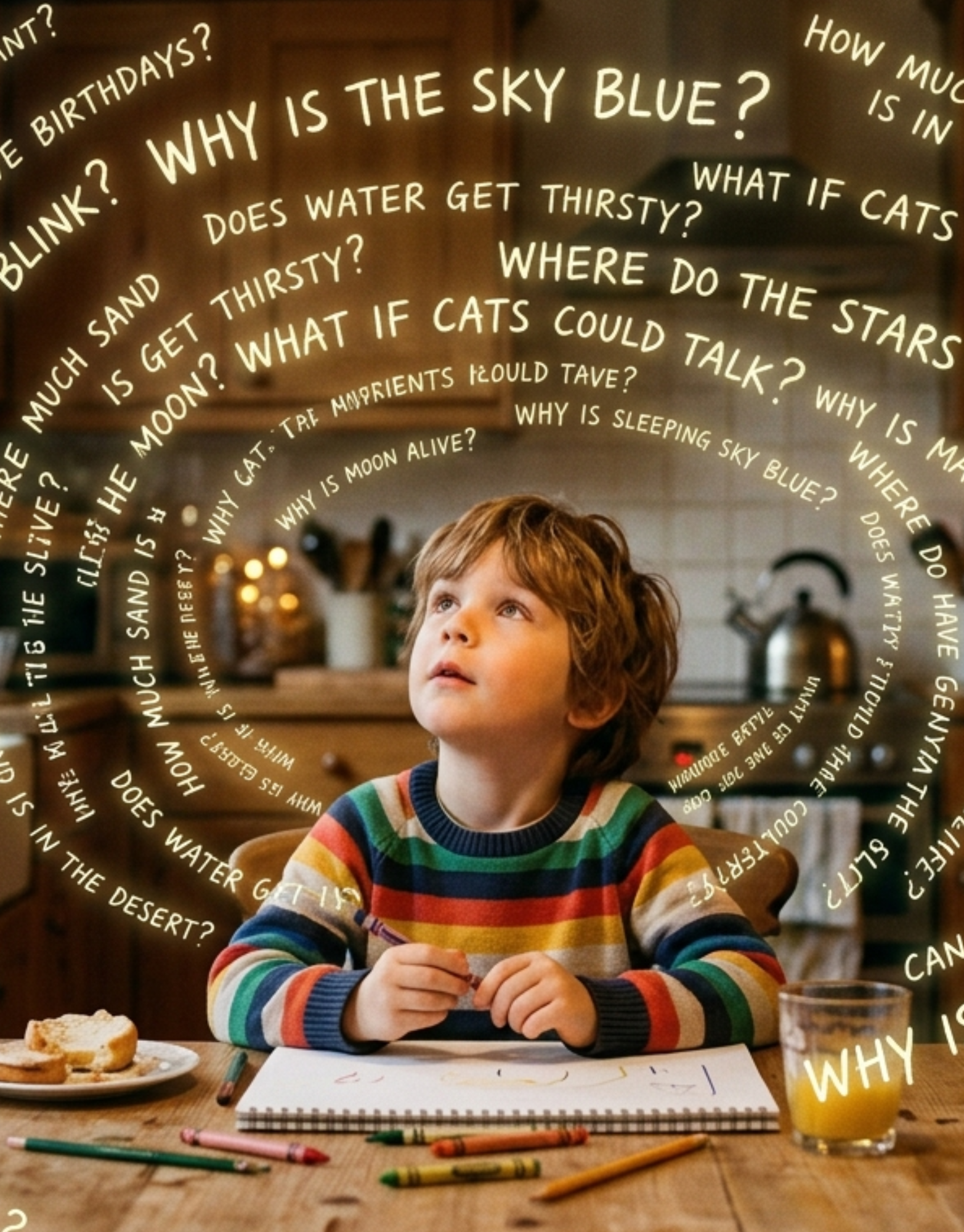
THEY ASK ABOUT 300 QUESTIONS DAILY
Children, it turns out, operate at curiosity levels that most adults retired from decades ago. Research suggests the average child asks somewhere in the range of 300 questions per day. Per day. That is not a typo. While you are trying to remember where you left your keys, the small person in your kitchen is already three layers deep into an inquiry that began at breakfast.
And the questions are not simple ones. Children do not waste their 300 daily queries on anything obvious. They go straight for the philosophical jugular:
- “Why does the moon always follow us?”
- “Who taught the first bird to fly?”
- “Can fish blink? And if they can’t, are they always surprised?”
- “Why do we say ‘I slept like a baby’ if babies wake up screaming?”
- “If I close my eyes, can you still see me?”
These are not the questions of a simple mind. These are the questions of someone experiencing the world without the comfortable numbness of familiarity, someone for whom everything is still genuinely, bewilderingly new.
THEY CAN HEAR THINGS ADULTS CANNOT
Then there is the hearing. Children can detect higher sound frequencies than most adults can. Their auditory range is wider, sharper, more attuned to things we have long since stopped being able to perceive. So, the next time a child freezes in the middle of a room and says, very quietly, “Did you hear that?” and the entire room goes silent, perhaps do not dismiss them quite so quickly.
We like to think of childhood as a rehearsal. A rough draft. The version before the real thing begins.
But maybe that framing has it backwards. Maybe children are not chaotic because they are still learning. Maybe they are just tiny humans experiencing the world at full, unfiltered volume more bones, more questions, more frequency, while the rest of us have slowly, without noticing, gone a little dull.
Which, frankly, is the strangest fact of all.