Spotlighting Remarkable Women and Girls

Chivalry Isn’t Dead. We have Just Normalised Indifference.

By Daniel Agusi

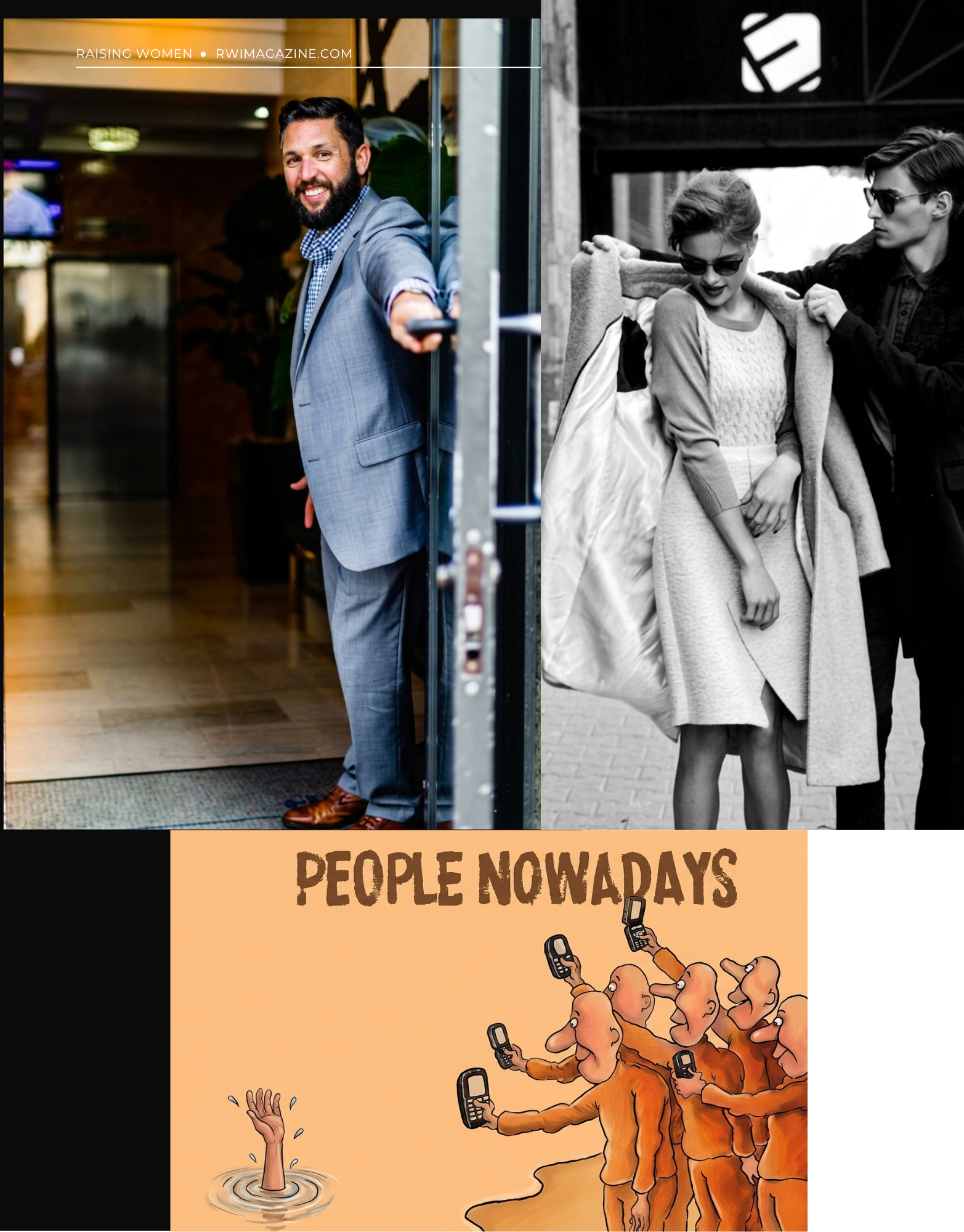
Yesterday, at a bus stop, a woman in heels tried to cross a gutter.

It wasn’t dramatic. No danger, no urgency. Just one of those small inconveniences that should take ten seconds to solve if someone decides to act.

Two men who came to pick her up sat in their parked car, watching. Laughing, even. Around them, a small crowd waiting for their rides. Women included. But no one moved.

She tried again. Adjusted her stance. Failed. Paused. That quiet moment where the body gives up before the voice does. Still, no one moved.

So, I did. Helped her across. That was it.

Except it wasn’t.

Because what stayed with me was not her struggle. It was the audience.

We keep asking whether chivalry is dead, but that question is too convenient. It suggests something noble has been killed off, usually by modernity or shifting gender roles.

But standing there, watching a group of perfectly capable adults choose observation over action, the answer felt simpler.

Chivalry isn’t dead. People just care less than they used to, or at least, they act like they do.

This is not new. Psychologists call it the bystander effect. The more people present, the less likely anyone is to help. Responsibility spreads thin until it disappears.

What has changed is how comfortable we’ve become with it. We do not just hesitate anymore. We watch. We assess. Sometimes we even find humour in someone else’s inconvenience because it removes any pressure to act.

The men in the car were not cruel. They were casual. That is what makes it worse.

Now, to be fair, this is where the conversation gets complicated.

Chivalry has always been framed as something men do. Open doors. Offer help. Step in. But modern men are navigating a confusing script.

Be helpful, but not patronising. Be kind, but do not assume. Offer assistance, but do not offend. Somewhere in all that, many have quietly stepped back.

And honestly, part of the reason is not hard to see.

I have another experience.

On most days, after work, I walk out with my colleagues. All women. We get to the gate, I open it, they walk through, and then I follow. Simple. No big deal.

One day, they got there before me. And instead of opening the gate themselves, they stood there. Waiting. For me.

I got there, looked at them, opened the gate, walked through, and closed it behind me.

Because at that point, it was no longer a gesture. It had become an expectation.

That shift matters.

When kindness becomes something you are expected to deliver on cue, it stops feeling like kindness. It starts to feel like a role you are being cast into without audition.

But let’s not make this a men versus women argument. That would be missing the point entirely.

The bus stop incident was not about entitlement. No one there felt owed help. They simply did not feel responsible to offer it.

That includes everyone.

So, the real issue is not that chivalry is fading. It is that basic consideration is no longer instinctive. It has become optional, something we weigh, analyse, and sometimes ignore.

And that is a bigger problem.

Because chivalry, as a concept, was never perfect. It was selective and often performative. What we actually need is something simpler and more honest.

Consideration.

Helping someone because they need help. Acting because it is right. Not because it is expected, and not because it will be applauded.

The truth is, we have become very aware of ourselves. Every small action now comes with questions.

Will this be misinterpreted? Will this be appreciated? Is this even my place?

Sometimes, doing nothing feels safer than doing something slightly awkward.

But that safety has a cost.

Every time we choose not to act, we quietly reinforce the idea that help is optional. That someone else will do it. That discomfort is not urgent enough to interrupt our day.

And over time, that builds a culture where people feel alone, even in a crowd.

So no, chivalry is not dead.

It just no longer feels necessary to most people.

And that is the real problem.

Because fixing it does not require grand gestures. It is much simpler than that.

Step forward instead of watching. Help without overthinking it. Do the small thing, even if no one notices.

Because in the end, it is not about chivalry.

It is about whether we are still the kind of people who act when it would be easier not to.

Share:

Trending

Raising Women Magazine Issue 045 – June 2026

There is a difference between living and merely functioning.
Somewhere between the notifications, deadlines, responsibilities, ambitions, and endless demands of modern life, many of us have become exceptionally good at keeping going. We show up. We deliver. We carry. We cope. Yet beneath the appearance of productivity, an important question remains: are we truly well?
In this issue of Raising Women Magazine, we explore wellness not as a trend, but as a deeper conversation about humanity, health, purpose, and presence.
Our cover feature introduces Dr. Heidi Beilis, a pioneering physician helping to shape the future of healthcare through artificial intelligence. Her work reminds us that innovation is at its best when it serves people, particularly women whose lives may be transformed by earlier diagnoses and better outcomes.
Elsewhere, we explore grief, ambition, beauty, leadership, healthspan, rest, and the invisible burdens many women carry. We ask difficult questions about what it means to thrive, not simply survive.
As I wrote in this issue’s Find Her Light column, sometimes the rest we need is not sleep. Sometimes it is space. Sometimes it is perspective. Sometimes it is permission.
May these pages offer all three.

Raising Women Magazine Issue 044 – May 2026

There is something deeply revealing about the way a society treats its children. Not just in policy or parenting, but in the stories it tells them, the spaces it creates for them, and the kind of world it quietly prepares them to inherit. In this Children’s Day edition, Raising Women Magazine turns its attention to childhood itself, not as a sentimental phase of life, but as the foundation upon which identity, confidence, memory, and humanity are built.

Our cover star, Ms. Rachel, represents a refreshing reminder that gentleness still matters in an age of noise. Through patience, intentionality, and emotional safety, she has transformed songs and screen time into a global classroom for millions of children and families.

Across this issue, we explore the emotional architecture of childhood, from the girls who learn too early to shrink themselves, to the children quietly carrying adult burdens before they fully understand their own. We also interrogate modern parenting, digital culture, family, safety, and the futures young people are already shaping.

Because childhood is never just preparation for life.

In many ways, it is life itself.

The Family Tree Divide

What Women Are Given, and What They Build By Sipho Khumalo Two women walk into the same room. One is recognised before she speaks. The

Your guide to IVF and egg freezing in Korea

Empowering your family planning journey with curated fertility treatments at lower costs. Get our guide for Korea’s leading clinics, pricing and service breakdown.

Recommended News

Raising Women Magazine Issue 045 – June 2026

There is a difference between living and merely functioning.
Somewhere between the notifications, deadlines, responsibilities, ambitions, and endless demands of modern life, many of us have become exceptionally good at keeping going. We show up. We deliver. We carry. We cope. Yet beneath the appearance of productivity, an important question remains: are we truly well?
In this issue of Raising Women Magazine, we explore wellness not as a trend, but as a deeper conversation about humanity, health, purpose, and presence.
Our cover feature introduces Dr. Heidi Beilis, a pioneering physician helping to shape the future of healthcare through artificial intelligence. Her work reminds us that innovation is at its best when it serves people, particularly women whose lives may be transformed by earlier diagnoses and better outcomes.
Elsewhere, we explore grief, ambition, beauty, leadership, healthspan, rest, and the invisible burdens many women carry. We ask difficult questions about what it means to thrive, not simply survive.
As I wrote in this issue’s Find Her Light column, sometimes the rest we need is not sleep. Sometimes it is space. Sometimes it is perspective. Sometimes it is permission.
May these pages offer all three.

Raising Women Magazine Issue 044 – May 2026

There is something deeply revealing about the way a society treats its children. Not just in policy or parenting, but in the stories it tells them, the spaces it creates for them, and the kind of world it quietly prepares them to inherit. In this Children’s Day edition, Raising Women Magazine turns its attention to childhood itself, not as a sentimental phase of life, but as the foundation upon which identity, confidence, memory, and humanity are built.

Our cover star, Ms. Rachel, represents a refreshing reminder that gentleness still matters in an age of noise. Through patience, intentionality, and emotional safety, she has transformed songs and screen time into a global classroom for millions of children and families.

Across this issue, we explore the emotional architecture of childhood, from the girls who learn too early to shrink themselves, to the children quietly carrying adult burdens before they fully understand their own. We also interrogate modern parenting, digital culture, family, safety, and the futures young people are already shaping.

Because childhood is never just preparation for life.

In many ways, it is life itself.

The Family Tree Divide

What Women Are Given, and What They Build By Sipho Khumalo Two women walk into the same room. One is

First, Believe

By The Lulu They said the sky’s the limit But what if you’re still underground, still digging through the dirt