By Chris Wede
Most of the work that shapes our lives doesn’t come with applause. It doesn’t make headlines. It rarely has a face attached to it.
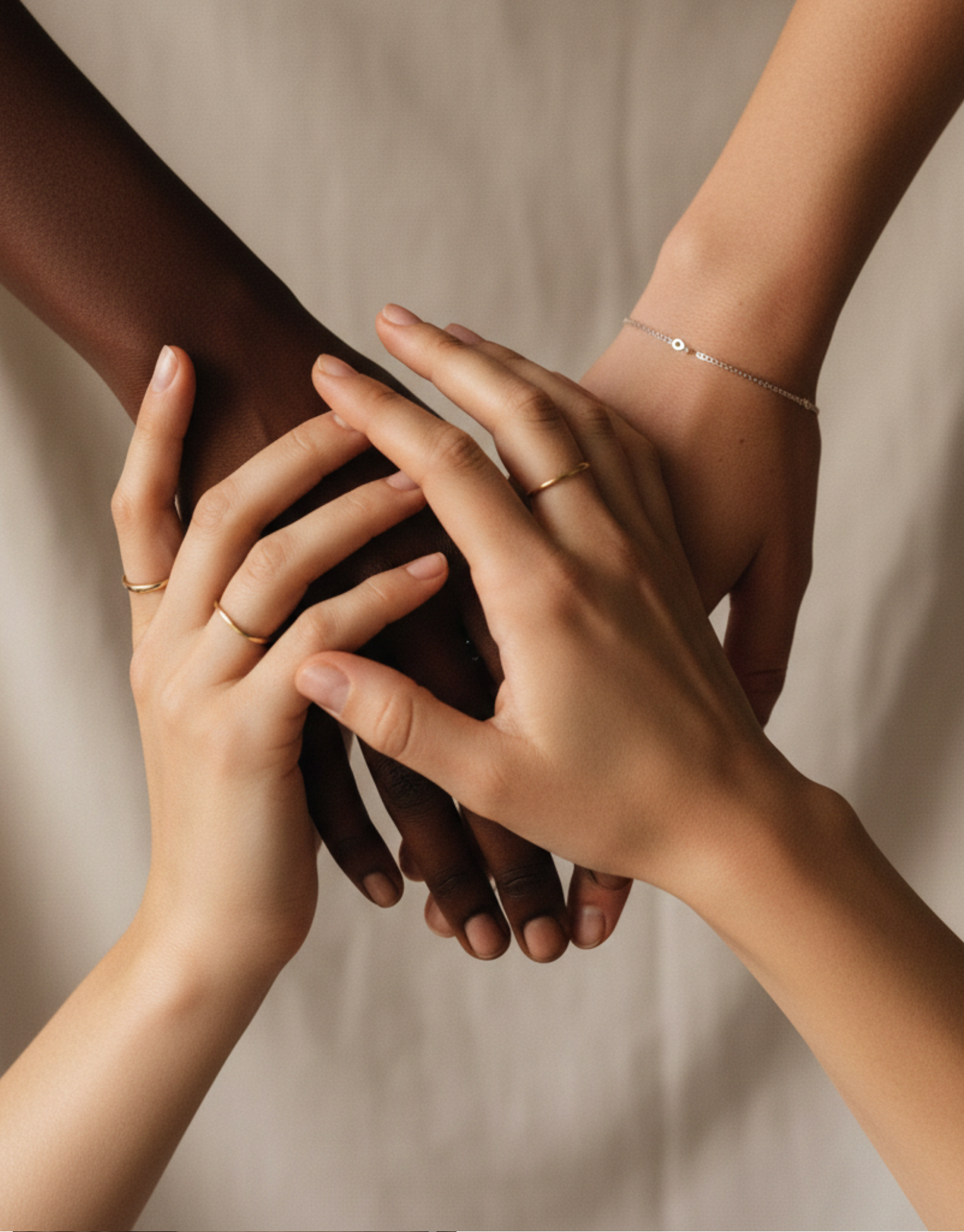
But it always has hands. Hands that wake up early and fall asleep late. Hands that move through the same routines every day, even when no one is watching. Hands that carry responsibility, care, worry, patience, and hope, all at once. Hands that do the work that keeps families, communities, and systems standing.
When we started shaping this issue of Raising Women Magazine, we kept coming back to one simple truth: collaboration doesn’t look the way we’re used to seeing success portrayed. It isn’t loud. It isn’t centered on one person. Most times, it doesn’t even ask to be seen.
So we chose hands.
No faces. No names. No hierarchy.
Just the work.
Why We Chose Not to Show Faces
Faces tell stories quickly. They invite judgment, comparison, familiarity. We decide who we relate to, who we admire, who we think belongs. Faces can be powerful, but they can also narrow the story.
Hands do the opposite. Hands are honest. They don’t perform. They don’t compete. They simply show what has been done and what is still being carried.
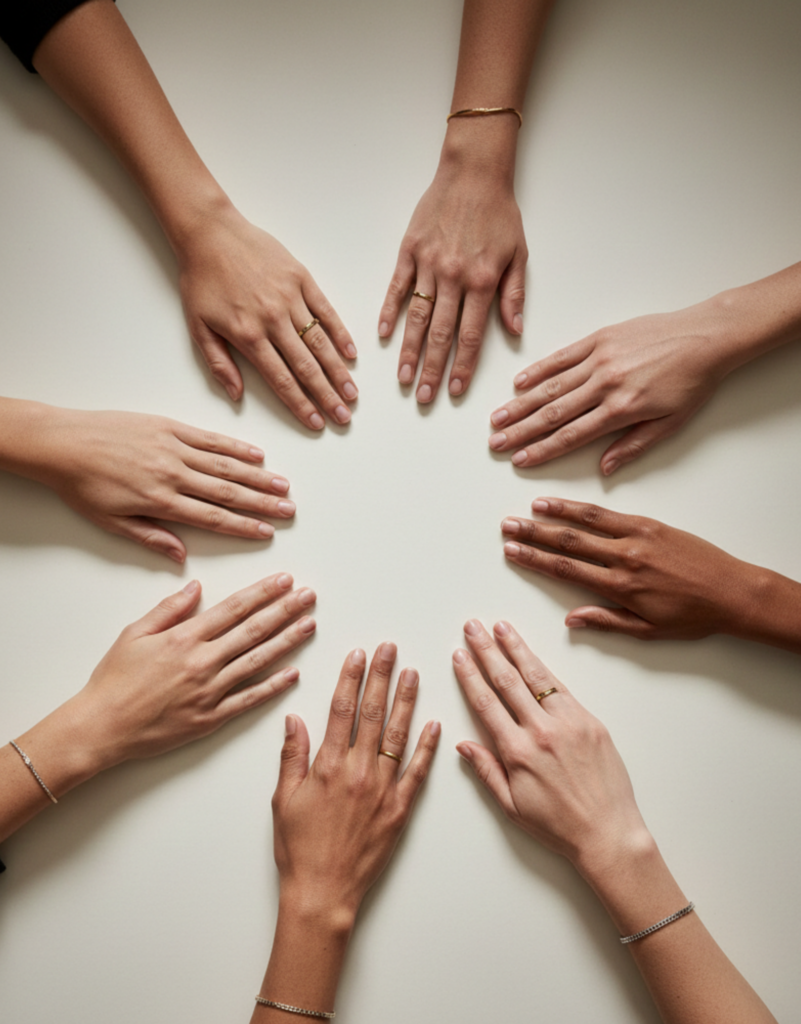
Some hands are smooth, others worn. Some carry rings, others carry scars. Some look young, some older. But when placed together, none of that matters. What matters is what they are doing, holding, building, passing, supporting.
By removing faces, we removed ego. We removed status. We removed the need to explain who is important.
Because collaboration isn’t about who stands at the center. It’s about who shows up.
The Work We Rarely Name
There are so many forms of labor we’ve been taught not to notice.
The mother who is learning a new skill at home so she can contribute more, dream bigger, or simply survive better. The educator who answers one more question long after class is over. The woman who organizes schedules, resources, emotions, and people quietly. The one who connects others, introduces opportunities, fills gaps, and never claims credit.
This kind of work doesn’t photograph well. It doesn’t come with a clear title. And yet, without it, nothing else moves.
Collaboration lives here, in the everyday exchanges we don’t label as important, but rely on completely.
Collaboration Isn’t Always Equal And That’s the Truth
We often talk about collaboration as if it’s neat and balanced. As if everyone brings the same thing, at the same time, with the same energy.
That’s not real life.
Sometimes one person carries more. Sometimes someone else needs support longer. Sometimes collaboration looks like patience. Other times it looks like sacrifice. Often, it looks like doing something you won’t be thanked for.
Women understand this deeply. They collaborate in ways that are practical, not performative. They step in where they are needed, not where they will be seen. They adjust, adapt, and continue.
Collaboration is not a trend. It’s a practice. One learned through necessity, care, and responsibility.
The Language of Hands
Hands speak, even when mouths are silent. They tell stories of repetition. Of consistency. Of staying.
Hands remember what the mind tries to forget, the weight of carrying too much, the strength built slowly over time, the quiet pride of finishing something that mattered.
Hands pass things on. Knowledge. Skills. Trust. Responsibility. One woman teaches. Another learns. Another applies. Another sustains. That is collaboration in its truest form, not a moment, but a chain.
Gratitude Is Not Soft, It’s Honest
Gratitude is often mistaken for weakness or politeness. A closing line. A formality.
But gratitude is clarity.
It says: This didn’t happen by accident.
It says: Someone carried this before me.
It says: I didn’t do this alone.
In a world that celebrates individual success stories, gratitude shifts the lens. It forces us to look behind the outcome and acknowledge the effort that made it possible.
Gratitude is not about lowering ambition. It’s about grounding it in truth. This issue is our way of saying thank you not loudly, not dramatically, but intentionally.
The Women You Don’t See
There are women whose work never enters a room before they do. Women whose influence is felt more than it is named.
They are not invisible because they lack impact. They are invisible because they have been taught that their kind of contribution is expected. These hands belong to them.
To the woman who holds space when others fall apart.
To the one who keeps things running without recognition.
To the woman who collaborates instinctively, not strategically.
To the woman who understands that real impact is rarely immediate.
Their power is quiet. But it is steady.
Changing What Leadership Looks Like
Leadership is often pictured as standing in front. Giving direction. Being followed.
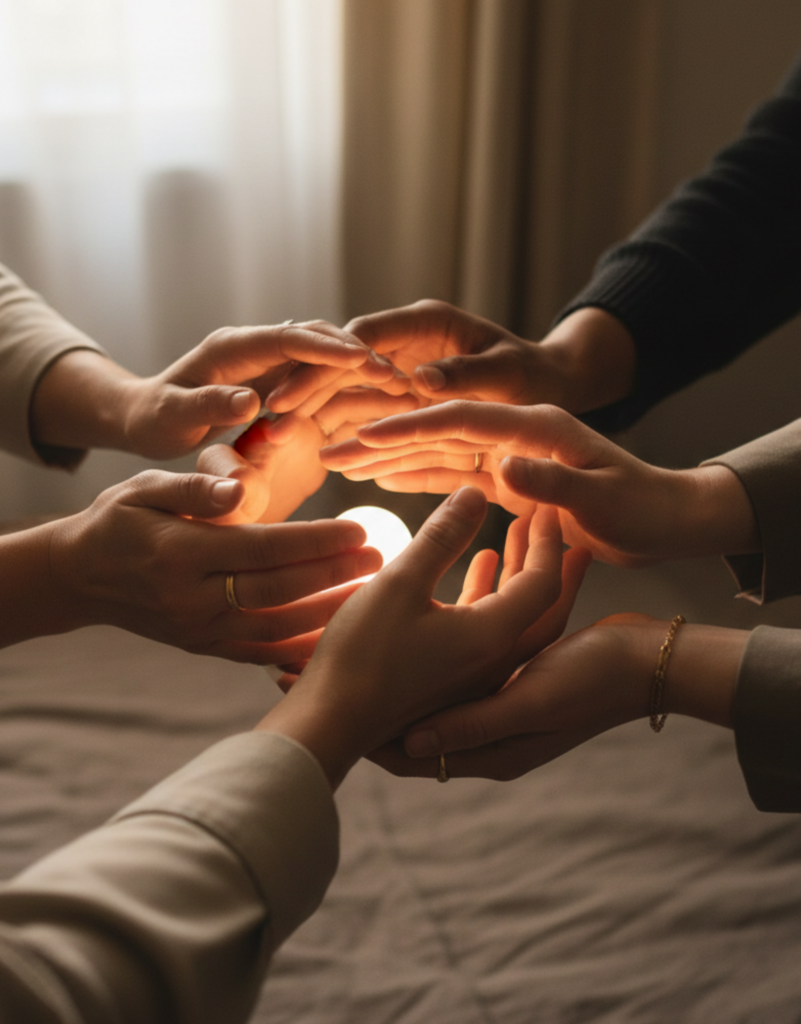
But what if leadership also looks like standing beside? Or behind? Or beneath, holding everything steady? Hands teach us this.
They don’t dominate. They coordinate. They adjust. They respond.
True leadership is collaborative by nature. It understands that strength multiplies when shared, not when hoarded.
This cover is not about rejecting individuality. It’s about rejecting isolation.
A Cover That Invites, Not Explains
This image does not tell you what to think. It doesn’t spell out its meaning. It invites you in. It asks you to pause. To notice. To reflect.
You might see your own hands in it. You might think of someone else’s. A mother’s. A mentor’s. A colleague’s. A friend’s.
That’s intentional. This cover is not a statement piece, it’s a mirror.
The Work That Continues Quietly
Hands rest, but they rarely stop holding responsibility.
Even in stillness, they carry memory of things built slowly, of people supported, of moments that mattered quietly.
As we step into a new year, this issue reminds us that progress doesn’t come from doing more alone. It comes from recognizing the systems we are part of, and choosing to strengthen them together.
Collaboration is not always visible. Gratitude is not always spoken. But both are always felt.
This Is an Invitation
An invitation to look again at the work you do.
An invitation to notice who you collaborate with, knowingly or not.
An invitation to say thank you, even silently, to the hands that make your life easier.
Because long after names fade and faces change, the work remains.
And the work always passes through hands.