By Emmanuella Abraham
In recent years architects have flipped the script on “building from scratch.” Instead of bulldozing trees, many are designing houses around existing flora, treating mature trees as centerpieces rather than nuisances. This “form follows the existing” approach means floor plans twist, cut, or cantilever around trunks, and central courtyards are laid out to let trees continue growing. The result is homes wrapped in greenery, with built forms that delineate spaces by the pattern of the trees. As one design writer notes, architects today are “increasingly shrouding… hard-edged” walls with lush vegetation. In short, woodlands on the site become guides to the plan, not obstacles to be cleared.
(put the photo of the KAA Design Group’s Tree House)
KAA Design Group’s Tree House in Southern California is literally built around century-old trees. The firm left mature cork oaks and magnolias standing and “nestled” the structure among them. For example, a second-floor terrace is notched to accommodate the limbs of an existing oak. Such thoughtful design lets indoor and outdoor spaces flow together: living rooms and courtyards open out onto the native landscape, with the trees at their heart.
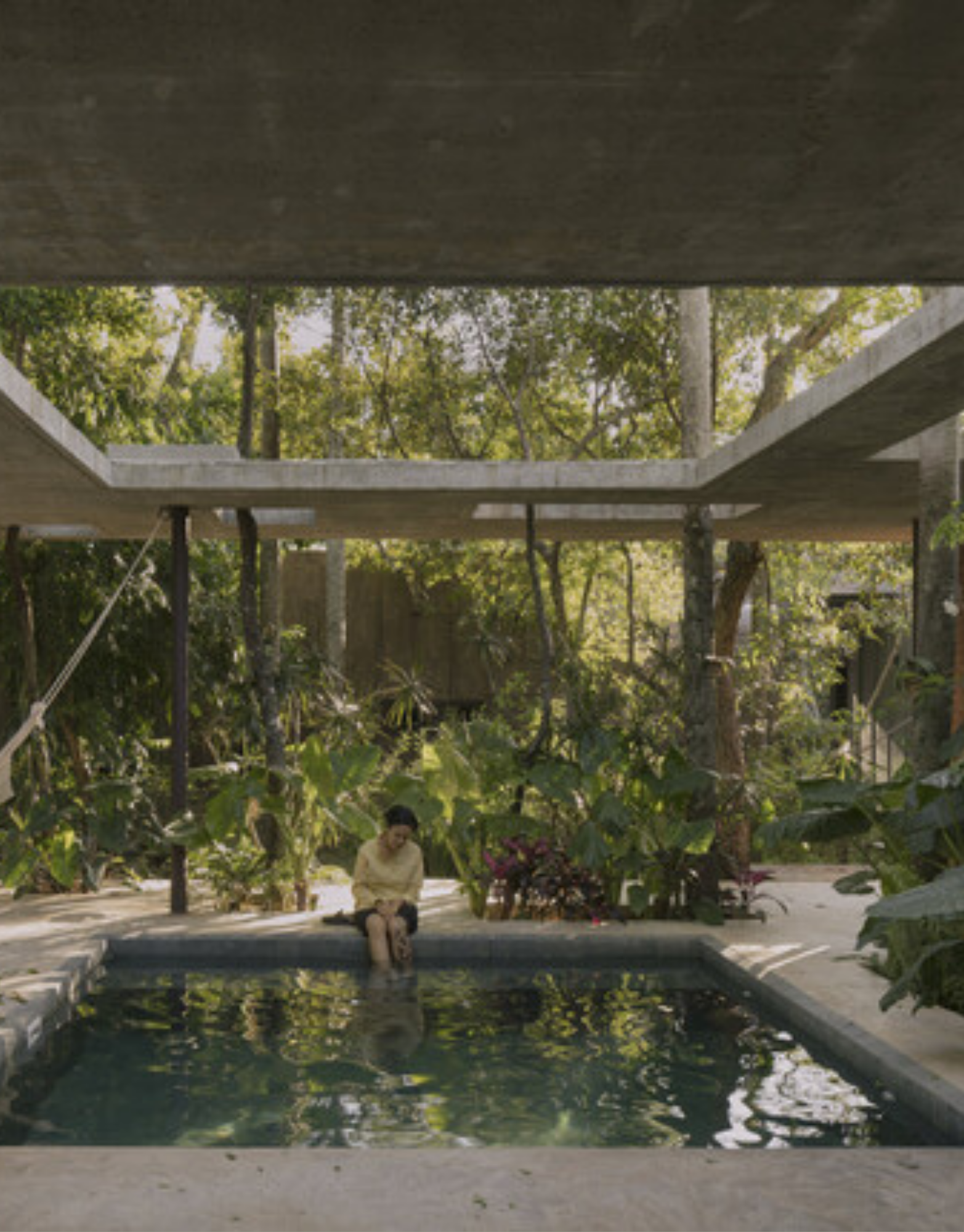
Across the globe, similar projects are underway. In Paraguay, the Forest in the House by Equipo de Arquitectura “embraces” existing trees as fundamental guides to the layout. The architects explain that the trunks “delineate the relationship between occupied spaces and voids,” freeing the structure from a conventional grid. In India, ODA Architecture built a New Delhi penthouse around a ficus microcarpa planted under a glass roof, creating a true indoor forest. ODA principal Ryoko Okada says that “there’s nothing more calming than being surrounded by nature. A living tree is a statement piece, an art installation in itself. It’ll bring you joy and peace”. Even in Los Angeles, KAA Design reports convincing a skeptical client to preserve a 300-year-old oak by pointing out it should be “featured rather than removed.” Once the home plan was redrawn around the trunk, the client understood the oak’s beauty. Such stories highlight a key shift: homeowners and architects are increasingly choosing to retain mature trees in residential designs, weaving houses around their trunks.
Benefits: Shade, Clean Air, and Serenity
Integrating trees into homes isn’t just an aesthetic trend, it delivers real benefits for residents. Mature trees provide natural shading and cooling, reducing heat gain in summer and lowering energy costs. A leafy canopy over an outdoor courtyard or patio can cut daytime temperatures significantly, improving comfort without air-conditioning. Trees also improve microclimate: they moderate humidity, muffle noise and diffuse sunlight, creating a more pleasant indoor/outdoor environment.
- Air quality: Plants absorb carbon dioxide and certain pollutants, releasing fresh oxygen. Studies show that having plants indoors can measurably improve air quality (especially filtering VOCs from paints or cleaners) and thus benefit health. Even beyond chemistry, simply being around plants has measurable effects: one review of 42 studies found that the mere presence of indoor plants improves mental and physical health. Houseplants (and indoor trees) have been linked to better focus and lower stress in occupants.
- Well-being: This is the heart of “biophilic design.” Psychology and health research confirm that views of greenery and contact with nature reduce anxiety, speed recovery and boost mood. Children and adults with daily access to green spaces or even indoor plants show lower blood pressure, better memory, and greater creativity. The effect is so strong that people report feeling calmer and more inspired simply by looking out on trees. As Harvard Health reports, “spending time around trees and green spaces uplifts our health and mood”. In practice, a tree in the living room or courtyard can feel like a built-in spa: stress retreats as soon as you step into the dappled light and rustling leaves.
- Biophilic Appeal. Today’s homebuyers crave a connection to nature. Industry sources note that biophilic features – natural materials, daylight and indoor greenery – “remain popular” with buyers. Architects exploit this by framing views through tree-filled courtyards or lining walls with potted living walls, but nothing beats the drama of an actual tree. In a world of glass and steel, a living trunk or canopy is an instant focal point and conversation piece. As Okada put it, a tree becomes an “art installation” – and that appeals to people’s sense of beauty and wellness.
Challenges and Considerations
Of course, planting or preserving trees indoors requires care. Architects caution: do this only with professional guidance. As Ryoko Okada emphasizes, one should never put a large tree inside a home “without consulting a landscape architect or other qualified specialist”. A tree will thrive only in the right conditions of light, air, and soil depth – and it must be supported by proper infrastructure (root barriers, drainage, etc.) to avoid damaging the home.
Key requirements include:
- Space & Soil. A healthy tree needs room for its roots. Designers recommend at least four feet of soil depth and a planter or courtyard big enough to accommodate the spread. The location needs plentiful sunlight too; dark basements or dim rooms won’t sustain most species.
- Tree Selection. Not every tree is a good indoor candidate. Architects and landscapers stress “the right tree for the right climate” . Slow-growing, non-invasive species are preferred. Evergreens or well-behaved deciduous trees (e.g. ficus, olive, certain pines) work better than messy fruit trees or weak-wooded types. Native or acclimated species adapt more easily to local humidity and pests.
- Structural Adaptations. Homes built around trees often need special detailing. Floors may have holes or raised sections for trunks, and roofs must be framed to avoid branches. Watering, drainage and irrigation must be planned carefully. As one architect notes, indoor palms eventually need replacing (the Brookfield Place palms were changed every ~10 years) because they lack wind stress. In short, plan for long-term care.
- Alternate Solutions. If a full-size tree is impractical, designers sometimes use symbolic alternatives. For example, burned tree branches might be mounted as art, or artificial trees and green walls can echo nature. But for real health benefits and authenticity, a living tree is best, experts agree.
Despite these hurdles, many clients judge the effort worthwhile. Architect Grant Kirkpatrick quips that tree-friendly projects often “take a bit of a sell” – but once the home “embraces” the tree, owners quickly appreciate its antique beauty.
A Growing Movement
All signs point to this being more than a fad. Iconic projects like Milan’s Bosco Verticale (with balconies full of trees) gave the idea public visibility, but it’s in houses where it may have the biggest impact. Even the American housing industry lists biophilic design as a top trend. Buyers increasingly expect natural daylight, indoor plantings, and a sense of green living in their homes.
As London writer Dominic Lutyens observes, architects are already softening hard edges with greenery. The examples above suggest this practice is spreading. Each preserved tree keeps a century of carbon storage, wildlife habitat and shade intact – small victories against urban heat islands and deforestation. In short, designing homes around trees offers a win-win: houses that feel good to live in, and forests that keep on growing.