Spotlighting Remarkable Women and Girls

Did You Know? “Give to Gain” Is More Than a Slogan

By Ifeanyi’s Daughter

Every year, International Women’s Day arrives with a theme. Some are bold. Some are urgent. Some are aspirational. This year’s theme, “Give to Gain,” may sound simple at first glance. But like many powerful ideas, its strength lies in what sits beneath it.

So, what does “Give to Gain” actually mean? Where did it come from? And why is it relevant now? To understand it properly, we need to start with the foundation of International Women’s Day itself.

International Women’s Day, marked every year on 8 March, dates back to the early twentieth century. It emerged from labour movements in North America and Europe, where women were demanding fair wages, safer working conditions and voting rights. Over time, it evolved into a global moment recognised by the United Nations, focusing on gender equality, economic empowerment, political participation and social justice.

Each year, organisations, advocacy groups and global institutions shape themes that reflect current realities. These themes are not random. They respond to economic trends, political shifts and social gaps.

“Give to Gain” sits squarely within that tradition.

At its core, the phrase suggests reciprocity. It implies that what we invest into women and girls returns multiplied. But the theme is not simply about generosity in a personal sense. It is about systems.

The first word, Give, is intentional. It asks institutions, governments, corporations and communities to give tangible things. Give opportunity. Give access. Give funding. Give policy protection. Give space at decision-making tables. Give mentorship. Give safety. Give education.

The second word, Gain, speaks to outcome. When women are given equal access to resources and opportunity, societies gain economically, socially and politically. This is not rhetorical optimism. There is data behind it.

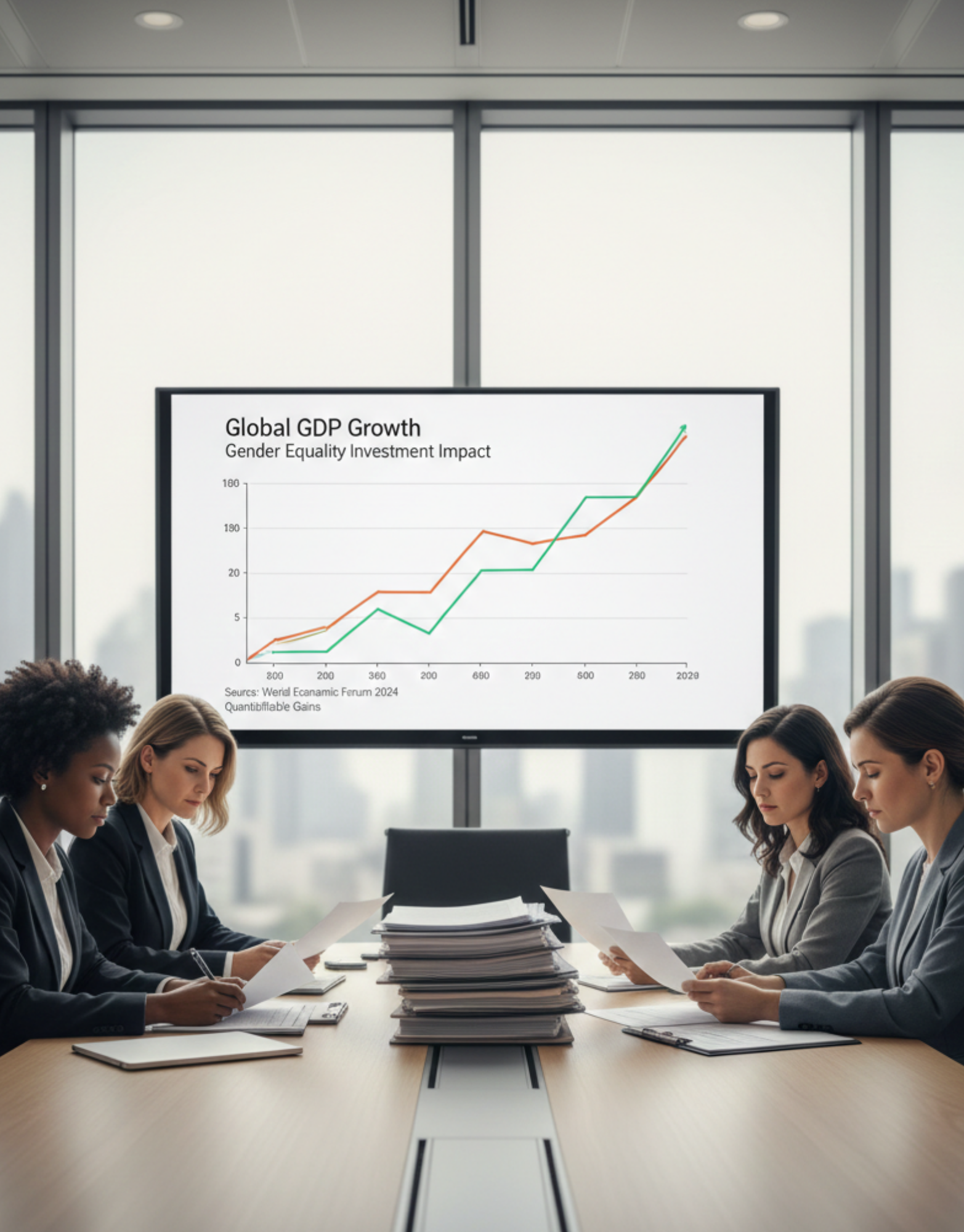
According to the World Bank, closing gender gaps in employment could significantly increase global GDP. McKinsey research has estimated that advancing women’s equality could add trillions of dollars to global economic output. When women participate fully in labour markets, they increase household income, improve child welfare outcomes and strengthen national economies.

So “Give to Gain” is not charity language. It is economic strategy.

The theme also responds to a present reality. Despite decades of advocacy, gender gaps persist across multiple areas. Women remain underrepresented in political leadership. They are more likely to work in informal or vulnerable employment. Globally, women perform a disproportionate share of unpaid care work. Access to capital for women-owned businesses remains significantly lower than for male-owned enterprises.

In that context, “Give to Gain” becomes a call to rebalance.

It challenges decision-makers to move beyond symbolic celebration and towards structural action. It asks a practical question. If societies want economic growth, social stability and sustainable development, are they investing adequately in half the population?

The phrase can also be misunderstood if taken too narrowly. It is not a demand that women give more of themselves. Historically, women have given extensively through unpaid labour, caregiving and emotional support. This theme does not celebrate sacrifice. Instead, it redirects responsibility towards systems that must give more to women.

There is also a collective dimension embedded in the theme. “Give to Gain” encourages collaboration. When women support women through mentorship, networking and resource-sharing, they create multiplier effects. When businesses commit to inclusive supply chains, they expand market access. When communities prioritise girls’ education, they raise future earning potential.

It is a reminder that equality benefits everyone.

Importantly, the theme also recognises that progress requires intentional action. Gains do not happen automatically. They follow investment. They follow policy change. They follow accountability. For contributors, businesses and advocates engaging with this theme, the key is clarity. “Give to Gain” is not about vague goodwill. It is about measurable shifts. What are we giving? Who is giving it? How is it structured? What gain are we expecting? Who benefits?

When broken down this way, the theme becomes less abstract and more actionable.

It asks governments to give stronger protections and inclusive policies. It asks corporations to give fair wages, leadership pathways and procurement opportunities. It asks investors to give capital to women-led enterprises. It asks communities to give support structures that reduce the burden of unpaid labour.

And in return, societies gain productivity, innovation, stability and resilience.

International Women’s Day has always been about more than celebration. It has been about progress. “Give to Gain” continues that legacy by connecting generosity with strategy, inclusion with growth and equality with long-term prosperity.

Did you know that investing in women is not just a moral imperative but an economic one? That is the essence of this year’s theme.

When we understand it fully, “Give to Gain” stops being a slogan. It becomes a blueprint.
Share:

Trending

Raising Women Magazine Issue 56 – November 2026

The Courage to Question
We live in a world where reputation often arrives before character, popularity masquerades as goodness, and questioning authority can make you the problem. Apparently, being respected is sometimes mistaken for being beyond reproach.
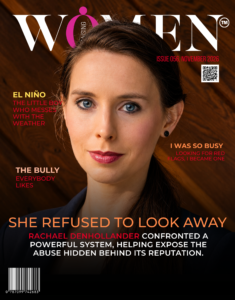
Our cover woman, Rachael Denhollander, reminds us why that distinction matters. Her courage in confronting institutional abuse challenges us to reconsider what safety, justice and accountability truly mean.

Elsewhere, we explore the judgement surrounding childbirth, the invisible labour behind successful careers, the beauty industry’s obsession with perfection, and why women can cook the same meal as men yet receive considerably less applause.

From fashion and culture to relationships and motherhood, Issue 56 invites us to examine the assumptions we have inherited, including those we unknowingly perpetuate.

Because progress is not simply about celebrating extraordinary women. It is about creating a world where ordinary women and girls are heard, valued and protected.

And sometimes, change begins with refusing to look away.

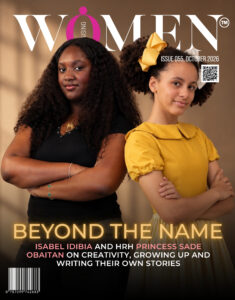
Raising Women Magazine Issue 55 – October 2026

We spend a remarkable amount of time telling girls who they should become, often before they have finished discovering who they are. Apparently, growing up comes with a job description nobody remembers applying for.

In Issue 55, our cover girls, Isabel Idibia and Princess Sade Obaitan, remind us that famous surnames and royal titles may introduce you, but they should never define you.

From girls conquering oceans and swimming pools to conversations about beauty, culture and ambition, this edition examines the expectations we inherit and the courage required to question them.

In Find Her Light, I also reflect on the careers I might have pursued and why discovering another gift does not invalidate the life we have already built.

Perhaps that is the lesson running through these pages: identity is not a finished manuscript.

Every girl deserves the freedom to write her own story. And every woman deserves another chapter.

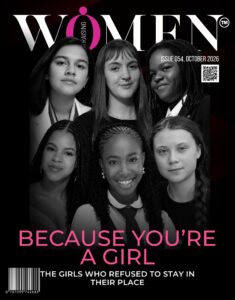
Raising Women Magazine Issue 54 – October 2026

“Because you’re a girl.”
Four little words that have spent generations doing an extraordinary amount of damage. Apparently, ambition, intelligence and audacity were once considered rather unladylike.
Fortunately, the girls featured in our 54th edition missed that memo.
As we celebrate the International Day of the Girl Child, we spotlight twelve remarkable girls rewriting the rules, while reminding ourselves that a girl should not need extraordinary achievements to deserve ordinary opportunities.
We also explore the expectations that complicate girlhood, the childhood wounds we carry into adulthood and, in my Find Her Light reflection, why the girl I once was might have a few lessons for the woman I have become.
Perhaps our greatest responsibility is not simply raising girls to conquer the world, but ensuring they never have to shrink themselves to belong in it.
Because you’re a girl?
What a wonderful reason to dream without limits.

Raising Women Magazine Issue 53 – September 2026

Apparently, saving the planet comes with a shopping list. Solar panels, electric cars, sustainable fashion and, preferably, a bank account that understands the assignment.

In Issue 53, our cover woman, Professor Joyashree Roy, challenges us to reconsider what sustainability really costs, who pays, and why the cheapest choices today may leave tomorrow’s generations with the bill.

But this issue is also about the invisible price tags attached to everyday life. From passport privilege and the cultural expectations of a “good woman” to motherhood, personal boundaries and the delicate art of enjoying life before finishing every task, we examine the systems shaping our choices.

We also celebrate women turning overlooked problems into extraordinary opportunities.

Perhaps progress begins when we stop asking only what things cost and start asking what they are worth.

A better world should not be a luxury reserved for those who can afford it.
Happy reading!

.

Your guide to IVF and egg freezing in Korea

Empowering your family planning journey with curated fertility treatments at lower costs. Get our guide for Korea’s leading clinics, pricing and service breakdown.

Recommended News

Raising Women Magazine Issue 56 – November 2026

The Courage to Question
We live in a world where reputation often arrives before character, popularity masquerades as goodness, and questioning authority can make you the problem. Apparently, being respected is sometimes mistaken for being beyond reproach.
Our cover woman, Rachael Denhollander, reminds us why that distinction matters. Her courage in confronting institutional abuse challenges us to reconsider what safety, justice and accountability truly mean.

Elsewhere, we explore the judgement surrounding childbirth, the invisible labour behind successful careers, the beauty industry’s obsession with perfection, and why women can cook the same meal as men yet receive considerably less applause.

From fashion and culture to relationships and motherhood, Issue 56 invites us to examine the assumptions we have inherited, including those we unknowingly perpetuate.

Because progress is not simply about celebrating extraordinary women. It is about creating a world where ordinary women and girls are heard, valued and protected.

And sometimes, change begins with refusing to look away.

Raising Women Magazine Issue 55 – October 2026

We spend a remarkable amount of time telling girls who they should become, often before they have finished discovering who they are. Apparently, growing up comes with a job description nobody remembers applying for.

In Issue 55, our cover girls, Isabel Idibia and Princess Sade Obaitan, remind us that famous surnames and royal titles may introduce you, but they should never define you.

From girls conquering oceans and swimming pools to conversations about beauty, culture and ambition, this edition examines the expectations we inherit and the courage required to question them.

In Find Her Light, I also reflect on the careers I might have pursued and why discovering another gift does not invalidate the life we have already built.

Perhaps that is the lesson running through these pages: identity is not a finished manuscript.

Every girl deserves the freedom to write her own story. And every woman deserves another chapter.

Raising Women Magazine Issue 54 – October 2026

“Because you’re a girl.”
Four little words that have spent generations doing an extraordinary amount of damage. Apparently, ambition, intelligence and audacity were once considered rather unladylike.
Fortunately, the girls featured in our 54th edition missed that memo.
As we celebrate the International Day of the Girl Child, we spotlight twelve remarkable girls rewriting the rules, while reminding ourselves that a girl should not need extraordinary achievements to deserve ordinary opportunities.
We also explore the expectations that complicate girlhood, the childhood wounds we carry into adulthood and, in my Find Her Light reflection, why the girl I once was might have a few lessons for the woman I have become.
Perhaps our greatest responsibility is not simply raising girls to conquer the world, but ensuring they never have to shrink themselves to belong in it.
Because you’re a girl?
What a wonderful reason to dream without limits.

Raising Women Magazine Issue 53 – September 2026

Apparently, saving the planet comes with a shopping list. Solar panels, electric cars, sustainable fashion and, preferably, a bank account that understands the assignment.

In Issue 53, our cover woman, Professor Joyashree Roy, challenges us to reconsider what sustainability really costs, who pays, and why the cheapest choices today may leave tomorrow’s generations with the bill.

But this issue is also about the invisible price tags attached to everyday life. From passport privilege and the cultural expectations of a “good woman” to motherhood, personal boundaries and the delicate art of enjoying life before finishing every task, we examine the systems shaping our choices.

We also celebrate women turning overlooked problems into extraordinary opportunities.

Perhaps progress begins when we stop asking only what things cost and start asking what they are worth.

A better world should not be a luxury reserved for those who can afford it.
Happy reading!

.

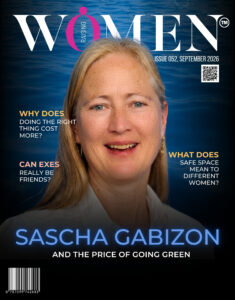
Raising Women Magazine Issue 52 – September 2026

This issue asks a deceptively simple question: can we save the planet without making ordinary people pay the highest price?
Our cover star, Sascha Gabizon, brings that question sharply into focus, challenging us to think about climate action not only through carbon, but through fairness, access and gender. Because going green sounds wonderful until sustainability becomes something only the wealthy can afford.
Across these pages, we follow climate change into unexpected places. Into our wardrobes, our food, our cultural traditions and even the price of our morning coffee. We also continue our important First Daughters conversation, explore what women really mean when they speak about safety, and look at 111 Miss World contestants whose purpose projects remind us that beauty today carries increasingly bigger expectations.
This edition is ultimately about responsibility, but responsibility shared fairly.
Because saving our planet cannot become another luxury.
And perhaps the greenest future is one everyone can actually afford.

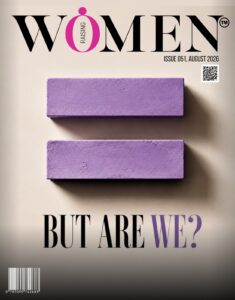
Raising Women Magazine Issue 051 – August 2026

Equal. Such a small word for such a complicated idea.

In this issue, we ask a question that feels almost impolite after decades of progress: women have more rights, education, income and influence than generations before us, but are we equal? We have travelled remarkably far, yet full global gender parity remains generations away. Apparently, equality is taking the scenic route.

Issue 51 looks beyond the equal sign to what equality actually feels like in women’s lives. We follow the money, the power and, importantly, the hours women still disproportionately spend caring. We also explore women’s old financial systems, workplace design, the soft life economy and the changing meaning of opportunity
.
Progress deserves celebration. But celebration should never make us complacent.

We have opened many doors.

Now we must ask what happens after women walk through them.

We are closer.

But are we there?
.