best casino sites for Canadians top real money casinos for Canadians safe online casinos for Canadian players Canadian online casino rankings best mobile casino Canada

Spotlighting Remarkable Women and Girls

Did You Know? Tattoos Are the New Passports for Refugee Women

By Tilly Boateng

Ink and Identity: How Refugee Women Preserve History on Their Skin

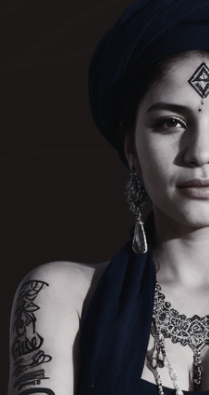
When homes vanish and official records disappear, some displaced women are turning to an unexpected archive: their skin. These tattoos, once cultural adornments, now serve as living memorials of identity, lineage, and resistance.

Amazigh (Berber) Women of North Africa

Amazigh women in Morocco, Algeria, Tunisia, and neighboring regions have long inscribed intricate geometric tattoos on their faces, hands, and ankles. These inked symbols signified tribal affiliation, marital status, fertility, and protection from evil. Though urbanization and religious conservatism caused this practice to fade, a revival is underway. Refugee and migrant Amazigh women in Europe are re-embracing these traditional marks, reconnecting with ancestors and asserting cultural identity. Tunisian tattooist Manel Mahdouani is bringing these designs to younger generations, framing each as “a woman’s history written on her,” even calling them a “Facebook wall” of personal and tribal memory.

Kurdish Deq Tattoos Across the Diaspora

In Kurdish communities spanning Syria, Turkey, Iraq, Iran, and the diaspora, the ancient art of deq (or xal) adorns chins, foreheads, hands, even breasts and feet. These tattoos, crafted by poking soot-and-breast-milk ink into the skin, marked personal milestones, tribal identity, spiritual protection, and fertility. Though suppressed by Islamic norms and state policies, deq is seeing revival. In Diyarbakır, Turkey, artist Fatê Temel became one of the few modern practitioners, using traditional ink to reconnect clients with their disappearing culture. In European diasporas, including Portugal artist Elu Aiyana continues the tradition, using deq to spiritually bridge fragmented Kurdish identities. In Kobane refugee camps, elders like Safi Haso recount how once “all Kurdish women had them,” with tattoos seen as diaries of womanhood and survival.

Bedouin Women of the Middle East

Nomadic Bedouin women, particularly in Jordan and Sinai traditionally tattooed their hands, faces, and arms via hand‑poking. These marks symbolized protection, health, tribal identity, and important life events. Though mostly found now on older generations, tattoos occasionally remain in regional camps and villages. Historical studies reinforce that Bedouin tattoos served multiple functions, including medicinal purposes and defense against the evil eye.

Body as Archive, Resistance, and Healing

For refugee women, tattoos offer more than cultural value, they restore agency. Choosing symbols, enduring the pain, and permanently marking the body becomes an act of control amid displacement. Psychologists note tattooing or even drawing personal symbols on the body can help build emotional resilience by reconnecting women to their heritage and giving them a tangible reminder of self amid upheaval.

In contexts where official identification is lost, skin becomes a living archive. It carries the names of absent loved ones, images of vanished homelands, and ancient prayers. Tattooed skin is more than ink, it’s memory, protest, and survival.

A Permanent Statement

In landscapes shaped by borders and laws, refugee women are writing their own histories on their skin. These tattoos are not simply art or tradition; they stand for defiance: “We are still here. We remember. We endure.”
Share:

Trending

Raising Women Magazine Issue 045 – June 2026

There is a difference between living and merely functioning.
Somewhere between the notifications, deadlines, responsibilities, ambitions, and endless demands of modern life, many of us have become exceptionally good at keeping going. We show up. We deliver. We carry. We cope. Yet beneath the appearance of productivity, an important question remains: are we truly well?
In this issue of Raising Women Magazine, we explore wellness not as a trend, but as a deeper conversation about humanity, health, purpose, and presence.
Our cover feature introduces Dr. Heidi Beilis, a pioneering physician helping to shape the future of healthcare through artificial intelligence. Her work reminds us that innovation is at its best when it serves people, particularly women whose lives may be transformed by earlier diagnoses and better outcomes.
Elsewhere, we explore grief, ambition, beauty, leadership, healthspan, rest, and the invisible burdens many women carry. We ask difficult questions about what it means to thrive, not simply survive.
As I wrote in this issue’s Find Her Light column, sometimes the rest we need is not sleep. Sometimes it is space. Sometimes it is perspective. Sometimes it is permission.
May these pages offer all three.

Raising Women Magazine Issue 044 – May 2026

There is something deeply revealing about the way a society treats its children. Not just in policy or parenting, but in the stories it tells them, the spaces it creates for them, and the kind of world it quietly prepares them to inherit. In this Children’s Day edition, Raising Women Magazine turns its attention to childhood itself, not as a sentimental phase of life, but as the foundation upon which identity, confidence, memory, and humanity are built.

Our cover star, Ms. Rachel, represents a refreshing reminder that gentleness still matters in an age of noise. Through patience, intentionality, and emotional safety, she has transformed songs and screen time into a global classroom for millions of children and families.

Across this issue, we explore the emotional architecture of childhood, from the girls who learn too early to shrink themselves, to the children quietly carrying adult burdens before they fully understand their own. We also interrogate modern parenting, digital culture, family, safety, and the futures young people are already shaping.

Because childhood is never just preparation for life.

In many ways, it is life itself.

The Family Tree Divide

What Women Are Given, and What They Build By Sipho Khumalo Two women walk into the same room. One is recognised before she speaks. The

Your guide to IVF and egg freezing in Korea

Empowering your family planning journey with curated fertility treatments at lower costs. Get our guide for Korea’s leading clinics, pricing and service breakdown.

Recommended News

Raising Women Magazine Issue 045 – June 2026

There is a difference between living and merely functioning.
Somewhere between the notifications, deadlines, responsibilities, ambitions, and endless demands of modern life, many of us have become exceptionally good at keeping going. We show up. We deliver. We carry. We cope. Yet beneath the appearance of productivity, an important question remains: are we truly well?
In this issue of Raising Women Magazine, we explore wellness not as a trend, but as a deeper conversation about humanity, health, purpose, and presence.
Our cover feature introduces Dr. Heidi Beilis, a pioneering physician helping to shape the future of healthcare through artificial intelligence. Her work reminds us that innovation is at its best when it serves people, particularly women whose lives may be transformed by earlier diagnoses and better outcomes.
Elsewhere, we explore grief, ambition, beauty, leadership, healthspan, rest, and the invisible burdens many women carry. We ask difficult questions about what it means to thrive, not simply survive.
As I wrote in this issue’s Find Her Light column, sometimes the rest we need is not sleep. Sometimes it is space. Sometimes it is perspective. Sometimes it is permission.
May these pages offer all three.

Raising Women Magazine Issue 044 – May 2026

There is something deeply revealing about the way a society treats its children. Not just in policy or parenting, but in the stories it tells them, the spaces it creates for them, and the kind of world it quietly prepares them to inherit. In this Children’s Day edition, Raising Women Magazine turns its attention to childhood itself, not as a sentimental phase of life, but as the foundation upon which identity, confidence, memory, and humanity are built.

Our cover star, Ms. Rachel, represents a refreshing reminder that gentleness still matters in an age of noise. Through patience, intentionality, and emotional safety, she has transformed songs and screen time into a global classroom for millions of children and families.

Across this issue, we explore the emotional architecture of childhood, from the girls who learn too early to shrink themselves, to the children quietly carrying adult burdens before they fully understand their own. We also interrogate modern parenting, digital culture, family, safety, and the futures young people are already shaping.

Because childhood is never just preparation for life.

In many ways, it is life itself.

The Family Tree Divide

What Women Are Given, and What They Build By Sipho Khumalo Two women walk into the same room. One is

First, Believe

By The Lulu They said the sky’s the limit But what if you’re still underground, still digging through the dirt

RudolphCasinos