Spotlighting Remarkable Women and Girls

Did You Know? We Already Feel the Effects of Climate Change?

By Daniel Agusi

When people think about climate change, they often imagine something distant. Melting ice caps. Rising oceans. A future problem waiting somewhere ahead. But climate change is not approaching. It is already here, quietly altering daily life in ways that are easy to miss if you are not looking closely.

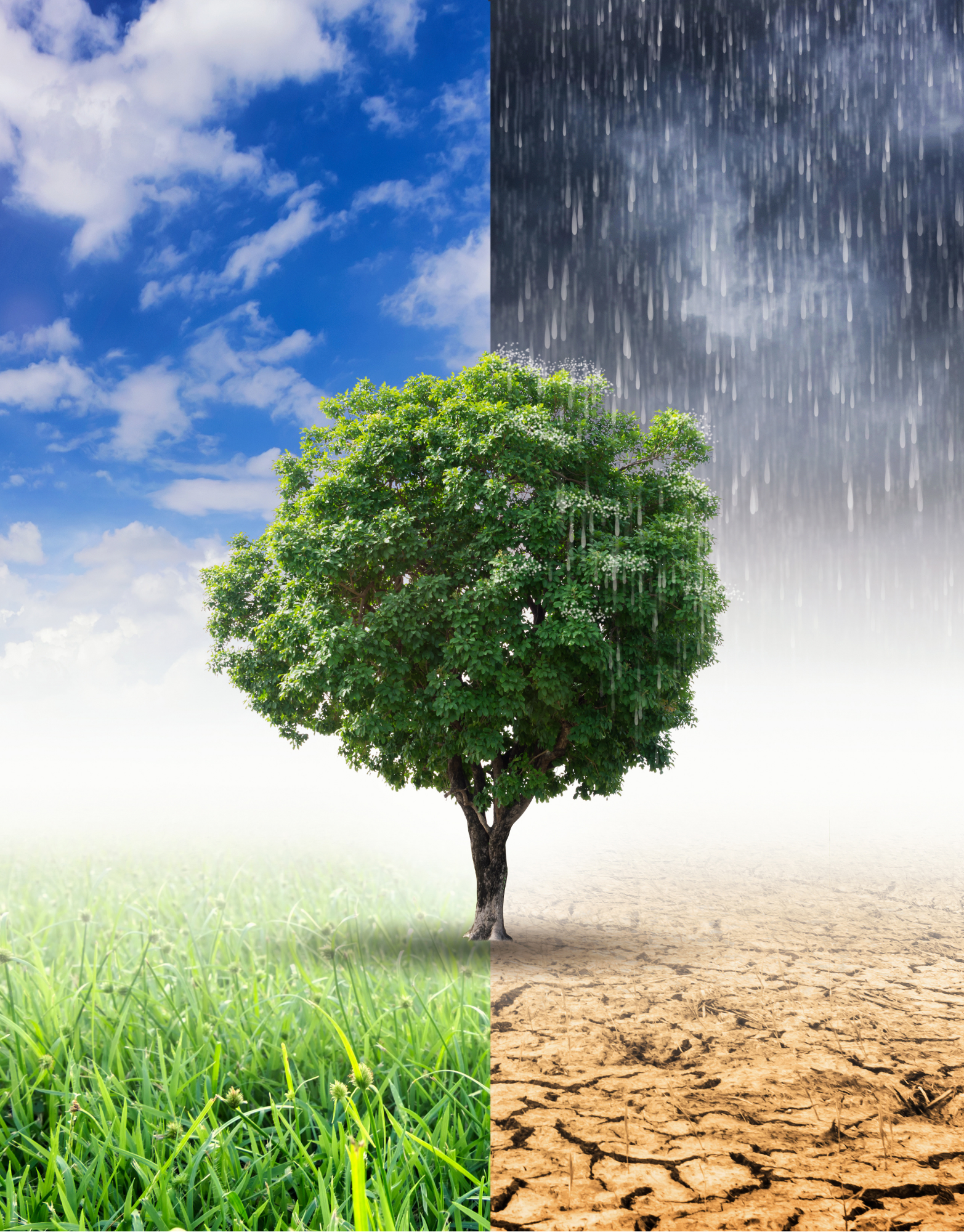
One of the biggest misconceptions about climate change is that it only shows up through dramatic disasters. In reality, its most common form is disruption. Not a single flood or heatwave, but a pattern that keeps repeating. Heat that lasts longer than it used to. Rain that falls all at once instead of over weeks. Seasons that no longer follow the rhythms people grew up knowing.

Did you know that these changes are not random? Scientists have been tracking them for decades. According to the Intergovernmental Panel on Climate Change, the Earth’s average temperature has already increased by about 1.1 degrees Celsius above pre industrial levels. That might sound small, but even slight increases in global temperature can throw natural systems off balance. Weather becomes less predictable, and predictability is what people rely on to farm, plan, build, and survive.

Another thing many people do not realise is that what we are experiencing now is delayed impact. Carbon emissions released decades ago are still affecting the climate today. Climate change works slowly, storing consequences in the atmosphere and releasing them over time. That means today’s heatwaves, floods, and droughts are not sudden surprises. They are the result of choices made years ago.

This delay also explains why climate change can be confusing or even easy to doubt. Its effects are uneven. Some regions experience it as inconvenience. Hotter summers. Higher electricity bills. Cancelled flights. Other regions experience it as crisis. Crops fail. Homes flood repeatedly. Water becomes scarce. Disease spreads more easily. It is the same global problem, but the weight is not shared equally.

Did you know that climate change also affects the human body? Rising temperatures increase the risk of heat stress, dehydration, and exhaustion. Warmer conditions worsen allergies and asthma by extending pollen seasons. Changing rainfall patterns allow disease carrying mosquitoes to spread into new areas. The World Health Organization estimates that climate change will cause hundreds of thousands of additional deaths each year through heat exposure, malnutrition, and disease if action is not taken.

This is why climate change is not just an environmental issue. It is a health issue, an economic issue, and a social issue. When temperatures rise, productivity drops. When floods destroy roads and markets, food prices increase. When harvests fail, families face hunger and instability. These pressures are already being felt, particularly in countries where safety nets are limited.

Perhaps the most dangerous part of climate change is not extreme events, but instability. Nature used to be predictable enough to plan around. Farmers knew when rains would come. Communities knew when dry seasons would end. Now those patterns are unreliable. When systems lose reliability, everything else becomes fragile. Economies strain. Governments struggle to respond. Households are forced into constant adaptation.

Did you know that adaptation is already happening, even if people do not call it that? Farmers switching crops. Families changing work hours to avoid heat. Communities raising homes or relocating altogether. These are signs that climate change has moved from theory into lived experience.

So should we be feeling the effects of climate change already? Yes. Not in a cinematic way, but in quieter forms that accumulate over time. In higher food costs. In unusual weather. In bodies that struggle more in heat. In uncertainty about what tomorrow’s environment will look like.

The real question is no longer whether climate change is real. The question is how much disruption societies are willing to accept as normal before they recognise it as a crisis that demands urgent action.


Share:

Trending

Raising Women Magazine Issue 045 – June 2026

There is a difference between living and merely functioning.
Somewhere between the notifications, deadlines, responsibilities, ambitions, and endless demands of modern life, many of us have become exceptionally good at keeping going. We show up. We deliver. We carry. We cope. Yet beneath the appearance of productivity, an important question remains: are we truly well?
In this issue of Raising Women Magazine, we explore wellness not as a trend, but as a deeper conversation about humanity, health, purpose, and presence.
Our cover feature introduces Dr. Heidi Beilis, a pioneering physician helping to shape the future of healthcare through artificial intelligence. Her work reminds us that innovation is at its best when it serves people, particularly women whose lives may be transformed by earlier diagnoses and better outcomes.
Elsewhere, we explore grief, ambition, beauty, leadership, healthspan, rest, and the invisible burdens many women carry. We ask difficult questions about what it means to thrive, not simply survive.
As I wrote in this issue’s Find Her Light column, sometimes the rest we need is not sleep. Sometimes it is space. Sometimes it is perspective. Sometimes it is permission.
May these pages offer all three.

Raising Women Magazine Issue 044 – May 2026

There is something deeply revealing about the way a society treats its children. Not just in policy or parenting, but in the stories it tells them, the spaces it creates for them, and the kind of world it quietly prepares them to inherit. In this Children’s Day edition, Raising Women Magazine turns its attention to childhood itself, not as a sentimental phase of life, but as the foundation upon which identity, confidence, memory, and humanity are built.

Our cover star, Ms. Rachel, represents a refreshing reminder that gentleness still matters in an age of noise. Through patience, intentionality, and emotional safety, she has transformed songs and screen time into a global classroom for millions of children and families.

Across this issue, we explore the emotional architecture of childhood, from the girls who learn too early to shrink themselves, to the children quietly carrying adult burdens before they fully understand their own. We also interrogate modern parenting, digital culture, family, safety, and the futures young people are already shaping.

Because childhood is never just preparation for life.

In many ways, it is life itself.

The Family Tree Divide

What Women Are Given, and What They Build By Sipho Khumalo Two women walk into the same room. One is recognised before she speaks. The

Your guide to IVF and egg freezing in Korea

Empowering your family planning journey with curated fertility treatments at lower costs. Get our guide for Korea’s leading clinics, pricing and service breakdown.

Recommended News

Raising Women Magazine Issue 045 – June 2026

There is a difference between living and merely functioning.
Somewhere between the notifications, deadlines, responsibilities, ambitions, and endless demands of modern life, many of us have become exceptionally good at keeping going. We show up. We deliver. We carry. We cope. Yet beneath the appearance of productivity, an important question remains: are we truly well?
In this issue of Raising Women Magazine, we explore wellness not as a trend, but as a deeper conversation about humanity, health, purpose, and presence.
Our cover feature introduces Dr. Heidi Beilis, a pioneering physician helping to shape the future of healthcare through artificial intelligence. Her work reminds us that innovation is at its best when it serves people, particularly women whose lives may be transformed by earlier diagnoses and better outcomes.
Elsewhere, we explore grief, ambition, beauty, leadership, healthspan, rest, and the invisible burdens many women carry. We ask difficult questions about what it means to thrive, not simply survive.
As I wrote in this issue’s Find Her Light column, sometimes the rest we need is not sleep. Sometimes it is space. Sometimes it is perspective. Sometimes it is permission.
May these pages offer all three.

Raising Women Magazine Issue 044 – May 2026

There is something deeply revealing about the way a society treats its children. Not just in policy or parenting, but in the stories it tells them, the spaces it creates for them, and the kind of world it quietly prepares them to inherit. In this Children’s Day edition, Raising Women Magazine turns its attention to childhood itself, not as a sentimental phase of life, but as the foundation upon which identity, confidence, memory, and humanity are built.

Our cover star, Ms. Rachel, represents a refreshing reminder that gentleness still matters in an age of noise. Through patience, intentionality, and emotional safety, she has transformed songs and screen time into a global classroom for millions of children and families.

Across this issue, we explore the emotional architecture of childhood, from the girls who learn too early to shrink themselves, to the children quietly carrying adult burdens before they fully understand their own. We also interrogate modern parenting, digital culture, family, safety, and the futures young people are already shaping.

Because childhood is never just preparation for life.

In many ways, it is life itself.

The Family Tree Divide

What Women Are Given, and What They Build By Sipho Khumalo Two women walk into the same room. One is

First, Believe

By The Lulu They said the sky’s the limit But what if you’re still underground, still digging through the dirt