By Dr May Ikeora-Amamgbo
There is a particular kind of honesty in that sentence. It does not flatter you. It does not comfort you. It simply asks, quietly but firmly, what exactly are you doing with your life?
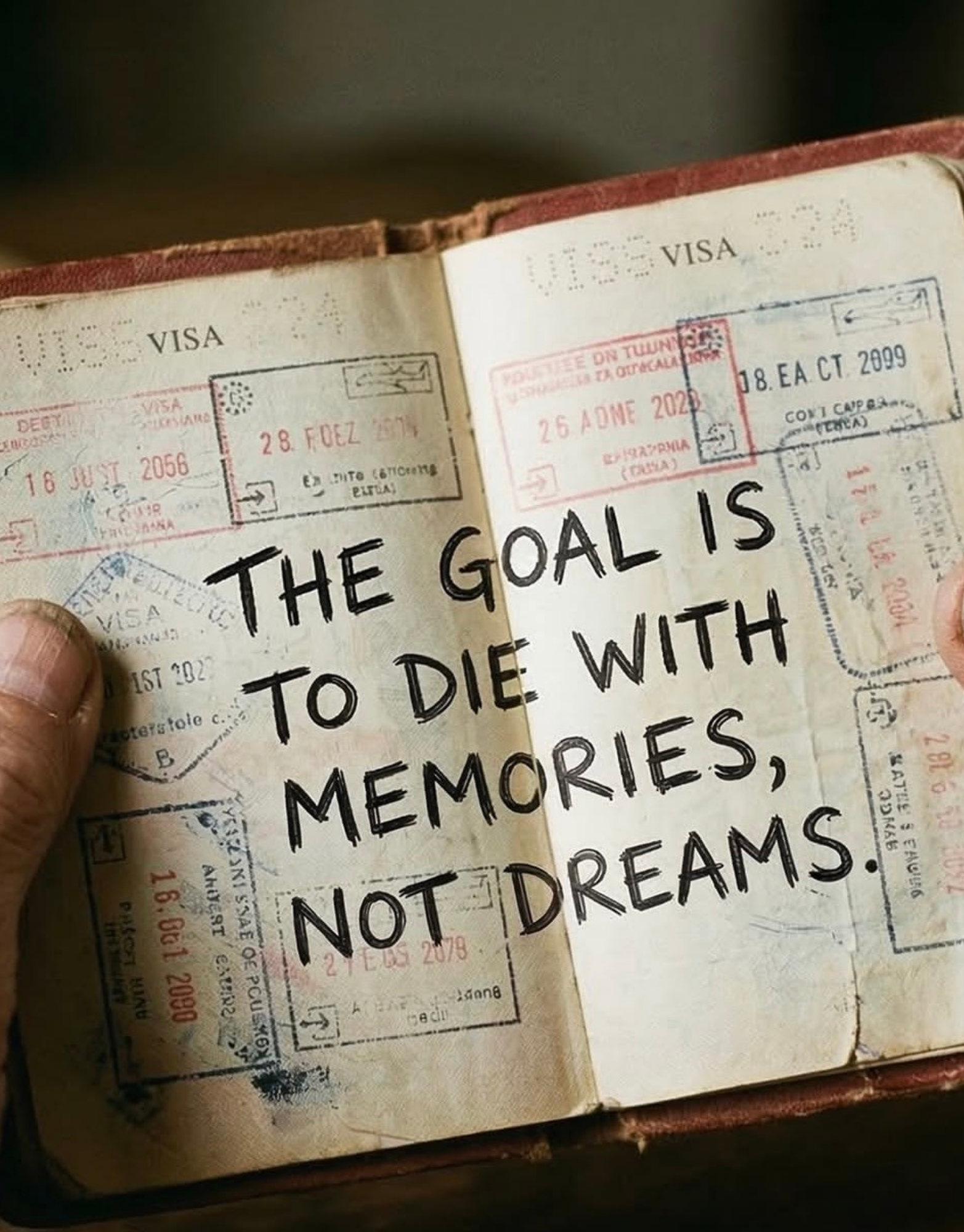
“The goal is to die with memories, not dreams.”
It sounds poetic at first. Almost like something you would repost, nod at, and move on from. But sit with it for a moment, and it becomes less of a quote and more of a mirror.
Because most women are not short of dreams. If anything, we are raised on them. Dream of success. Dream of love. Dream of impact. Dream of becoming. We are taught to imagine, to aspire, to stretch beyond where we are.
But no one really prepares us for the harder question. What happens to the dreams that never leave our minds?
There is a quiet accumulation that happens over time. Dreams deferred, postponed, reshaped to fit circumstances.
Not because we are incapable, but because life, especially as a woman, is rarely lived in isolation. There are expectations to meet, roles to fulfil, people to consider. We become excellent at carrying. Responsibilities, emotions, entire ecosystems of other people’s needs.
And somewhere in all of that, our dreams learn patience.
Too much patience.
Research in behavioural psychology suggests that humans are naturally inclined to prioritise immediate obligations over long term fulfilment. It is not laziness. It is design. We respond to urgency. We attend to what is in front of us. The problem is that for many women, what is in front of us is often everything except ourselves.
So dreams remain intact, but untouched.
This is where the quote disrupts us.
It does not say stop dreaming. It says do not die with them still inside you.
Because there is a difference between a dream and a memory. A dream is imagined. A memory is lived. A dream is safe. A memory is proof that you were willing to step into uncertainty.
And uncertainty is where most women hesitate, not because we lack courage, but because we have been conditioned to minimise risk. To be sensible. To be strategic. To be careful.
Careful women build stable lives. But careful women can also build quiet regrets.
There is a version of you that exists only in your imagination. She is the one who took the trip. Who started the thing. Who said yes before she felt ready. Who chose herself without over explaining it. She is not extraordinary. She is simply a version of you that acted.
And action is where identity is formed.
This is what we do not say enough. You do not find yourself by thinking about who you are. You find yourself by living in ways that reveal you.
The woman who travels alone for the first time does not return as the same woman.
The one who finally speaks, after years of silence, does not remain who she was.
The one who tries, fails, recalibrates, and tries again begins to understand herself in ways no amount of reflection could offer.
Memories are not just experiences. They are data. Evidence of expansion. And expansion is uncomfortable.
There is always a cost. Time. Money. Reputation. Certainty. Sometimes even relationships. Growth rarely negotiates gently. It demands movement. It asks you to leave behind versions of yourself that felt safe but no longer serve you.
This is why many women stay with dreams. Dreams do not disrupt your life. Memories do.
But here is the quiet truth. A life without disruption may feel stable, but it can also feel distant. Like you are watching yourself live instead of actually living.
There is nothing empowering about postponing your life indefinitely.
And no, this is not about reckless decisions or abandoning responsibility. It is about recalibrating your relationship with your own life. It is about recognising that you are not just here to manage existence. You are here to experience it.
To feel it fully. To participate in it actively. To make decisions that, even if imperfect, become part of your story. Because one day, whether we admit it or not, we will all take inventory. Not of what we planned. Not of what we almost did. But of what we actually lived.
The conversations we had. The risks we took. The moments we allowed ourselves to be present, unguarded, alive. That is what remains. Dreams are beautiful, but they are not enough. They were never meant to stay dreams.
So the question is not whether you have them. The question is, what are you doing about them? Because the life you are imagining is not waiting somewhere in the future. It is waiting on your decision.
And perhaps, in choosing to live just a little more boldly, a little more presently, a little more honestly, you begin, gently and deliberately, to find her light.