Spotlighting Remarkable Women and Girls

Little People, Big Presence: Celebrating Dwarfism Day

By Oluchi Obiahu

Dwarfism Awareness Day is a day to celebrate individuals with short stature, challenge stereotypes, and embrace the beauty of diversity in every form. When we think of “standing tall,” our minds often go to physical height. But truth be told, some of the tallest spirits on earth come in smaller frames. Dwarfism, a condition caused by genetic or medical factors that affect bone growth, doesn’t diminish capability, creativity, or character, it only reshapes how we see the world.

Every October 25th, the world recognizes something both simple and profound: the celebration of difference. It is a day that shines a light on a group of people who have long lived under the shadow of misunderstanding, mockery, and marginalization. It is a day that reminds us that humanity does not come in one height, one size, or one shape.

In every society, there are stories that often go untold, stories that deserve to stand tall, even when the people behind them are shorter in stature. People living with dwarfism are one such community. They walk the same streets, attend the same schools, dream the same dreams, and yet, they often have to push twice as hard just to be seen beyond their height.

Understanding Dwarfism

Dwarfism is not a limitation of potential; it is simply a variation in human growth. Scientifically, it refers to a condition that results in short stature, usually when an adult’s height is 4 feet 10 inches (about 147 cm) or below. But beyond the numbers and the medical definitions lies a simple truth: dwarfism is just another expression of human diversity.

It occurs due to genetic or medical reasons that affect bone growth, but it doesn’t define the strength of a mind, the depth of a personality, or the vastness of a dream. Around the world, it’s estimated that one in every 25,000 people lives with dwarfism. it’s a visible, living, breathing part of our shared human family.

And yet, visibility hasn’t always meant acceptance.

More Than What Meets the Eye

For generations, society has had a complicated relationship with difference. Height, oddly enough, has always carried social symbolism, taller often equated to stronger, more cap-able, or more commanding. Those of shorter stature have, therefore, had to live within an unfair lens that sees them as less, less powerful, less capable, less adult.

But step closer, and you’ll find that there’s nothing “less” about the dwarfism community. What you’ll find instead are people who have learned resilience early, who navigate a world built for taller bodies with grace, ingenuity, and courage.

Imagine walking into a supermarket where the shelves are built above your reach. Imagine stepping onto a public bus where the steps rise to your chest. Imagine going for a job interview where your abilities are questioned before you’ve even said a word.

These are everyday realities for many people living with dwarfism; not because they lack ability, but because the world lacks accessibility and understanding.

The Weight of Stereotypes

Sadly, much of what society “knows” about dwarfism is filtered through entertainment and myth. For decades, films and comedies have reduced people with dwarfism to caricatures, comic reliefs, sidekicks, mythical creatures, or objects of curiosity.

This portrayal has done real harm. It has made it difficult for many to be seen as professionals, as leaders, as equals. When your identity becomes a punchline, it takes a great deal of strength to stand proudly in your truth.

But here’s the thing: the laughter at their expense says more about the immaturity of society than about those being laughed at. It reveals a world still struggling to understand that differences aren’t defects – they’re design features of humanity.

Think of Peter Dinklage, who redefined what it means to be a Hollywood lead in Game of Thrones. Or Sinéad Burke, the Irish activist who stormed the global fashion scene and stood proudly on the cover of Vogue, proving that beauty isn’t bound by inches. Thanks to these bold individuals who refuse to shrink their dreams.

Across Africa too, voices are rising. Communities and advocacy groups are fighting discrimination, pushing for accessibility, and encouraging society to see ability, not abnormality.

Strength Beyond Stature

People living with dwarfism do not need pity; they deserve respect They are teachers, engineers, parents, business owners, dreamers, and innovators. They contribute to communities in every way possible, except that, too often, they must first fight for the right to belong.

The real conversation around dwarfism should not center on height at all, but on inclusion. Are our schools designed to accommodate them comfortably? Do workplaces have furniture and environments that make participation equitable? Are we raising children to understand that jokes about size are not funny, they’re harmful?

Dwarfism Awareness Day is about asking these questions and holding ourselves accountable as a society.

A World Built for Everyone

Inclusion is about building empathy, it is about learning to see people – really see them – without filtering their worth through physical differences.

Every individual, regardless of size, deserves to feel like they belong in the spaces they occupy. When public facilities, transportation, and social systems are designed without considering the needs of those with dwarfism, it sends an unspoken message: “You don’t fit here.”

And yet, they continue to fit in; beautifully, bravely, and boldly. They modify, adapt, and adjust, proving over and over again that limitations often exist more in the mind than in the body.

Awareness is about thriving. It’s about creating a society where no one has to explain their right to exist comfortably.

What if, instead of seeing dwarfism as something unusual, we saw it as simply another shade of humanity? After all, diversity is what makes our world rich.

The more we normalize conversations about dwarfism, the more we chip away at the old, dusty walls of ignorance. The more we highlight achievements, not as exceptions, but as ordinary expressions of potential, the closer we come to a truly inclusive world.

It starts with everyday choices:

  • Speaking with respect, not curiosity.
  • Using people-first language (“person with dwarfism,” not “a dwarf”).
  • Teaching children to appreciate difference early, so they grow up kinder and more aware.
  • Supporting inclusion in public design and policy.

The beauty of awareness is that it invites understanding, and understanding births empathy, the kind of empathy that transforms societies quietly but powerfully.

Standing Tall in Spirit

Dwarfism Awareness Day is about equalizing perception. It’s a day to celebrate the indomitable human spirit, one that rises, not in height, but in hope.

There’s something deeply poetic about the idea of “standing tall.” It reminds us that height is measured not by inches but by impact. A person’s worth cannot be stretched or shrunk, it is infinite, regardless of frame.

So, when we celebrate Dwarfism Awareness Day, we are celebrating everyone who has ever been underestimated, overlooked, or unfairly defined by their appearance. We are celebrating courage in its purest form, the courage to exist authentically in a world that often misunderstands difference.

In every way that matters, people with dwarfism are not small people in a big world, they are complete people in a shared world. And it’s high time the world learned to look them in the eye, with respect, not surprise.

So today, we shine our SPOTLITE on every little person doing big things, because greatness doesn’t come in sizes, it comes in stories.

@peter, put these separately in customised boxes

Did You Know?

  • Dwarfism affects about 1 in every 25,000 people worldwide.
  • The most common type is Achondroplasia, but there are over 200 different forms.
  • People with dwarfism are often below 4 feet 10 inches in height, yet many have made giant impacts in film, fashion, sports, politics, and advocacy.
  • Next time you meet someone with dwarfism, don’t look down, look deeper. Behind that small frame might be a teacher, a leader, a comedian, or a dreamer with mountains to move.
  • When we create space for everyone to thrive, we elevate the entire society. Because a world that only celebrates the “average” isn’t just boring, it’s incomplete.
  • Let’s build a world where no one is too tall, too short, too loud, or too different to belong. A world that sees beyond the frame to the flame; the light within us all.
Share:

Trending

Raising Women Magazine Issue 56 – November 2026

The Courage to Question
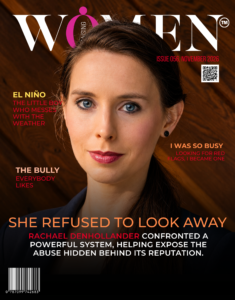
We live in a world where reputation often arrives before character, popularity masquerades as goodness, and questioning authority can make you the problem. Apparently, being respected is sometimes mistaken for being beyond reproach.
Our cover woman, Rachael Denhollander, reminds us why that distinction matters. Her courage in confronting institutional abuse challenges us to reconsider what safety, justice and accountability truly mean.

Elsewhere, we explore the judgement surrounding childbirth, the invisible labour behind successful careers, the beauty industry’s obsession with perfection, and why women can cook the same meal as men yet receive considerably less applause.

From fashion and culture to relationships and motherhood, Issue 56 invites us to examine the assumptions we have inherited, including those we unknowingly perpetuate.

Because progress is not simply about celebrating extraordinary women. It is about creating a world where ordinary women and girls are heard, valued and protected.

And sometimes, change begins with refusing to look away.

Raising Women Magazine Issue 55 – October 2026

We spend a remarkable amount of time telling girls who they should become, often before they have finished discovering who they are. Apparently, growing up comes with a job description nobody remembers applying for.

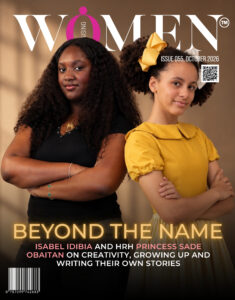
In Issue 55, our cover girls, Isabel Idibia and Princess Sade Obaitan, remind us that famous surnames and royal titles may introduce you, but they should never define you.

From girls conquering oceans and swimming pools to conversations about beauty, culture and ambition, this edition examines the expectations we inherit and the courage required to question them.

In Find Her Light, I also reflect on the careers I might have pursued and why discovering another gift does not invalidate the life we have already built.

Perhaps that is the lesson running through these pages: identity is not a finished manuscript.

Every girl deserves the freedom to write her own story. And every woman deserves another chapter.

Raising Women Magazine Issue 54 – October 2026

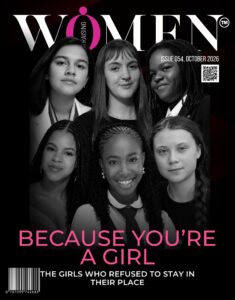
“Because you’re a girl.”
Four little words that have spent generations doing an extraordinary amount of damage. Apparently, ambition, intelligence and audacity were once considered rather unladylike.
Fortunately, the girls featured in our 54th edition missed that memo.
As we celebrate the International Day of the Girl Child, we spotlight twelve remarkable girls rewriting the rules, while reminding ourselves that a girl should not need extraordinary achievements to deserve ordinary opportunities.
We also explore the expectations that complicate girlhood, the childhood wounds we carry into adulthood and, in my Find Her Light reflection, why the girl I once was might have a few lessons for the woman I have become.
Perhaps our greatest responsibility is not simply raising girls to conquer the world, but ensuring they never have to shrink themselves to belong in it.
Because you’re a girl?
What a wonderful reason to dream without limits.

Raising Women Magazine Issue 53 – September 2026

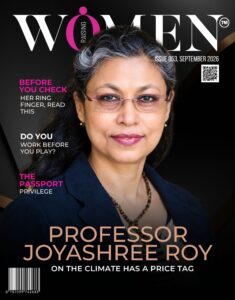
Apparently, saving the planet comes with a shopping list. Solar panels, electric cars, sustainable fashion and, preferably, a bank account that understands the assignment.

In Issue 53, our cover woman, Professor Joyashree Roy, challenges us to reconsider what sustainability really costs, who pays, and why the cheapest choices today may leave tomorrow’s generations with the bill.

But this issue is also about the invisible price tags attached to everyday life. From passport privilege and the cultural expectations of a “good woman” to motherhood, personal boundaries and the delicate art of enjoying life before finishing every task, we examine the systems shaping our choices.

We also celebrate women turning overlooked problems into extraordinary opportunities.

Perhaps progress begins when we stop asking only what things cost and start asking what they are worth.

A better world should not be a luxury reserved for those who can afford it.
Happy reading!

.

Your guide to IVF and egg freezing in Korea

Empowering your family planning journey with curated fertility treatments at lower costs. Get our guide for Korea’s leading clinics, pricing and service breakdown.

Recommended News

Raising Women Magazine Issue 56 – November 2026

The Courage to Question
We live in a world where reputation often arrives before character, popularity masquerades as goodness, and questioning authority can make you the problem. Apparently, being respected is sometimes mistaken for being beyond reproach.
Our cover woman, Rachael Denhollander, reminds us why that distinction matters. Her courage in confronting institutional abuse challenges us to reconsider what safety, justice and accountability truly mean.

Elsewhere, we explore the judgement surrounding childbirth, the invisible labour behind successful careers, the beauty industry’s obsession with perfection, and why women can cook the same meal as men yet receive considerably less applause.

From fashion and culture to relationships and motherhood, Issue 56 invites us to examine the assumptions we have inherited, including those we unknowingly perpetuate.

Because progress is not simply about celebrating extraordinary women. It is about creating a world where ordinary women and girls are heard, valued and protected.

And sometimes, change begins with refusing to look away.

Raising Women Magazine Issue 55 – October 2026

We spend a remarkable amount of time telling girls who they should become, often before they have finished discovering who they are. Apparently, growing up comes with a job description nobody remembers applying for.

In Issue 55, our cover girls, Isabel Idibia and Princess Sade Obaitan, remind us that famous surnames and royal titles may introduce you, but they should never define you.

From girls conquering oceans and swimming pools to conversations about beauty, culture and ambition, this edition examines the expectations we inherit and the courage required to question them.

In Find Her Light, I also reflect on the careers I might have pursued and why discovering another gift does not invalidate the life we have already built.

Perhaps that is the lesson running through these pages: identity is not a finished manuscript.

Every girl deserves the freedom to write her own story. And every woman deserves another chapter.

Raising Women Magazine Issue 54 – October 2026

“Because you’re a girl.”
Four little words that have spent generations doing an extraordinary amount of damage. Apparently, ambition, intelligence and audacity were once considered rather unladylike.
Fortunately, the girls featured in our 54th edition missed that memo.
As we celebrate the International Day of the Girl Child, we spotlight twelve remarkable girls rewriting the rules, while reminding ourselves that a girl should not need extraordinary achievements to deserve ordinary opportunities.
We also explore the expectations that complicate girlhood, the childhood wounds we carry into adulthood and, in my Find Her Light reflection, why the girl I once was might have a few lessons for the woman I have become.
Perhaps our greatest responsibility is not simply raising girls to conquer the world, but ensuring they never have to shrink themselves to belong in it.
Because you’re a girl?
What a wonderful reason to dream without limits.

Raising Women Magazine Issue 53 – September 2026

Apparently, saving the planet comes with a shopping list. Solar panels, electric cars, sustainable fashion and, preferably, a bank account that understands the assignment.

In Issue 53, our cover woman, Professor Joyashree Roy, challenges us to reconsider what sustainability really costs, who pays, and why the cheapest choices today may leave tomorrow’s generations with the bill.

But this issue is also about the invisible price tags attached to everyday life. From passport privilege and the cultural expectations of a “good woman” to motherhood, personal boundaries and the delicate art of enjoying life before finishing every task, we examine the systems shaping our choices.

We also celebrate women turning overlooked problems into extraordinary opportunities.

Perhaps progress begins when we stop asking only what things cost and start asking what they are worth.

A better world should not be a luxury reserved for those who can afford it.
Happy reading!

.

Raising Women Magazine Issue 52 – September 2026

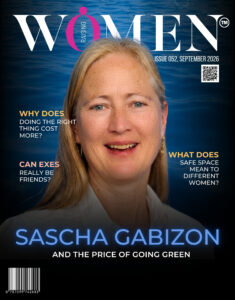
This issue asks a deceptively simple question: can we save the planet without making ordinary people pay the highest price?
Our cover star, Sascha Gabizon, brings that question sharply into focus, challenging us to think about climate action not only through carbon, but through fairness, access and gender. Because going green sounds wonderful until sustainability becomes something only the wealthy can afford.
Across these pages, we follow climate change into unexpected places. Into our wardrobes, our food, our cultural traditions and even the price of our morning coffee. We also continue our important First Daughters conversation, explore what women really mean when they speak about safety, and look at 111 Miss World contestants whose purpose projects remind us that beauty today carries increasingly bigger expectations.
This edition is ultimately about responsibility, but responsibility shared fairly.
Because saving our planet cannot become another luxury.
And perhaps the greenest future is one everyone can actually afford.

Raising Women Magazine Issue 051 – August 2026

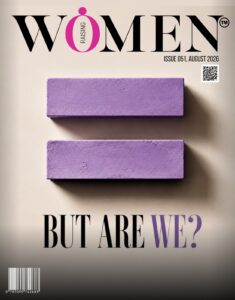
Equal. Such a small word for such a complicated idea.

In this issue, we ask a question that feels almost impolite after decades of progress: women have more rights, education, income and influence than generations before us, but are we equal? We have travelled remarkably far, yet full global gender parity remains generations away. Apparently, equality is taking the scenic route.

Issue 51 looks beyond the equal sign to what equality actually feels like in women’s lives. We follow the money, the power and, importantly, the hours women still disproportionately spend caring. We also explore women’s old financial systems, workplace design, the soft life economy and the changing meaning of opportunity
.
Progress deserves celebration. But celebration should never make us complacent.

We have opened many doors.

Now we must ask what happens after women walk through them.

We are closer.

But are we there?
.