Spotlighting Remarkable Women and Girls

Empowering Africa’s Future

How Three Bold Women Are Revolutionizing Tech to Save Lives and Sustain Communities

By Tilly Boateng

Africa’s innovative spirit is well represented by women who have harnessed technology to tackle pressing challenges in their communities. In Kenya and Uganda, three remarkable entrepreneurs Margaret Wanjiku, Vivian Arinaitwe, and Nura Izath are turning local issues into scalable solutions that improve livelihoods, enhance healthcare, and empower rural populations. Their stories exemplify the transformative power of technology when combined with passion and a commitment to change.

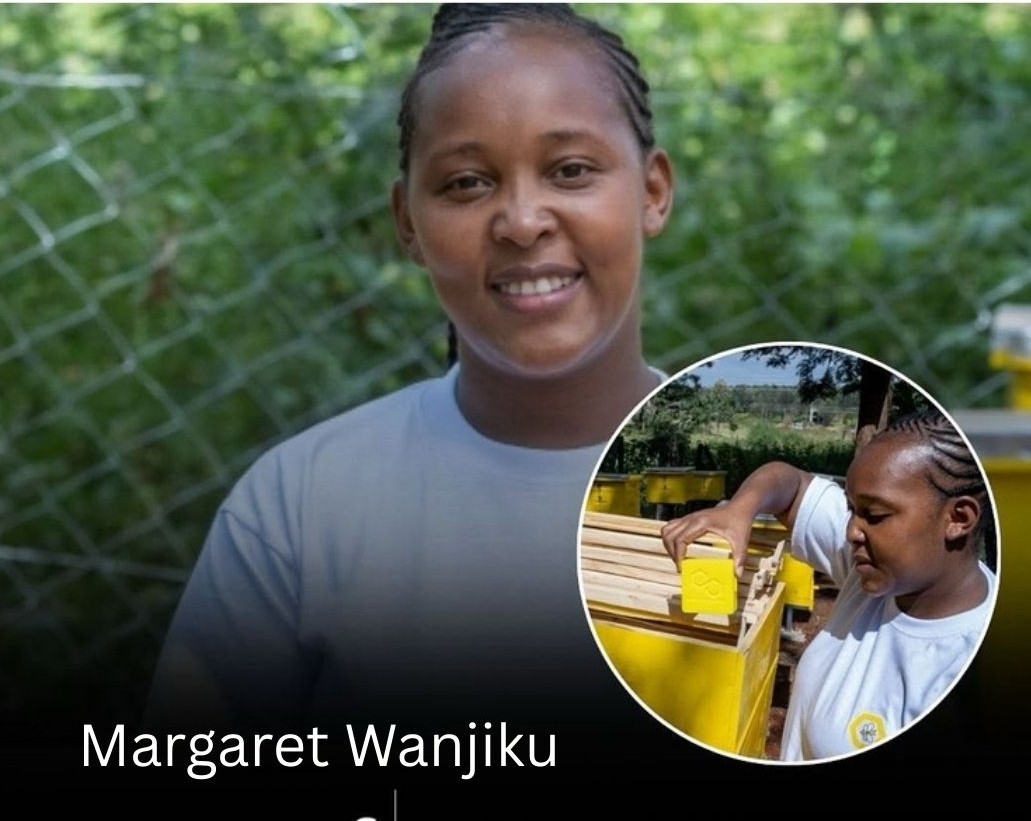
Margaret Wanjiku and Pollen Patrollers

Margaret Wanjiku, the force behind Pollen Patrollers, grew up in the rural settings of Kenya where she witnessed the vital role that bees play in agriculture first-hand. Raised amidst the practices of traditional beekeeping, Margaret observed the challenges farmers faced, most notably the frequent collapse of hives that jeopardized both honey production and crop pollination. Determined to provide a solution, she co-founded Pollen Patrollers, an all-women start-up that leverages cutting-edge IoT technology to transform the beekeeping value chain.

At the heart of Pollen Patrollers’ approach is the Smart Hive: a compact, IoT-powered device that monitors temperature, humidity, sound, and foraging activity inside beehives. Equipped with AI-driven analytics, the device provides real-time data that enable beekeepers to take timely action to safeguard their hives. A key feature is its built-in solar panel, which ensures that even beekeepers in remote areas without access to reliable electricity can benefit from constant monitoring.

By integrating satellite imagery and precision mapping, the company also offers an innovative pollination service that significantly boosts crop yields. Farmers who have adopted these technologies report revenue increases as high as 33% and improvements in crop yield quality reaching 50%.

Margaret’s leadership has not only redefined modern beekeeping in Kenya, but it has also empowered local women. By ensuring that every field agent and team member is a woman, Pollen Patrollers stands as a beacon of community upliftment and gender empowerment. With plans to expand the use of IoT technology across Africa, Margaret’s vision is clear: to combine traditional knowledge with modern technology in a way that preserves natural resources while driving sustainable agricultural practices.

Vivian Arinaitwe and NeoNest

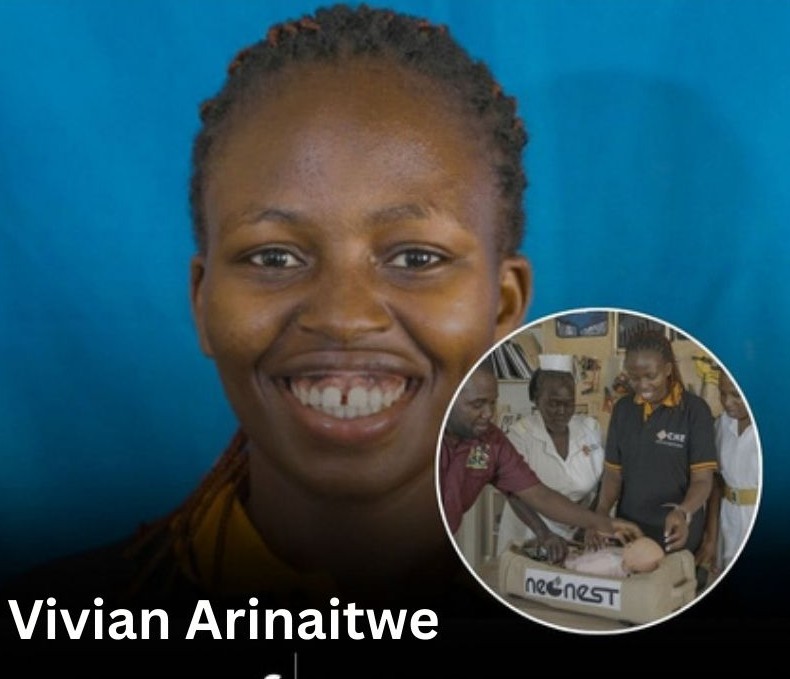
In Uganda, Vivian Arinaitwe has set her sights on addressing one of the most critical challenges in neonatal care: hypothermia among prematurely born infants during transport. In many regions of Uganda, long journeys from rural health centers to specialized hospitals often leave newborns at risk of dangerously low body temperatures. With a background deeply rooted in the realities of rural life, Vivian saw an urgent need for a solution that could provide continuous, reliable care even during transportation. This need led her to co-create NeoNest through her work with Che Innovations.
Issue 16, APRIL, 2025 – 33

NeoNest is a low-cost, portable neonatal warming and monitoring device designed explicitly for use in ambulances and other transport scenarios. It operates by drawing power from the ambulance’s socket and employs a smart temperature control system. Once an infant is safely secured within the device with adjustable supports and Velcro straps for stability, the NeoNest continuously monitors body temperature and alerts healthcare workers via intuitive LED signals. A green light signifies normal conditions, while orange and red signal warnings and danger, respectively.

Built with affordability and accessibility in mind, the device uses locally sourced and repurposed materials, including a jerry can that has been innovatively transformed to serve as a container and heat regulator. NeoNest not only ensures the survival of vulnerable infants by maintaining optimal body temperatures throughout long journeys but also integrates seamlessly into Uganda’s constrained healthcare infrastructure. With a low production cost and a design tailored to local needs, Vivian’s innovation is set to scale across Uganda and, potentially, other resource-limited regions in sub-Saharan Africa.

Nura Izath and Autothermo

Nura Izath, a product and systems engineer from Uganda, brings a personal touch to innovation with her creation, Autothermo. Inspired by the challenges of monitoring newborns, a struggle highlighted during her early caregiving experiences. Nura designed Autothermo to continuously track critical health indicators in neonates. Her journey was marked by personal loss and resilience; the passing of her father left a lasting impact, imbuing her with the determination to develop technologies that can save lives.

Autothermo is a wearable, bracelet-like device that encircles a newborn’s upper arm and uses medical-grade sensors to monitor vital signs such as temperature, heart rate, and oxygen saturation. The device’s design prioritizes simplicity and effectiveness: a rechargeable battery keeps it powered, while built-in RGB LEDs offer quick, easily interpretable visual alerts.

In environments where traditional thermometers and manual checks fail to provide continuous data, Autothermo delivers real-time monitoring, transmitting information wirelessly to a central display. This ensures that healthcare professionals and even caregivers at home can respond promptly to any health anomalies.

Constructed with ISO 10993-compliant medical-grade silicone and recyclable materials, Autothermo is designed for both comfort and safety. Its innovative use of an emoji-based alert system makes it accessible not only to healthcare workers in hospitals but also to parents who may not have extensive technical knowledge. Nura’s drive to secure ISO certification and her vision to scale production further underscore her commitment to reducing neonatal mortality in Uganda and across Africa. With clinical validations underway, Autothermo has the potential to revolutionize neonatal care in resource-limited settings and dramatically reduce preventable infant deaths.

Empowering Communities Through Technology

The stories of Margaret, Vivian, and Nura are testaments to the transformative power of local innovation. Each woman identified a critical challenge in their respective communities like beekeeping, neonatal care during transport, and continuous neonatal monitoring, and responded with a tailored, technologically driven solution. Their work goes beyond mere business innovation; it is a rallying cry for sustainable development, gender equity, and community empowerment.

Their successes have inspired not only their local communities but also the wider entrepreneurial ecosystem across Africa. Shortlisted for the Africa Prize for Engineering Innovation and other industry recognitions, these innovators are paving the way for future generations of women in tech. They show that technology, when grounded in local realities and supported by robust, community-focused solutions, can have a far-reaching impact on both economic and social fronts.

In celebrating these three trailblazers, we recognize a broader movement in Africa, a move toward harnessing technology to solve pressing societal challenges while ensuring that the solutions are accessible, affordable, and sustainable. Their work embodies the spirit of innovation that is not only reshaping industries but also transforming lives across the continent.
Share:

Trending

Raising Women Magazine Issue 56 – November 2026

The Courage to Question
We live in a world where reputation often arrives before character, popularity masquerades as goodness, and questioning authority can make you the problem. Apparently, being respected is sometimes mistaken for being beyond reproach.
Our cover woman, Rachael Denhollander, reminds us why that distinction matters. Her courage in confronting institutional abuse challenges us to reconsider what safety, justice and accountability truly mean.

Elsewhere, we explore the judgement surrounding childbirth, the invisible labour behind successful careers, the beauty industry’s obsession with perfection, and why women can cook the same meal as men yet receive considerably less applause.

From fashion and culture to relationships and motherhood, Issue 56 invites us to examine the assumptions we have inherited, including those we unknowingly perpetuate.

Because progress is not simply about celebrating extraordinary women. It is about creating a world where ordinary women and girls are heard, valued and protected.

And sometimes, change begins with refusing to look away.

Raising Women Magazine Issue 55 – October 2026

We spend a remarkable amount of time telling girls who they should become, often before they have finished discovering who they are. Apparently, growing up comes with a job description nobody remembers applying for.

In Issue 55, our cover girls, Isabel Idibia and Princess Sade Obaitan, remind us that famous surnames and royal titles may introduce you, but they should never define you.

From girls conquering oceans and swimming pools to conversations about beauty, culture and ambition, this edition examines the expectations we inherit and the courage required to question them.

In Find Her Light, I also reflect on the careers I might have pursued and why discovering another gift does not invalidate the life we have already built.

Perhaps that is the lesson running through these pages: identity is not a finished manuscript.

Every girl deserves the freedom to write her own story. And every woman deserves another chapter.

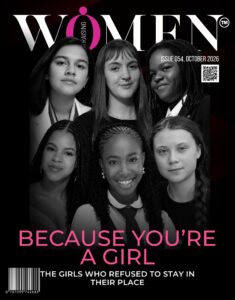
Raising Women Magazine Issue 54 – October 2026

“Because you’re a girl.”
Four little words that have spent generations doing an extraordinary amount of damage. Apparently, ambition, intelligence and audacity were once considered rather unladylike.
Fortunately, the girls featured in our 54th edition missed that memo.
As we celebrate the International Day of the Girl Child, we spotlight twelve remarkable girls rewriting the rules, while reminding ourselves that a girl should not need extraordinary achievements to deserve ordinary opportunities.
We also explore the expectations that complicate girlhood, the childhood wounds we carry into adulthood and, in my Find Her Light reflection, why the girl I once was might have a few lessons for the woman I have become.
Perhaps our greatest responsibility is not simply raising girls to conquer the world, but ensuring they never have to shrink themselves to belong in it.
Because you’re a girl?
What a wonderful reason to dream without limits.

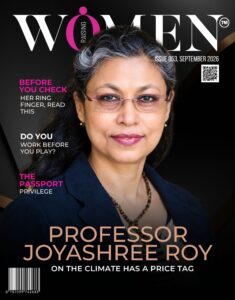
Raising Women Magazine Issue 53 – September 2026

Apparently, saving the planet comes with a shopping list. Solar panels, electric cars, sustainable fashion and, preferably, a bank account that understands the assignment.

In Issue 53, our cover woman, Professor Joyashree Roy, challenges us to reconsider what sustainability really costs, who pays, and why the cheapest choices today may leave tomorrow’s generations with the bill.

But this issue is also about the invisible price tags attached to everyday life. From passport privilege and the cultural expectations of a “good woman” to motherhood, personal boundaries and the delicate art of enjoying life before finishing every task, we examine the systems shaping our choices.

We also celebrate women turning overlooked problems into extraordinary opportunities.

Perhaps progress begins when we stop asking only what things cost and start asking what they are worth.

A better world should not be a luxury reserved for those who can afford it.
Happy reading!

.

Your guide to IVF and egg freezing in Korea

Empowering your family planning journey with curated fertility treatments at lower costs. Get our guide for Korea’s leading clinics, pricing and service breakdown.

Recommended News

Raising Women Magazine Issue 56 – November 2026

The Courage to Question
We live in a world where reputation often arrives before character, popularity masquerades as goodness, and questioning authority can make you the problem. Apparently, being respected is sometimes mistaken for being beyond reproach.
Our cover woman, Rachael Denhollander, reminds us why that distinction matters. Her courage in confronting institutional abuse challenges us to reconsider what safety, justice and accountability truly mean.

Elsewhere, we explore the judgement surrounding childbirth, the invisible labour behind successful careers, the beauty industry’s obsession with perfection, and why women can cook the same meal as men yet receive considerably less applause.

From fashion and culture to relationships and motherhood, Issue 56 invites us to examine the assumptions we have inherited, including those we unknowingly perpetuate.

Because progress is not simply about celebrating extraordinary women. It is about creating a world where ordinary women and girls are heard, valued and protected.

And sometimes, change begins with refusing to look away.

Raising Women Magazine Issue 55 – October 2026

We spend a remarkable amount of time telling girls who they should become, often before they have finished discovering who they are. Apparently, growing up comes with a job description nobody remembers applying for.

In Issue 55, our cover girls, Isabel Idibia and Princess Sade Obaitan, remind us that famous surnames and royal titles may introduce you, but they should never define you.

From girls conquering oceans and swimming pools to conversations about beauty, culture and ambition, this edition examines the expectations we inherit and the courage required to question them.

In Find Her Light, I also reflect on the careers I might have pursued and why discovering another gift does not invalidate the life we have already built.

Perhaps that is the lesson running through these pages: identity is not a finished manuscript.

Every girl deserves the freedom to write her own story. And every woman deserves another chapter.

Raising Women Magazine Issue 54 – October 2026

“Because you’re a girl.”
Four little words that have spent generations doing an extraordinary amount of damage. Apparently, ambition, intelligence and audacity were once considered rather unladylike.
Fortunately, the girls featured in our 54th edition missed that memo.
As we celebrate the International Day of the Girl Child, we spotlight twelve remarkable girls rewriting the rules, while reminding ourselves that a girl should not need extraordinary achievements to deserve ordinary opportunities.
We also explore the expectations that complicate girlhood, the childhood wounds we carry into adulthood and, in my Find Her Light reflection, why the girl I once was might have a few lessons for the woman I have become.
Perhaps our greatest responsibility is not simply raising girls to conquer the world, but ensuring they never have to shrink themselves to belong in it.
Because you’re a girl?
What a wonderful reason to dream without limits.

Raising Women Magazine Issue 53 – September 2026

Apparently, saving the planet comes with a shopping list. Solar panels, electric cars, sustainable fashion and, preferably, a bank account that understands the assignment.

In Issue 53, our cover woman, Professor Joyashree Roy, challenges us to reconsider what sustainability really costs, who pays, and why the cheapest choices today may leave tomorrow’s generations with the bill.

But this issue is also about the invisible price tags attached to everyday life. From passport privilege and the cultural expectations of a “good woman” to motherhood, personal boundaries and the delicate art of enjoying life before finishing every task, we examine the systems shaping our choices.

We also celebrate women turning overlooked problems into extraordinary opportunities.

Perhaps progress begins when we stop asking only what things cost and start asking what they are worth.

A better world should not be a luxury reserved for those who can afford it.
Happy reading!

.

Raising Women Magazine Issue 52 – September 2026

This issue asks a deceptively simple question: can we save the planet without making ordinary people pay the highest price?
Our cover star, Sascha Gabizon, brings that question sharply into focus, challenging us to think about climate action not only through carbon, but through fairness, access and gender. Because going green sounds wonderful until sustainability becomes something only the wealthy can afford.
Across these pages, we follow climate change into unexpected places. Into our wardrobes, our food, our cultural traditions and even the price of our morning coffee. We also continue our important First Daughters conversation, explore what women really mean when they speak about safety, and look at 111 Miss World contestants whose purpose projects remind us that beauty today carries increasingly bigger expectations.
This edition is ultimately about responsibility, but responsibility shared fairly.
Because saving our planet cannot become another luxury.
And perhaps the greenest future is one everyone can actually afford.

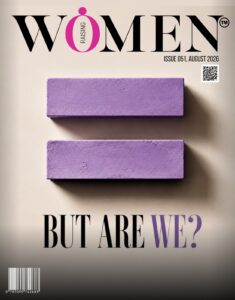
Raising Women Magazine Issue 051 – August 2026

Equal. Such a small word for such a complicated idea.

In this issue, we ask a question that feels almost impolite after decades of progress: women have more rights, education, income and influence than generations before us, but are we equal? We have travelled remarkably far, yet full global gender parity remains generations away. Apparently, equality is taking the scenic route.

Issue 51 looks beyond the equal sign to what equality actually feels like in women’s lives. We follow the money, the power and, importantly, the hours women still disproportionately spend caring. We also explore women’s old financial systems, workplace design, the soft life economy and the changing meaning of opportunity
.
Progress deserves celebration. But celebration should never make us complacent.

We have opened many doors.

Now we must ask what happens after women walk through them.

We are closer.

But are we there?
.