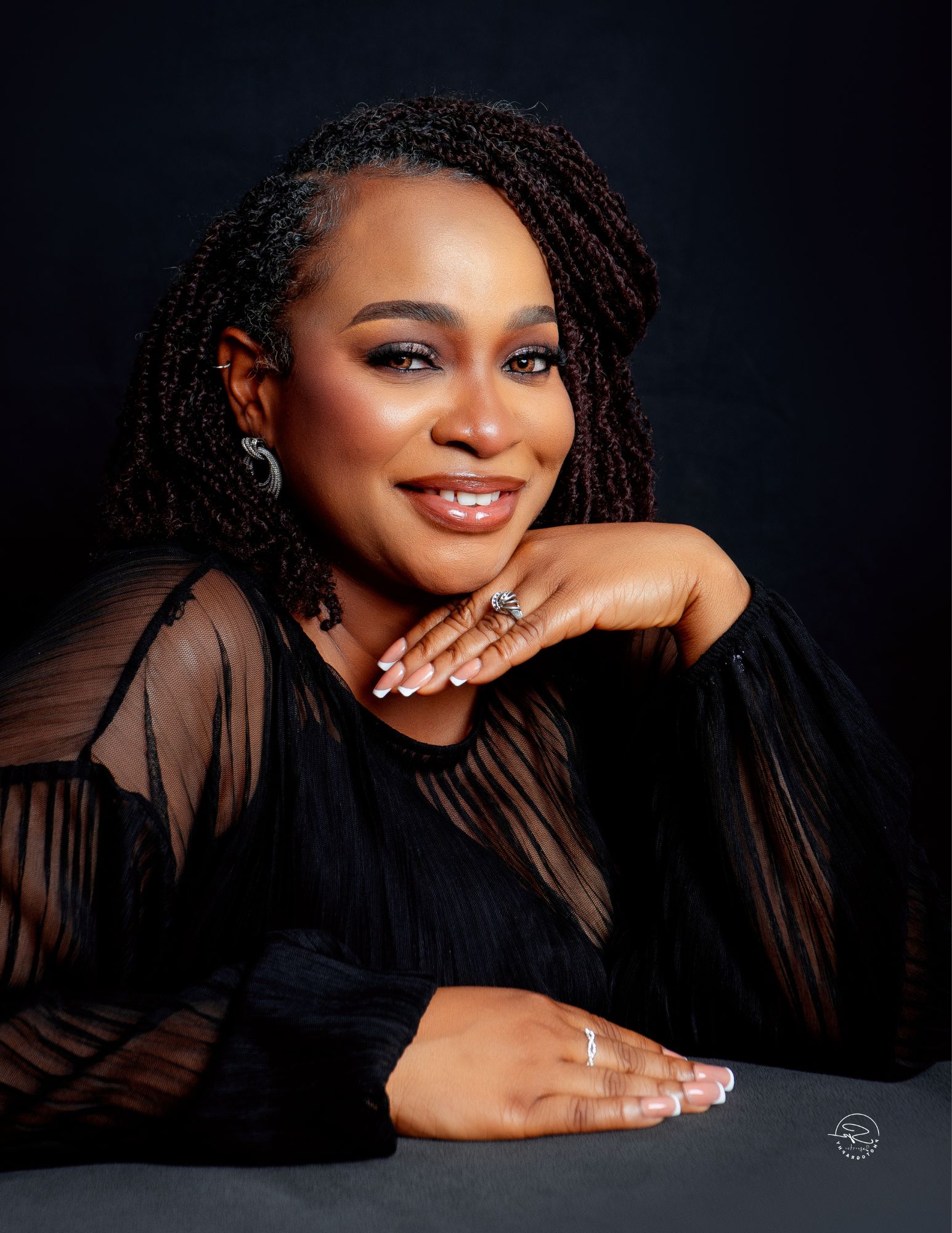
By Daniel Agusi
In Africa’s rapidly evolving economic landscape, financial inclusion remains a critical challenge for women. Despite their significant contributions to trade, entrepreneurship, and community development, many women still face systemic barriers to accessing financial resources, investment opportunities, and digital trade platforms. Dr. Weyinmi Eribo, a passionate advocate for women’s economic empowerment and the Director General of the Women Chamber of Commerce, Industry, Mines & Agriculture (WCCIMA), is on a mission to change this reality.
Through strategic partnerships, innovative programs, and policy advocacy, Dr. Eribo is working to bridge the financial gap and equip women with the tools they need to thrive. Her efforts extend beyond traditional banking solutions, she is pioneering digital transformation, championing trade accessibility, and leading groundbreaking
initiatives that empower women to take full control of their financial futures. In this feature, we explore
her inspiring journey, the challenges she is tackling, and the transformative solutions she is bringing to the forefront of Africa’s financial ecosystem.
Q: Can you share with us the inspiration behind your work in promoting financial inclusion for women in Africa, and what drives your passion for this cause?
A: My work is driven by a deep understanding of the critical role women play in Africa’s economic development and the glaring gaps in access to finance for women. I have witnessed firsthand the transformative power of equipping women with financial tools and knowledge, not only for their businesses but also for their families and
communities. Also my own personal experiences, as well as those of family and friends, have highlighted the need for women to understand and control their finances.
Economic empowerment and financial inclusion are not just about having money but about having power and control over it. Many women come from wealth or live in wealth but do not necessarily make the financial decisions. It’s one thing to have money, but another to control and utilize it effectively. One key pathway to financial independence is entrepreneurship, which effectively closes the gender equality gap.
As the Director General of the Women Chamber of Commerce, Industry, Mines & Agriculture, my passion stems from seeing women-led enterprises unlock their potential, something that can only happen when they are given the right tools, resources, opportunities and support. My goal is to change the narrative, ensuring that women are not just participants but leaders in driving Africa’s economy.
Q: In your experience, what are the most significant barriers that limit African women’s access to financial resources and opportunities, and how do these barriers impact their economic empowerment?
A: Several barriers exist, but I would highlight financial literacy as the most fundamental. Understanding money is crucial. Other barriers include cultural biases, such as the inability to own collateral, typically houses or land and that is due to traditional restrictions. Systemic inequalities within financial institutions also limit women’s participation in accessing finance.
For instance, a woman seeking a bank loan may be required to provide land as collateral. However, in some cultures, women are not allowed to own land. This systemic design automatically excludes them from financial
opportunities. Additionally, gaps in financial literacy prevent women from managing business finances effectively. Without proper bookkeeping, inventory management, or an understanding of bank statements, they struggle to access funding. These barriers restrict business growth. Even when women have market demand and production capacity, they are unable to scale due to financial constraints. This is why many women-led businesses remain in the SME category, or even at the nano level (NSMEs). Addressing these barriers is essential for achieving true economic empowerment and breaking cycles of poverty.
Q: Could you highlight some key initiatives or programs you’ve been involved in that help bridge the financial inclusion gap for women? What impact have you seen so far?
A: WCCIMA recently marked its first year of operations, during which we have worked tirelessly to create access to funding through partnerships with financial institutions. A key initiative is HERfinance, a finance accelerator launched in partnership with the KVP Project Nigeria under the German Chamber of Commerce. This initiative provides women-led businesses with hands-on financial guidance from experts who help them structure their finances, develop business plans, and create pitch decks for funding opportunities. We have further partnered with UNDP to unlock trade financing for women-owned businesses, leveraging the AfCFTA trade agreement
through the HerAfcta program.
We have also collaborated with financial institutions to match women entrepreneurs with appropriate funding programs. By acting as a bridge between women-led businesses and
funders, we facilitate access to financial resources. We also have recently launched another ground breaking initative, the National Trade and Exchange (NATEX) program with the goal to promote and facilitate intra-country trade and integrate women owned business into the export value chain with the overall goal to put more money in the hands of women. We also have recently launched another ground breaking initative, the National Trade and Exchange (NATEX) program with the goal to promote and facilitate intra-country trade and integrate women owned business into the export value chain with the overall goal to put more money in the hands of women.
We are already seeing a positive impact: more women are approaching financial institutions with confidence, understanding financial structures and the language of funding. Women are also exploring alternative
financing models, such as investment and equity, rather than relying solely on grants or small loans. These changes are enabling them to scale their businesses faster and more sustainably.
Q: How do cultural and societal norms in Africa influence women’s ability to participate fully in the economy? What strategies are you using to address these challenges?
A: Cultural norms pose significant challenges, from restrictions on property ownership to limitations on financial decision-making and education access. Some landlords even refuse to rent business spaces to women.
These patriarchal systems hinder economic participation.
At WCCIMA, we tackle these issues through policy advocacy and capacity building initiatives. We work closely with the UN Human Rights Office, facilitating dialogues on human rights, business, and women’s economic empowerment. We also host roundtable discussions on how associations and affiliations can help women overcome societal barriers.
A key tool in our advocacy is the Women’s Economic Empowerment (WEE) Policy, which provides a clear direction for gender-focused development efforts. The Nigerian government is working to domesticate this policy across all states, and we will continue to try to actively engage in ensuring
its implementation.
Q: What role do technology and innovation play in advancing financial inclusion for women? How are you leveraging these tools in your work?
A: Technology is a game changer for financial inclusion. The rise of FinTech and mobile banking has reduced physical barriers to financial access, allowing women to open bank accounts and access financial tools remotely.
At WCCIMA, we prioritize digital trade and innovation. We very recently received approval for Technical Assistance from the Investment Climate Reform (ICR) facility to advance digital trade and e-commerce for women
entrepreneurs. We have also partnered with Suburban Cloud and the Ministry of Trade and Investment to provide 1,000 free websites for women led businesses through the 1KDP initiative. Recognizing the importance of
an online presence, we ensure women not only have websites but also control their digital platforms rather than relying solely on social media.
We also run digital innovation and marketing training programs, including a current collaboration with impact HER for free digital marketing training. Additionally, we use technology to connect with our members through an active website and social media platforms.
These efforts are yielding results: more women are engaging in online trade, expanding their market reach, and even starting export businesses. For example, after a training mission to Namibia last year, several women
continued trading internationally, facilitated by their online presence.
Q: Looking ahead, what opportunities do you see for African women to achieve greater financial independence? How can stakeholders collaborate to make this a reality?
A: The future is promising. Africa’s growing digital economy and initiatives like the AfCFTA trade agreement offer unprecedented opportunities for women-led businesses to expand beyond national borders.
However, this progress requires collaboration among stakeholders. Governments must implement gender-inclusive policies, financial institutions must provide accessible funding, organizations must invest in capacity building, and individuals must challenge cultural norms that limit women’s participation.
At WCCIMA, we actively foster collaboration, serving as a bridge between women entrepreneurs and key stakeholders. Success in empowering women requires a collective effort from government bodies, private sector
players, international development organizations, and NGOs. Ultimately, when women succeed, the entire world benefits. It is crucial for all stakeholders to see themselves as part of this ecosystem and contribute their expertise, resources, and networks to drive sustainable change. Collaboration is key.