Spotlighting Remarkable Women and Girls

Esther Perel and the Truth About Love We Have Been Avoiding

By Sipho Khumalo

If love were simple, Esther Perel would not be one of the most sought after voices of our time. Yet here we are, entering another Valentine season, still confused, still longing, still searching for language that can explain why intimacy feels harder in a world that claims to be more connected than ever.

Esther Perel does not offer fairy tales. She offers mirrors.

Born in Belgium to Holocaust survivors, Perel grew up listening to stories of survival, desire, loss, and resilience. It is no coincidence that her work centres not on perfect relationships, but on human ones. Her life trained her early to understand that love does not exist in a vacuum. It exists under pressure.

“Love is not a permanent state,” she once said. “It is a practice.”

That single sentence disrupts almost everything modern culture has sold us about romance.

In a world obsessed with finding the one, Esther Perel asks a more uncomfortable question. Can you become many versions of yourself while staying with one person.

Her work has reshaped how we think about marriage, desire, fidelity, and commitment. She refuses the idea that love should be effortless. Instead, she insists that it should be intentional.

When Safety Kills Desire

One of Perel’s most provocative insights is that the very things that make relationships secure often suffocate passion. We want our partners to be reliable, emotionally available, predictable, and nurturing. But desire, she argues, thrives on mystery, distance, and novelty.

“Fire needs air,” she says. “Desire needs space.”

For many women, this truth lands like a quiet revelation. We were taught that closeness was the ultimate goal. That merging was romantic. That love meant disappearing into partnership. Yet Perel reminds us that erotic energy requires separateness. You cannot desire what you have completely consumed.

This is not an argument against intimacy. It is an argument for individuality within it.

Infidelity as a Symptom, Not the Story

Few topics provoke as much discomfort as infidelity, yet Perel has dared to enter the conversation without moral grandstanding. She does not excuse betrayal, but she interrogates it.

“An affair is not always a sign that something is wrong in the relationship,” she explains. “It can be a sign that something is wrong within the person.”

This reframing is radical. It asks us to look beyond blame and into unmet needs, silenced desires, and neglected selves. For women especially, who are often taught to carry emotional labour silently, this perspective can be both confronting and freeing.

Perel insists that affairs are rarely about sex alone. They are about vitality, autonomy, and the longing to feel alive again.

That does not justify harm. But it does demand honesty.

Love in the Age of Choice

Modern relationships are burdened by impossible expectations. We want one person to be our lover, best friend, therapist, co parent, financial partner, emotional anchor, and source of excitement. Previous generations outsourced these needs across community. We demand them all from one individual.

And then we wonder why disappointment follows.

“We have moved from survival to fulfilment,” Perel observes. “But with fulfilment comes enormous pressure.”

Her work invites women to question whether their expectations are realistic, or inherited from a culture that confuses love with consumption. Love, she reminds us, is not about constant happiness. It is about growth.

The Courage to Stay Curious

What makes Esther Perel compelling is not that she offers answers, but that she insists on curiosity. She believes relationships fail not because people stop loving, but because they stop listening.

“The quality of your relationships determines the quality of your life,” she says.

For women navigating careers, motherhood, ambition, identity, and partnership, this insight matters deeply. Perel encourages women to reclaim desire not as performance, but as presence. To ask themselves not just what they give in relationships, but who they are becoming inside them.

She challenges the idea that self sacrifice equals love. She asks women to remain sovereign, curious, and emotionally literate.

Feminism, Desire, and Power

Esther Perel’s feminism is nuanced. She does not frame women as victims of love, but as participants in it. She believes empowerment includes sexual agency, emotional clarity, and the right to want.

“Eroticism is not something you do,” she says. “It is a place you go.”

In a culture that polices female desire while monetising it, Perel’s insistence that women own their inner worlds is quietly revolutionary. She understands that desire is deeply connected to power. When women lose touch with desire, they often lose touch with self.

Her work invites women back to themselves.

Love as a Long Conversation

Perhaps the most important lesson Esther Perel offers is that love is not static. It evolves as we evolve. The partner who met you at twenty may not recognise you at forty, unless you let them.

“Relationships are not a destination,” she reminds us. “They are a journey.”

This is not romanticism. It is responsibility.

As Valentine approaches, Esther Perel offers no flowers or clichés. She offers something more enduring. Language. Context. Permission to grow without guilt.

In a world that sells love as certainty, she teaches us to sit with complexity. To choose curiosity over control. To understand that intimacy is not the absence of distance, but the ability to return.

Love, according to Esther Perel, is not about losing yourself.

It is about meeting yourself again, and again, and again, in the presence of another.

And perhaps that is the most honest definition of romance we have been avoiding.
Share:

Trending

Raising Women Magazine Issue 52 – September 2026

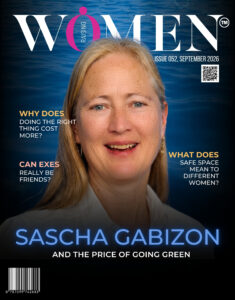
This issue asks a deceptively simple question: can we save the planet without making ordinary people pay the highest price?
Our cover star, Sascha Gabizon, brings that question sharply into focus, challenging us to think about climate action not only through carbon, but through fairness, access and gender. Because going green sounds wonderful until sustainability becomes something only the wealthy can afford.
Across these pages, we follow climate change into unexpected places. Into our wardrobes, our food, our cultural traditions and even the price of our morning coffee. We also continue our important First Daughters conversation, explore what women really mean when they speak about safety, and look at 111 Miss World contestants whose purpose projects remind us that beauty today carries increasingly bigger expectations.
This edition is ultimately about responsibility, but responsibility shared fairly.
Because saving our planet cannot become another luxury.
And perhaps the greenest future is one everyone can actually afford.

Raising Women Magazine Issue 051 – August 2026

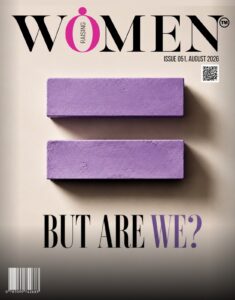
Equal. Such a small word for such a complicated idea.

In this issue, we ask a question that feels almost impolite after decades of progress: women have more rights, education, income and influence than generations before us, but are we equal? We have travelled remarkably far, yet full global gender parity remains generations away. Apparently, equality is taking the scenic route.

Issue 51 looks beyond the equal sign to what equality actually feels like in women’s lives. We follow the money, the power and, importantly, the hours women still disproportionately spend caring. We also explore women’s old financial systems, workplace design, the soft life economy and the changing meaning of opportunity
.
Progress deserves celebration. But celebration should never make us complacent.

We have opened many doors.

Now we must ask what happens after women walk through them.

We are closer.

But are we there?
.

Raising Women Magazine Issue 050 – August 2026

Fifty issues. That feels worth pausing for.
Not because fifty is simply a lovely round number, but because every issue represents another opportunity to ask better questions about women, culture and the world we are building.
And Issue 50 certainly asks questions.
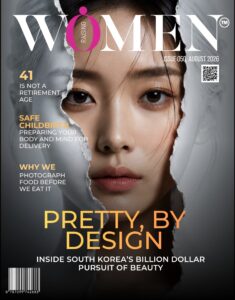
Our cover story, PRETTY, BY DESIGN, takes us to South Korea and its billion dollar pursuit of beauty, examining what happens when appearance becomes intertwined with confidence, opportunity and social capital. But before we become too fascinated by South Korea, perhaps we should check our own mirrors. The pursuit of “better” is increasingly global.
Elsewhere, we meet an Olympic champion who found gold at 41 and after motherhood, explore the AI gap reshaping women’s work, rediscover our grandmothers as archivists and ask why dinner now requires photography before eating.
Fifty editions later, Raising Women Magazine remains curious, global and committed to conversations that matter.
Here’s to 50.
And to everything we are still becoming.

Raising Women Magazine Issue 049 – August 2026

There is a quiet shift taking place in the stories women are telling.

For years, success was measured by titles, milestones, and visibility. Today, we are asking deeper questions. What does influence look like? Who is changing the world? Which friendships shape the women we become? And how do we carry our heritage into a future we are helping to build?

This edition celebrates women and girls of African descent whose ideas, courage, creativity, and leadership are reshaping global conversations. Our cover feature is a reminder that Africa is not waiting to be discovered. It is already influencing the future through remarkable women whose work is changing industries, communities, and generations.

Alongside these inspiring stories, we explore the quiet power of friendship, the economics of modern womanhood, fashion’s changing priorities, and the cultural moments defining our time.

At Raising Women Magazine, we remain committed to one belief: when women rise with purpose, they do not simply change their own stories. They expand what the world believes is possible.

Your guide to IVF and egg freezing in Korea

Empowering your family planning journey with curated fertility treatments at lower costs. Get our guide for Korea’s leading clinics, pricing and service breakdown.

Recommended News

Raising Women Magazine Issue 52 – September 2026

This issue asks a deceptively simple question: can we save the planet without making ordinary people pay the highest price?
Our cover star, Sascha Gabizon, brings that question sharply into focus, challenging us to think about climate action not only through carbon, but through fairness, access and gender. Because going green sounds wonderful until sustainability becomes something only the wealthy can afford.
Across these pages, we follow climate change into unexpected places. Into our wardrobes, our food, our cultural traditions and even the price of our morning coffee. We also continue our important First Daughters conversation, explore what women really mean when they speak about safety, and look at 111 Miss World contestants whose purpose projects remind us that beauty today carries increasingly bigger expectations.
This edition is ultimately about responsibility, but responsibility shared fairly.
Because saving our planet cannot become another luxury.
And perhaps the greenest future is one everyone can actually afford.

Raising Women Magazine Issue 051 – August 2026

Equal. Such a small word for such a complicated idea.

In this issue, we ask a question that feels almost impolite after decades of progress: women have more rights, education, income and influence than generations before us, but are we equal? We have travelled remarkably far, yet full global gender parity remains generations away. Apparently, equality is taking the scenic route.

Issue 51 looks beyond the equal sign to what equality actually feels like in women’s lives. We follow the money, the power and, importantly, the hours women still disproportionately spend caring. We also explore women’s old financial systems, workplace design, the soft life economy and the changing meaning of opportunity
.
Progress deserves celebration. But celebration should never make us complacent.

We have opened many doors.

Now we must ask what happens after women walk through them.

We are closer.

But are we there?
.

Raising Women Magazine Issue 050 – August 2026

Fifty issues. That feels worth pausing for.
Not because fifty is simply a lovely round number, but because every issue represents another opportunity to ask better questions about women, culture and the world we are building.
And Issue 50 certainly asks questions.
Our cover story, PRETTY, BY DESIGN, takes us to South Korea and its billion dollar pursuit of beauty, examining what happens when appearance becomes intertwined with confidence, opportunity and social capital. But before we become too fascinated by South Korea, perhaps we should check our own mirrors. The pursuit of “better” is increasingly global.
Elsewhere, we meet an Olympic champion who found gold at 41 and after motherhood, explore the AI gap reshaping women’s work, rediscover our grandmothers as archivists and ask why dinner now requires photography before eating.
Fifty editions later, Raising Women Magazine remains curious, global and committed to conversations that matter.
Here’s to 50.
And to everything we are still becoming.

Raising Women Magazine Issue 049 – August 2026

There is a quiet shift taking place in the stories women are telling.

For years, success was measured by titles, milestones, and visibility. Today, we are asking deeper questions. What does influence look like? Who is changing the world? Which friendships shape the women we become? And how do we carry our heritage into a future we are helping to build?

This edition celebrates women and girls of African descent whose ideas, courage, creativity, and leadership are reshaping global conversations. Our cover feature is a reminder that Africa is not waiting to be discovered. It is already influencing the future through remarkable women whose work is changing industries, communities, and generations.

Alongside these inspiring stories, we explore the quiet power of friendship, the economics of modern womanhood, fashion’s changing priorities, and the cultural moments defining our time.

At Raising Women Magazine, we remain committed to one belief: when women rise with purpose, they do not simply change their own stories. They expand what the world believes is possible.

Raising Women Magazine Issue 048 – July 2026

There is a quiet shift taking place in the stories women are telling.

For years, success was measured by titles, milestones, and visibility. Today, we are asking deeper questions. What does influence look like? Who is changing the world? Which friendships shape the women we become? And how do we carry our heritage into a future we are helping to build?

This edition celebrates women and girls of African descent whose ideas, courage, creativity, and leadership are reshaping global conversations. Our cover feature is a reminder that Africa is not waiting to be discovered. It is already influencing the future through remarkable women whose work is changing industries, communities, and generations.

Alongside these inspiring stories, we explore the quiet power of friendship, the economics of modern womanhood, fashion’s changing priorities, and the cultural moments defining our time.

At Raising Women Magazine, we remain committed to one belief: when women rise with purpose, they do not simply change their own stories. They expand what the world believes is possible.