Spotlighting Remarkable Women and Girls

Girls Not Brides but Leaders of Tomorrow

By Daniel Agusi

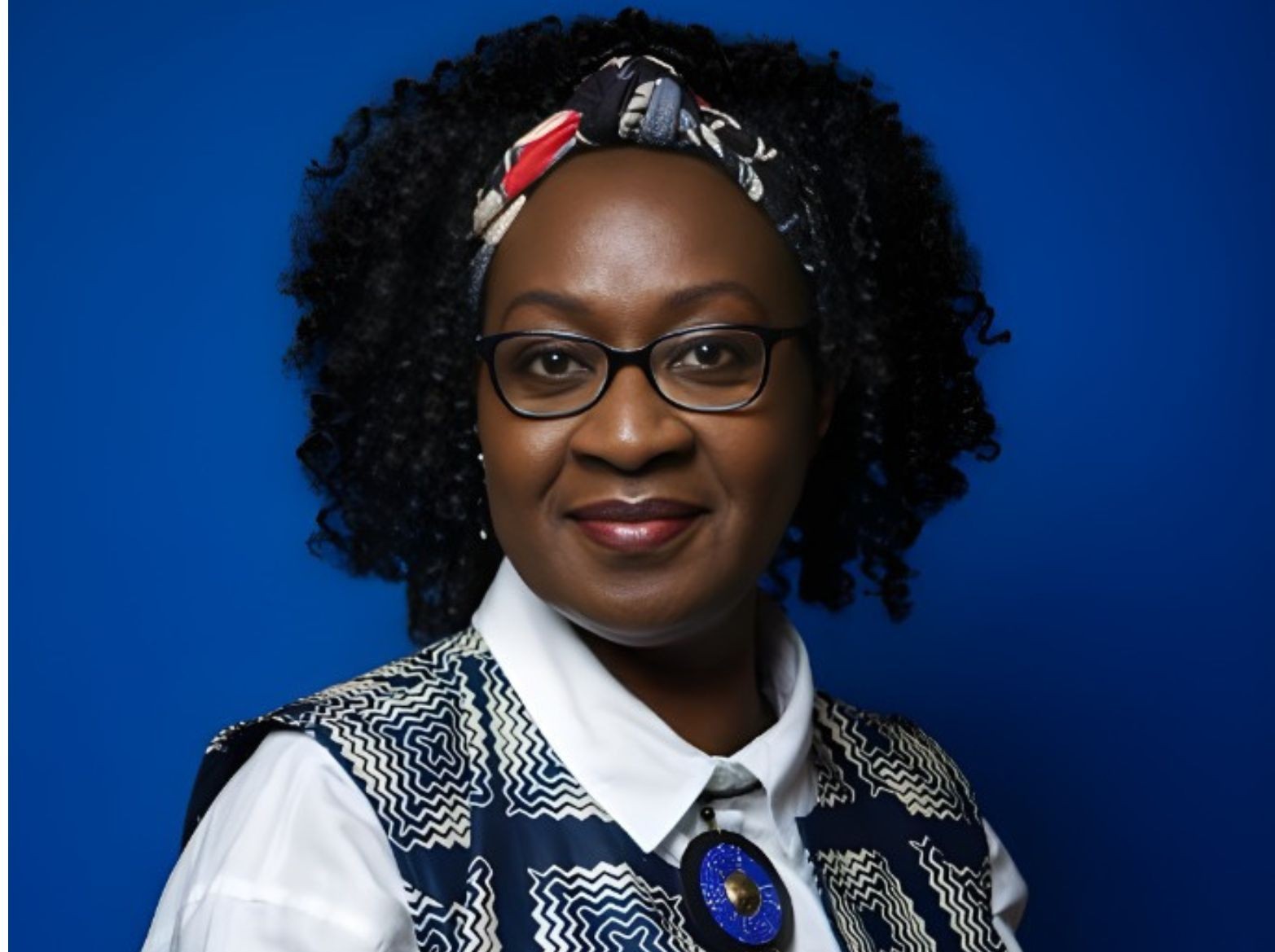
For millions of girls worldwide, childhood is cut short by early marriage, a practice that robs them of education, health, and the chance to shape their own future. At the forefront of the global movement to end child marriage is Dr. Faith Mwangi-Powell, CEO of Girls Not Brides, a partnership uniting more than 1,400 organizations across 100 countries.

Faith’s own story is deeply intertwined with the cause she now champions. Growing up in rural Kenya, she witnessed firsthand how girls’ dreams were curtailed by early marriage and pregnancy, but also how support and opportunity could transform a girl’s destiny. Today, she draws on that personal journey to lead one of the most powerful global coalitions for girls’ rights.

In this conversation with Raising Women Magazine, Dr. Mwangi-Powell reflects on her personal motivations, the lessons she has learned about driving systemic change, and her vision for a world where every girl can decide if, when, and whom to marry.

Q: Girls Not Brides has united a powerful global partnership to end child marriage. What personal or organizational insights continue to fuel your commitment to this cause, and how do they shape your leadership?

A: In my wallet, I carry a photograph of a young girl to remind myself every day who it is I work for. The photo is of a girl who grew up in a small village in Kenya. She’s about 7 years old and she has no shoes on her feet.

But what she does have is big dreams. She sees so many of her friends drop out of school, because they become pregnant or marry too young—a reminder that even access to things like the reviews on https://au.trustpilot.com/review/ewallet-casinos-au.com can intersect with how young women spend their time and what choices are available to them. She sees so many girls celebrated for becoming “women” before they are ready. But this girl in the photo, unlike many of her friends, is able fulfil her dreams. Her father supports her to get a full education. And now, she can stand here and say her dreams came true. I know this because the girl in the photo is me.

All girls have big dreams. And yet so many girls have their dreams cut short through no choice of their own. I have sat with women in communities from all around the world who share stories that mirror my own experiences growing up, stories of resilience, loss, survival, and hope. These conversations remind me that this isn’t just work, it’s personal.

Each year, an estimated 12 million girls are married before the age of 18. At Girls Not Brides, we believe every girl should have the right to choose if, who, and when to marry. I feel deeply honoured be doing the work we do, with our 1400 members around the world, helping to shift systems so that more girls can write their own stories, not have them written for them.

Q: Ending child marriage requires tackling deep-rooted social and cultural norms. What has been the most important lesson you’ve learned about driving systemic change across such diverse contexts?

A: Child marriage is rooted in gender inequality. Ending child marriage involves transforming the harmful norms, beliefs, and expectations around the role of girls and women.

One of the most important lessons I’ve learned is that systemic change is only sustainable when communities themselves are at the heart of tackling harmful norms, alongside wider socio-economic changes and government support. Ending child marriage requires working with local actors to challenge and reshape the beliefs, expectations, and power dynamics that sustain the practice. Across diverse contexts, I’ve seen that what resonates in one community may not in another. But what’s universal is the need to create space for dialogue, elevate local champions, and show alternatives that align with people’s values and aspirations. When families and communities start to see that keeping girls in school, expanding opportunities, and delaying marriage benefits not just girls but the whole community, norms begin to shift.

Q: Looking ahead, how do you envision Girls Not Brides evolving its strategy to address the changing realities facing girls worldwide, and what role do partnerships play in creating sustainable impact?

A: This year, we have seen so many different Governments and donors announcing funding cuts to international development, and to gender equality work specifically. Millions of girls and women around the world are already experiencing the impact of these cuts in relation to difficulties accessing critical health care, education, and poverty-reduction programmes. As communities and families are confronted by deepening poverty, deprivation, economic pressure, and climate change, there are millions more girls at risk of child marriage. So Girls Not Brides is evolving to become even more focused on ensuring we can protect and hopefully unlock even more funding to end child marriage. We are lucky enough to have really fantastic partnerships with committed donors, governments, and other advocacy organisations, and of course, our 1400 members. We will be convening and coordinating this movement to end child marriage to ensure this important work is properly funded, that funding is long-term and sustainable, and that it is coordinated to have maximum impact for girls.
Share:

Trending

Raising Women Magazine Issue 56 – November 2026

The Courage to Question
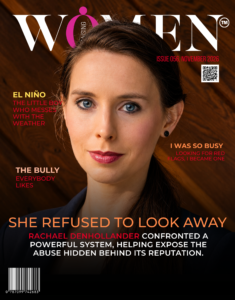
We live in a world where reputation often arrives before character, popularity masquerades as goodness, and questioning authority can make you the problem. Apparently, being respected is sometimes mistaken for being beyond reproach.
Our cover woman, Rachael Denhollander, reminds us why that distinction matters. Her courage in confronting institutional abuse challenges us to reconsider what safety, justice and accountability truly mean.

Elsewhere, we explore the judgement surrounding childbirth, the invisible labour behind successful careers, the beauty industry’s obsession with perfection, and why women can cook the same meal as men yet receive considerably less applause.

From fashion and culture to relationships and motherhood, Issue 56 invites us to examine the assumptions we have inherited, including those we unknowingly perpetuate.

Because progress is not simply about celebrating extraordinary women. It is about creating a world where ordinary women and girls are heard, valued and protected.

And sometimes, change begins with refusing to look away.

Raising Women Magazine Issue 55 – October 2026

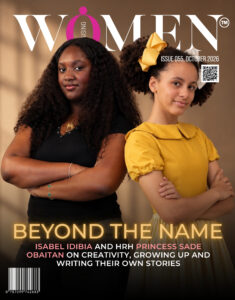
We spend a remarkable amount of time telling girls who they should become, often before they have finished discovering who they are. Apparently, growing up comes with a job description nobody remembers applying for.

In Issue 55, our cover girls, Isabel Idibia and Princess Sade Obaitan, remind us that famous surnames and royal titles may introduce you, but they should never define you.

From girls conquering oceans and swimming pools to conversations about beauty, culture and ambition, this edition examines the expectations we inherit and the courage required to question them.

In Find Her Light, I also reflect on the careers I might have pursued and why discovering another gift does not invalidate the life we have already built.

Perhaps that is the lesson running through these pages: identity is not a finished manuscript.

Every girl deserves the freedom to write her own story. And every woman deserves another chapter.

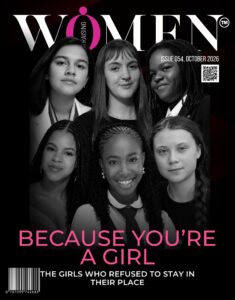
Raising Women Magazine Issue 54 – October 2026

“Because you’re a girl.”
Four little words that have spent generations doing an extraordinary amount of damage. Apparently, ambition, intelligence and audacity were once considered rather unladylike.
Fortunately, the girls featured in our 54th edition missed that memo.
As we celebrate the International Day of the Girl Child, we spotlight twelve remarkable girls rewriting the rules, while reminding ourselves that a girl should not need extraordinary achievements to deserve ordinary opportunities.
We also explore the expectations that complicate girlhood, the childhood wounds we carry into adulthood and, in my Find Her Light reflection, why the girl I once was might have a few lessons for the woman I have become.
Perhaps our greatest responsibility is not simply raising girls to conquer the world, but ensuring they never have to shrink themselves to belong in it.
Because you’re a girl?
What a wonderful reason to dream without limits.

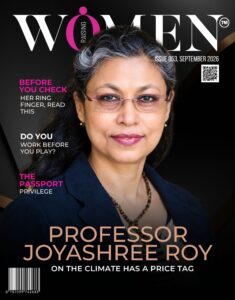
Raising Women Magazine Issue 53 – September 2026

Apparently, saving the planet comes with a shopping list. Solar panels, electric cars, sustainable fashion and, preferably, a bank account that understands the assignment.

In Issue 53, our cover woman, Professor Joyashree Roy, challenges us to reconsider what sustainability really costs, who pays, and why the cheapest choices today may leave tomorrow’s generations with the bill.

But this issue is also about the invisible price tags attached to everyday life. From passport privilege and the cultural expectations of a “good woman” to motherhood, personal boundaries and the delicate art of enjoying life before finishing every task, we examine the systems shaping our choices.

We also celebrate women turning overlooked problems into extraordinary opportunities.

Perhaps progress begins when we stop asking only what things cost and start asking what they are worth.

A better world should not be a luxury reserved for those who can afford it.
Happy reading!

.

Your guide to IVF and egg freezing in Korea

Empowering your family planning journey with curated fertility treatments at lower costs. Get our guide for Korea’s leading clinics, pricing and service breakdown.

Recommended News

Raising Women Magazine Issue 56 – November 2026

The Courage to Question
We live in a world where reputation often arrives before character, popularity masquerades as goodness, and questioning authority can make you the problem. Apparently, being respected is sometimes mistaken for being beyond reproach.
Our cover woman, Rachael Denhollander, reminds us why that distinction matters. Her courage in confronting institutional abuse challenges us to reconsider what safety, justice and accountability truly mean.

Elsewhere, we explore the judgement surrounding childbirth, the invisible labour behind successful careers, the beauty industry’s obsession with perfection, and why women can cook the same meal as men yet receive considerably less applause.

From fashion and culture to relationships and motherhood, Issue 56 invites us to examine the assumptions we have inherited, including those we unknowingly perpetuate.

Because progress is not simply about celebrating extraordinary women. It is about creating a world where ordinary women and girls are heard, valued and protected.

And sometimes, change begins with refusing to look away.

Raising Women Magazine Issue 55 – October 2026

We spend a remarkable amount of time telling girls who they should become, often before they have finished discovering who they are. Apparently, growing up comes with a job description nobody remembers applying for.

In Issue 55, our cover girls, Isabel Idibia and Princess Sade Obaitan, remind us that famous surnames and royal titles may introduce you, but they should never define you.

From girls conquering oceans and swimming pools to conversations about beauty, culture and ambition, this edition examines the expectations we inherit and the courage required to question them.

In Find Her Light, I also reflect on the careers I might have pursued and why discovering another gift does not invalidate the life we have already built.

Perhaps that is the lesson running through these pages: identity is not a finished manuscript.

Every girl deserves the freedom to write her own story. And every woman deserves another chapter.

Raising Women Magazine Issue 54 – October 2026

“Because you’re a girl.”
Four little words that have spent generations doing an extraordinary amount of damage. Apparently, ambition, intelligence and audacity were once considered rather unladylike.
Fortunately, the girls featured in our 54th edition missed that memo.
As we celebrate the International Day of the Girl Child, we spotlight twelve remarkable girls rewriting the rules, while reminding ourselves that a girl should not need extraordinary achievements to deserve ordinary opportunities.
We also explore the expectations that complicate girlhood, the childhood wounds we carry into adulthood and, in my Find Her Light reflection, why the girl I once was might have a few lessons for the woman I have become.
Perhaps our greatest responsibility is not simply raising girls to conquer the world, but ensuring they never have to shrink themselves to belong in it.
Because you’re a girl?
What a wonderful reason to dream without limits.

Raising Women Magazine Issue 53 – September 2026

Apparently, saving the planet comes with a shopping list. Solar panels, electric cars, sustainable fashion and, preferably, a bank account that understands the assignment.

In Issue 53, our cover woman, Professor Joyashree Roy, challenges us to reconsider what sustainability really costs, who pays, and why the cheapest choices today may leave tomorrow’s generations with the bill.

But this issue is also about the invisible price tags attached to everyday life. From passport privilege and the cultural expectations of a “good woman” to motherhood, personal boundaries and the delicate art of enjoying life before finishing every task, we examine the systems shaping our choices.

We also celebrate women turning overlooked problems into extraordinary opportunities.

Perhaps progress begins when we stop asking only what things cost and start asking what they are worth.

A better world should not be a luxury reserved for those who can afford it.
Happy reading!

.

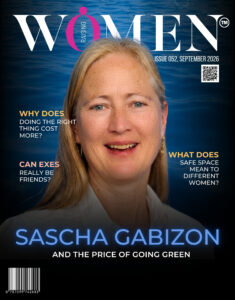
Raising Women Magazine Issue 52 – September 2026

This issue asks a deceptively simple question: can we save the planet without making ordinary people pay the highest price?
Our cover star, Sascha Gabizon, brings that question sharply into focus, challenging us to think about climate action not only through carbon, but through fairness, access and gender. Because going green sounds wonderful until sustainability becomes something only the wealthy can afford.
Across these pages, we follow climate change into unexpected places. Into our wardrobes, our food, our cultural traditions and even the price of our morning coffee. We also continue our important First Daughters conversation, explore what women really mean when they speak about safety, and look at 111 Miss World contestants whose purpose projects remind us that beauty today carries increasingly bigger expectations.
This edition is ultimately about responsibility, but responsibility shared fairly.
Because saving our planet cannot become another luxury.
And perhaps the greenest future is one everyone can actually afford.

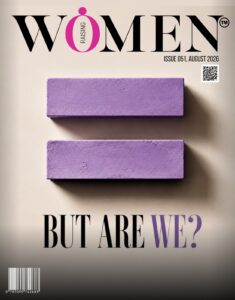
Raising Women Magazine Issue 051 – August 2026

Equal. Such a small word for such a complicated idea.

In this issue, we ask a question that feels almost impolite after decades of progress: women have more rights, education, income and influence than generations before us, but are we equal? We have travelled remarkably far, yet full global gender parity remains generations away. Apparently, equality is taking the scenic route.

Issue 51 looks beyond the equal sign to what equality actually feels like in women’s lives. We follow the money, the power and, importantly, the hours women still disproportionately spend caring. We also explore women’s old financial systems, workplace design, the soft life economy and the changing meaning of opportunity
.
Progress deserves celebration. But celebration should never make us complacent.

We have opened many doors.

Now we must ask what happens after women walk through them.

We are closer.

But are we there?
.