best casino sites for Canadians top real money casinos for Canadians safe online casinos for Canadian players Canadian online casino rankings best mobile casino Canada

Spotlighting Remarkable Women and Girls

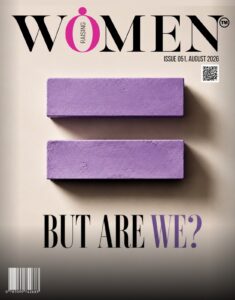
Financial Equality vs. Emotional Security: Why Some Women Prefer Not to Split the Bill Even in Equal Partnerships

By Zamie Ayo

In many relationships, finances can be a delicate topic, especially when it comes to splitting expenses. While modern relationships emphasize equality, the idea of splitting bills 50-50 does not always sit well with everyone. For some women, financial contributions in a relationship go beyond just covering costs, they represent care, security, and commitment from their partner. This perspective doesn’t stem from an unwillingness to contribute but from a sense that emotional support and financial gestures are closely linked, creating a foundation of emotional security.

Many women who prefer not to split bills equally feel that covering expenses can symbolise a partner’s role as a protector and provider, reinforcing feelings of care and stability. In this view, financial gestures may provide reassurance that goes beyond material value. This feeling isn’t necessarily tied to financial dependence but to a desire for a partner to show investment in the relationship through acts that go beyond splitting costs down the middle. Financial gestures may serve as a way of reinforcing emotional bonds, making them feel supported and cherished in ways that extend beyond money itself.

Another reason some women may shy away from strict bill-splitting is that it can feel too business-like, potentially stripping away the romantic elements in a relationship. Splitting every meal or expense in half can make the relationship feel overly transactional, creating an atmosphere more akin to a financial partnership than a romantic one. For many women, these small financial gestures represent a willingness to provide, which in turn fosters a sense of connection.

Cultural influences and upbringing also play a significant role in shaping these perspectives. In many cultures, men have traditionally taken on the financial responsibilities in relationships, and while this has evolved, these ideas often persist. For women raised with the idea that financial gestures equate to care, the concept of splitting costs equally may feel contradictory to what they believe a partnership should embody. This does not mean they expect or demand financial dependency; rather, they seek assurance that a partner is willing to invest emotionally, which sometimes manifests in financial ways.

The concept of emotional security is deeply personal, and for some women, it can be tied to subtle actions that express dependability. Financial gestures become a language of commitment, expressing that a partner values the relationship and is willing to shoulder some responsibilities to show it. These gestures might seem small, yet they can significantly affect how some women feel in their relationship. When a partner voluntarily takes care of expenses, it can help reinforce a woman’s trust, easing any anxieties about the stability and depth of the connection. This sense of security is less about money and more about feeling safe and valued

While some may view these preferences as traditional, others see them as a balanced approach to modern partnerships, where both equality and emotional security are essential. For many, equality does not necessarily mean splitting every cost but rather sharing in a way that feels supportive and caring for both partners. In some cases, couples may choose arrangements where both partners contribute in different ways that suit their strengths or preferences, allowing financial gestures to foster trust and security.

Ultimately, preferences around financial contributions are not one size-fits-all. What matters most is that both partners communicate openly and understand what makes each feel valued and secure. For some women, financial gestures may continue to be a meaningful way to feel cherished and supported, even in a relationship where they contribute equally in other ways. This nuanced approach allows both partners to feel emotionally fulfilled, creating a balanced and supportive partnership that respects each person’s needs.

Share:

Trending

Raising Women Magazine Issue 045 – June 2026

There is a difference between living and merely functioning.
Somewhere between the notifications, deadlines, responsibilities, ambitions, and endless demands of modern life, many of us have become exceptionally good at keeping going. We show up. We deliver. We carry. We cope. Yet beneath the appearance of productivity, an important question remains: are we truly well?
In this issue of Raising Women Magazine, we explore wellness not as a trend, but as a deeper conversation about humanity, health, purpose, and presence.
Our cover feature introduces Dr. Heidi Beilis, a pioneering physician helping to shape the future of healthcare through artificial intelligence. Her work reminds us that innovation is at its best when it serves people, particularly women whose lives may be transformed by earlier diagnoses and better outcomes.
Elsewhere, we explore grief, ambition, beauty, leadership, healthspan, rest, and the invisible burdens many women carry. We ask difficult questions about what it means to thrive, not simply survive.
As I wrote in this issue’s Find Her Light column, sometimes the rest we need is not sleep. Sometimes it is space. Sometimes it is perspective. Sometimes it is permission.
May these pages offer all three.

Raising Women Magazine Issue 044 – May 2026

There is something deeply revealing about the way a society treats its children. Not just in policy or parenting, but in the stories it tells them, the spaces it creates for them, and the kind of world it quietly prepares them to inherit. In this Children’s Day edition, Raising Women Magazine turns its attention to childhood itself, not as a sentimental phase of life, but as the foundation upon which identity, confidence, memory, and humanity are built.

Our cover star, Ms. Rachel, represents a refreshing reminder that gentleness still matters in an age of noise. Through patience, intentionality, and emotional safety, she has transformed songs and screen time into a global classroom for millions of children and families.

Across this issue, we explore the emotional architecture of childhood, from the girls who learn too early to shrink themselves, to the children quietly carrying adult burdens before they fully understand their own. We also interrogate modern parenting, digital culture, family, safety, and the futures young people are already shaping.

Because childhood is never just preparation for life.

In many ways, it is life itself.

The Family Tree Divide

What Women Are Given, and What They Build By Sipho Khumalo Two women walk into the same room. One is recognised before she speaks. The

Your guide to IVF and egg freezing in Korea

Empowering your family planning journey with curated fertility treatments at lower costs. Get our guide for Korea’s leading clinics, pricing and service breakdown.

Recommended News

Raising Women Magazine Issue 045 – June 2026

There is a difference between living and merely functioning.
Somewhere between the notifications, deadlines, responsibilities, ambitions, and endless demands of modern life, many of us have become exceptionally good at keeping going. We show up. We deliver. We carry. We cope. Yet beneath the appearance of productivity, an important question remains: are we truly well?
In this issue of Raising Women Magazine, we explore wellness not as a trend, but as a deeper conversation about humanity, health, purpose, and presence.
Our cover feature introduces Dr. Heidi Beilis, a pioneering physician helping to shape the future of healthcare through artificial intelligence. Her work reminds us that innovation is at its best when it serves people, particularly women whose lives may be transformed by earlier diagnoses and better outcomes.
Elsewhere, we explore grief, ambition, beauty, leadership, healthspan, rest, and the invisible burdens many women carry. We ask difficult questions about what it means to thrive, not simply survive.
As I wrote in this issue’s Find Her Light column, sometimes the rest we need is not sleep. Sometimes it is space. Sometimes it is perspective. Sometimes it is permission.
May these pages offer all three.

Raising Women Magazine Issue 044 – May 2026

There is something deeply revealing about the way a society treats its children. Not just in policy or parenting, but in the stories it tells them, the spaces it creates for them, and the kind of world it quietly prepares them to inherit. In this Children’s Day edition, Raising Women Magazine turns its attention to childhood itself, not as a sentimental phase of life, but as the foundation upon which identity, confidence, memory, and humanity are built.

Our cover star, Ms. Rachel, represents a refreshing reminder that gentleness still matters in an age of noise. Through patience, intentionality, and emotional safety, she has transformed songs and screen time into a global classroom for millions of children and families.

Across this issue, we explore the emotional architecture of childhood, from the girls who learn too early to shrink themselves, to the children quietly carrying adult burdens before they fully understand their own. We also interrogate modern parenting, digital culture, family, safety, and the futures young people are already shaping.

Because childhood is never just preparation for life.

In many ways, it is life itself.

The Family Tree Divide

What Women Are Given, and What They Build By Sipho Khumalo Two women walk into the same room. One is

First, Believe

By The Lulu They said the sky’s the limit But what if you’re still underground, still digging through the dirt

RudolphCasinos